


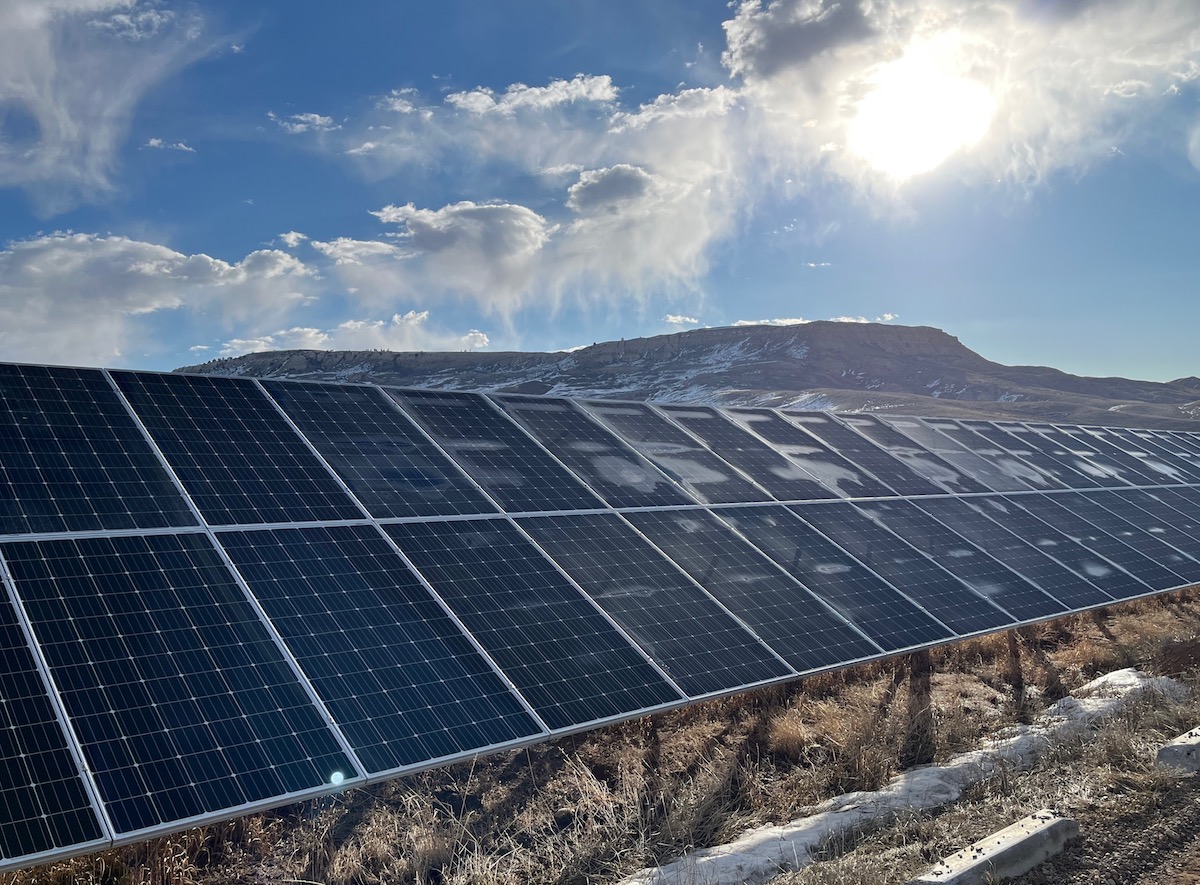
Wyoming-based All Solar has seen steadily increasing demand in recent years among homeowners and small businesses seeking some level of “energy independence,” including some clients that might surprise.
“It runs the gamut,” All Solar Head of Operations Riley Pieper told WyoFile, “from Rocky Mountain Power [customers] to people in the oilfield that you wouldn’t really expect. They love their solar equipment.”
The company currently has more than 100 installs scheduled and has been preparing to expand operations in the state and potentially open new branches in Montana and Nebraska. But those ambitions might be on hold for a while, Pieper said.
The long-running 30% tax credit for residential rooftop solar will close at the end of this year due to a provision in the One Big Beautiful Bill. A lot of All Solar’s past and prospective clients rely on the tax credit, according to Pieper. When it goes away, “it won’t make as much [economic] sense for a lot of people,” she said. “It is definitely not ideal.”
Since returning to the White House, President Donald Trump and the Republican-led Congress have frozen or cut consumer-level renewable energy and energy efficiency initiatives, as well as halted permitting for commercial-scale wind and solar projects and gutted research budgets and grant programs for the industries.
Speculation abounds about the actual impacts for Wyoming homeowners and small businesses, as well as commercial wind and solar developers. Not only will the new policy moves take time to play out in the market, but many are likely to be tied up in court challenges, according to sources who spoke with WyoFile.
Rising costs
The stakes are high for a lot of Wyoming households. Many have already seen electric bills increase by double digits, and one analysis predicts the nation’s current policy direction could spike bills here by another 29% over the next decade.
“For low-income residents in particular, they’re just going to be subject to increasing [electric] rates, which is just going to continue to exacerbate as we have data centers coming online and wildfire risk continuing to drive [utilities’] insurance costs to go up,” Lander-based Wyoming Outdoor Council Energy and Climate Associate Jonathan Williams told WyoFile, referring to a mounting insurance cost and litigation dilemma for both electric utilities and their customers.
The council has been working for years on another federal program it believes is a particularly good fit in Wyoming, according to Williams.
“That’s the thing that hurts so much about the loss of the Solar for All program: They’re pushing solar back to a time when only higher-income families could afford solar.”
Scott Kane, Creative Energies
Solar For All, created under the 2022 Inflation Reduction Act, was aimed at helping low- and medium-income households, along with nonprofits and Native American tribes, to pay for solar panel installations. Some $30 million was set aside for qualifying Wyoming applicants, and $5 million of that was set aside for the Wind River Indian Reservation.
But the U.S. Environmental Protection Agency is reportedly preparing to cancel some $7 billion in grants already awarded under the program, throwing into doubt Wyoming’s share.
Big Wind Carpenter, a member of the Northern Arapaho tribe, serves as the Outdoor Council’s tribal engagement coordinator. Some workforce training was already underway, they said, and the tribes had identified several housing project facilities as ideal candidates for rooftop solar.
“Putting rooftop solar on those houses would have saved [money for] a lot of people who are already lower-income families,” Big Wind said.
The council estimated that perhaps more than 30% of all Wyoming households might have qualified for assistance under the Solar for All program.
The potential lost opportunity in Wyoming is compounded by the administration putting into limbo more than $50 million for the Home Energy Savings Program to help low-income households cope with rising electric utility rates “and access more reliable energy by providing rebates for home energy efficiency projects,” according to a 2024 state presentation.
“Just across the board, on numerous programs similar to [Solar for All], which is an intent to reduce electricity bills, folks have seen uncertainty and new headwinds that have popped up,” Williams added.
Part of the drive behind the Solar for All program, according to Lander-based Creative Energies co-founder Scott Kane, was in response to the long-running tax credit for rooftop solar and criticism that it too narrowly catered to households that could afford the investment.
“The solar for all program was trying to push the energy transition in our country,” Kane said. “But it was also really motivated by environmental justice. It was really trying to make sure that the benefits of clean energy were accruing to all of society, not just the healthier economic tiers. That’s the thing that hurts so much about the loss of the Solar for All program: They’re pushing solar back to a time when only higher-income families could afford solar.”
Support, criticism for wind and solar
Despite Wyoming’s deep roots in fossil fuels and skepticism of renewables — particularly wind turbines proliferating across the landscape — more residents are warming to renewable energy, especially for powering their homes. Rising electricity rates likely play a big role.
The increasing costs are changing attitudes, Williams suggested, noting that about 70% of Wyoming residents support rooftop solar, citing the University of Wyoming’s 2022 report, Social License for Wyoming’s Energy Future.
Lander Republican Sen. Cale Case said he has mixed feelings about the fate of federal energy assistance programs, especially those that encourage rooftop solar. Case admits to being perhaps the state’s most notorious critic of rooftop solar — he’s sponsored several bills to overhaul the state’s rooftop solar net-metering law.


“I think pricing is not very good under a net-metering situation, because the person that’s making the installation avoids fixed costs and the utility makes up those costs from other customers,” he said.
A large portion of Case’s district includes the Wind River Reservation. He said he supports energy assistance efforts there, and for low-income communities and households across the state. But, “I do want to have that dialogue about fixing that — net-metering — and a lot of other things.”
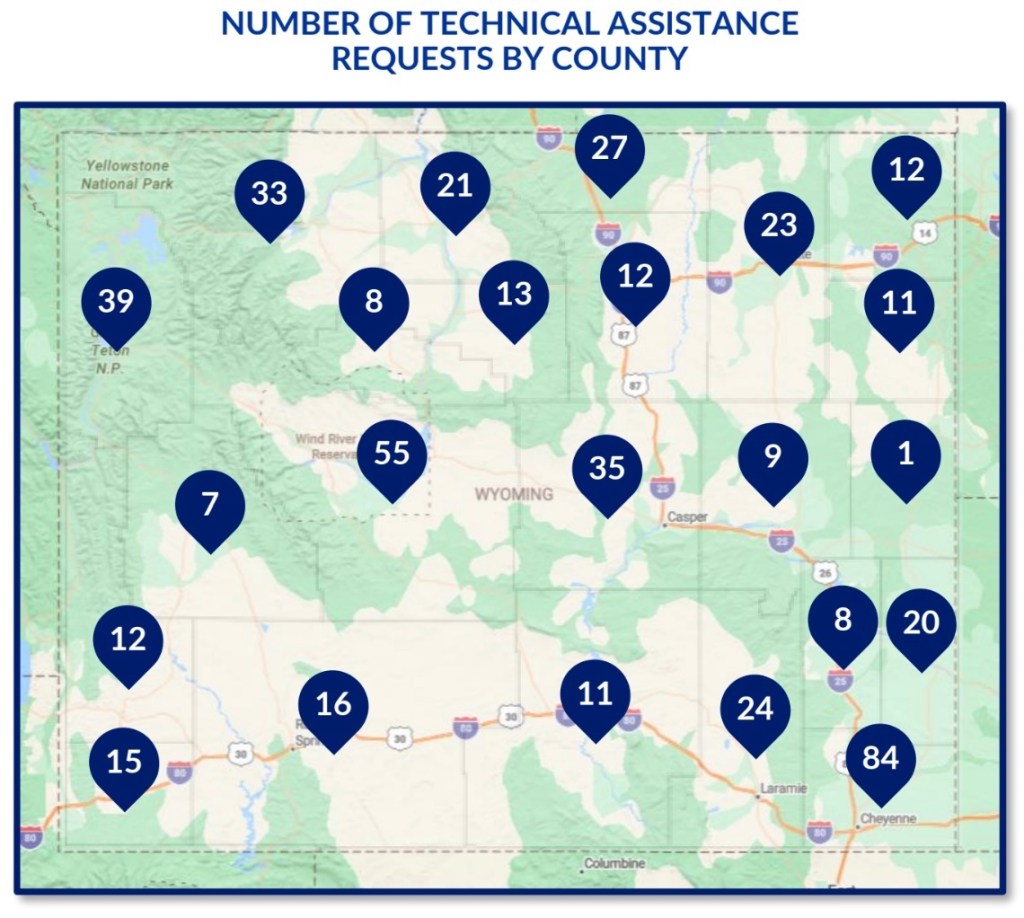
Last year, Gov. Mark Gordon established the Grants Management Office to assist local governments, businesses and nonprofits in pursuing state and federal grant programs, including initiatives under the Infrastructure Investment and Jobs Act, Inflation Reduction Act and CHIPS and Science Act. The office has already fielded 500 requests, according to an annual report.
For his part, Gordon “recognizes that the Trump administration may have different priorities than the previous administration,” Gordon’s Communications Director Michael Pearlman told WyoFile via email. “Ultimately, this is a decision being made at the federal level and the Governor respects whatever the final decision is on the status of those programs.”
