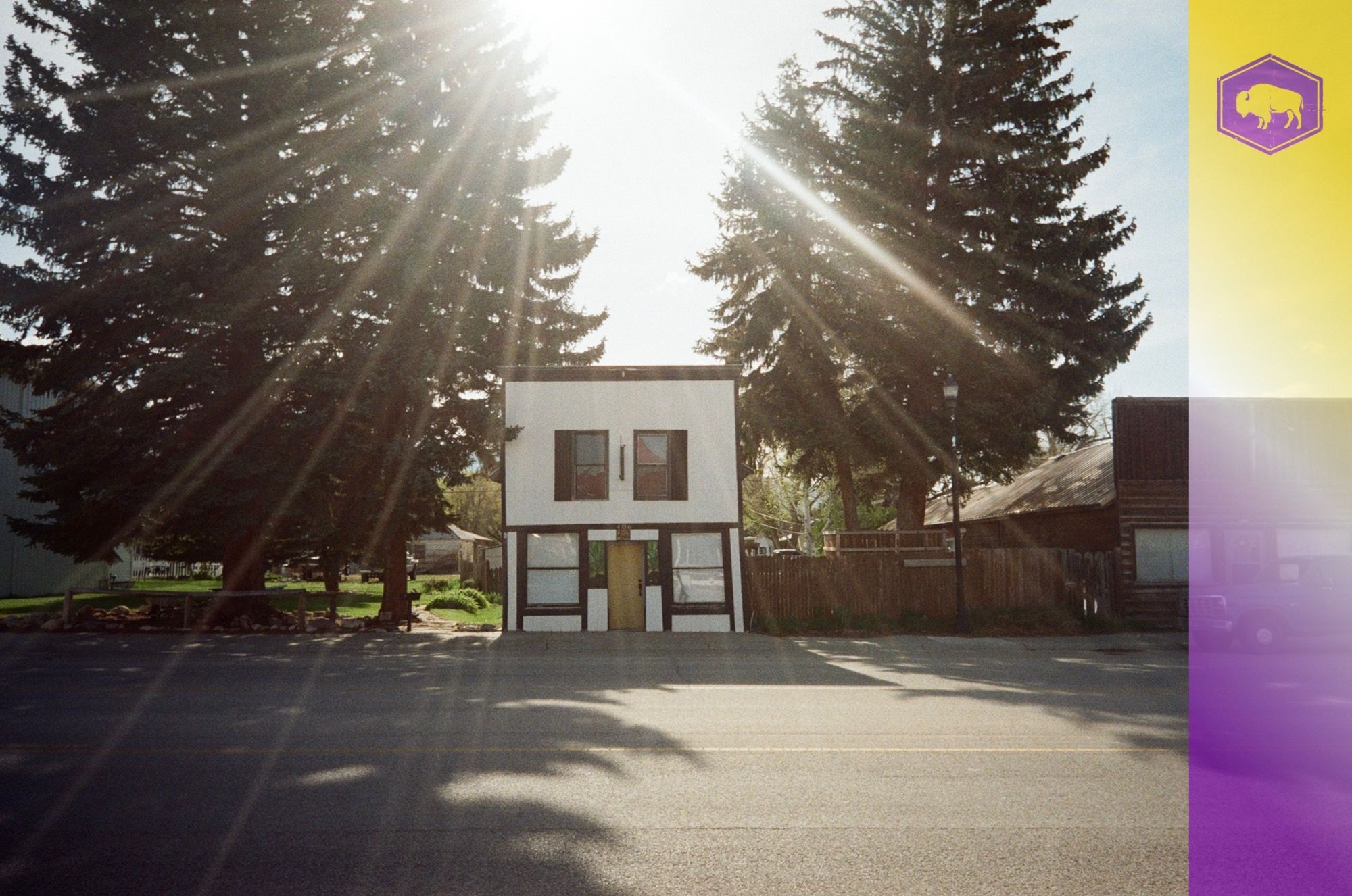

The sharp angles of an old antenna jut behind the facade of a shiplap-sided building on Main Street in Dayton, across from the corner store that doubles as the tiny Wyoming town’s grocery stop and gas station.
Opinion
It would be easy to breeze past the cracked windowpane toward the looming charm of the Bighorn Mountains, but my affinity for historical relics held together with duct tape and a prayer rewarded me with the story of Susan Wissler — Wyoming’s first woman mayor. I had no knowledge of Wissler and soon learned I wasn’t the only one.
Wissler had been nudged into the race by local women, running on an independent ticket against C. H. Ketcham, who was seeking a fifth term. She was known for her skill in fashioning hats at her store and residence at 406 Main Street — with its make-believe second story obscuring a squat, peaked roof — still standing 114 years later.
In the shadow of 406’s false front, a plaque commemorates Wissler’s mark on Wyoming women’s history. It was placed here in 1976. Going quietly grey under the grime from the birds who nest above it, it reads, “Mrs. Susan Wissler owned and operated a millinery shop at this location while serving as mayor of Dayton from 1911 to 1913.”
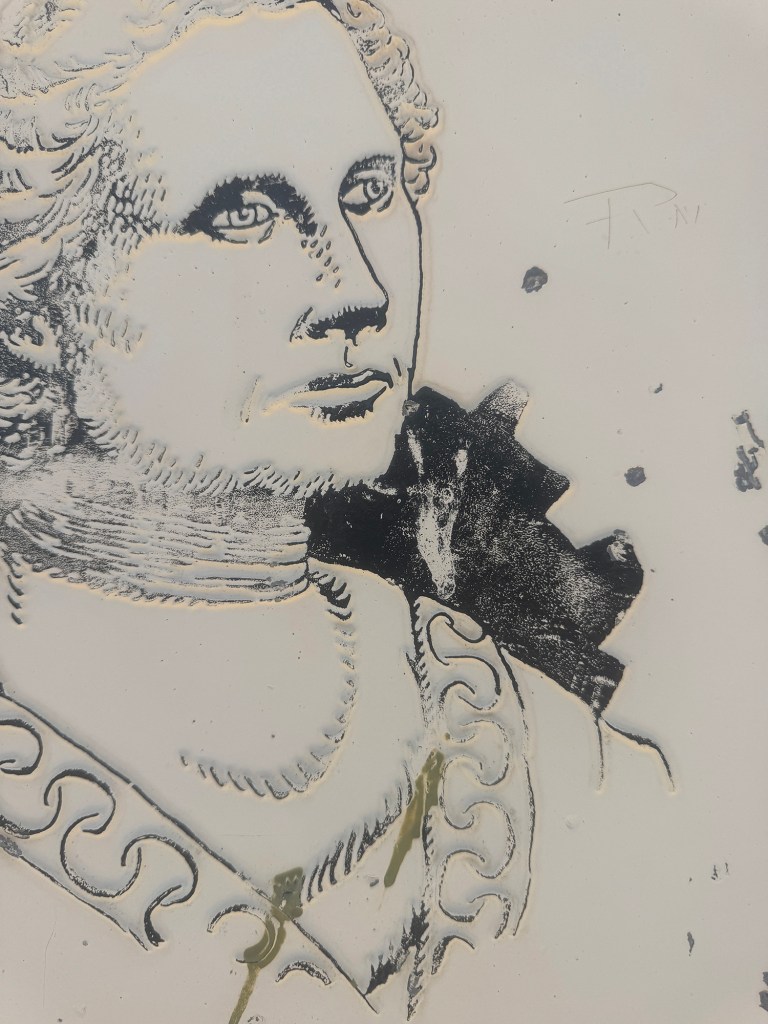
Across the street, outside the Dayton Town Hall, there’s another plaque. “Mrs. Susan Wissler, on May 9, 1911, was elected mayor of Dayton, Wyoming.”
Somehow, neither of the historic markers got the dates right. Wissler was elected mayor of Dayton on Tuesday, May 14, 1912.
Painted brilliant white against dark brown wood, the town hall sign preserves an undeniable truth: “Mrs. Wissler was truly a pioneer.”
By press time the day after Wissler’s history-making election, the gravity of the news seemed to settle across the cow town. “Mrs. Susan Wissler was Put Up by the Gentle Sex—Got Majority of Nine Votes,” Thursday’s front page read. “The women now regret they did not run a full ticket,” the story said, referring to the town’s men, who stayed home from the polls that day, apathetic or perhaps overconfident. With no printed ballots, voters wrote Wissler’s name in themselves.
The big news from Sheridan County was picked up as far away as Los Angeles and Chicago, garnering features in national publications like Good Housekeeping and Technical World Magazine.
“Giving the franchise to women in Wyoming was a very advanced movement,” Wissler told the Sheridan Press in 1934, four years before her death. “Although some thought it was a great joke, less than 50 years later it proved to be what the whole country demanded.” It would be nearly a decade after her election until the U.S. Congress ratified the 19th Amendment granting women the right to vote.
Throughout her mayoral terms, she led the installation of the city’s first waterworks, curbed gambling, regulated the once-too-lively saloons and slowed in-town automobile traffic to a 5-mile-per-hour limit. A Wyoming Eagle article announcing Wissler’s death in 1938 reported that at the time of her nomination, she was “the Dayton board of education” and taught in the log cabin school. “She was a small, heavy-set woman, widowed 15 years before and left to care for a daughter and a son in a western country where men had trouble caring for themselves,” it said.
“You bet that little woman in the dry goods store is some scrapper,” an anonymous cowboy is quoted in a July 29, 1912, Laramie Republican. “If the marshal ain’t got sand enough to back her up, she’s jest liable to grab his star and guns and go after the roughnecks herself.”
Gentle Susan sounds tough to me.
A few months after her election, Wissler told a Laramie Republican reporter, “Some of the papers said the women elected me.”
The farther through time and across America Wissler’s story traveled, the more unclear the details became. The reported number of terms she served in office and votes by which she won her election vary across regional newspapers, national publications and the National Register Nomination. There was seemingly no consensus on Dayton’s population or certainty on whether she was only Wyoming’s or all of America’s first woman mayor.
The same papers, then and decades later, listed her dead husband, her hatmaking and her build among her credentials to lead the town — details not mentioned of her opponent, four terms deep. They called her gentle in the headline announcing her history. “You know Wyoming is a man’s state,” she said, “and the men are greatly in the majority here.”
False-front architecture like that of the storefront that drew me to Wissler’s story, with its facade obscuring the true structure beneath it, is not unlike the legacy of Wyoming’s first woman mayor.
In 1934, a Sheridan Press feature of a now “kindly little gray-haired woman,” said of her run for office, “The male political leaders of the town, scurrying about for a mayoralty candidate who had a good business head on his shoulders as well as the knack of getting votes, decided they weren’t looking for a man at all.” So, was Wissler’s legacy forged by strong-minded men of the Tongue River Valley?
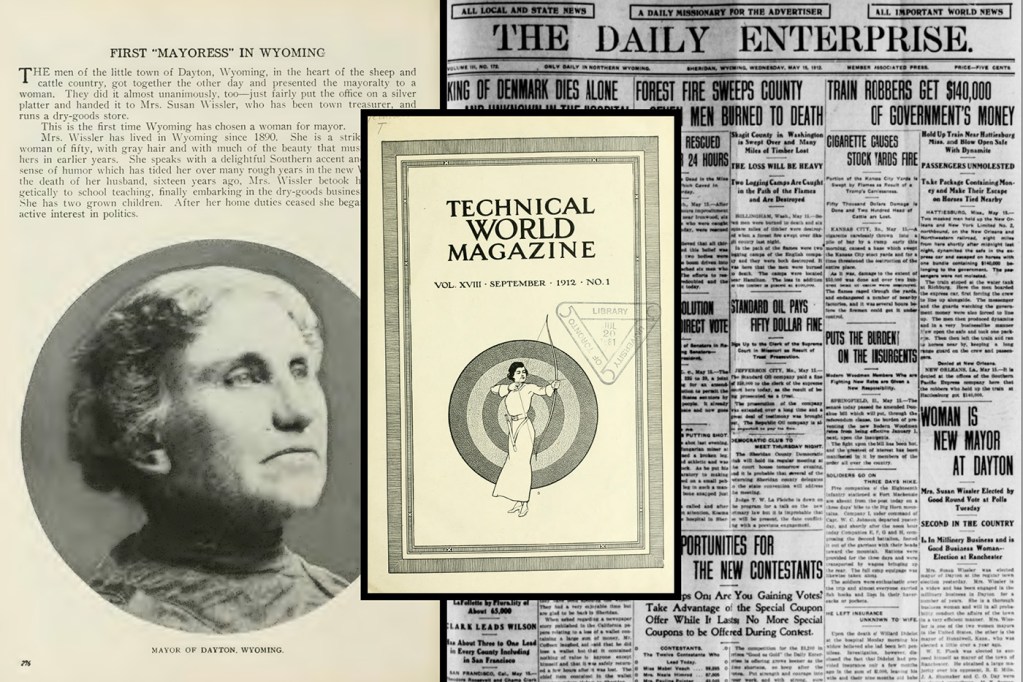
The 1912 [Sheridan] Daily Enterprise story said she was elected from a “coterie of women” — a version of this story that became widespread in further retellings. Rather, was she raised into leadership by the “gentler” sex? I can’t deny that’s a more compelling narrative, regardless of its legitimacy.
That’s the story we want so badly — today, more than ever. And perhaps, somewhere between 1911 and 1912, on Dayton’s Main Street, that story was real.
“Her election seems to have excited a great deal of curiosity at the time and she was visited by a score or more of writers,” a 1920 letter from Wissler’s daughter Brownie Wissler to University of Wyoming suffragist and scholar Grace Raymond Hebard read.
“In Dayton it was not thought of,” the letter continued. “As my mother was an old timer, one of the chief merchants and one of the large property holders. This business was all built by herself without any captal [sic] or help at any time.”
While the memory of Dayton’s quiet streets and roaring Tongue River was still clear, I began to question why this story was new to me, a born-and-raised Wyomingite working in civic spaces. I started reaching out for help — to educators, elected officials, history scholars, suffragette experts and archivists. My inquiries were almost universally met with, “Who’s that?”
“Does anyone know who Susan Wissler was?” I thought.
I’m not sure anyone knows how she got the job.
The plaque, streaked in bird poop in the shadow of her larger-than-life home, concludes, “It is appropriate that she was elected in the first state to grant equal suffrage to woman [sic].”