
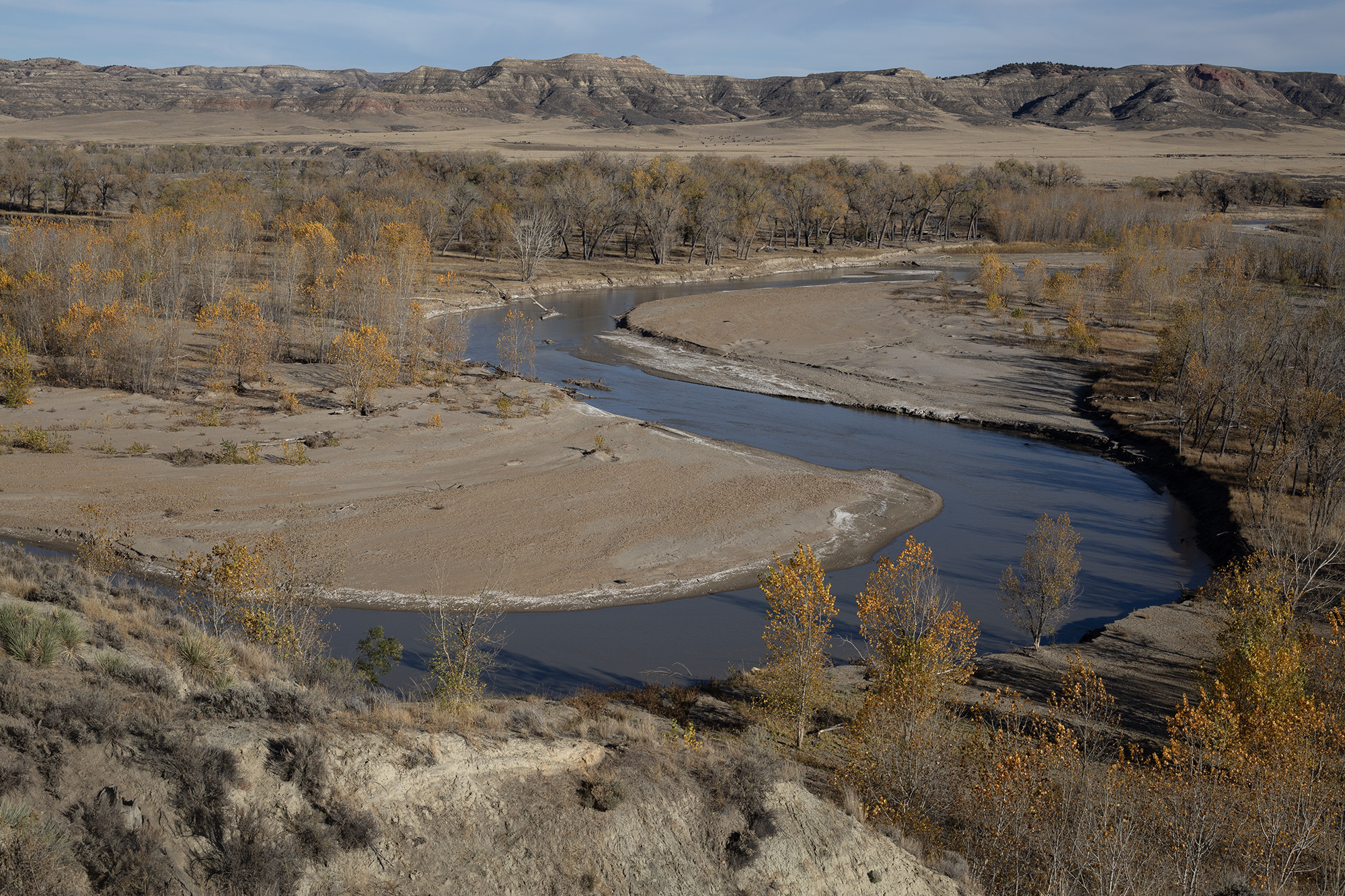

In a state with clean, cold waters that rush over boulders and through canyons, the adjectives warm, calm and muddy rarely elicit a positive reaction from anglers.
When people think about fishing in Wyoming, they imagine feisty 4- and 5-pound rainbow trout, spotted brown trout with hooked jaws or prehistoric-looking walleye and whiskered catfish. It’s unlikely that many, if any, recreational anglers have listed the orangethroat darter as their favorite fish, or the brassy minnow or striped northern plains killifish.
But maybe they should.
While none of these native fish weigh more than a few ounces or measure longer than 3 inches, their beauty and pizazz should count for something.
Hidden in the depths — or shallows — of Wyoming’s prairie streams swims a dazzling array of biodiversity that keeps the waters humming with life. And as our environment continues to warm, and creeks dry up, these lesser-known species are the ones that evolved to survive. They may prefer cold, clear water, but they hunker down in puddles that reach a trout-killing 90 degrees. Many can wait years to spawn and then lay bumper crops of eggs when conditions improve. Some males turn bright shades of turquoise and fiery orange to impress females, and others, like the hornyhead chub, build towers out of pebbles upon which females lay eggs.
Some of them are on the state’s list of species of greatest conservation need, which means they, too, could use some love as waters dry and habitat changes.
“And if the ecosystem isn’t fit for the little fish, then at some point in time it’s not fit for the fish everyone is excited about,” said Nick Hogberg, a Wyoming Game and Fish Department fisheries biologist in the Casper region. “If you don’t have water for minnows, you don’t have water for sportfish either.”
So in honor of this summer’s heat, meet a handful of Wyoming’s plains fish. Some are glacial relics. All are survivors. Consider them the understudies to Wyoming’s trophy rainbows and walleye and the indicators of the health of our waters. And next time you drive over one of these prairie streams, consider just how much life is hanging on.
Orangethroat darter
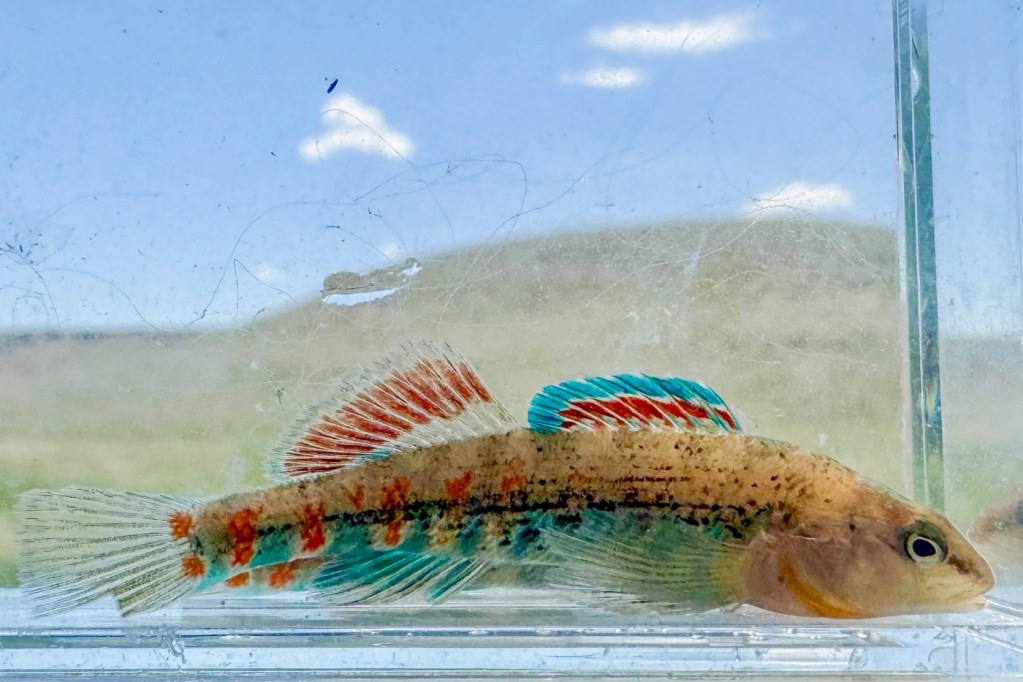
If a fish went to a rave it might dress like an orangethroat darter. The orangethroat, along with its cousins the Iowa and Johnny darters, belong to the perch family, diminutive relatives of walleye. While most anglers are familiar with yellow perch, an introduced fish to the state, some darter species like the Iowa darter have been here since the glaciers receded, said Kye Dean Catlin, a University of Wyoming graduate student studying prairie fishes and how to improve their habitat.
And when the males spawn, their colors are fit for any rock concert. The orangethroat darter has bright blue and orange striped dorsal fins with similarly colored bars running up and down its body.
They also evolved without swim bladders, which means they can stay put on the bottom of streams eating insect larvae instead of floating around in the midcurrent.
Northern plains killifish
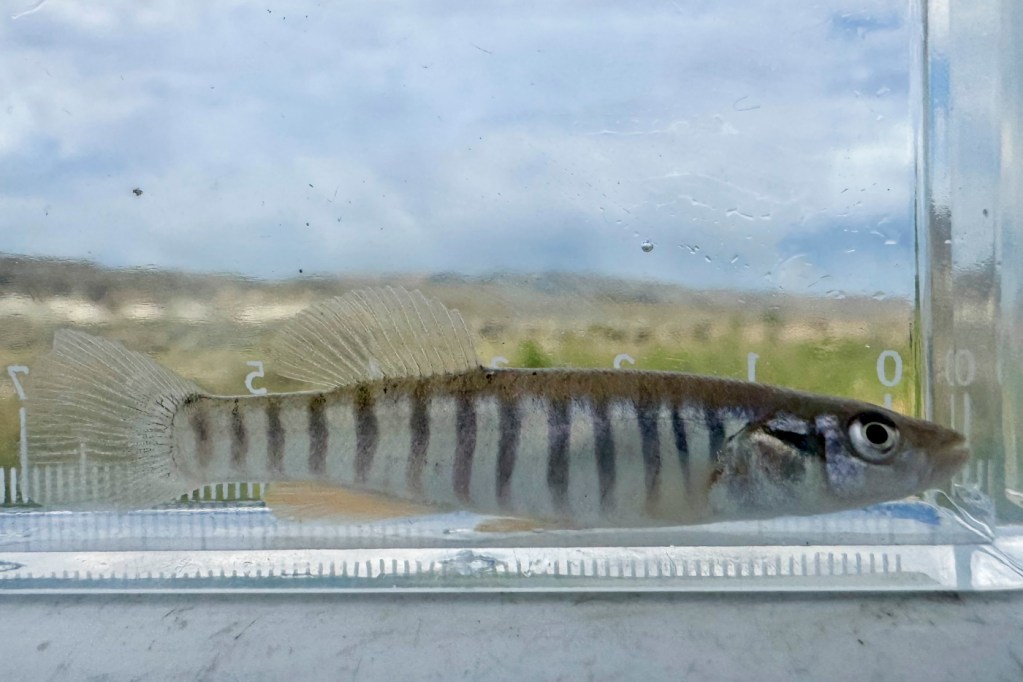
If you cross a zebra with a minnow, a categorically impossible task, you might get something like a killifish. The northern plains killifish has vertical black and white stripes that give a distinct zebra flavor.
The curious species not only lives in and can tolerate high-salinity waters like those in the slow-moving streams of eastern Wyoming, they thrive in them, said Matt Hahn, Wyoming Game and Fish’s fisheries supervisor in the Casper region. Their upturned mouths are perfectly adapted to suck oxygen from the top millimeter of water in a pond or puddle, allowing them to live in places no other fish could survive.
Sand shiner
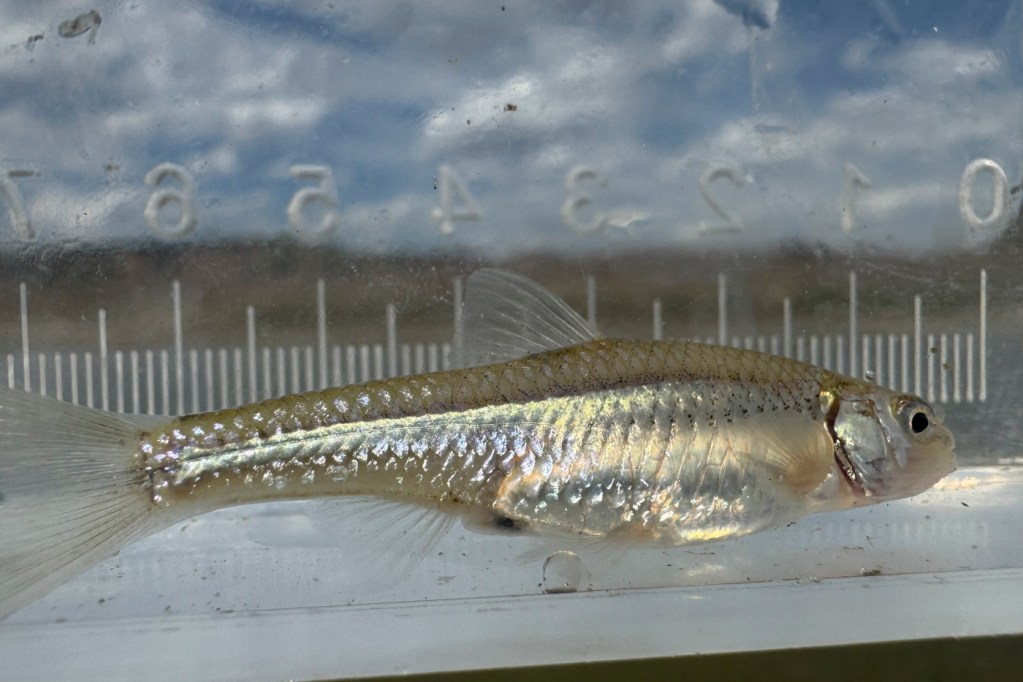
In the warm and salty Powder River lives the sand shiner. It reflects with an intoxicating silver that glints in the sun. Each scale, no larger than the tip of a pencil, is intricately lined in black.
It thrives in the Powder River alongside prehistoric shovelnose sturgeon, squishy stonecat, and behemoth channel catfish. But they’re also common across the eastern side of the state in small streams and big rivers.
“They’re doing really well even as other species struggle,” Hahn said.
Brassy minnow
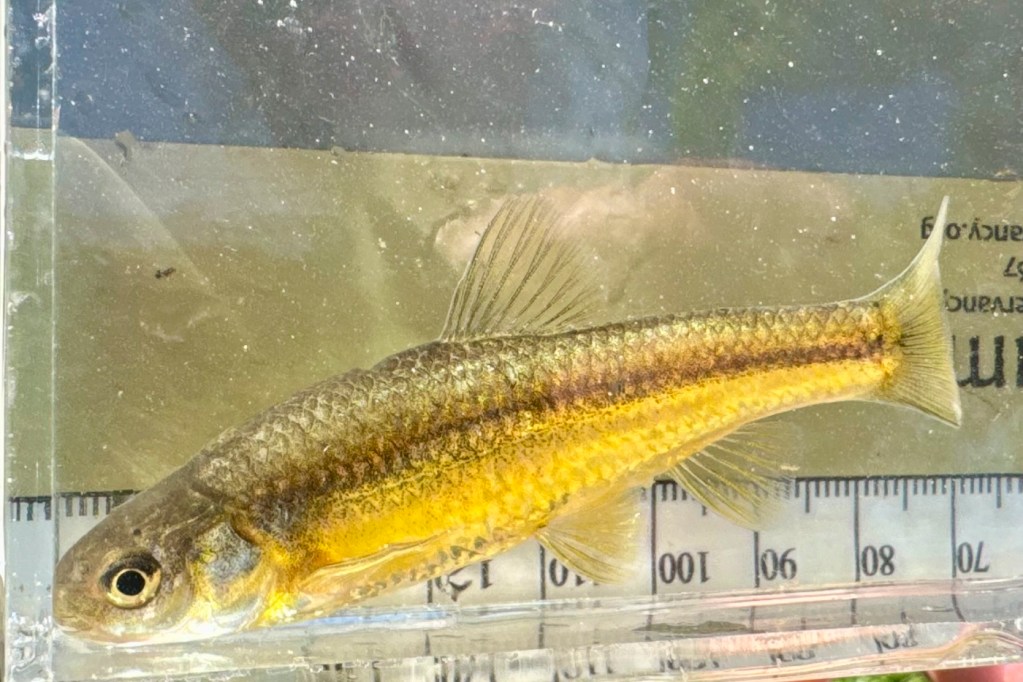
Coat a sleek little fish in 24-carat gold, throw in a few dark spots, and you have a brassy minnow.
They don’t live in many streams in Wyoming, but they can be common in the ones they still occupy, Compton said. They’re also one of those indicator species.
Brassy minnows, along with the plains and silvery minnow, swim great lengths to spawn. The females then lay eggs somewhere in the water column, which then slowly tumble and sink to the bottom where they stick ever so slightly to rocks or vegetation.
“When you find a brassy minnow in Wyoming usually it’s because you have good water quality,” said Bobby Compton, Game and Fish’s Laramie regional fisheries supervisor.
Creek chub
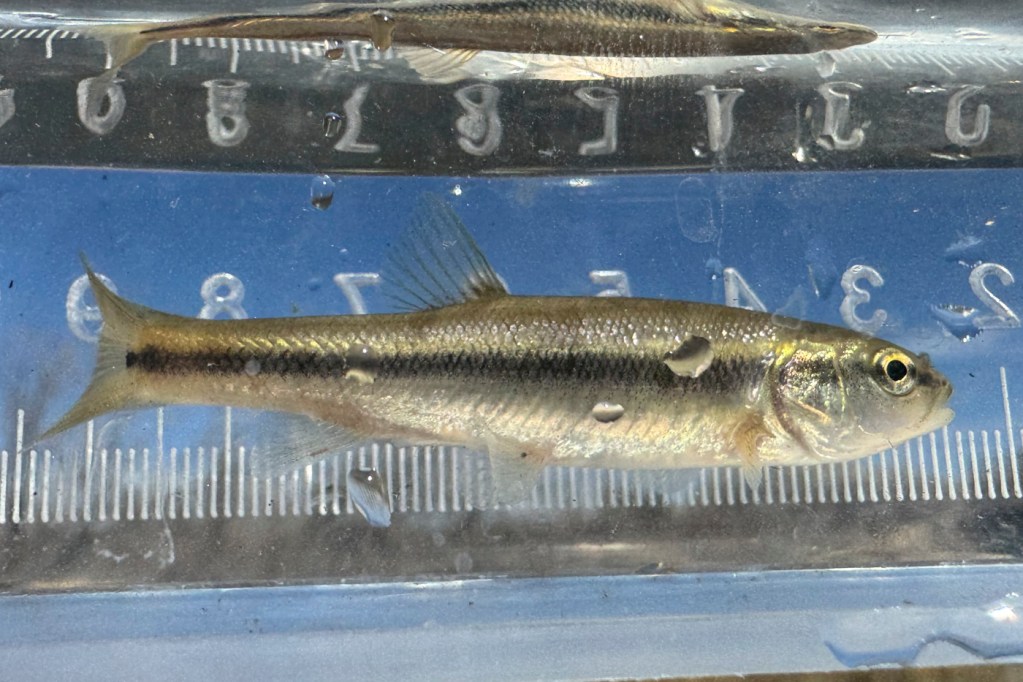
Anyone who wandered down to an eastern Wyoming creek as a child and caught a fish, likely hooked a creek chub. The species are active, abundant and willing to bite just about anything on a hook. A dark racing stripe runs down each side, and they can grow to 8 or even 10 inches long, a veritable monster among its prairie stream peers.
“They have a big mouth like a bass,” Compton said. “And they’re aggressive, the king of the creek and top predator.”
Creek chubs are not only abundant but also widespread, native to every drainage east of the Continental Divide. They deserve our respect because, if nothing else, they’re so often the fish that gives our imagination a taste of what else could live beneath the surface.
