

Overview:
This story is part of WyoFile’s collaborative legislative initiative — a coordinated effort by partner newsrooms to deliver comprehensive coverage of Wyoming’s 2025 general session.
Freedom Caucus anti-DEI bill flies through House committee
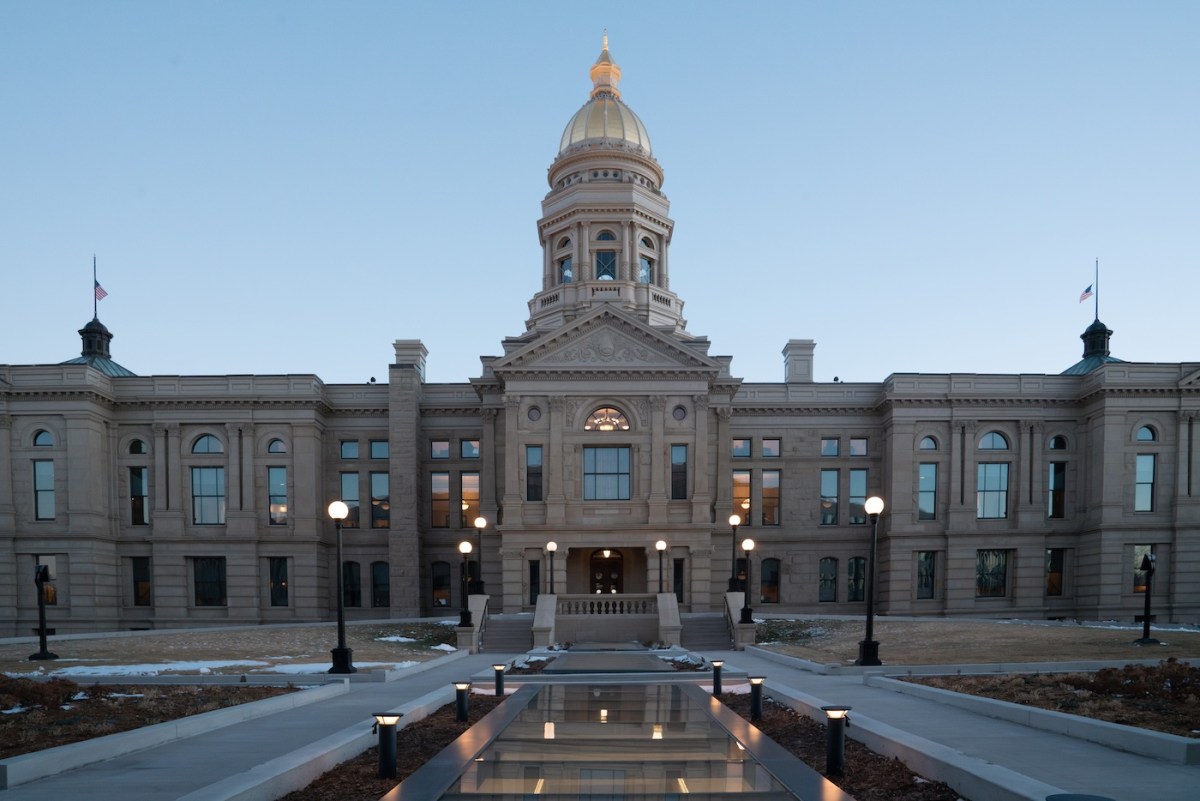
CHEYENNE—The third item of the Wyoming Freedom Caucus’ “Five and Dime Plan” is moving forward after a bill prohibiting DEI practices in state institutions passed unanimously Wednesday in the House Education Committee and on first reading in the full House on Thursday.
House Bill 147, “Prohibition of institutional discrimination,” is sponsored by Freedom Caucus Chairwoman Rachel Rodriguez-Williams, R-Cody, and, as she put it, restores the state government to a “colorblind approach.”
“The Biden administration sold DEI, known as diversity, equity and inclusion, as a benign way to address inequalities,” Rodriguez-Williams said. “But the words for which these letters stand have been twisted beyond all recognition to now mean the exact opposite of what most Americans and Wyomingites believe are meant by diversity, equity and inclusion.”
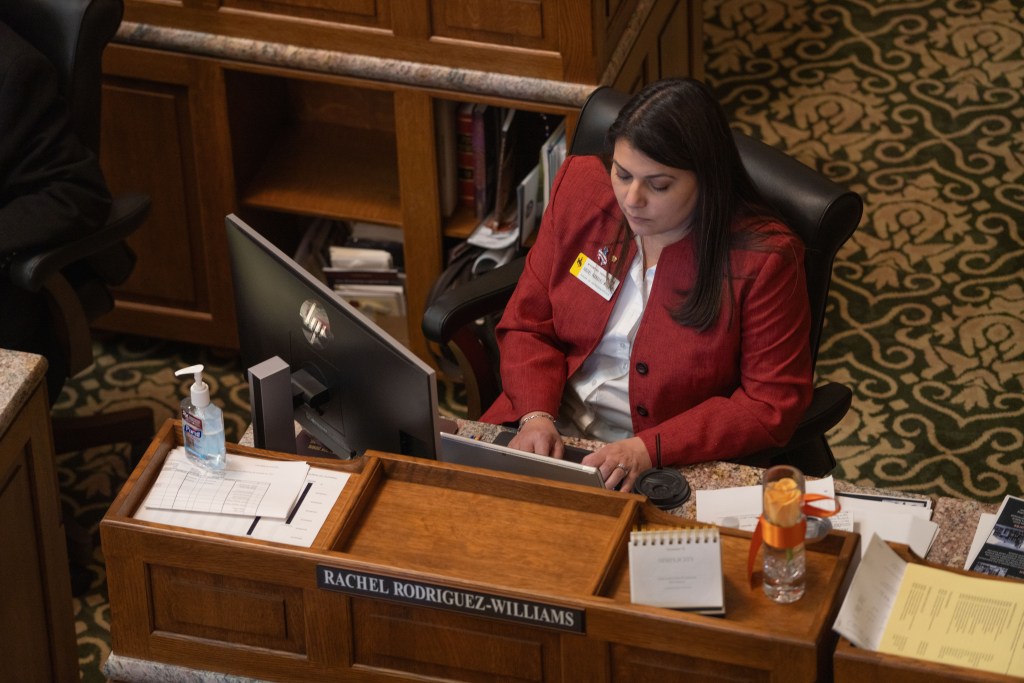
The bill defines DEI as “any program, activity or policy that promotes differential or preferential treatment of individuals or classifies individuals on the basis of race, color, religion, sex, ethnicity or national origin.” It applies to the University of Wyoming, public community colleges and school districts, as well as local governments and political subdivisions or corporations of the state.
Rep. Tom Kelly, R-Sheridan, asked the sponsor if any public schools, which are a state institution, would be prohibited from having open discussions related to institutional racism.
“As an educator myself, and a college professor, I would not want the state telling me what I can and cannot talk about in my classroom,” Kelly said.
Rodriguez-Williams answered the intent of the bill is to prevent DEI practices, not open discussions. Her goal is not to impede anyone’s free speech, she said.
In May, the UW Board of Trustees voted to eliminate the university’s DEI Office. State Superintendent of Public Instruction Megan Degenfelder, who is also a UW trustee, was instrumental in that process and is in full support of the bill, said Chief of Staff Dicky Shanor.
Public testimony from education stakeholders against the bill argued it created a “chilling effect” in the classroom. Wyoming School Boards Association Executive Director Brian Farmer said the way the bill was written, teachers wouldn’t be able to teach Supreme Court cases like Brown v. Board of Education.
Wyoming Education Association spokesman Tate Mullen told committee members the bill disproportionately impacts social studies and history teachers in public schools.
Moms for Liberty of Laramie County spokesperson Patricia McCoy said she was in support of the bill, arguing there was a way to teach slavery “without saying it was the result of white supremacy.” McCoy said children are being taught from an early age they are either oppressors or victims, based on the color of their skin.
“Rep. Daniel Singh, R-Cheyenne, successfully added an amendment to the bill to clarify that teaching about institutional racism in the public classroom would not be prohibited. Two other technical amendments, including one from Rep. Martha Lawley, R-Worland, to specify the phrase “promoting institutional discrimination,” were also successfully added to the bill.
“What is a Woman Act” passes first round in House
CHEYENNE—Wyoming representatives who opposed the “What is a Woman Act” during a floor debate Thursday argued the bill is an overreach of state government and unconstitutionally takes on the role of the court.
House Bill 32, “What is a Woman Act,” sponsored by Rep. Jayme Lien, R-Casper, passed the committee of the whole in the Legislature’s lower chamber. To move to the Senate, it must pass two more votes in the House.
The bill creates a statutory definition of “man,” “woman” and “biological sex,” and requires public schools and state agencies to “identify each person … as either male or female consistent with the person’s sex at birth.”
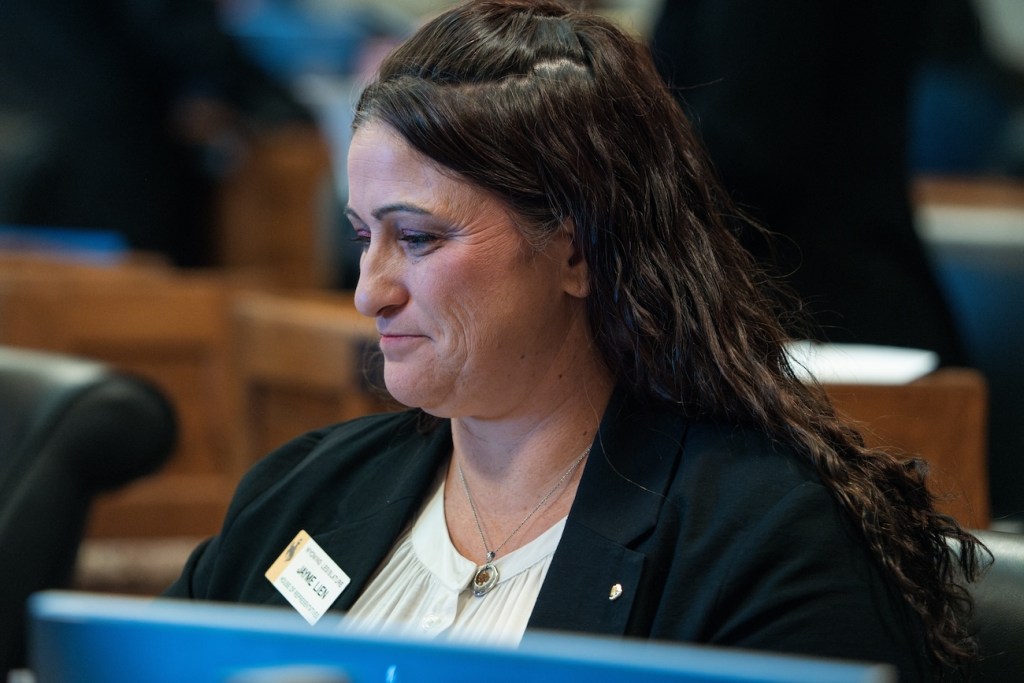
Rep. Ken Chestek, D-Laramie, said this bill attempts “to do the court’s job.” He pointed to a section in the bill where it states the Legislature finds these laws subject to intermediate constitutional scrutiny.
Levels of scrutiny are determined by the court, Chestek said, based on the justices’ interpretation of the Constitution.
“They’re trying to tell the court what the Constitution requires. That is not the job of this Legislature,” Chestek said. “When we tell the court how to do its job, we are in trouble. We are violating the principle of separation of powers.”
However, Rep. Ken Pendergraft, R-Sheridan, countered his Democratic colleague. Pendergraft said it is the job of the Legislature to clearly define the intent of its laws.
“We need to be very clear on exactly what we mean when we write law,” Pendergraft said. “When there is a cloud of confusion being strewn up about what a word means, it is appropriate for us to stand forward and clearly define precisely what we mean.”
Rep. Lloyd Larsen, R-Lander, was somewhere in the middle, but also echoed Chestek’s concerns. He agreed defining “man” and “woman” could provide some value in today’s society, but asked if the intent of the bill is to merely provide a definition.
“Is the intent of the bill purely to put a definition on what a male and a female is, or is it also to tell the courts what we think meets constitutional intermediate scrutiny?”
Other lawmakers, both Republican and Democrat, argued the bill’s mandate to “identify a person’s biological sex” was too vague and overreaching. Rep. Karlee Provenza, D-Laramie, said the bill doesn’t specify how a person’s biological sex should be identified.
The Laramie Democrat said she worried how domestic violence shelters would inspect the biological sex of victims before being admitted. Given some of these individuals are victims of rape, Provenza said they shouldn’t be forced to expose themselves under the law.
“If you do not outline exactly how this is going to be enforced, you are opening it up to everybody,” Provenza said. “And I don’t want rape victims to show up to domestic violence shelters and have to show their genitals. I don’t think I need to walk them through why that’s so traumatic.”
Rep. Elissa Campbell, R-Casper, echoed a similar concern. She said the bill did more than provide definitions – it’s a “call to action.”

“What terrifies me the most is we talk about government overreach, and we talk about protecting the rights and freedoms,” Campbell said. “This bill, to me, screams, ‘We are taking rights, liberties, freedoms from individuals, and giving that authority to the state.’”
However, several Republican lawmakers spoke in support of the bill, arguing there is a need to put these definitions into law. Wyoming Freedom Caucus Chairwoman Rep. Rachel Rodriguez-Williams, R-Cody, was among those who argued in favor of the bill.
“The courts need a little help,” Rodriguez-Williams said. “It’s time to stand up for real women.”
Correction: The section of the story about an anti-DEI bill making its way through the House of Representatives contained an error. Rep. Daniel Singh’s amendment was to clarify that teaching about institutional racism would not be prohibited. The original version said “would be prohibited.” The WTE regrets the error. —Ed.
Will the (anti) Freedom Caucus bill require appropriate armbands as attire? Separate septic systems? Will Moms for Liberty (and Degenfelder) define appropriate attire? Will jackboots be exempted? Will the detention camps and crematoria be built on federal or state land? Will cross burning still be allowed during high fire danger periods? So much to do. So many questions. So little time.
Montana Legislature is also addressing this pseudo-problem. The bill allows women called to jury duty (and required to stay until excused) to sue the County if a man uses the women’s bathroom.
If this bill passes, every woman in Wyoming will have to ask herself, “how long before I’m expected to expose myself to prove I’m a woman?”
And do you think men will be expected to offer similar proof?? Don’t hold your breath.
Standing up for real women or men is taking the “person” out of the equation. The Equality State lost it’s reputation on a buck and pole fence hopefully this session will not further tarnish our motto “Equal Rights”
Imagine.
Peace all.