


This story is part of WyoFile’s collaborative legislative initiative — a coordinated effort by partner newsrooms to deliver comprehensive coverage of Wyoming’s 2025 general session.
CHEYENNE—A push to change Wyoming’s property tax system could force the Wyoming Board of Equalization to sue the Wyoming Legislature.
In his last four years in the Legislature, former Sheridan Rep. Mark Jennings pushed for a switch to acquisition-based — rather than valuation-based — residential property taxes. Only one bill — ordering a study to determine the change’s viability — succeeded.
That study, which was completed ahead of the 2024 budget session, indicated the state did not have the necessary legal framework to adopt an acquisition-based residential property tax system. According to the study, completed by Florida-based TEAM Consulting, the necessary building blocks to implement the system included constitutional amendments, additional staff, revised statutes and administrative rules, among others.
With Jennings no longer in the Legislature, Rep. Tony Locke, R-Casper, brought a bill to move Wyoming to an acquisition-based residential property tax system. The idea closely resembles California’s Proposition 13, which the state’s voters approved in 1978.

The House Revenue Committee reviewed House Bill 282, “Property tax-acquisition value,” during its meeting Thursday. The bill, should it become law, would be established in three steps.
The first would roll properties acquired before 2020 back to a base of their fair market value from Jan. 1, 2019.
By resetting values to 2019 for longer-term property owners, Locke said the bill would help avoid a spike in Wyomingites’ property tax bills.
“At this point, we’re just looking to roll back, trying to get to a better baseline that is, in my opinion, getting people close to a value that makes sense,” Locke said.
The second would apply to residential properties acquired between Jan. 1, 2020 and Dec. 31, 2025, giving them a base of the property’s fair market value from Jan. 1 in the year it was purchased.
The third would roll out acquisition-based residential property tax beginning Jan. 1, 2026. Properties purchased on or after that date would be subject to property taxes based on the acquisition price.
Base year values would increase each year by either 2% or the consumer price index, whichever is less.
‘On its face, unconstitutional’
Marty Hardsocg, chairman of the Wyoming Board of Equalization, noted the bill has two issues. For one, the bill instructs the board not to fulfill part of its obligation to ensure all properties in the state are taxed based on the fair market value. The board’s responsibilities are laid out in the Wyoming Constitution.
“This bill is, on its face, unconstitutional,” Hardsocg said. “That means day one if it’s enacted, the Board of Equalization, assuming the governor would allow it to, would literally have to sue the state Legislature to challenge this bill.”
The second problem, Hardsocg said, is the bill is contradictory to the definition of fair market value.
“The notion that you can simply say full value now equals whatever the purchaser paid for the property and escalate it each year is absolutely contrary to the notion of market value [and] full value,” Hardsocg said.
Should the bill become law, Hardsocg ultimately said the Board of Equalization, another entity or private citizens would “have to pursue litigation” due to its unconstitutionality and its non-uniform application.
Legislative support
Jennings and former Newcastle Rep. Allen Slagle spoke in favor of the bill during public testimony.
Save for coughs, pages turning and Rep. Clarence Styvar, R-Cheyenne, rattling off page numbers and requesting amendments as he went, the meeting room fell silent after the committee closed public comment.
Lawmakers then shared their thoughts on the bill after Styvar’s request for amendments was met with indifference.
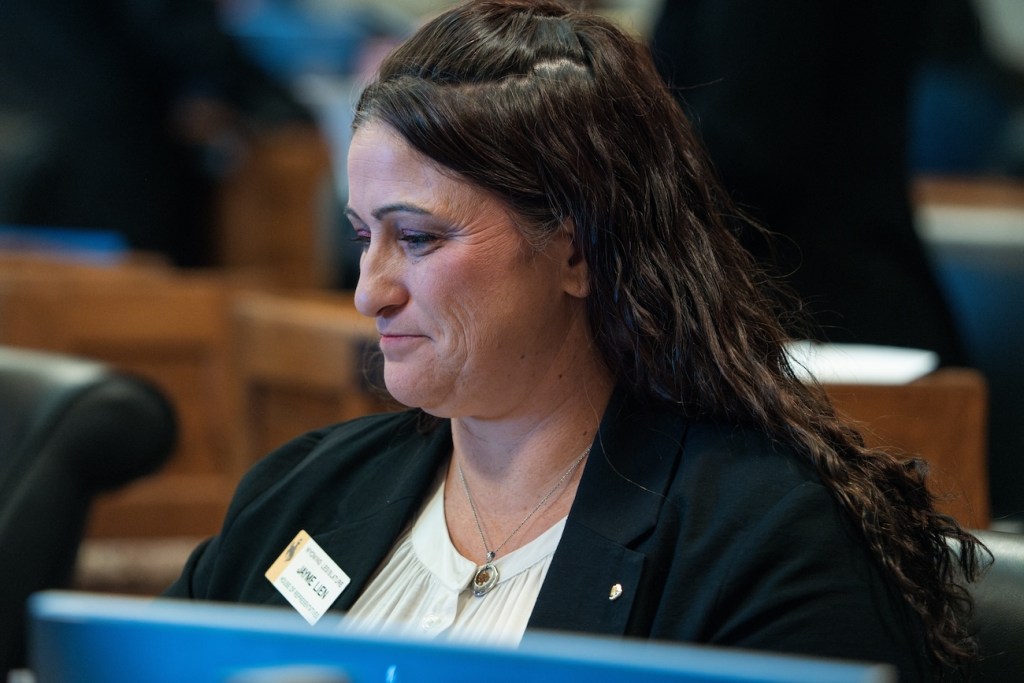
Rep. Jayme Lien, R-Casper, said many of her constituents would support an acquisition-based residential property tax system.
“Many of them would like to go back to what they bought their homes for, and while I understand that that may not be an obtainable goal at this moment, I think this is a great start and a great step in the right direction,” Lien said.
Rep. Liz Storer, D-Jackson, said the state is already capable of offering property tax relief to those who need it in the form of its refund program and considering policy related to voters’ decision to create a separate class for residential property tax.
“If our goal is to bankrupt local communities, cost schools millions of dollars, invite litigation [and] increase our reliance on the fossil fuel industry in order to give wealthy second homeowners the biggest tax breaks in the state … then this bill is clearly the ticket,” Storer said.
Despite those concerns and questions about the bill’s constitutionality, the committee voted 6-2 to send it to the floor; Storer and Rep. Kevin Campbell, R-Glenrock, were the two dissenting votes.

It’s amazing how a bunch that swore on the constitution to uphold their belief in a bible have no respect for either.