



Wyoming will invalidate the driver’s licenses that some states issue to undocumented immigrants under a new law that Gov. Mark Godon acknowledged has thrust the Equality State into uncharted waters.
Gordon on Friday allowed the legislation to become law without his signature. Like state senators, who passed the bill to express their antipathy toward illegal immigration despite noting that it might carry negative consequences for the state, Gordon figuratively held his nose while letting the measure cross his desk.
“Because of the value of asserting Wyoming’s position on illegal presence, I am allowing this bill to go into law without my signature,” Gordon wrote.
House Bill 116, “Driver’s Licenses – unauthorized alien restrictions,” will likely invalidate driver’s licenses from as many as 21 states — lawmakers had previously estimated there were 19 states, but a spokesperson for the governor’s office said state agencies were reviewing a list of 21 states maintained by the National Conference of State Legislatures. In those 21 states, lawmakers have chosen to provide driver’s licenses to people in the country illegally in an effort to promote public safety and decrease the number of uninsured drivers on the roads.
Florida appears to be the only other state to similarly attempt to regulate the driver’s licenses of other states. But that state’s legislation was more narrow in its application. Florida lawmakers banned only driver’s licenses that are issued “exclusively” to unauthorized immigrants. That restriction ultimately resulted in the state voiding driver’s licenses from only two states, Delaware and Connecticut.
Some undocumented immigrants living and working in Wyoming carry driver’s licenses issued by other states. If they’re stopped by law enforcement and their license is identified as invalidated under the new law, they’ll face a misdemeanor charge that carries a $750 fine or up to six months in prison — the same penalty that exists for driving on a suspended license.
There’s no data on how many undocumented immigrants in Wyoming use valid driver’s licenses from other states, and it’s unclear how invalidating them might impact the state’s workforce.
Law enforcement chiefs have previously told WyoFile that driving with an invalid license is likely not by itself an offense that would lead officers to detain someone and take them to jail — which could ultimately land undocumented immigrants in federal custody by U.S. Immigration and Customs Enforcement. Detention is more likely if the officer suspects the driver of some greater illegal act, such as driving under the influence.
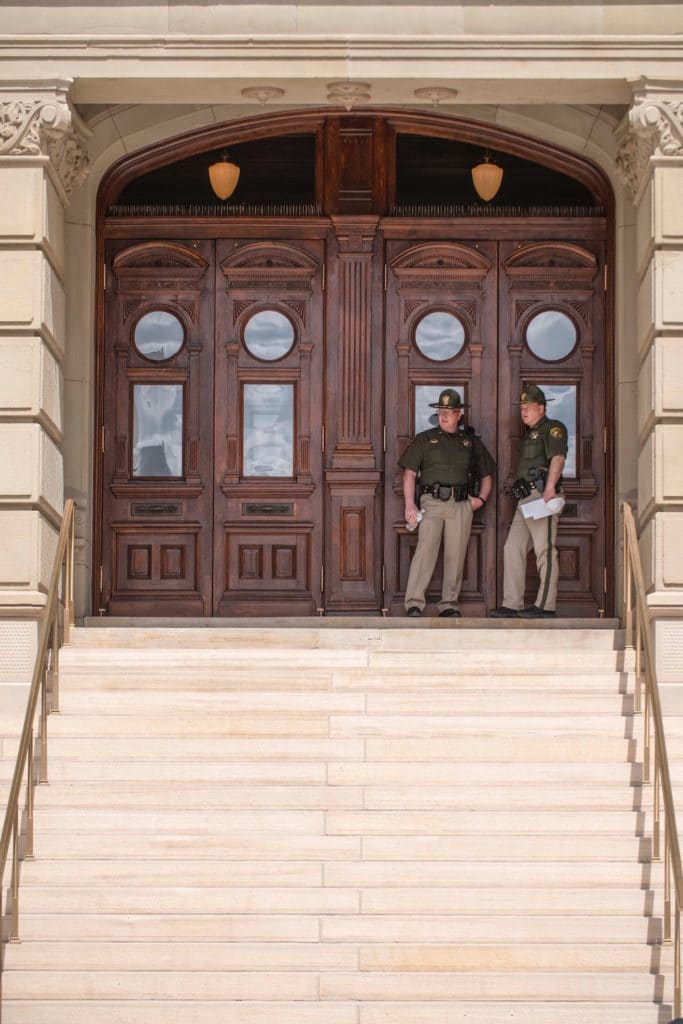
Wyoming Highway Patrol officers will have the discretion to issue a citation or a warning, Lt. Col. Karl Germain, who tracked the bill for the agency, told WyoFile on Monday. “We’re not going to impound their vehicle and we’re not going to detain them,” he said of drivers with invalidated licenses, unless they have outstanding warrants or there’s suspicion of a more severe crime.
But people would likely not be able to drive on if discovered to be illegally in the country, Germain said — whether that unlawful presence is due to sneaking over the border or overstaying a work visa. Such drivers would have to find an alternative driver to operate their vehicle.
Except for Delaware and Connecticut, it appears most states that issue the licenses in question give them both to people who have legal status in the country — such as a student visa — and those who don’t. Markings on the license indicate it’s not valid for federal purposes like voting, but don’t say what type of documentation or lack thereof the carrier has to be in the country. Once Wyoming’s bill takes effect in July, law enforcement will likely have to check the immigration status of people pulled over with those licenses.
As such, Gordon, in his letter, said it was an open question whether the bill could place a level of immigration enforcement on the backs of Wyoming law enforcement. “It is not immediately clear whether [the bill] places Wyoming law enforcement in an exposed role that is much more suited for the resources, training and system of the U.S. Immigration and Customs Enforcement,” he wrote.
“While law enforcement have access to ICE,” he continued, “the time for ICE to respond to our law enforcement may be minutes, hours, or even days. My hope is that Wyoming law enforcement resources are used to assist in illegal presence operations but not take lead in determining one’s status through credentials both issued and dictated by other states’ laws.”
Like some lawmakers, Gordon also worried about Wyoming’s status in interstate compacts that regulate driver’s licenses and the sharing of driving record data. The Non-Resident Violators Compact that Wyoming has belonged to since 1987 could conflict with the new law, Gordon wrote. The compact allows Wyoming law enforcement to issue citations to drivers from other states and then permit the driver to continue on their travels, knowing the driver’s home state will enforce Wyoming’s citation so that the driver pays any fines or returns for court.
“Being able to work together with our fellow states is imperative for the safety of all those on the road,” Gordon wrote. “This law could impact Wyoming’s ability to work with other states in this fashion.”
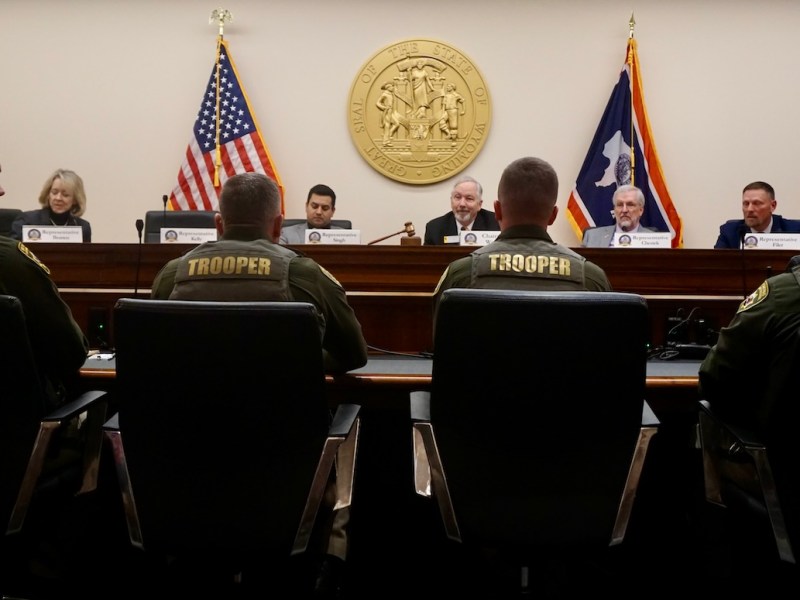
Col. Tim Cameron, the Wyoming Highway Patrol’s director, told WyoFile the compacts were important to his agency’s ability to enforce public safety on the roadways. “I certainly hope this doesn’t compromise that,” Cameron said.
Some senators also feared the new law will lead to more uninsured drivers on the state’s roads, since companies who insure someone with one of the impacted licenses may try to claim they weren’t liable for an accident in Wyoming.
But, as Gordon noted in his letter, the Legislature has been determined to participate in President Donald Trump’s effort to increase deportations. “Wyoming is united in our determination to secure our borders and protect both the United States and Wyoming from the nefarious actions of people who are in our country illegally,” he wrote at the start of his letter.
The bill drew opposition from Wyoming residents who are themselves undocumented or who belong to families with mixed status — where some people have a legal status and others do not. Those immigrants, and advocates who speak for them, have argued that lawmakers are unaware of both the extent of undocumented labor in the state’s workforce and the challenges of achieving legal residency status.
“Lawmakers shouldn’t be passing laws when they don’t know what they do,” Antonio Serrano, advocacy director for the American Civil Liberties Union of Wyoming, previously told WyoFile.
“These are people who have been parts of the community, this has just been their normal life and all of a sudden it’s just taken away from them,” Serrano said of people working in the state who may use the impacted driver’s licenses from other states. “Going to work just got a lot harder,” he said.
Have the authorities go to the Amazon Hub in Casper at 11am, they all have temp driver’s license from Colorado. Also, the spark delivery drivers for Walmart, majority are illegals. Good luck!!!
Keep Wyoming great by keeping border hoppers out.
I asked AI why Colorado issues licenses to people who are not in the US legally. This was it’s response: AI Overview
Colorado issues driver’s licenses to undocumented immigrants under the Colorado Road and Community Safety Act (CO-RCSA SB251) to ensure road safety, promote economic mobility, and allow individuals to participate fully in the state’s economy.
Here’s a more detailed explanation:
Road Safety:
Supporters argue that licensing undocumented immigrants, who may already be driving, helps ensure they are trained, tested, and insured, leading to safer roads for everyone.
Economic Benefits:
A driver’s license provides access to employment opportunities, allowing individuals to seek jobs further from home and potentially earn more.
Community Participation:
Having a driver’s license allows individuals to participate more fully in their communities, including running errands, accessing services, and visiting family and friends.
Economic Impact:
The Colorado Fiscal Institute estimates that allowing undocumented immigrants to obtain licenses leads to increased revenue for automobile insurance companies and car registration, as well as potential savings on insurance premiums for all Coloradans.
Legal Basis:
The CO-RCSA SB251, passed in 2013, allows all Coloradans, regardless of immigration status, to obtain a standard driver’s license or ID card if they meet specific requirements, including proof of identity and Colorado residency.
Not a path to citizenship:
It is important to note that these licenses are not REAL ID compliant and cannot be used for federal purposes, voting, or obtaining public benefits.
Based on that, it is actually public safety measure to issue licenses to undocumented people, because they are driving on the roads–and working in Wyoming. And in order for their vehicles to be licensed in the state, they must prove they have our minimum insurance requirements. Colorado did the right thing by issuing licenses to undocumented people to ensure that they could pass a drivers test and if they have a licensed vehicle, they have insurance.
Stop the Hate Wyoming. Remember good ole’ Wyoming Common Sense?
Colorado is the Rocky Mountain’s California.
Thank you Wyoming Legislature for doing the right thing. Being here illegally, undocumented, is breaking the law. If they are here with a “mixed” family then become a citizen the legal way. I’m tired of the entitlement establishment.
Good.
If they are stopping an illegal then they should be detained and turned over to ICE. Who cares about their license.
Huge win here for WY. This will definitely affect maybe 10 people.
China and Canada just announced up to 25% tariffs on goods that will directly affect WY’s economy and make life more expensive for our residents, however, our toilets are safe from trans-ghosts and our highways are now safe from… drivers. The world laughs.