

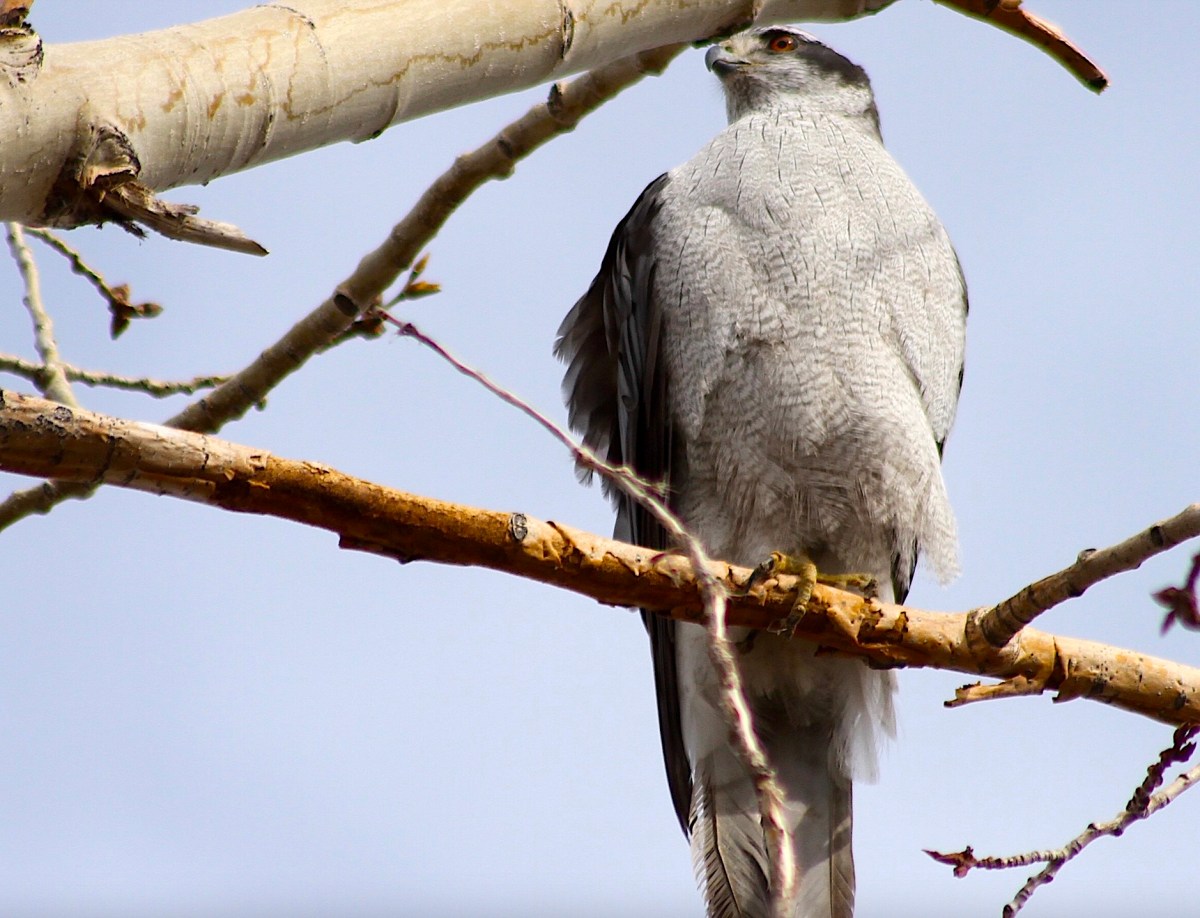
Bryan Bedrosian’s best guess is that the bird was out on the hunt.
One thing for certain is that the northern goshawk, perched in a Pinedale aspen, wasn’t in its standard habitat. Goshawks, the largest of North America’s three accipiters — acrobatic bird-eating specialists — typically dwell in the forest. Yet this hawk, an adult male based on its pale plumage and thin vertical chest stripes, was in a town surrounded by the sagebrush-dominated high desert.
Bedrosian, an avian biologist who works as the Teton Raptor Center’s conservation director, has seen this behavior before.
“We had 16 goshawks with transmitters here in [Jackson Hole] over the years,” he said. “The bird that was nesting up near Snow King, that bird hung out in town a lot foraging. I suspect collared doves, the more urban birds it was picking off.”
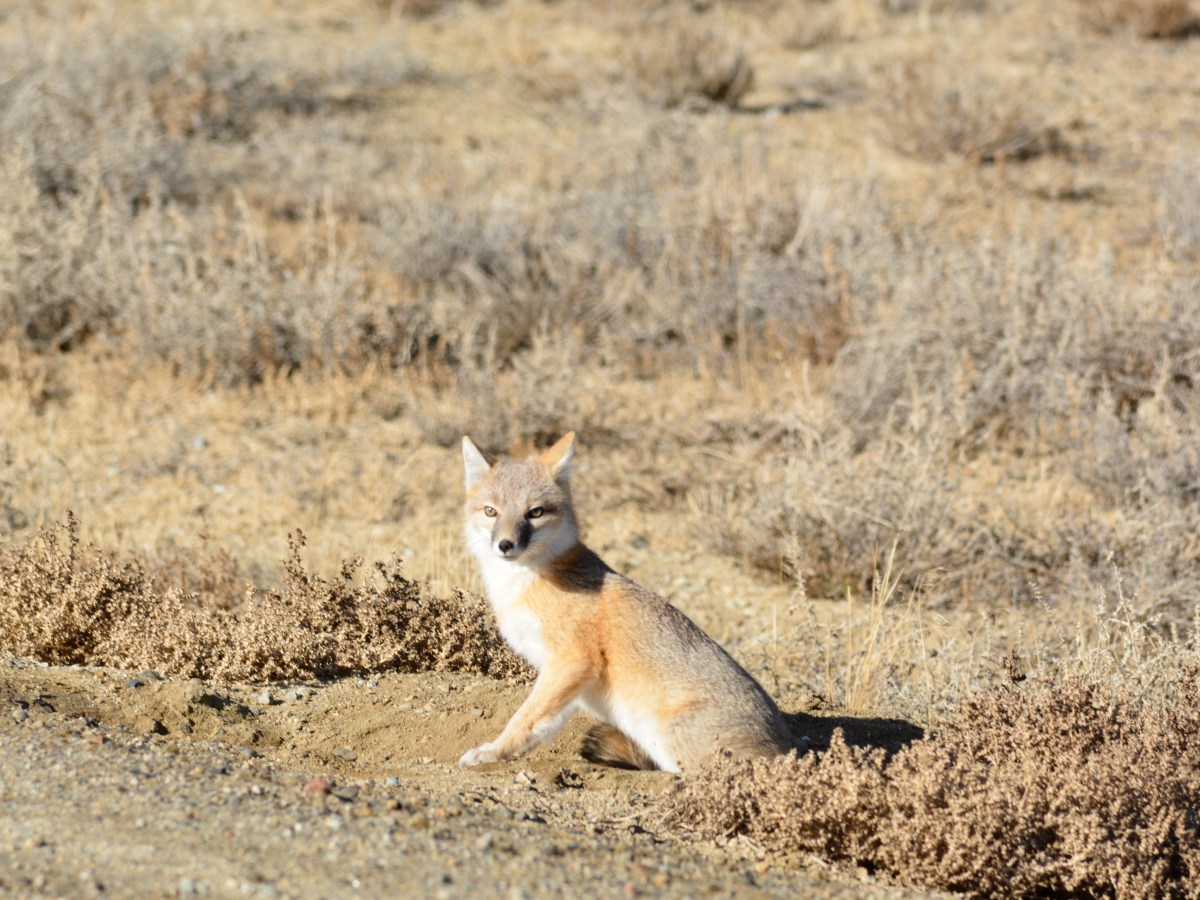
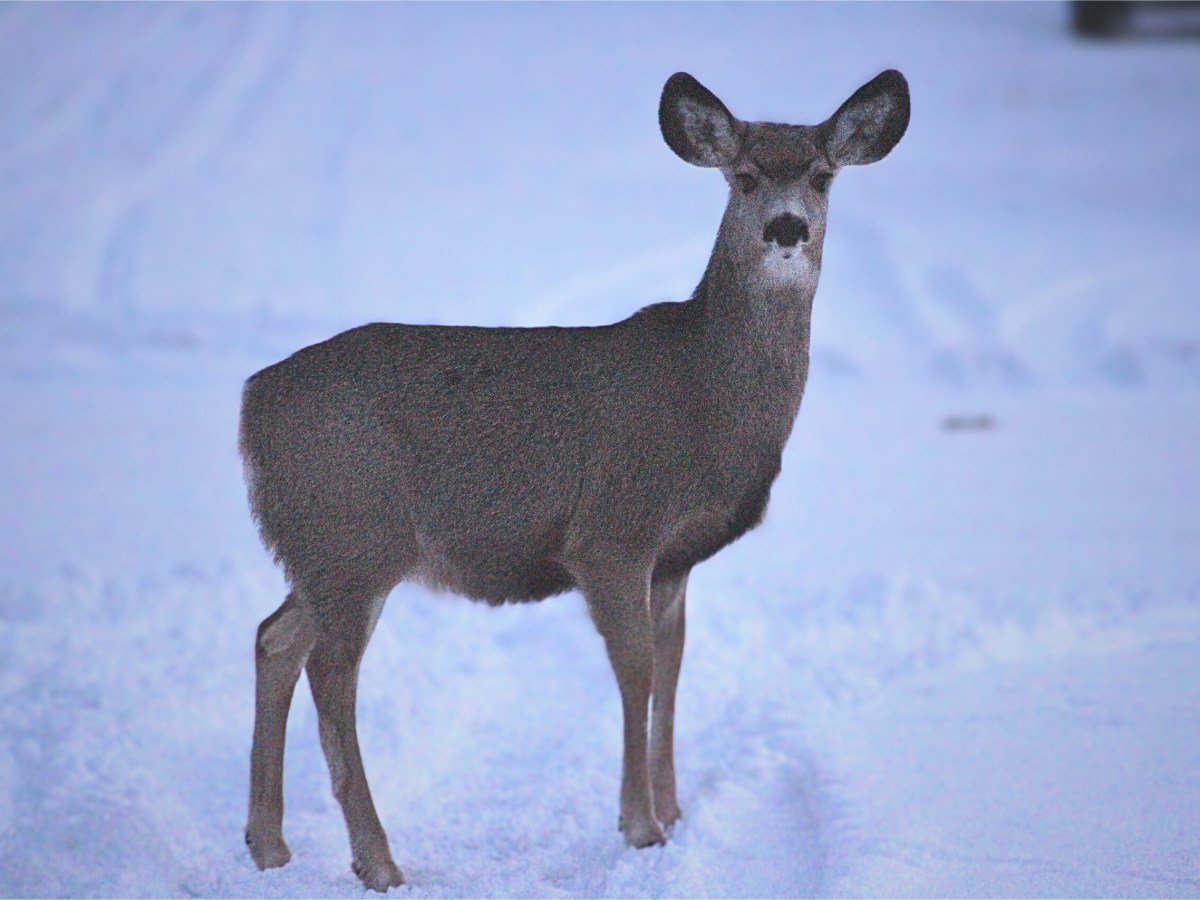
The male goshawk in Pinedale was probably doing the same, Bedrosian said. Females tend to stick tighter to nest sites in treed areas, but males will roam much wider in search of a feathered or furred meal.
And for goshawks, coming out of the forested mountains down into the sagebrush sea wouldn’t be completely unheard of. The Wyoming Game and Fish Department, which classifies goshawks as a “species of greatest conservation need,” reports that in winter the accipiters are known to use “non-forested, open habitats such as shrublands.”
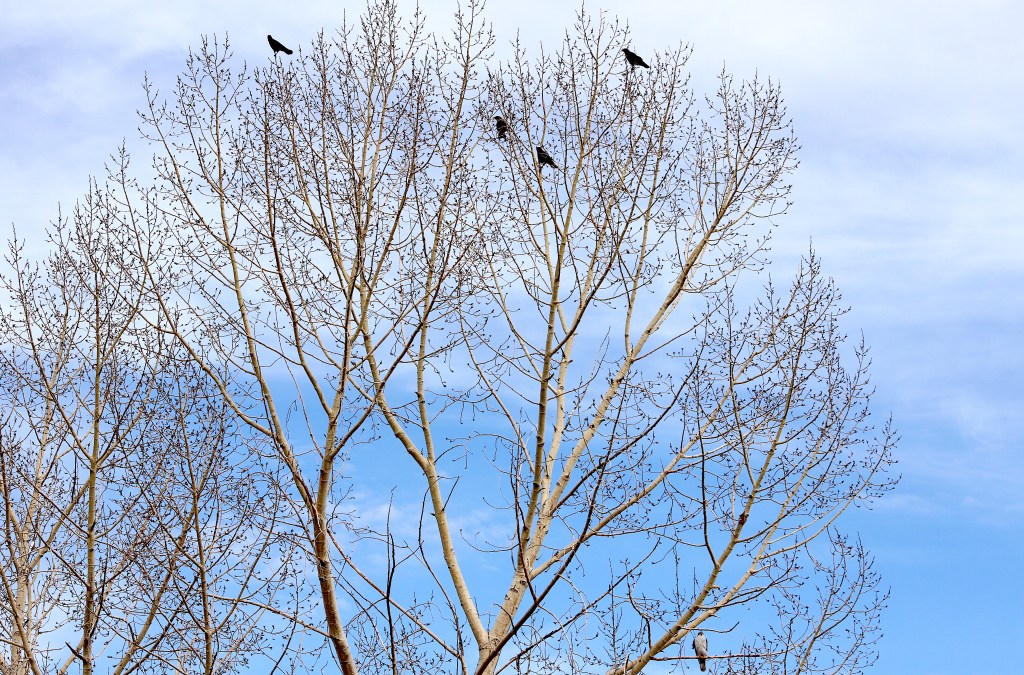
Although he may have been hunting, no birds were harmed during the half hour or so the goshawk perched in a backyard aspen tree on the afternoon of April 7. A handful of crows hung tight most of that time, “mobbing” the raptor with little effect.
When goshawks do decide to strike, it’s a sight to be seen — the nickname “flying mountain lion” has even been thrown around. Goshawks primarily prey on grouse and squirrels, Bedrosian said. They’re territorial, aggressive and even known to give unsuspecting humans a love tap with their talons.
“I’ve gotten tagged,” Bedrosian said. “Climbing up a nest tree, getting hit by the female and drawing blood on the back of my head.”

I love raptors. There’s a pair of eagles building a nest in a park 6 miles from my house.
The osprey is my favorite though. I love to see them dive feet first into the water.
I saw a similar bird in Sacramento, CA, in a tree frequented by hummingbirds. I took a picture and it appears to have the chest stripes of a goshawk but I don’t know how to upload it.
The claim that America has only three Accipiter is false. All hawks are of this genus. And they eat a much broader menu, not just fish. Maybe we have three fish-eaters – the Osprey is another – but we have a lot more species of hawk.
In Britain, they’re known as “The hardman of the Hawk World’. Can be aggressive towards humans but are also used in Germany for hunting corvids.
Good artical
The species is no longer an accipiter and is no longer called a Northern Goshawk. It is now a member of the astur genus and is known as the American Goshawk.
As a retired master falconer, I have trained these beautiful birds.I have hunted pheasants and quail.They are by far the best hunters of all birds of prey. They fear nothing.
Lovely bird.
So wish I could see these beauties in strike mode! Or any mode for that matter! Thanks for sharing the story and keep up the truly good work!
Excellent and informative story.
What an interesting article! If only the people who are vying for power today would simply sit back and appreciate all the things you observe and write about, we would have a much calmer, happier world for everyone (except the power-seeking billionaires and would-be dictators, of course).