


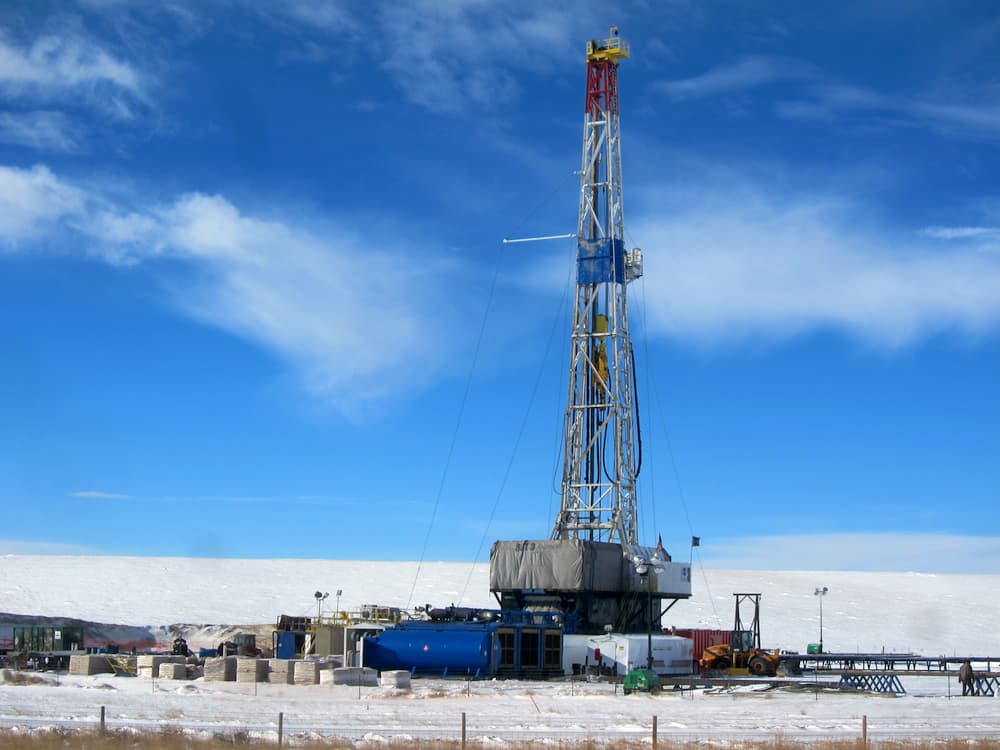
Millions of dollars are at stake for oil and gas producing counties in a case before the Wyoming Supreme Court to decide whether a sales tax exemption applies to companies that used electricity to move their products from wellheads to a point of sale.
The Department of Revenue is asking the Wyoming Supreme Court to overturn a 2024 State Board of Equalization ruling in favor of Merit Energy Company, which says it is entitled to a $3 million sales tax refund — in addition to earlier refunds — for the electrical power it purchased from 2020 through 2023 to transport oil and gas via pipeline.
Entangled in the lawsuit is electrical provider PacifiCorp, which seeks to collect the refund on Merit’s behalf. If the court sides with PacifiCorp and Merit, it could financially burden local governments that have received sales tax revenues based on the Department of Revenue’s interpretation of the sales tax exemption.
Park County officials, for example, said last year they were stunned to learn that local governments there might have to repay about $743,000, the Powell Tribune reported.
If Merit wins, other oil and gas companies will likely file for similar refunds, resulting in revenue “clawbacks” to the tune of “millions of dollars, but not tens of millions,” impacting most counties where there’s oil and gas production, according to a Department of Revenue official.
No matter which way the court rules, Merit’s view of the sales tax exemption will be enshrined in state statute, beginning July 1. House Bill 311, “Exemption for transported fuel and power sales-amendments,” passed earlier this year, clarifies that such utility expenses qualify.
‘Transportation’ or ‘gathering’?
The soon-to-be-outdated state sales tax exemption in question before the court applies to “Sales of power or fuel to a person transporting tangible personal property by railroad or by pipeline when the power or fuel is consumed directly in generating motive power for actual transportation purposes.”
The case hinges on whether or not Merit — and presumably other oil and gas producers in the state — qualify as a “transportation” company when it comes to moving their products to purchase points in the pipeline network.
Merit, one of the top oil and gas producers in the state, says the Department of Revenue has waffled on the classification, arguing on some occasions that oil and gas producers are in the business of transporting goods while also arguing they are not primarily transportation companies.


“Merit is in the oil and gas transportation business,” Merit attorneys wrote in a brief filed with the court on Monday. “It gets paid to transport other entities’ oil from wellheads to a point of sale. Merit is thus no different than an interstate trucking company or a railroad, except that instead of using trucks and roads or locomotives and rails, Merit uses submersible electric pumps and pipelines.”
The Department of Revenue, in a March brief, noted that Board of Equalization Vice-Chairman Martin L. Hardsocg dissented in the board’s ruling. Rather than transporting, according to Hardsocg’s dissent, Merit is in the business of “gathering” petrol commodities, which is more closely tied to production.
“Because Merit’s primary function is to operate various units and produce and sell oil and gas, including moving oil through a gathering system, it does not meet the statutory requirements for the exemption because it is not in the business of transporting oil through a pipeline,” according to the department’s brief.
No hearing dates have been set in the case initiated in January.


Interesting insights on the tax dispute affecting Wyoming counties. Do you think this ruling will significantly change local government budgets in the near future?