

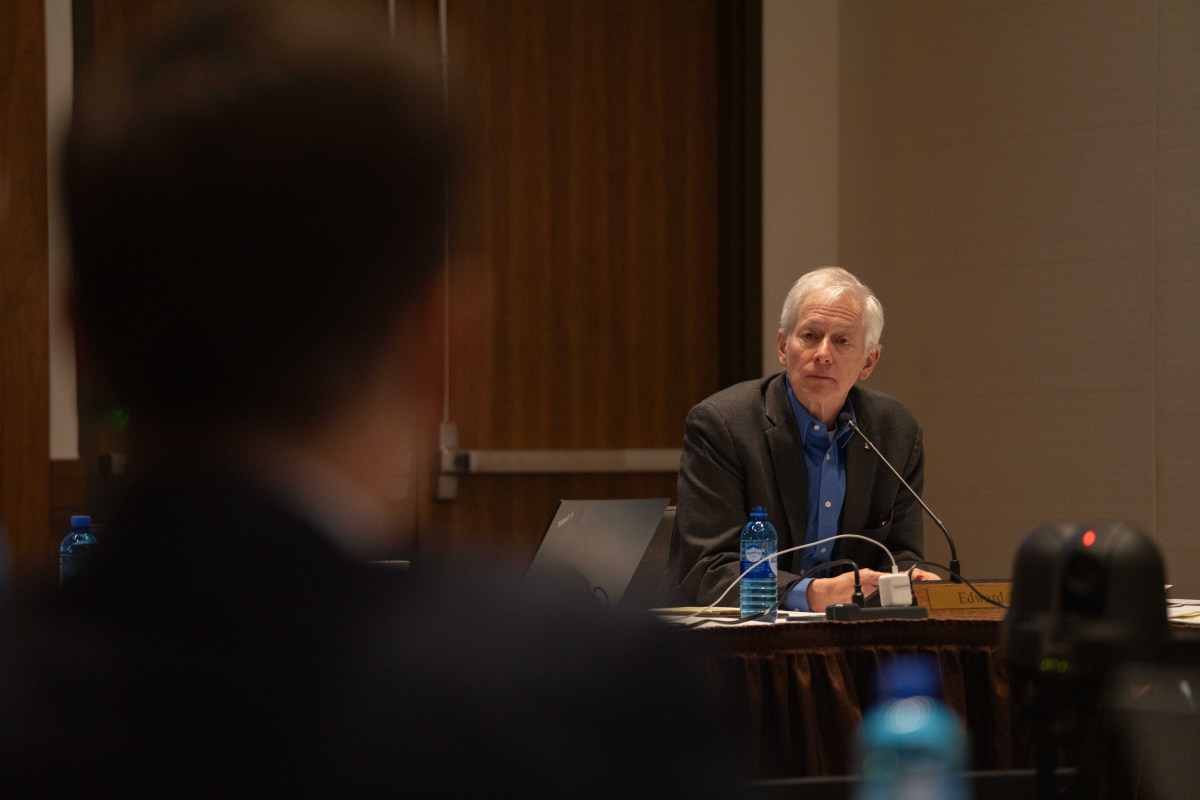
University of Wyoming President Ed Seidel will leave his leadership post when his contract expires in June, the school announced Monday.
The announcement did not cite a reason for his departure from Wyoming’s lone four-year public university. Seidel has served as UW’s top administrator since July 2020, when he arrived at a school shaken by presidential turnover and gripped by a global pandemic.
University leaders lauded Seidel’s accomplishments during his five years as president, including a major academic reorganization, the launch of a computing school and UW achieving top status as a research university.
“He’s been an innovator in a number of areas,” said UW Board of Trustees Chairman Kermit Brown. “He has moved us forward in those areas. And it’s hard to move this institution anywhere, let me tell you. It has a tendency to want to sit there and not move. So those are worthwhile accomplishments.”
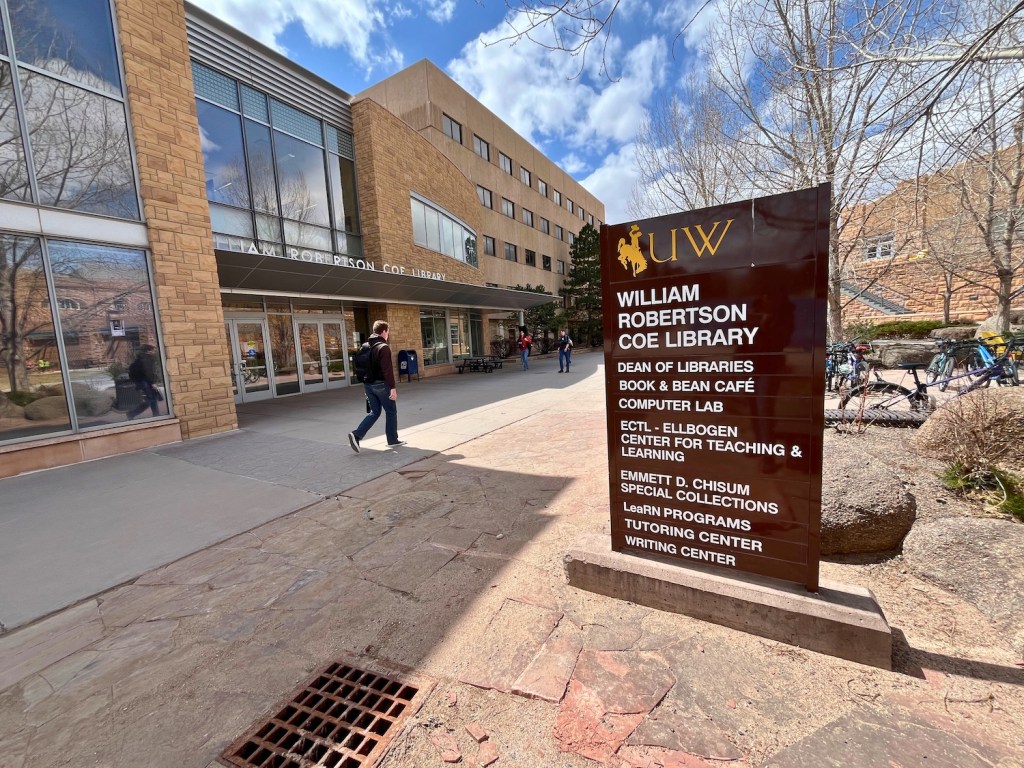
But Seidel’s decision to step down comes only three months after the faculty senate overwhelmingly delivered a vote of no confidence in his leadership following the demotion of a popular dean and questions over Seidel’s role in shifting money to the School of Computing, which was then headed by the president’s romantic partner. A dozen deans also signed a letter expressing concern over the university’s trajectory.
In the aftermath, university trustees met in private before agreeing to form a committee focused on improving shared governance and communication. The board retained Seidel as UW’s top official.
Asked by WyoFile whether the board played a role in Seidel’s decision now to step down, Brown insisted that was not the case.
“No pressure whatsoever,” Brown said. “It was his choice.”
In the university’s announcement, Seidel said he shared his decision now to give the school ample time to find a replacement. The board will decide at a future meeting what that process will entail, Brown said.
Challenging beginnings
Seidel started at the university amid a tumultuous time for one of the state’s key institutions. He was the fifth president hired in just over six years. In 2019, the trustees surprised the campus community by dismissing his predecessor Laurie Nichols without explanation, though later reporting by WyoFile and the Casper Star-Tribune revealed the board secretly investigated Nichols after receiving two complaints about her.
When Seidel arrived from the University of Illinois System, where he served as vice president of economic development and innovation, UW was navigating not only the pandemic, but also its economic fallout, which included millions of dollars in lost tuition and the cancellation of the football season. Gov. Mark Gordon also sought major cuts from all state agencies amid a downturn in state revenues.
By November of that year, only four months into Seidel’s tenure, the board had approved his plan to address a $42.3 million budget cut, which included a reorganization and the elimination of dozens of positions.
“This is a brand new person, with a lot of turnover that’s gone on prior to that, and walking into an institution with a challenging job,” noted Rod Godby, an economics professor who now chairs the faculty senate. “This is not the job he signed up for.”
The pandemic helped accelerate a change already underway in Wyoming politics. The Legislature pulled farther to the right, spurred in part by conservative anger over the COVID-19 response. Amid that rightward push, some lawmakers took aim at the university, describing it as out-of-touch with the state’s values. They targeted academic programs like gender studies and last year barred the school from spending state money on diversity, equity and inclusion efforts. University leaders responded by closing the school’s DEI office and replacing the Office of Multicultural Affairs.
Seidel faced a difficult dilemma. On one hand, some in the campus community wanted him to push back against the Legislature. But that risked an even stronger response from lawmakers skeptical of the university’s direction.
“He’s definitely between a rock and a hard place,” said retired professor and former faculty senate chair Donal O’Toole. “And I think as time went by, it got harder. To come in during COVID, that was a piece of bad luck, and then when the Legislature shifted to the right, particularly on the DEI situation … that was a no-win situation for him.”
Whether UW’s president effectively navigated that reality depends on whom you ask. Brown gives Seidel high marks.
“I think he’s done a good job of managing this institution and managing the competing forces that such an institution has,” Brown said. “There’s no end to the conflict and the competition. And so different people manage it in different ways, and I think he’s done a good job.”
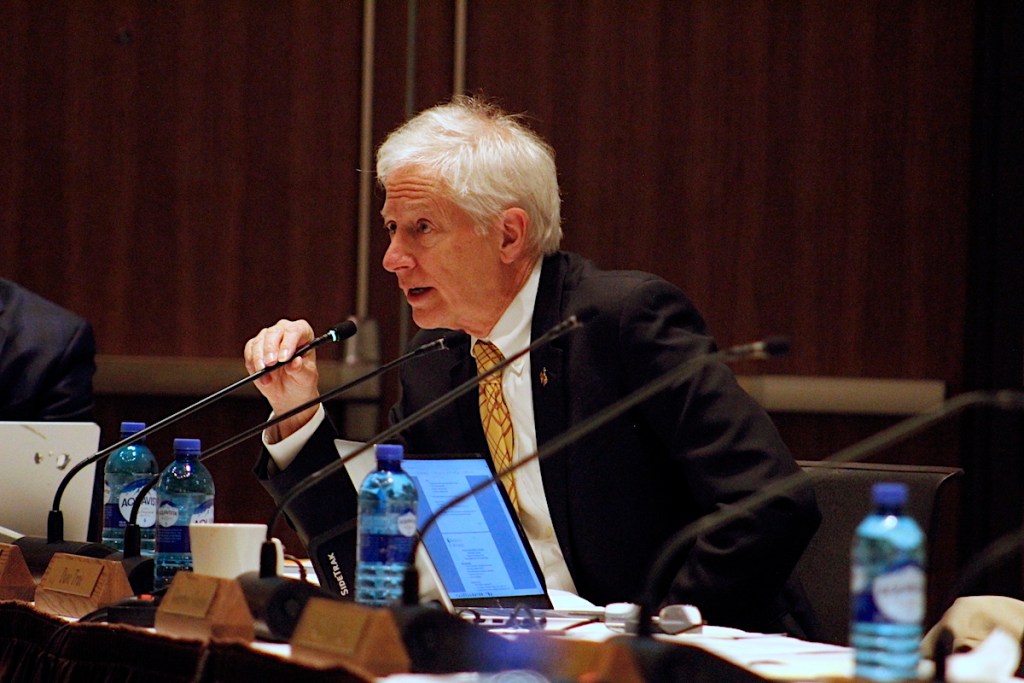
But from O’Toole’s perspective, Seidel had a difficult time understanding the state’s culture — or fitting in convincingly. That probably hurt him as he tried to serve as the public face of the university.
O’Toole recalls a Christmas card sent by Seidel one year early in his tenure. He wore a cowboy hat that was too large for him, and folks on the campus had a laugh at his expense.
“Being president in a state like Idaho or Wyoming is inherently going to be difficult,” O’Toole said. “But if you were going to pick someone who seemed like a square in a round hole, you couldn’t have picked a squarer peg than Ed Seidel. I think he was doomed from the get go.”
Innovation
The university announcement of Seidel’s departure listed several achievements by UW’s 28th president. It included the school’s recent designation as an “R1” university by the American Council on Education and the Carnegie Foundation for the Advancement of Teaching. The selection ranks UW in the highest level of research universities.
Under Seidel’s leadership, UW also launched the School of Computing and Center for Entrepreneurship and Innovation, created the Jay Kemmerer Wyoming Outdoor Recreation, Tourism and Hospitality (WORTH) Institute and helped start the Wyoming Innovation Partnership with the state’s community colleges and the governor’s office.
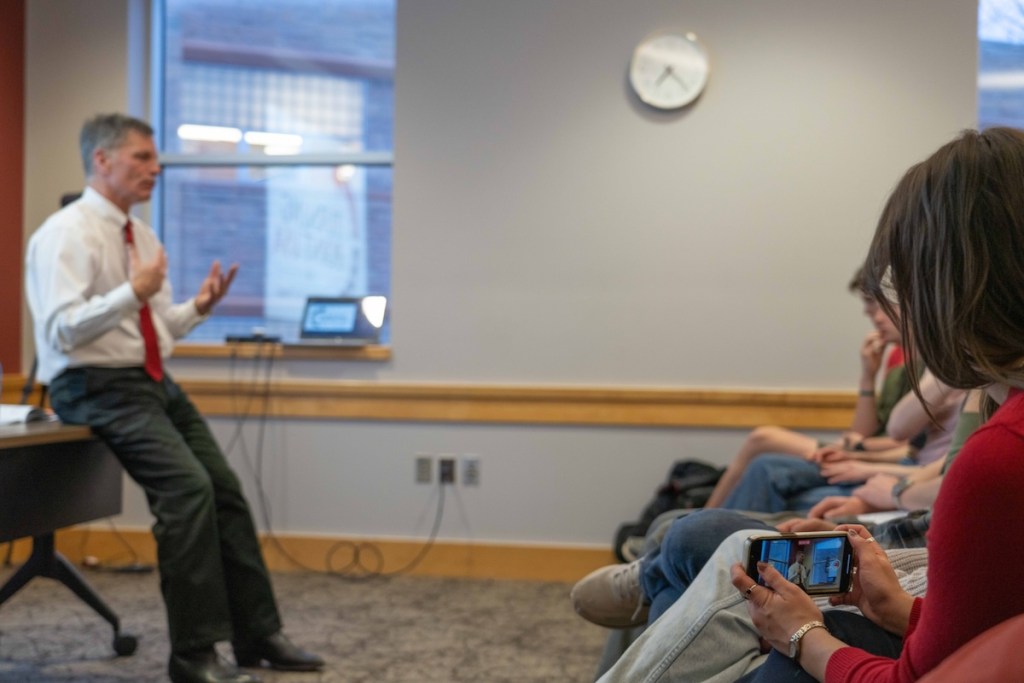
“He has led through significant challenges with a forward-looking vision and a steadfast commitment to the university’s future,” Gordon said in a statement. “He has moved the university forward, and I especially appreciate his leadership in establishing the Wyoming Innovation Partnership, which has strengthened higher education and workforce development. We will continue to work together with the trustees in the next year to ensure that UW continues to thrive. I wish him well in his future endeavors.”
Brown called Seidel a “visionary leader,” noting specifically the school’s performance as a research institution and the addition of a computing school.
“He’s moved the university forward and he’s improved our performance as a university,” Brown said.
No confidence vote
While the university touted the computing school as one of Seidel’s signature achievements, it also sparked a campus uproar earlier this year that culminated in the vote of no confidence — the first such vote of its kind at UW in decades.
This spring, the university demoted Cameron Wright, who had served as the dean of the College of Engineering and Physical Sciences since 2019. That ignited a firestorm of criticism of Seidel, who was accused of retaliating against Wright for opposing the transfer of $500,000 from the engineering department to the computing school, which was run at the time by Seidel’s romantic partner, Dr. Gabrielle Allen.
The week after Wright’s demotion, the faculty senate delivered the vote of no confidence in Seidel. In a resolution, the group said Seidel’s leadership was unacceptable and cited a distrust that dated back years and included the removal of deans and other leaders without public input or even an explanation.
“The President’s lack of leadership and loss of faculty trust has resulted in significant impacts on campus,” the resolution read. “These have included serious declines in morale resulting in good faculty leaving, programs struggling to provide capacity and content, research agendas being paused or abandoned, and the quality of education declining as we struggle to hire high quality faculty to put into classrooms.”
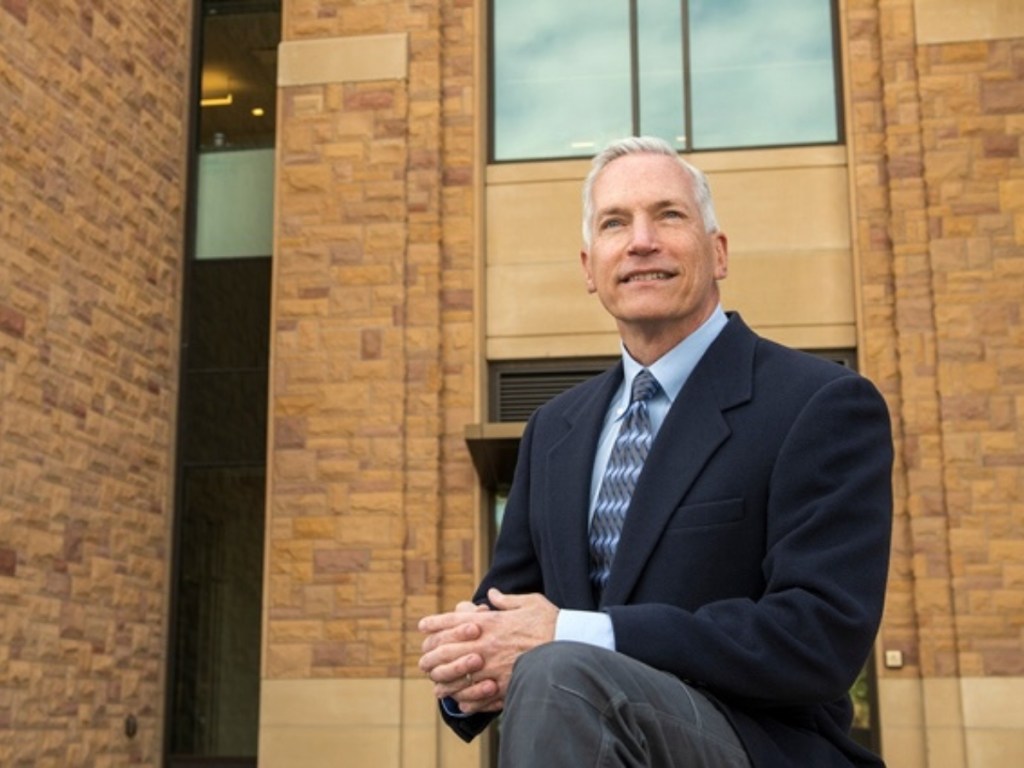
A few major donors, including the John P. Ellbogen Foundation, announced around the same time a halt on new giving based on concerns over Wright’s demotion. The board of trustees met soon after, where they made the decision to keep Seidel and form a committee. (The John P. Ellbogen Foundation is a financial supporter of WyoFile.)
Brown declined to answer questions related to Wright’s demotion, citing the lawsuit that Wright subsequently filed against the school.
O’Toole, however, said the episode represented the nail in the coffin for Seidel’s time at UW. He acknowledges that Allen had a good reputation academically, but said it was still an error to have her lead the computing school that her partner helped to establish.
“It gave a tremendous impression of favoritism,” O’Toole said. “It was just an error, he just shouldn’t have done it.”
Godby, the faculty senate chairman, was among those who supported the no confidence vote. But he credits Seidel and trustees with making improvements the past few months when it comes to shared governance and communication.
From Godby’s perspective, Seidel found himself in a difficult position from the start, managing multiple crises that were not of his making. That required immediate action that over time led to frustration among faculty. But the president, he added, has made amends since April.


“President Seidel, he admitted there had been mistakes,” Godby said. “You’re not going to agree with everything your leader does. You either share decisionmaking or rely on trust that they will make the right decisions for the right reasons.”
“It’s a bittersweet day,” he added. “No leader is perfect, and certainly we’ve had our differences, as expressed in that vote in April. But I don’t think anybody thinks the president has ever done anything other than try to make decisions that were best for the university and the state.”

I am more concerned about the selection process used hire a President of UW that has produced 5 candidates in the last decade without a transparent statement about WHY this is happening? Laurie Nichols case in point. This problem affects everyone involved in WY negatively and the University in particular. Let us figure out a solution to this egregious situation for all!
I guess I’m just more confused by this development. It just seems like a bad idea to allow a no confidence leader who may now be disgruntled an additional year to cause harm.
Evan Wyoming natives have a hard time fitting in. The states become a repository for right wing fake christian goofballs.