

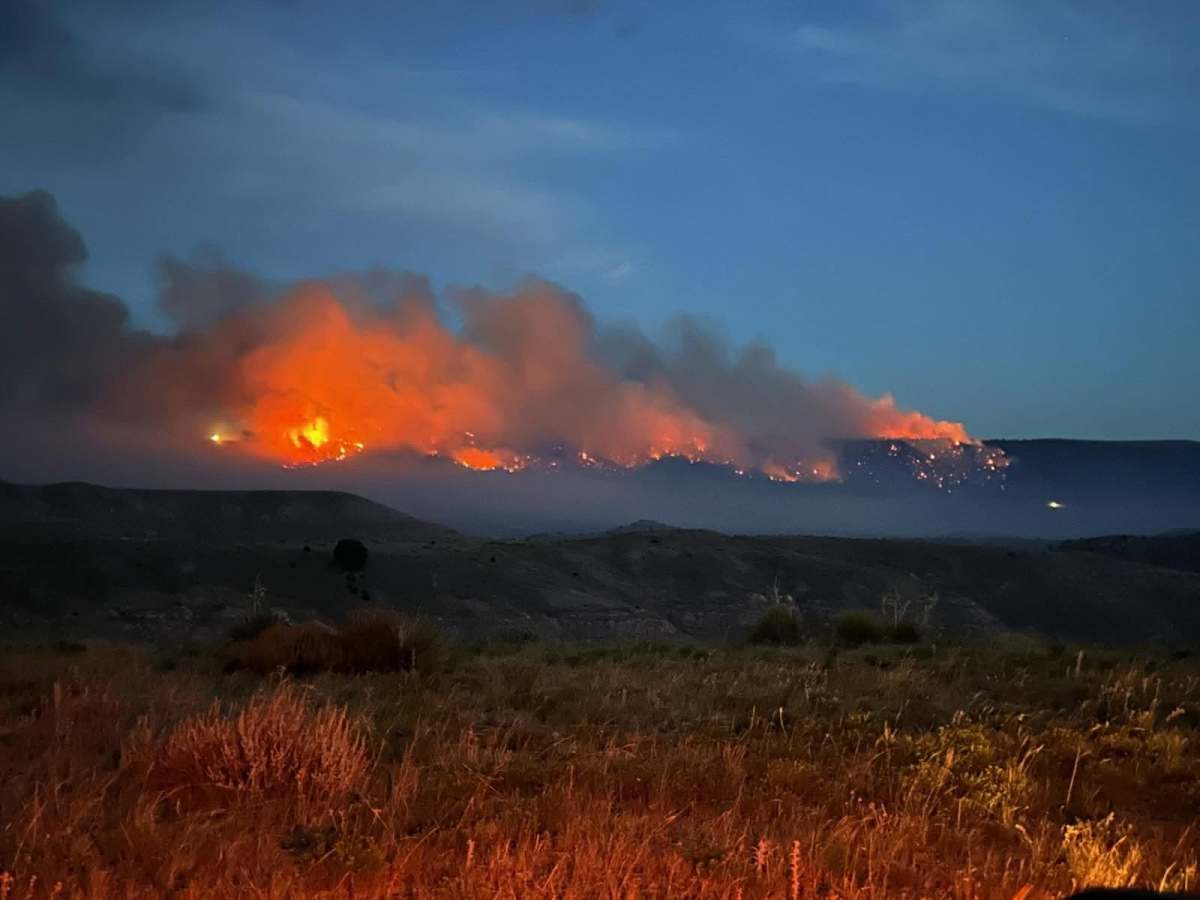
UPDATE: Since this story published on Aug. 14, fires in the Bighorn Basin has continued to grow rapidly. The Red Canyon Fire outside Thermopolis has now burned across an area estimated at over 50,000 acres. The Sleeper Ranch Fire in the Meeteetse area has now burned across 18,298 acres and the Spring Creek Fire outside Ten Sleep is now estimated at 2,322 acres.
A series of lightning-sparked wildfires in Wyoming’s Bighorn Basin sent authorities scrambling Wednesday and Thursday, as one fire outside Thermopolis exploded to burn across 20,000 remote acres.
That blaze, dubbed the Red Canyon Fire, drew an evacuation order from officials for an unknown number of rural homes in the area. The fire was burning in a very sparsely populated region of grass and scrub brush well east of Thermopolis itself, James Coates, secretary for the Thermopolis Volunteer Fire Department, told WyoFile.
A federal incident management team is en route to take command of the firefighting effort, Coates said, and the U.S. Bureau of Land Management is currently in charge of the fire.
The Red Canyon Fire has drawn a significant airborne response, Wyoming State Forester Kelly Norris told WyoFile on Thursday. Helicopters, large air tankers and single-engine air tankers are all working to stop the flames’ advance.
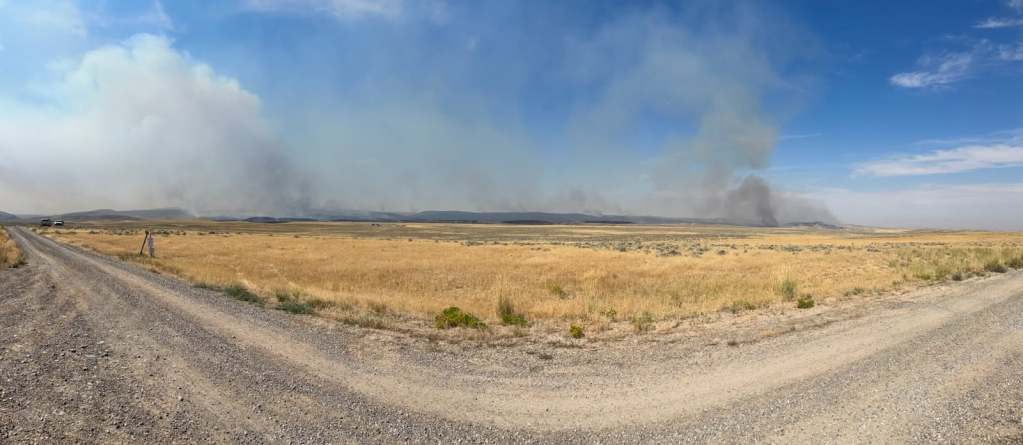
Two other fires, one northeast of Meeteetse and one southeast of Ten Sleep, were also on the move and cause for concern Thursday, Norris said. An estimate on the National Interagency Fire Center’s online map put the Spring Creek Fire, in the Ten Sleep area, at 1,000 acres. But Norris said the fire has been very active. A photograph taken Wednesday night by one of her colleagues and provided to WyoFile showed flames spread along a timbered ridge.
That fire and another in the area will be managed by a state incident command team, Norris said.
Northeast of Meeteetse, the Sleeper Ranch Fire also stood at around 1,000 acres, the NIFC map showed.
The sudden rash of blazes comes after a relatively quiet July on the wildfire front, though the Bighorn Basin has already seen some significant conflagrations.
“Fire season is here,” Norris said. “It showed up over the course of the last couple of days.”
Norris called on people to take extra care not to spark new fires while officials race to control those already burning. Wyoming is bone dry, she said. “We are very dry and we need to be very aware of the fire risk because while we’re managing these fires we don’t need any others.”
Lightning storms started as many as 20 fires around the state Wednesday, Norris said, with firefighters rushing to corral ignitions in Crook, Campbell, Johnson, Converse, Uinta, Lincoln and Sublette counties. The fires in the Bighorn Basin are the most worrying.
“Some of these fires, depending on where they grow or how they grow, they could go for weeks if they get a strong hold,” Norris said. “This is a really critical time.”
Wyoming had a record-breaking and state-bank-account-draining fire season in 2024. Wildfires burned across 840,000 acres in grasslands and mountains across the state, a season surpassed only by the infamous 1988 fires in Yellowstone National Park. About half of last year’s acreage burned in four big fires in the northeastern part of the state in late August.
Wyoming’s blazes join a stretch of fires around the mountain west. Montana, Utah and Idaho all have new wildfires burning, and in Colorado, the Lee Fire outside Meeker is burning across more than 127,000 acres, according to InciWeb.
“The rest of the West is experiencing the same pattern at the same time,” Norris said.


So far, your fire coverage is considerably better than that of Cowboy State Daily’s. The Red Canyon fire is big, but it’s still just a part of the whole, and the whole is most important. I would, however, like to know if any of these fires have affected transportation, private or commercial, in Wyoming.