

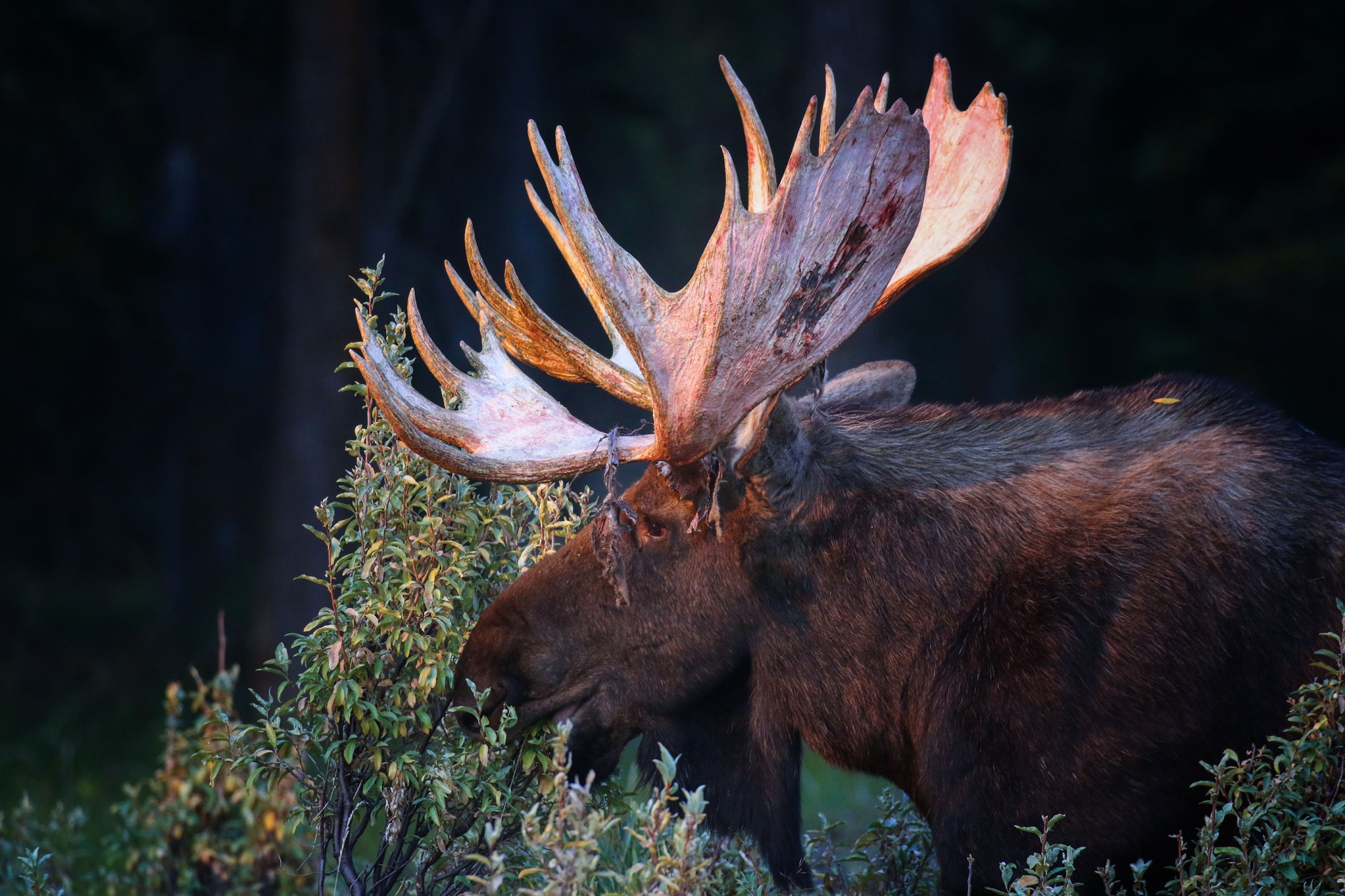

The nights are getting chilly, and it is a time of change in Wyoming. While each season has its special attributes, the transition from summer to fall may be the most thrilling for me. A favorite part of summer is seeing deer, elk and moose with their velvety antlers: so soft looking you want to touch them. And antlers are also fantastic photographically, especially when backlit, with their translucence creating amazing rim light.
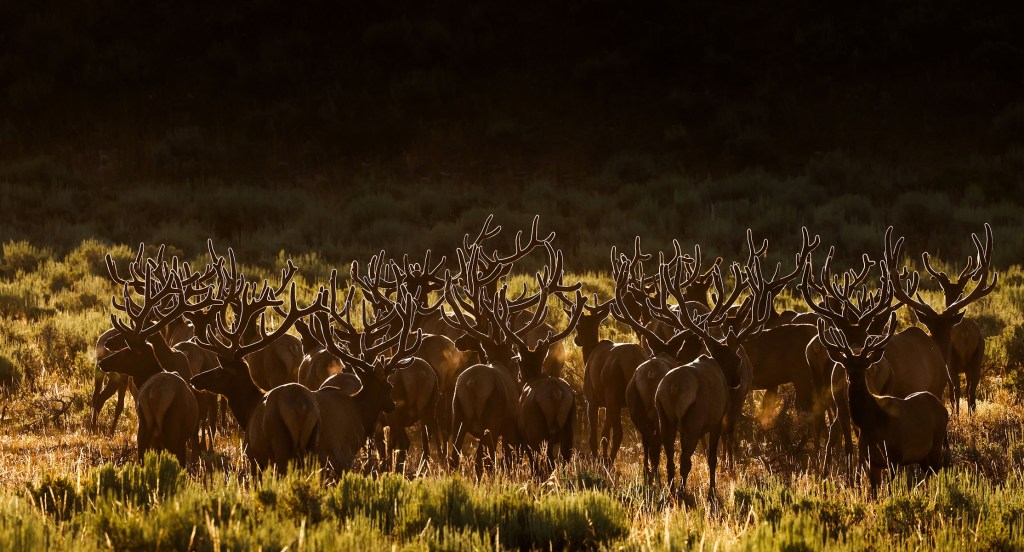
Not only are antlers a great photo subject, they’re also pretty amazing biologically. Antlers are one of the fastest growing biological tissues, similar to fetal tissue and that of a wound healing. In just a few short months, animals can grow a full set of antlers, which can be massive for the mature males, weighing over 30 pounds each for elk and moose. New antlers start growing as soon as the old ones are shed, which is typically by late winter. All summer, the velvety antlers are loaded with blood vessels carrying lots of nutrients for the rapid growth, and are thus warm to the touch.
By mid-August, these animals have grown their next full set of antlers. They start undergoing hormonal changes, triggered by shortening periods of daylight. We know this from researchers who have manipulated the amount of light available to animals indoors, actually causing them to grow two sets of antlers in one calendar year.
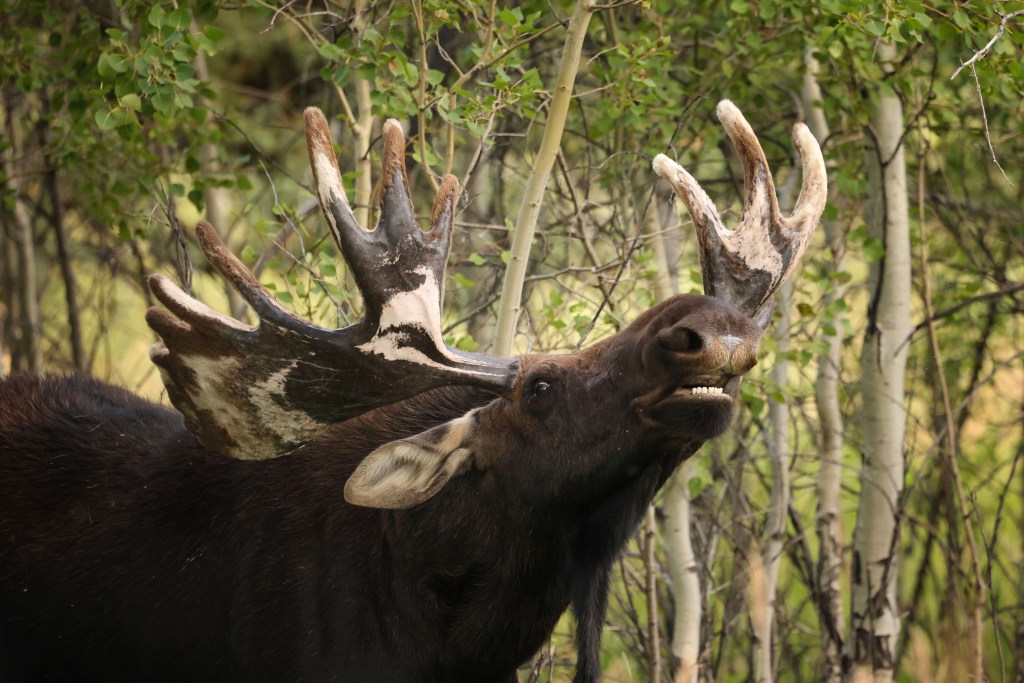
The hormonal changes primarily involve an increase in testosterone. Males that lack this normal spike in testosterone for any reason will remain in the velvet stage. This has been shown by castrating males in captivity. Otherwise, the blood vessels and velvet will begin to dry up, and the cartilaginous antlers further harden to become an external bone, primarily made up of calcium and phosphorus, just like other bones.
When the velvet begins shedding, the antlers are pure white with some remaining blood stains. However, this period is short-lived, typically only 24 to 48 hours, as the animals will accelerate the process by rubbing the velvet off on tree saplings and such. Tannin from the trees, along with the blood stains, give the antlers their usual brown color.
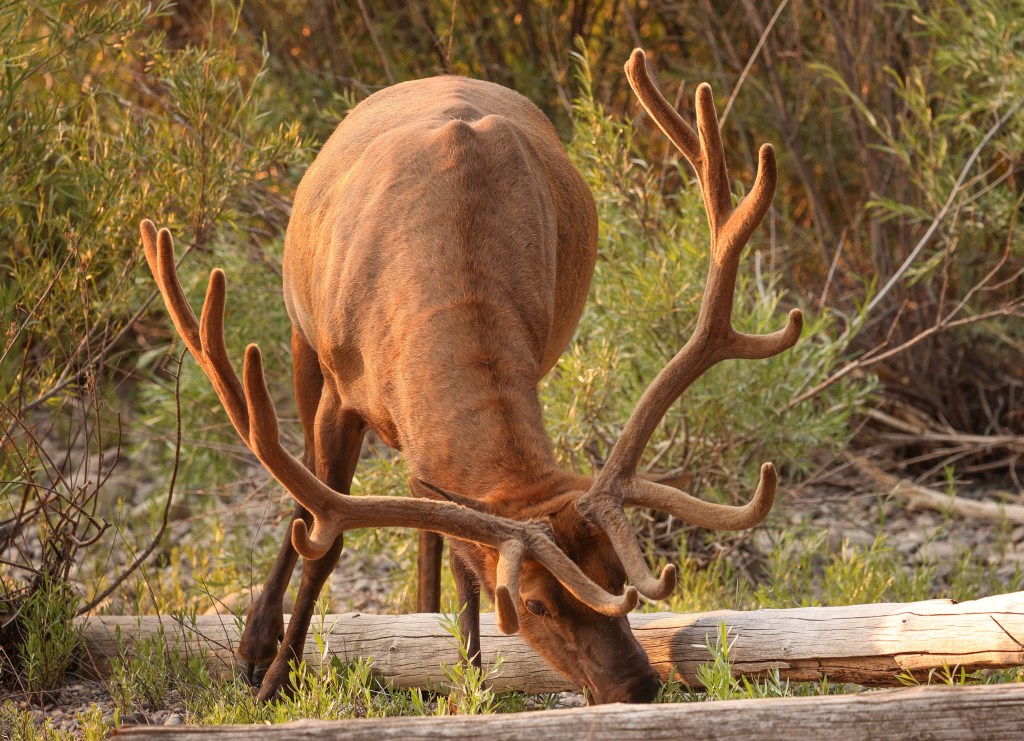
Throughout summer, males will often hang together in bachelor herds, but the increase in testosterone also urges the males to disband and start seeking out females to breed with. Thus begins the fall rut. The competition for breeding rights will cause individuals that have hung out together for months to suddenly become rivals, sometimes engaging in fierce battles with each other. This is truly a fascinating time of change for Wyoming’s wild ungulates.

mark, that moose photo sure gets the essense of a bull in rut. wouldn’t want to inadvertently stumble upon him too close. and, what a photo!
Mark your photography is exceptional as always and we do miss seeing you around town! Happy New Year to you and family.
But this admiration only lasts outside of hunting season, a time when humans shed their humanity and make war on antler bearing mammals for the fun of it.
Great article and photos, Mr.Gocke, Thank you
Beautiful photos with informative explanations that only a biologist/ photographer could provide. Thank you Mark!