


The remarkable seasonal flow of thousands of bison into and out of Yellowstone National Park is both a relic of an earlier, pre-settlement era and a source of great debate — Montana’s even sued in pursuit of fewer bison.
But there’s now less debate about the ecological good the herds of native herbivores bring to the landscape. A new study published in the journal Science shows that the migratory herds of bison effectively function as nature’s fertilizers, providing an astonishing 2.5-fold bump in crude proteins growing into the grasslands that blanket Yellowstone’s Northern Range.
“It’s mainly coming from urine and feces,” said Jerod Merkle, a professor of migration ecology and conservation at the University of Wyoming. “What happens is it goes into the ground, and it lights up the microbial ecosystem in the soil.
“It’s a circle,” he added. “Bison graze, pee and poop. That facilitates the insects and the microbes, which then creates better soil, which then the plants take up again.”
Bison and other critters, in turn, benefit.

Merkle, along with co-authors Chris Geremia of Yellowstone National Park and Bill Hamilton of Washington and Lee University, even estimated the net benefit migratory bison add to the landscape in terms of crude protein. There’s not actually more grasses growing — even though they’re heavily grazed, the volume sprouting off the landscape stays about the same.
“It’s not biomass,” Hamilton told WyoFile. “It’s more productive — the nutritional quality is improved. There’s more nitrogen and crude protein in the forage.”
Across Yellowstone’s Northern Range, researchers calculated that the bison stimulation effect added 3,549 tons of crude protein to a 329-square-mile region, which pencils out to an estimated 37-pounds-per-acre bump in nutrition.
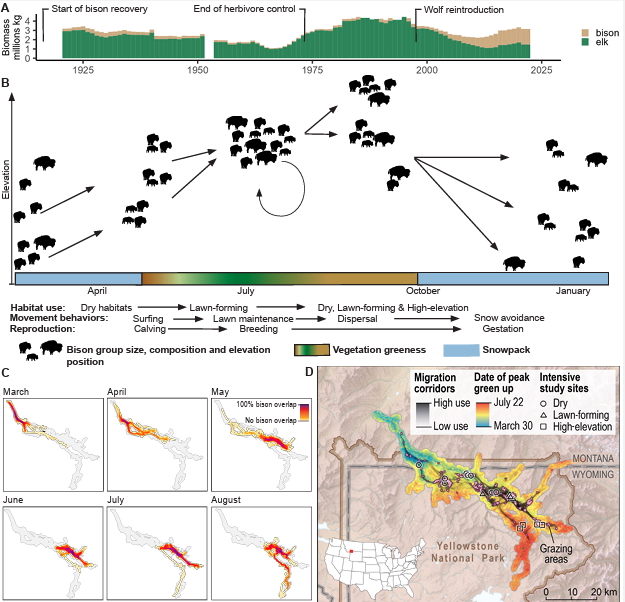
The benefits aren’t uniform. There’s a “mosaic” of bison grazing’s influence on the landscape, Merkle said, both in terms of space and time due to seasonal migrations. Grazing provided 156% more crude protein in the lawn-like habitats like the Lamar River valley and 155% more in high-elevation landscapes. In dry areas, the effect was slightly more subdued, with a 119% increase.
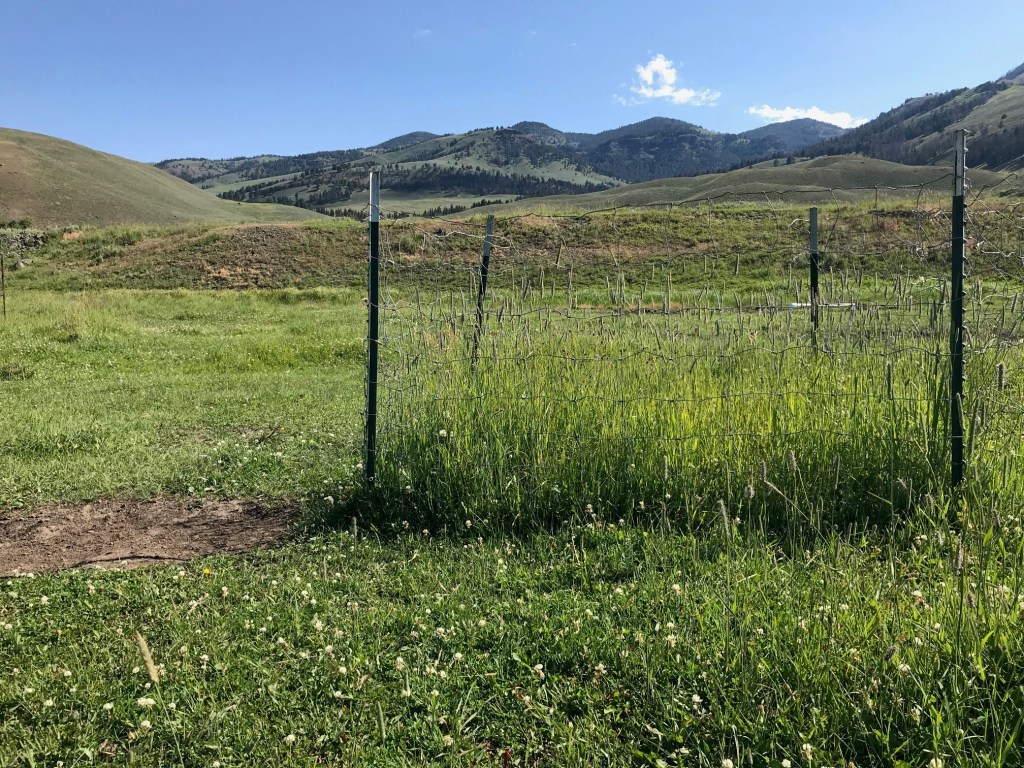
To make those calculations, the research team assessed grazing and nutrient dynamics at 16 sites from 2015 to 2022. They used fenced exclosures moved every five weeks and kept track of datapoints including plant consumption, plant growth and plant composition, nutrient cycling, plant and soil chemistry and soil microbial populations.
Merkle, Hamilton and Geremia did not detect overgrazing, which can result in declining plant productivity and diversity and soils becoming compacted. Rather, they detected the opposite and a lot of variation across the landscape, Merkle said.
“There are spots that bison hit hard, and places they don’t touch at all — and that can change over the years,” he said. “The cool thing is that allowing these bison to freely move across the landscape at a big scale, creates the heterogeneity.”
On the broader western landscape, it’s an effect that’s largely been lost. Although there are a few exceptions and efforts to grow more free-roaming herds, bison are generally not allowed to behave like wildlife in the modern world.
In Wyoming, for example, bison are classified as a big-game species where the roughly 500-animal Jackson Herd roams and in the unoccupied Absaroka herd unit east of Yellowstone. But elsewhere, they’re not considered wildlife and instead considered “privately owned or bison running at large.”
That’s not particularly unique. Today, about 95% of the 400,000 bison that exist are privately owned or commercially raised for their meat. The few “conservation herds” that exist average just 300 animals, and they’re “almost universally managed in constrained areas with strict limits on numbers and movements,” according to the Science paper. It’s a far cry from the 20,000-strong bison herd that early explorers Meriwether Lewis and William Clark encountered in South Dakota in 1806, which was just a sliver of the tens of millions that existed before white settlers hunted the American bison to near extinction.
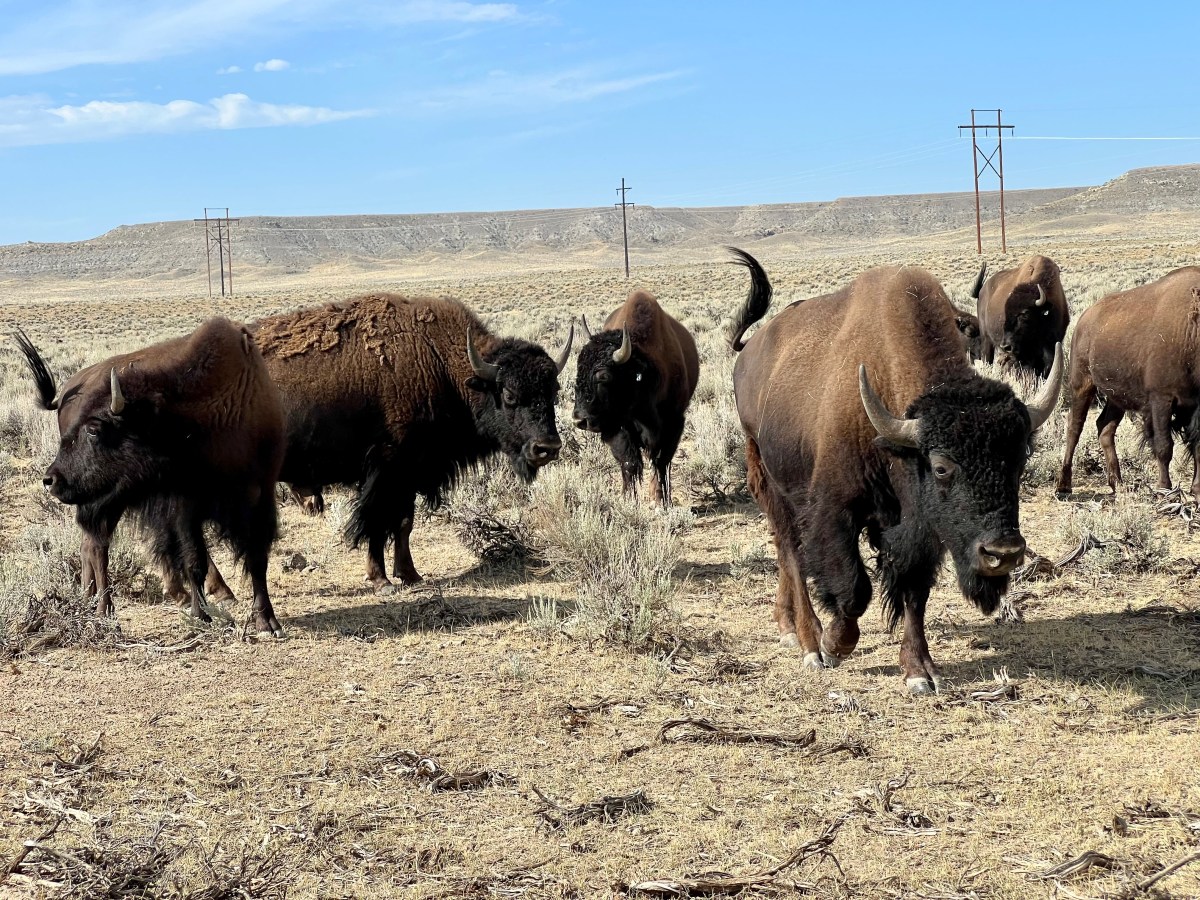
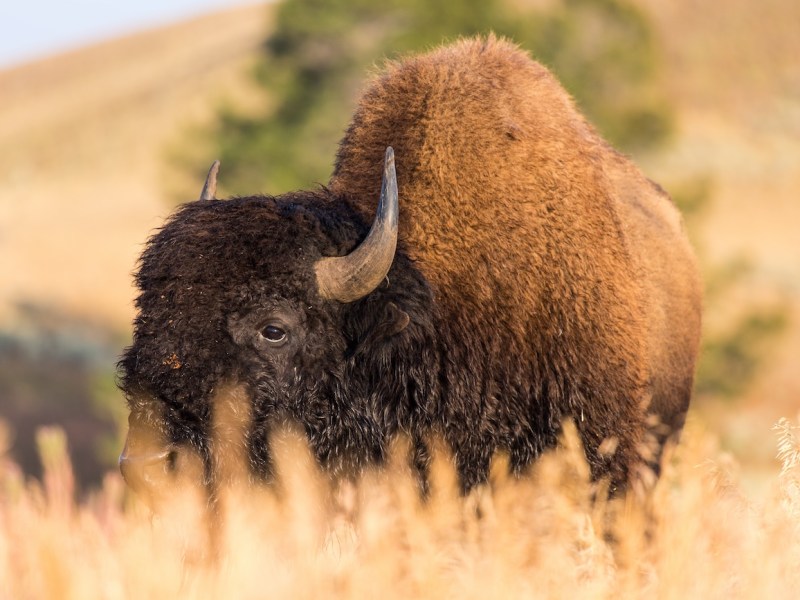
Yellowstone is one of the very few exceptions. The herd-oriented, migratory plant-eating megafauna — and their quantifiable ecological effects — have been lost almost everywhere else.
“The closest relatable ecosystem is the Serengeti, where we have big herds of wildebeest and zebra moving and migrating in a similar way and creating a similar nitrogen and ecosystem cycle,” Merkle said. “It’s kind of cool for Yellowstone to be on par with a Serengeti-type place.”

“Strive on for the control of nature is won not given.”
I find this research timely as I have just read an article by Tom Archdeacon, Sports Writer for the Dayton Daily News, that attributed the recent incredible corn harvest from a single 20 acre tract of land to the horse manure that was deposited on the land by the previous tenants – thoroughbred horses.
Working with nature is far better for humans and the land if only we would listen but alas petroleum has separated us from a better way.
Tom Archdeacon is a great story teller.
https://www.daytondailynews.com/sports/archdeacon-a-story-of-corn-racehorses-and-applause/DTB2KWWEPRETNEHI6244ZUMPME/
wow–this paper is so exciting. such carefully acquired longevity data is key in managing wildlife and habitat for the benefit of all creatures, and into the future. university of wyoming is leading the charge for movement ecology with a focus on conservation.
First of alll, it is not possible to turn back the clock to make anything just like it was 200 years ago. I suspect there are a lot of researchers that would like to use a lot of todays resources to make the attempt. Besides trying to raise too many buffalo in the Park would creat probloems for elk, deer, antelope, etc. They too are native to Yellowstone and deserve a place. Reseaechers and fixers are the biggest dangers to nature, including YNP.
You are very uninformed and biased. You knew what you were going to write before you even read the article. The biggest curse to public land quality and habitat diversity is unchecked over prioritization of cattle grazing
marion thinks she is the patron saint of welfare ranchers. no use in correcting her.
You do realize that cows and bison share the same genetic past right? They are cousins so to speak. In fact modern bison would not exist if it wasn’t for cows. They were brought back from near extinction by cross breeding.
Wild cattle exhibit almost the same exact herd behavior as bison.
Herd behavior in the wild is part of the natural cycle of the plains. That’s grazing. The only difference is now manage it. If you actually believe the Yellowstone herd isn’t managed, that’s a very foolish belief. It’s not managed well mind you, but it is.
Public grazing has protected natural grasslands for years.
I know the welfare ranchers like to use a lot of today’s resources.
So what would you cahnge? Stop feeding livestock and caring for them, and of course eliminate meat from everyone’s diet. Wolves deserve food more than humans???
After working on a M.S. Botany in YNP & GTNP for 4 years, the need for large animals to interact on a landscape basis is crucial to all involved species. I was there when wolf reintroduction fostered better stream cover with fish & other aquatic animal numbers soaring- the elk had to evade & move, not just clear-cut feeding.
Natural behaviors bring balance.
This took a study? Amazing
So you’d already performed years of standardized data collection, sample testing via multiple complex assays, and rigorous data analysis, and you never published your results (in one of the premier journals, no less)?
Bro – “I did my own research” doesn’t count if you don’t share your years of meticulous, carefully documented, methods-appropriate scientific knowledge with the world. Stop depriving us of your genius!
Just another example, that Mother Nature’s plan for eco-system health and management out foxed man. (Great article)
I don’t know what it means but I lived a few years along the Missouri River in North Dakota. I would take walks along the river and up on the bluffs and there wasn’t a square yard that you couldn’t find a piece of buffalo bone. Same goes for the Laramie and Platte Rivers in Wyoming. I walked them, if you look close in the cobbles and cut banks there is buffalo bone there.