

FORT WASHAKIE—When the Wind River Food Sovereignty Project purchased this 30-acre farm near Fort Washakie, the land mainly grew hay. Machinery and tools stood in the yards. Fences were aging.
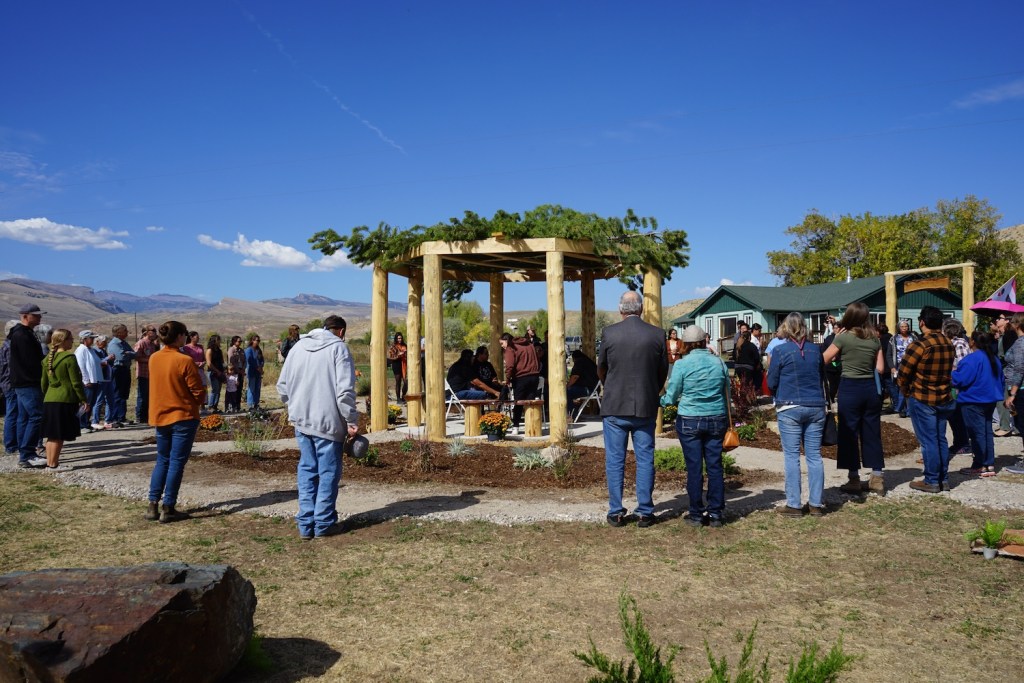
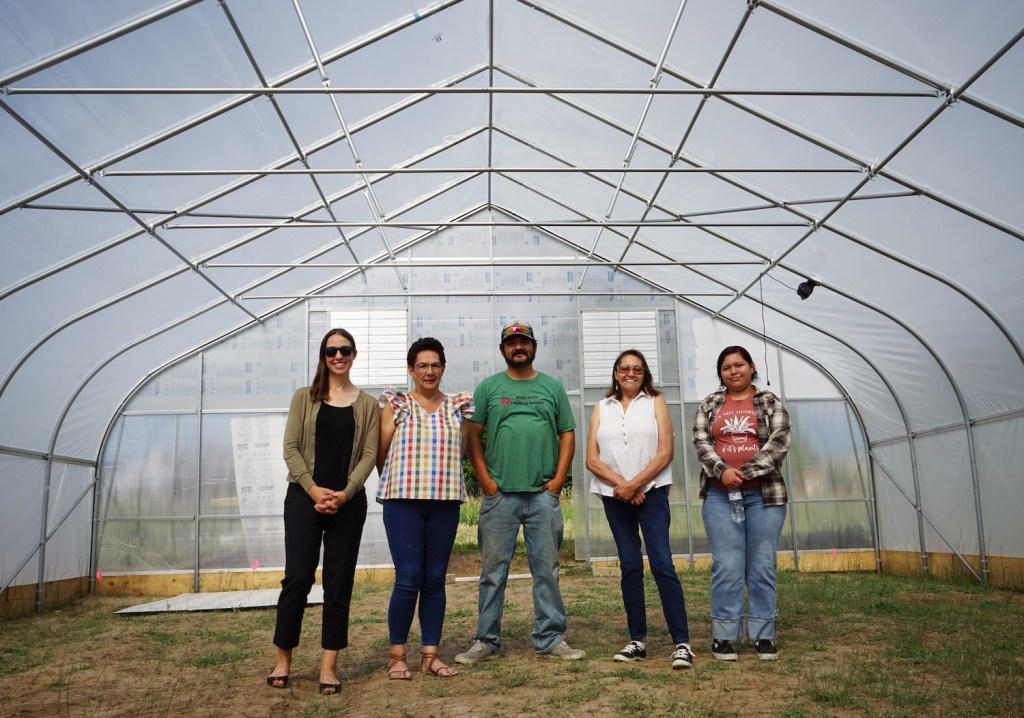
Fast forward two years, and a transformation is taking root. Old equipment has been cleared out, and a fenced vegetable garden is thick with vines of squash and melons. A large high tunnel has been erected; inside tidy rows of raised beds sit ready to receive soil and seeds. Native plants like chokecherry bushes have been transplanted near the creek, and some may even survive the deer onslaught. Near the farm entrance, circular paths wind around a garden, where benches, flowers and a shaded area have been designed to welcome tribal elders for rest and reflection.
“This garden is a sanctuary,” Wind River Food Sovereignty Project Co-director Kelly Pingree told a crowd gathered for a grand opening celebration Saturday. “A place for healing, peace and connection with nature.”
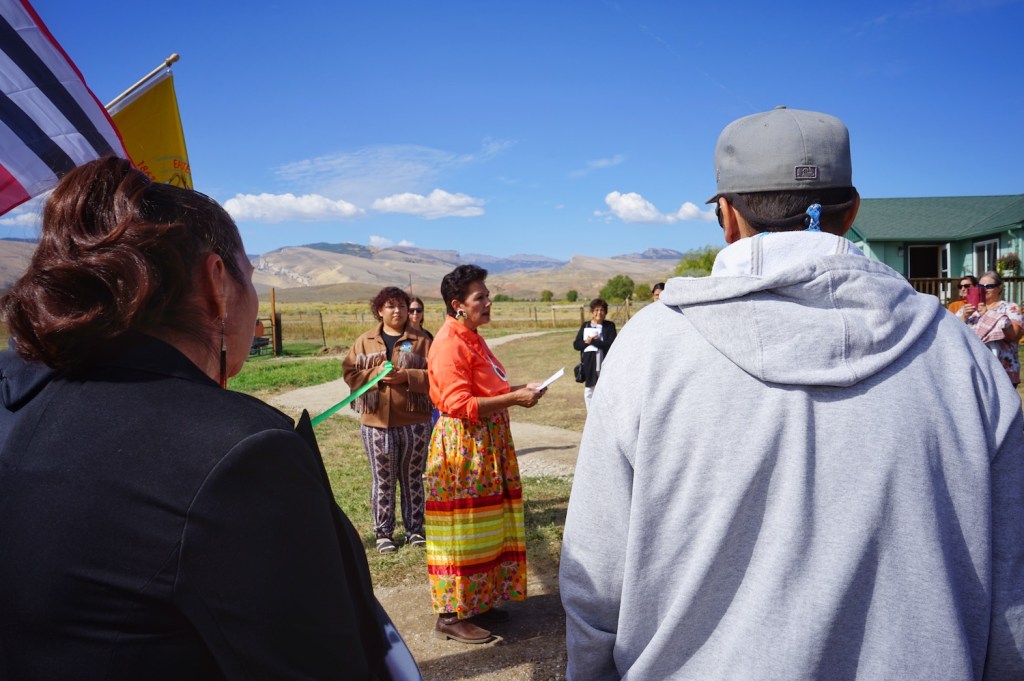
Once the ribbon was cut, tribal members and others from the community filed through an ornate gate and into the brand-new elder garden, forming a circle around drummers. After a song and a prayer, it was time to eat.
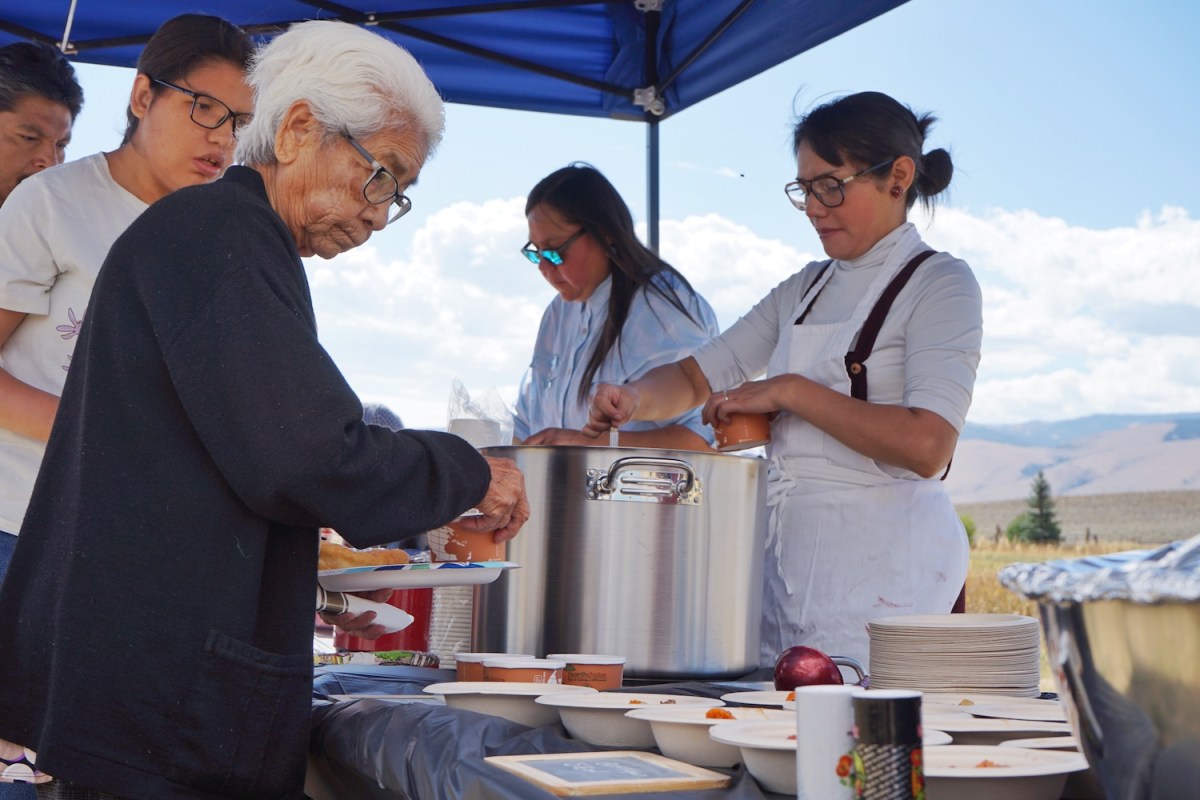
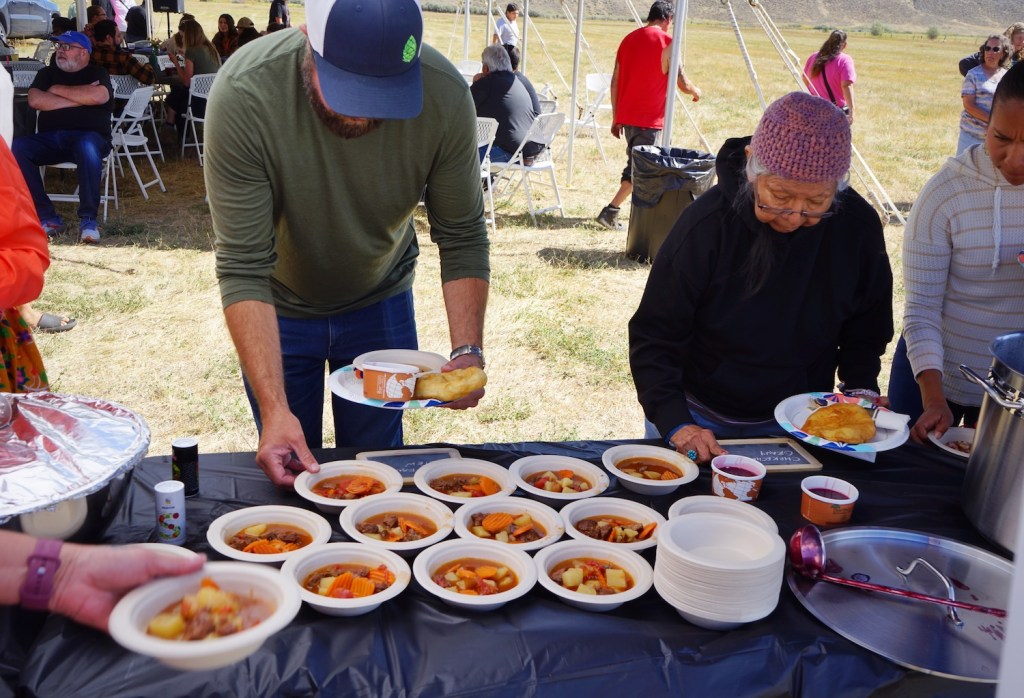
Marking the occasion with bowls of buffalo stew and fry bread dipped in chokecherry gravy felt appropriate given that the nonprofit is aimed at restoring food production and traditions in Wind River Reservation communities.
“As Native people, we always give thanks to Mother Earth for what she provides us,” Pingree told the crowd. “And when we connect with our food, it reconnects us to the land, our ancestral knowledge, our spirituality, our prayer.”
The progress at Trout Creek Farm marks the early stages of a multi-year vision to bolster local production, access to healthy foods, tribal education and more. But it also signifies the fruits of a $36 million federal redevelopment grant that several facets of the reservation stand to benefit from.
The Food Sovereignty project hopes to share with everyone, said Pingree, clad in a vibrant ribbon skirt and standing beneath the flags of the Eastern Shoshone and Northern Arapaho tribes.
“I invite each of you to embrace this garden as your own,” she said.
A dream takes root
The Wind River Food Sovereignty project was founded in 2018 by Hank Herrera. It was involved with reservation farmers’ markets and initiatives to support native food producers. Herrera passed away in 2020 due to COVID-19 complications, but colleagues continued the work.
A longtime goal of Herrera’s was to operate a farm that could be both a living classroom and a vehicle to engage tribal members with production of traditional foods and plants. The idea was to find a neutral ground that both tribes could utilize. “We wanted to serve everybody here,” Pingree told WyoFile in a July interview.
The land search took years. But in late 2023, the nonprofit closed on the Trout Creek Farm. The former owner, who was aging, wanted the place to go to someone who would take care of it. The nonprofit vowed to do that.
Private donations and grants helped enable the Sovereignty Project to purchase the land. In July 2024, it also received a major leg-up as one of the recipients of the federal “Recompete” pilot grant program. Wind River Development Fund, which applied on behalf of the Sovereignty Project and several others on the reservation, was one of only six awardees in the nation. The fund received $36 million, $4.2 million of which was earmarked for the Sovereignty Project’s ambitious plans.
“We knew it would be a huge leap for us, because it’s basically quadrupling our staff over the five years,” Wind River Food Sovereignty Project Co-director Livy Lewis said. “But we felt like we could rise to the occasion.”
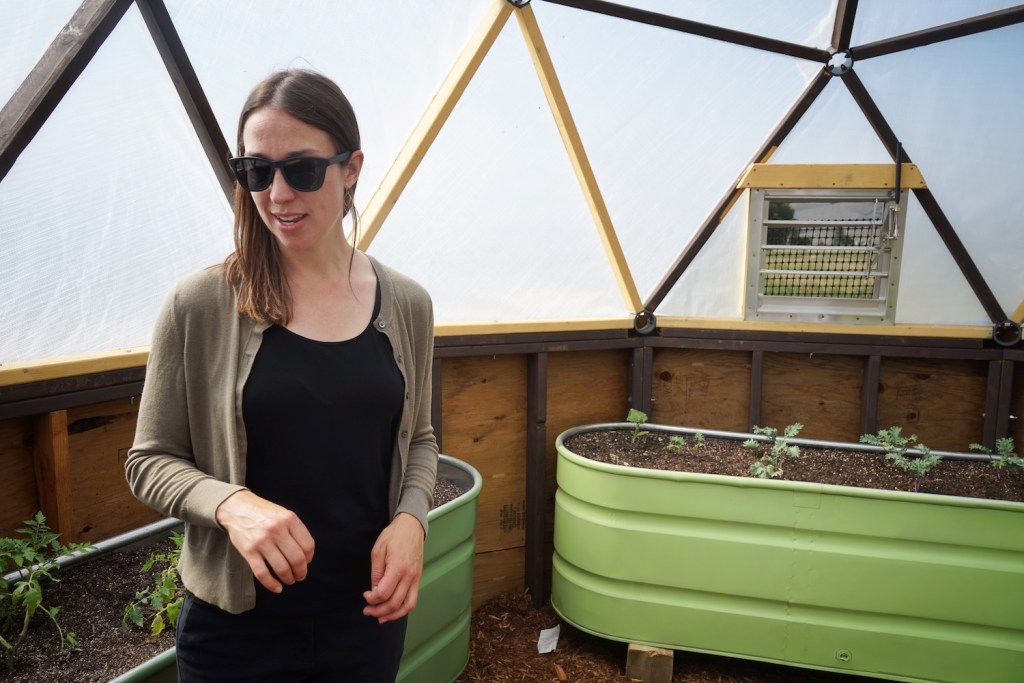
The project began by hiring a farm manager and purchasing equipment. Clearing and preparing the land took months. This summer, staff planted seeds in a grow dome, tilled rows for a garden and began a pumpkin patch. They also began expanding work with education initiatives. More recently, they poured concrete and installed pathways to finish the elder garden.
Saturday’s opening certainly drew elders — but they were joined by families with babies, young adults and residents from nearby towns. Along with feasting, participants drank sweet plum-colored chokecherry tea, perused a table arrayed with traditional native foods like cattails and amaranth, and took in the views of the hulking Wind River mountains to the west.
First sprouts
It’s taken years of work to get to the point of harvesting garden crops and opening the elder garden. But for the Sovereignty Project, it’s still just the beginning of a story that will in some ways write itself.
“It’s the first of its kind,” Pingree said of Trout Creek Farm. “But it’s also to be self determined, to choose our own food ways. You know, that’s what food sovereignty is all about, is to define how we grow our own food, what we choose to eat, and how we distribute that.”
Ultimately, she said, the nonprofit wants to use its grant money to create a healthier community. That means ramping up production enough to get their vegetables and fruits into schools, restaurants and senior homes. Offering plots of dirt for tribal members to grow their own food, and for kids to learn the basics of agriculture and nutrition. Facilitating the expansion of food banks, and hosting cooking and preservation classes. Growing resources to help reverse the habits that have led to high rates of diabetes and obesity among Indigenous people.
“But also teaching them their ancestral ways of being reconnected to the land, which has been severed for many, many years,” Pingree said. “And so to bring that back and to teach them to be proud again of being able to stand up and say, ‘I don’t choose to eat that anymore. This is what I choose to eat.’”

This very special story warmed my heart and made my day. Thank you, Katie!
The best story yet!
Thanks Katie!
Thanks WyoFile!
Great article! Thanks Katie.
This seems like the first significant step towards fighting back all the social ills endured by Native Americans in the Wyoming area. The BIA with all its money thrown in hasn’t seemed to accomplish anything because raw cash is not a cultural part of Native life. But real food based on old ways of getting it and sharing it…that’s so fundamental to any culture especially delicate, damaged cultures; that this effort could prove incredibly important and effective.