

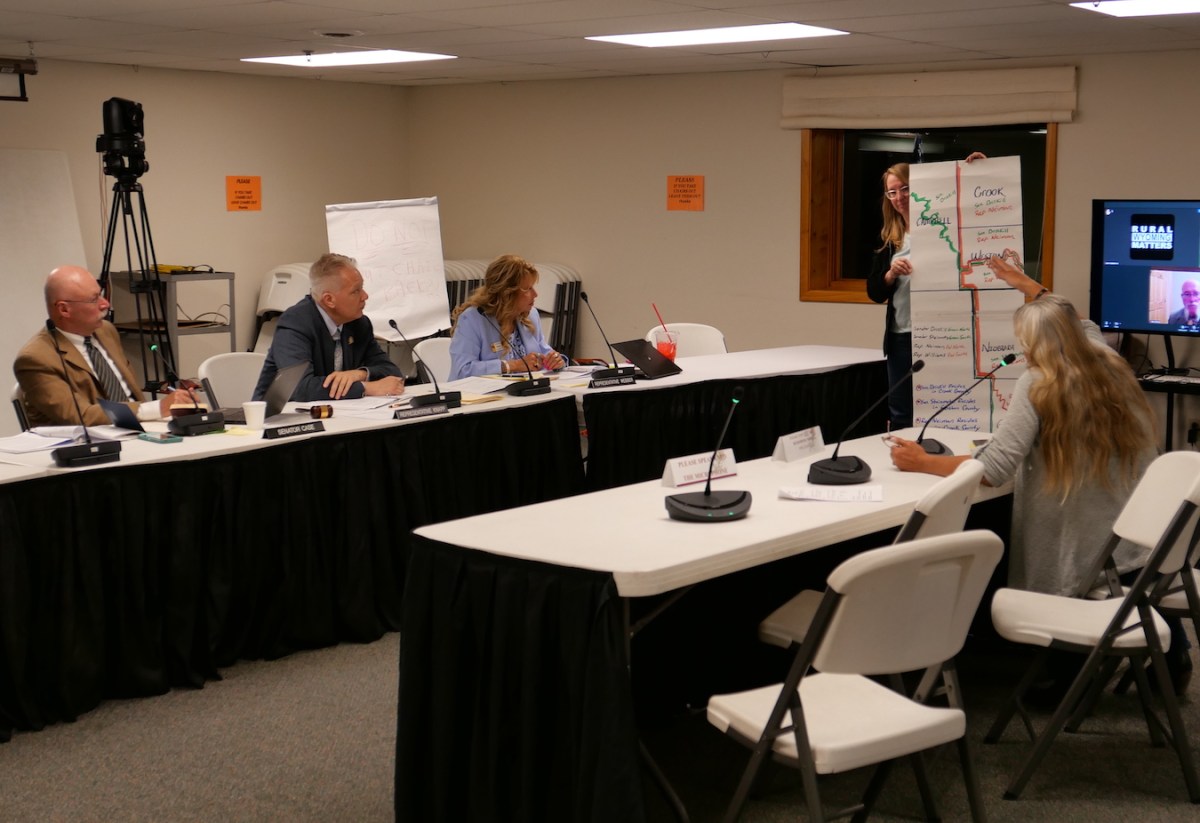
Wyoming lawmakers are pumping the brakes on efforts to redraw the state’s legislative district maps to match county lines.
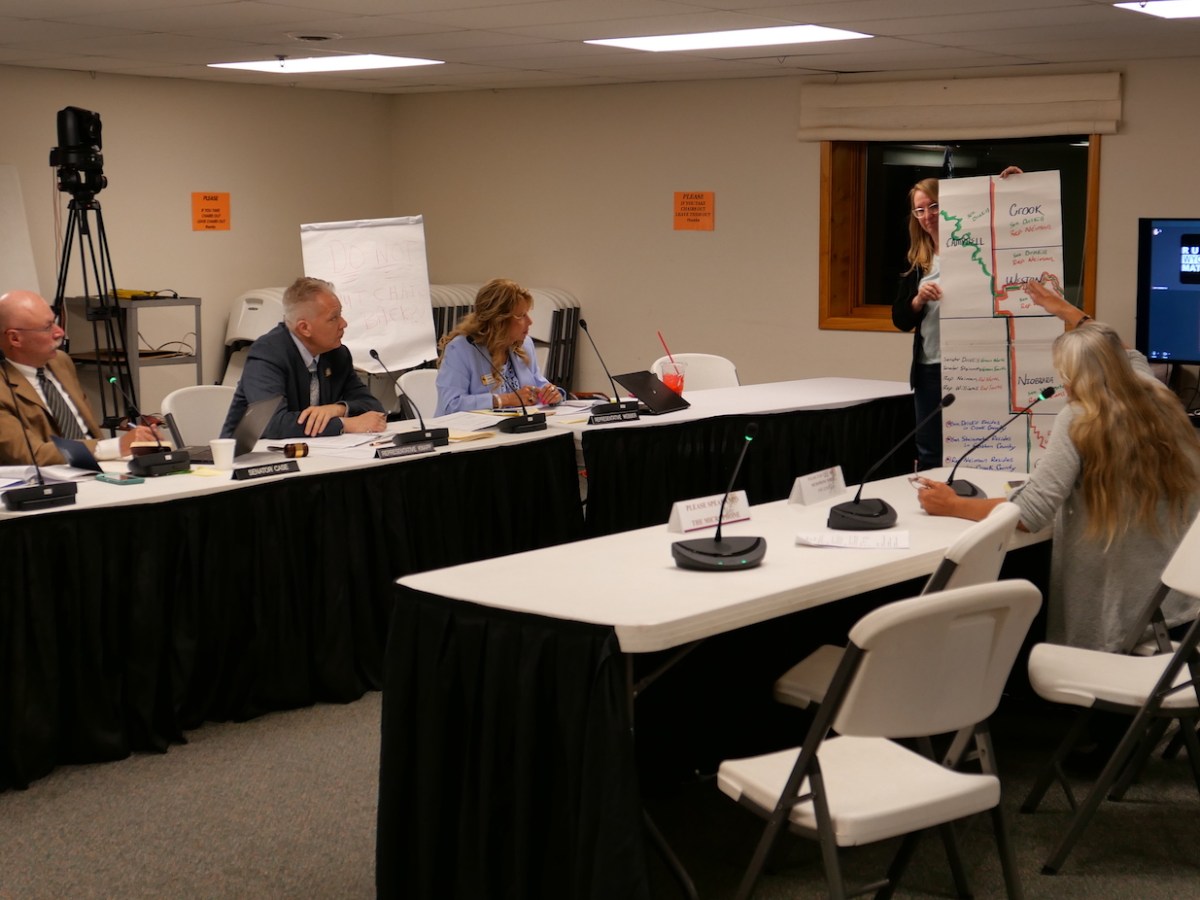
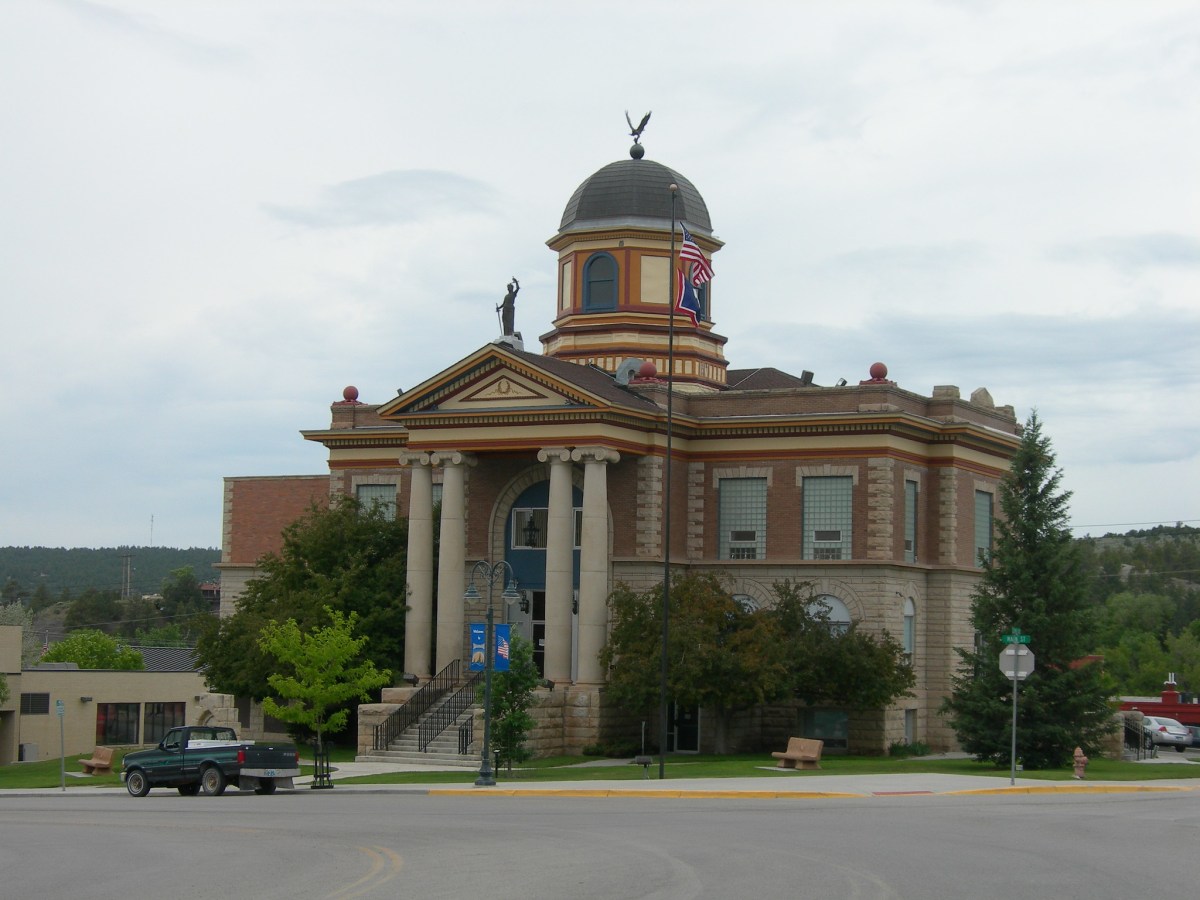
The Joint Reapportionment Subcommittee met virtually Wednesday to hear public comment and to discuss several proposals Weston County voters presented to lawmakers last month in Newcastle.
Since 2022, when Wyoming redrew its legislative districts following the last census, some Weston County voters have argued they’re inadequately represented in the statehouse because their lawmakers also represent varying portions of surrounding counties.
The subcommittee, however, chose not to recommend any of the proposals to the Joint Corporations, Elections and Political Subdivisions Committee for sponsorship in the 2026 budget session. Instead, the subcommittee chose to draft and forward a report to lawmakers to consider down the line.
“We’re coming in on a recommendation here that the present system seems satisfactory for now, but we’re willing to put in more effort to keep looking,” Lander Republican Sen. Cale Case said at the virtual meeting.
For decades, Wyoming’s legislative districts adhered to county lines, as specified in the state’s constitution. However, that legal requirement was upended in 1991 when a federal court ruled that Wyoming’s legislative maps violated the Equal Protection Clause of the U.S. Constitution — also known as “one person, one vote.”
Since then, the Legislature has shifted away from strict adherence to county boundaries and toward population. As a result, Weston County — one of the state’s least populated counties — is represented in the House and Senate by lawmakers who also speak for voters in certain parts of Campbell, Crook, Goshen and Niobrara.
“It’s got to be a hard job for a senator to represent more than one community of interest in Wyoming at the same time, equally on all things,” Newcastle resident William Curley told the subcommittee in September.
At that meeting, public testimony was nearly unanimous in its support for county conformity, though support varied on how exactly to achieve that. One proposal would involve weighted votes, while another would dramatically expand the number of lawmakers.
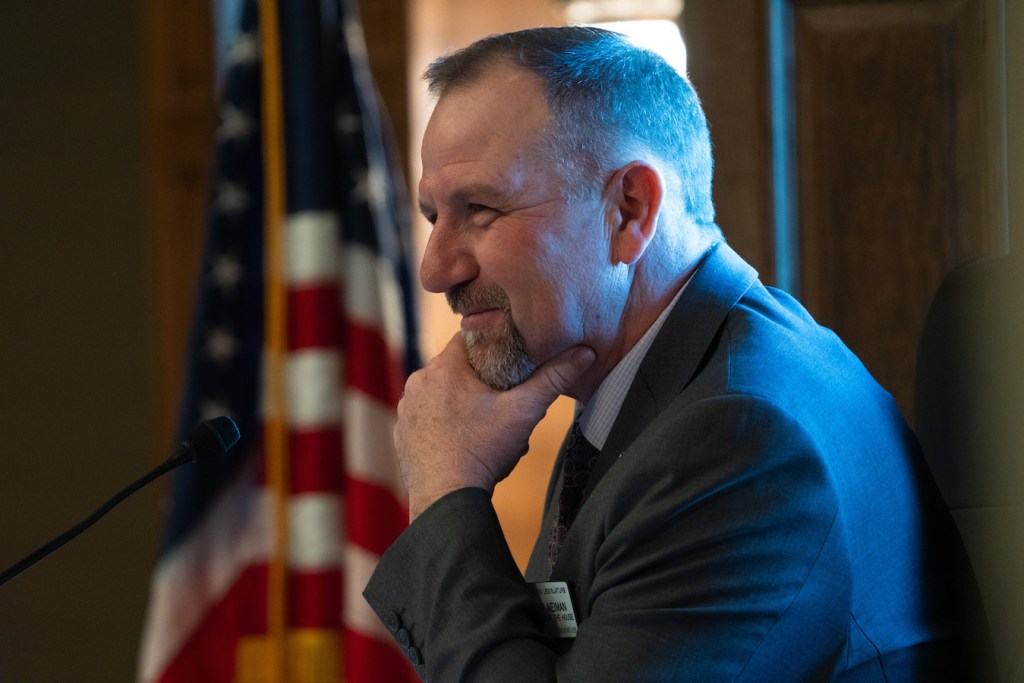
Speaker of the House Chip Neiman, R-Hulett, who represents all of Crook County and the northern half of Weston County, attended the meeting in Newcastle.
“Our ruralness is what, many times, makes us, I would say, makes us Wyoming,” Neiman said.
Over the course of three terms in the Legislature, Neiman has ascended to Speaker of the House, the most powerful position in the lower chamber. Still, he and his constituents argue that “rural voices” are diminishing in Cheyenne.
Wednesday meeting
The meeting this week offered a different perspective.
“I am the Gorin of Gorin v Karpan,” Laramie resident Sarah Gorin told the committee. “I was unable to attend your first meeting, and so I asked to testify today just briefly to fill you in on some of the background of that case and to speak for the basic fairness of the principle of one person, one vote.”
In 1991, Gorin was lead plaintiff in the case that would ultimately result in a U.S. District Court directing the Legislature to disregard the provision in the Wyoming Constitution that required each county to constitute a senatorial and representative district.
“While there can be little doubt that many Wyoming counties possess a sense of identity, a sense of neighborhood, and a sense of community interests, the bottom line is that citizens and not governmental units or regional interests are entitled to elect lawmakers,” according to a section of the ruling Gorin read to the committee.
The ruling has held up, including in a 2012 legal challenge, according to a Legislative Service Office memo. In that case, the court ruled that the plaintiffs presented no evidence that county-based districts resulted in different electoral rights compared to those drawn based on population.
Gorin told the committee that lawmakers are treading into similar territory.
“We haven’t yet heard a description of a problem that is so big that we need to turn the entire legislative system on its head and embark on something that is almost guaranteed to engender litigation,” Gorin said.
A New Jersey resident, who provided virtual testimony, was the one person at Wednesday’s meeting to urge Wyoming lawmakers forward.
“I know many of you might be thinking, ‘What brings a 26-year-old New Jerseyian all the way to Wyoming to testify about apportionment?’ The answer is the same reason I testified in my home state, which was to ensure that our state constitutions are followed as faithfully as possible,” Todd Lund Jr. told the committee.
Lund works as a policy director for Paul Kanitra, a Republican New Jersey Assemblyman, according to his LinkedIn.
While the panel did not proceed with legislation, the door’s not entirely closed on redrawing the state’s legislative lines. Individual lawmakers could bring their own bills, though such knotty legislation is likely to face significant challenges during a budget session when time is limited and bills face a steeper, initial hurdle.
The 2026 session starts Feb. 9.


Okay, for laughs: I was told during the previous reapportionment, that the Committee kept drawing lines/circles around what they deemed to be voting districts, and each kept gerrymandering the circles to make sure that those included themselves.
OK, more OUTSIDE influence.