

Touring the West during the height of the COVID pandemic, Courtney Buchanan lived out of her truck, slept wherever she ended up and lived off propane-stove-cooked meals.
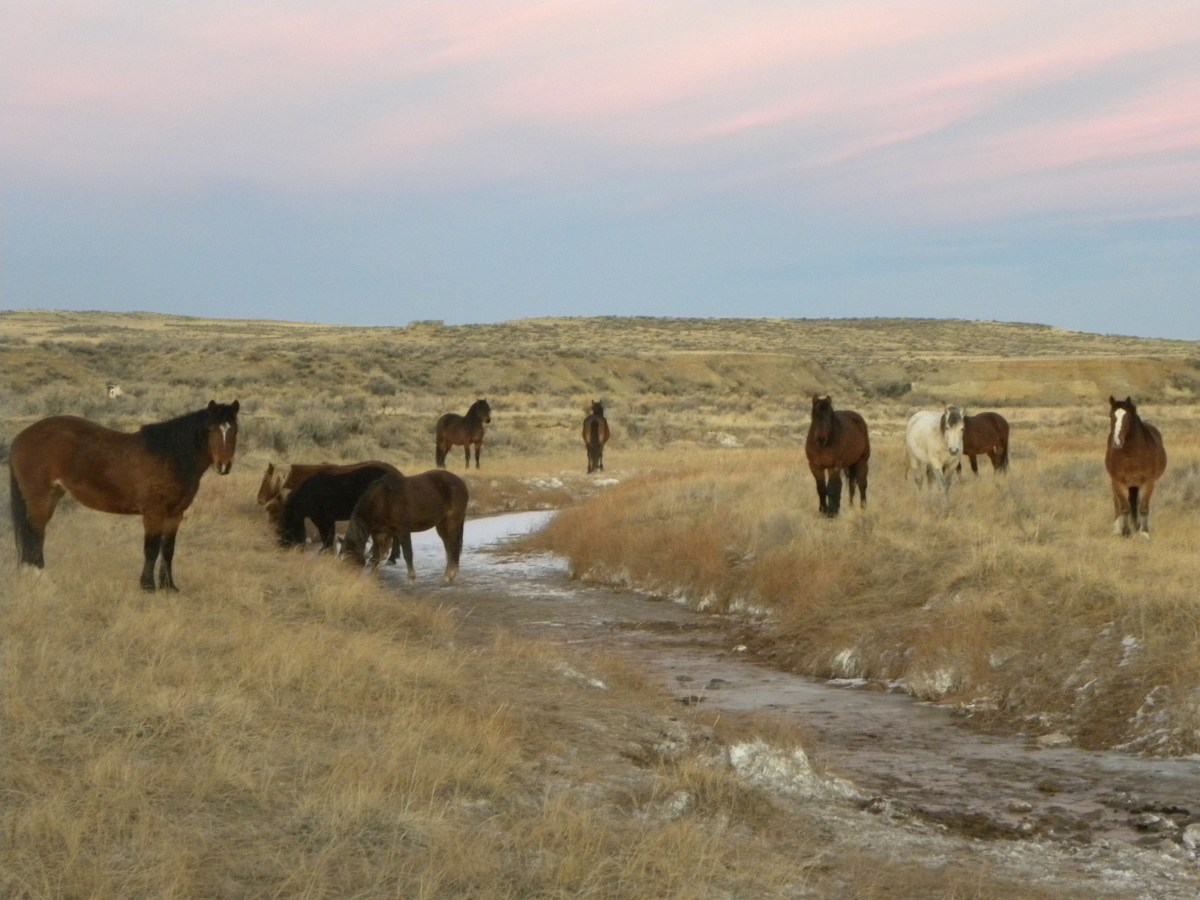
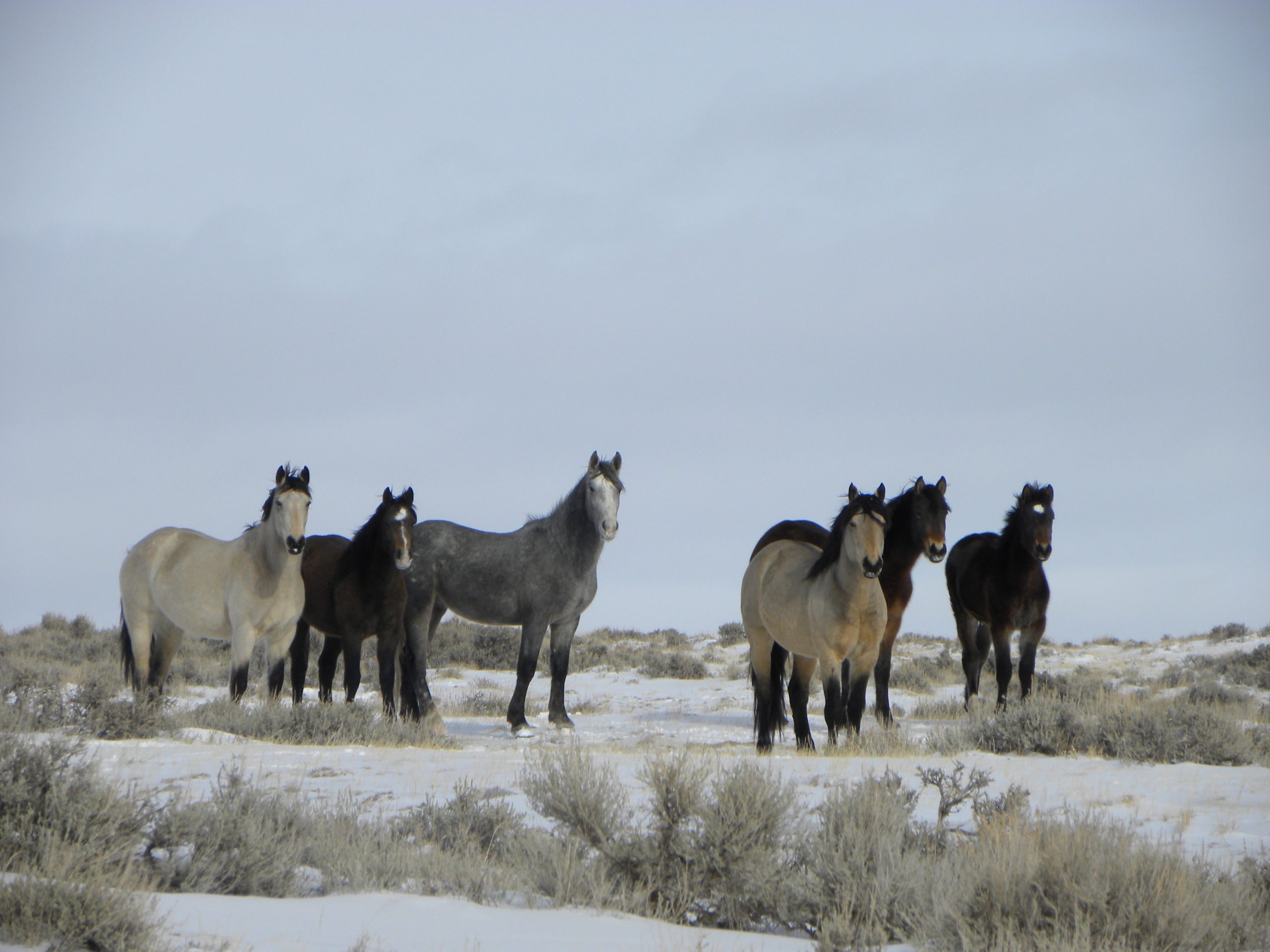
The then-University of Wyoming researcher was a nomad with a purpose, combing Western rangelands for free-roaming horses and the dung they left behind in search of clues about what they were eating and how they were faring. During surveys across seven Western states, she was struck by how the animals were consistently in good shape. She found the fattest horses in the Bighorn Basin, not far from home.
“The McCullough Peaks horses were in the best condition out of any of the horses I visited,” Buchanan told WyoFile. “It was wild to me, being out on the range, seeing them. Some of them are actually overweight — fat, chunky horses.”
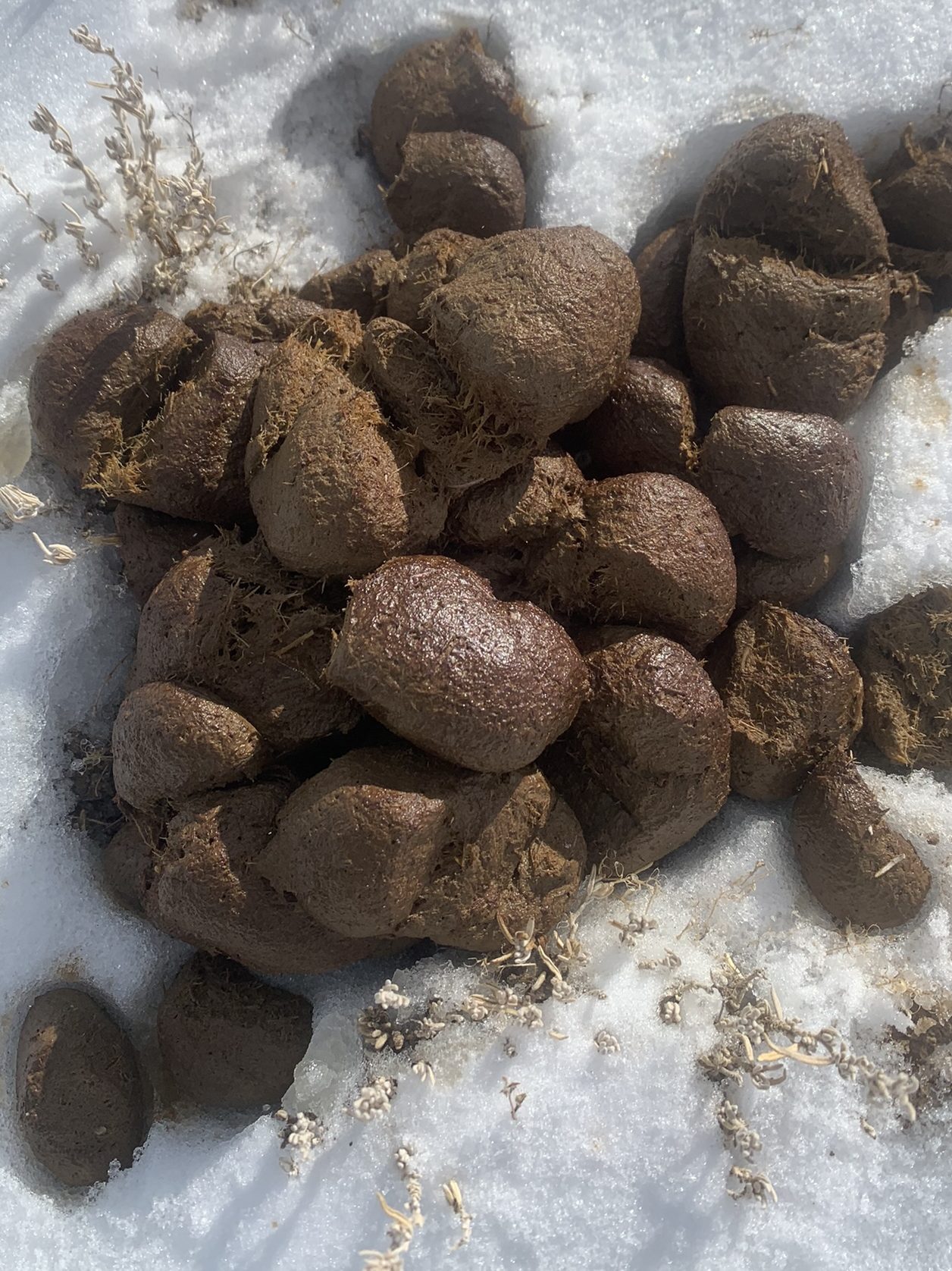
The findings of Buchanan’s recently completed study help explain why. The University of Wyoming Ph.D. graduate examined the composition of horses’ diet, how much it varied by season, and how much it varied from one reach of the equines’ Western range to another. She found great variation on all fronts.
“Our big takeaway was that in different environments and different places and in different seasons, they can really switch up what they’re doing and still be successful,” Buchanan said. “If they’re able to vary their diet that much and still maintain body condition, that sets them up for success.”
The dietary flexibility, she said, could help explain why rangewide free-roaming horse and burro populations are “so high” — at roughly 73,000, they number nearly three times land managers’ goal.
Buchanan studied under UW ecology professor Jeff Beck, who’s researched free-roaming horses for a decade, including how the large herbivores are negatively influencing sage grouse survival rates.
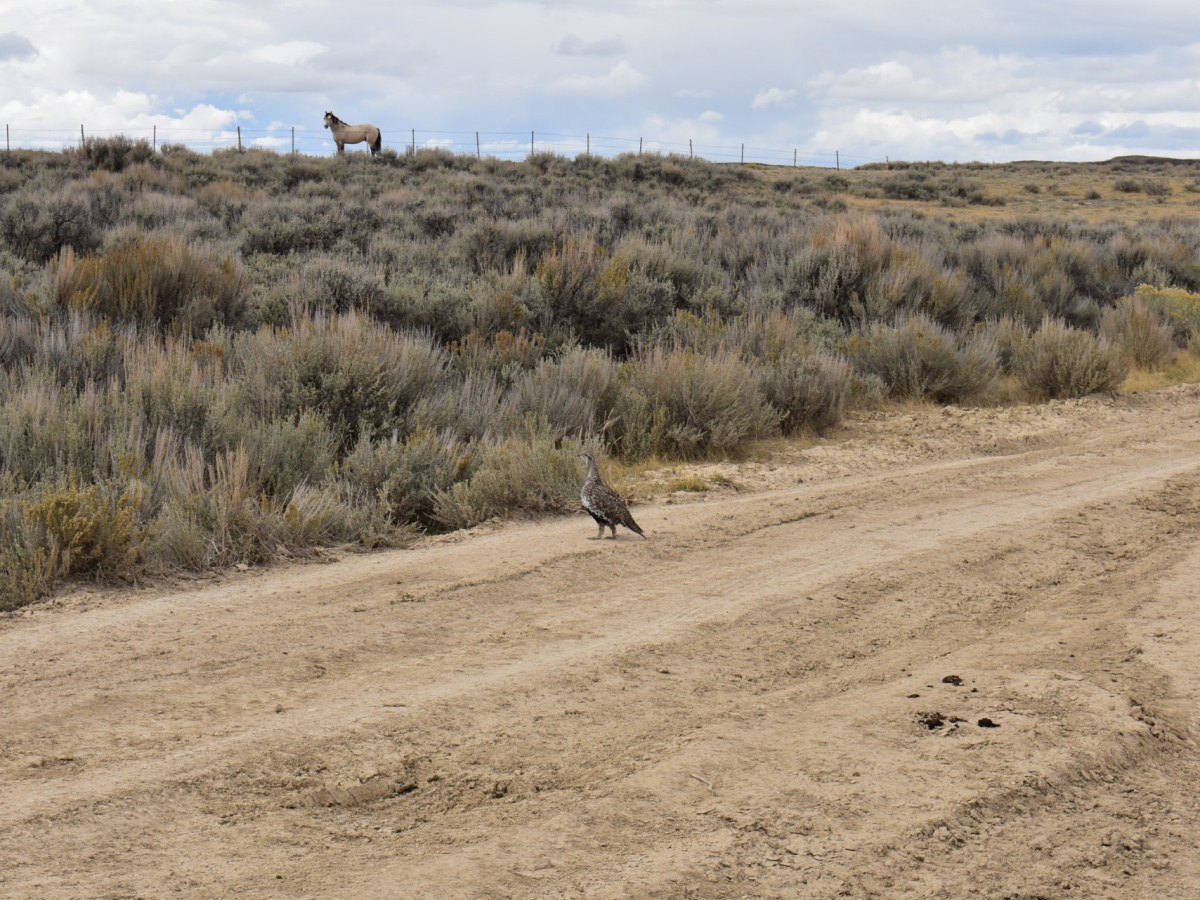
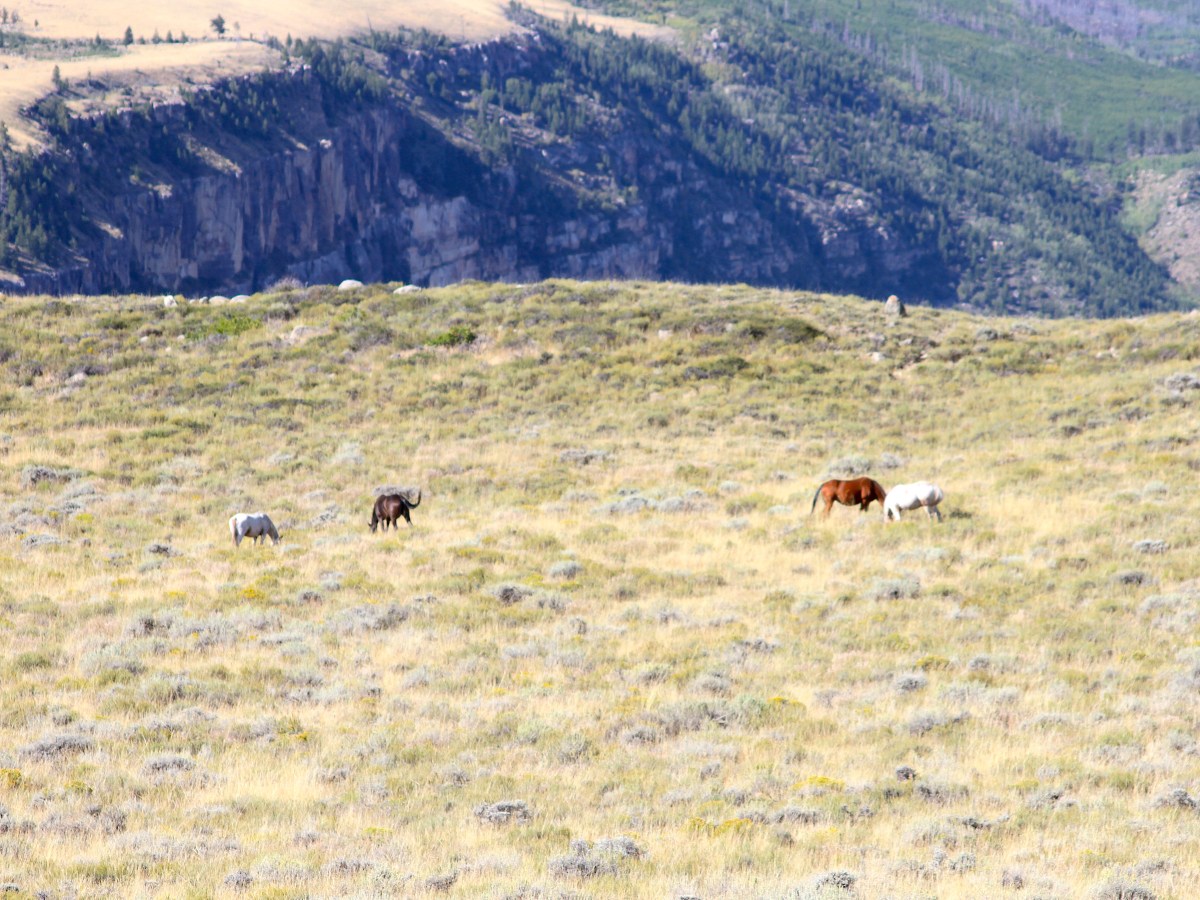
The study on diet and body condition, which looked at 16 herds in seven states, was recently published in the journal of Rangeland Ecology and Management. In their concluding remarks, Buchanan and Beck suggested that range managers could use their findings to help strike a balance between free-roaming horses, livestock and wildlife.
“While studies in individual locations and a meta-analysis of western North America have indicated low potential for direct dietary competition with free-roaming horses and wild ungulates that consume woody species such as mule deer and pronghorn, our findings indicate that there may be more potential for dietary overlap and competition during winter,” they wrote.
Going into the study, the ecologists sought to test the common view that horses are true grazers. Old research from the 1970s had found that horses in most herds ate predominantly grass, Buchanan said, though there were some exceptions and herds that also concentrated on other plant families.
In the lab a half century later, Wyoming researchers tested the horse manure Buchanan collected using a technology called DNA metabarcoding. That technique narrowed the contents of the feces down to the plant family level, though results weren’t accurate enough to reliably predict the species, Beck said.
Buchanan found that some herds fit the horses-are-grazers reputation. For example, the Adobe Town Herd — part of the historic “checkerboard” horse dispute — ate predominantly Poaceae, the grass family, regardless of the season. But diets varied wildly and, in many places, grasses were less than half of horse diets, especially in the winter.
“Each herd’s kind of doing a different thing,” Buchanan said.
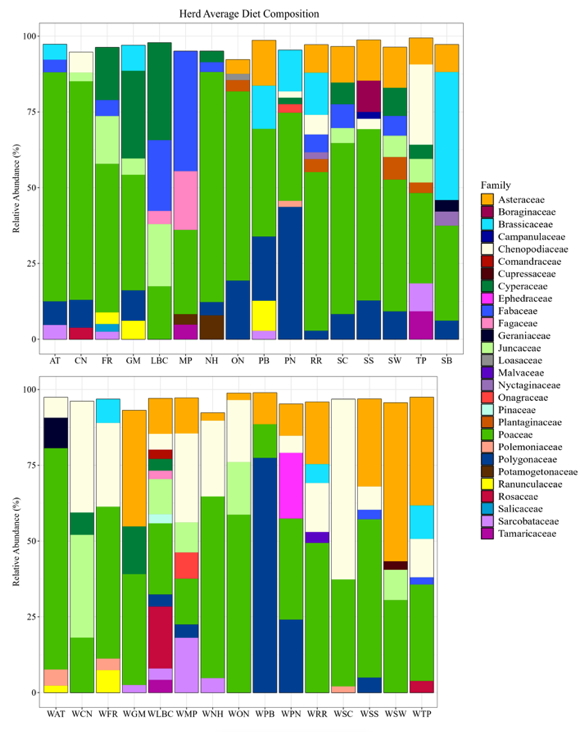
The plump McCullough Peaks horses, for example, homed in on legumes in the summer, but come winter switched to eating more from the Chenopodiaceae family — spinach-adjacent plants — than anything else.
The most slender horses that Buchanan encountered were in southern Utah’s North Hills Herd. There, animals ate mostly species from the grass family in the summer and winter, the study shows.
One limitation of the research, Buchanan said, was that the manure was collected over the course of a few days in any given herd. Findings about diet, in other words, are a snapshot in time.
Regardless, that doesn’t detract from the UW researchers’ overall finding: “They’re eating lots of different stuff,” Buchanan said, “but staying in pretty good condition.”

Kudos to Courtney for giving us a better understanding of the competition for forage between feral horses and wildlife. At this point the horses are winning, wildlife is suffering. We have far too many horses
Well done, Courtney Buchanan and Jeff Beck. Great science is a precursor to solid public lands policy. With sage grouse, mule deer and pronghorn all on the ropes, it’s high time to reduce feral horse numbers.
Great article, Mike! Another wrinkle in the discussion of feral horse management. But in addition to what horses are eating, we need to be concerned with the impact horse herds have on the ability of wildlife to access water sources. Seems I’ve heard reports of horses chasing pronghorn and deer away from scarce water. These horses, while pretty to look at, are introduced, and are not descendants of Miocene equines.
Thank you, Sarah. You are exactly correct.
Would be interesting to know what they were eating in the winter of 23 when losses were very high for horses and all ungulates.
I love the idea of wold horses. Every blade of grass and every drop of water dies not belong to cattle ranchers
No. We want to save the grazing for actual wildlife: deer and pronghorn. Not cattle
Mike great article. I spend a lot. of time in Adobe Town and I enjoy seeing some of the horse’s but they are not wild horses, they are FERAL horses. When the managable numbers are there its fine but when they over populate they seriously impact native wildlife populations and habitat