


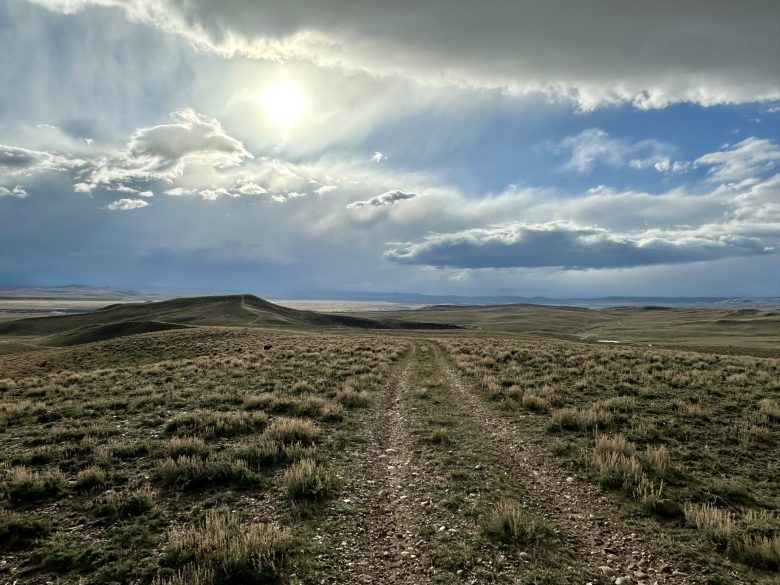
Wyoming is just different. Our wide-open landscapes, healthy herds and rich outdoor traditions aren’t just what we enjoy; they’re who we are. But they are also under strain. Habitat fragmentation, drought, invasive species and degraded landscapes are all chipping away at what makes Wyoming exceptional. The Bureau of Land Management’s Conservation and Landscape Health Rule, implemented in 2024, sought to maintain and restore these landscapes.
Opinion
Now, the Bureau of Land Management is proposing to repeal the Public Lands Rule, as it’s colloquially known. This rule is the agency’s policy that helps ensure America’s public lands are managed for long-term health, not short-term exploitation.
The BLM is mandated to manage public lands for multiple use — balancing conservation, extractive use, recreation and more. Repealing this rule would weaken the very foundation of how we care for the lands that sustain our wildlife, our communities and our outdoor economy.
The Public Lands Rule doesn’t lock up land or block multiple uses. It simply ensures that conservation is treated as a legitimate use alongside energy, grazing and recreation. It also calls on the agency to maintain intact lands, helping ensure functioning habitats remain connected.
Conservation may not sound like a “use,” but the purpose of the Public Lands Rule is to identify intact landscapes and to encourage active restoration and mitigation projects. What’s more, these uses don’t impact valid existing rights.
Under the Public Lands Rule, conservation can be compatible with other uses, but repealing it would unravel that balance, pitting short-term gains against the long-term health of the ecosystems that sustain us all. It would open the door to more poorly planned development, greater habitat fragmentation and diminished access for hunters, anglers and recreationists.
Wyomingites pride themselves on taking care of what they’ve been given. Ranchers manage grass and water because they know their livelihoods depend on it. Sportsmen and women follow fair chase because they know wildlife deserves respect. Agencies like the Wyoming Game and Fish Department rely on science to manage herds that sustain hunting, fishing and tourism across the state.
The Public Lands Rule reflects that same philosophy. It gives land managers the tools to restore degraded areas, reconnect wildlife corridors, and prevent invasive species from taking hold. It also encourages local residents to help identify lands that need restoration and where development is most appropriate, allowing communities to plan for the future instead of just reacting to the next boom-and-bust cycle. Repealing it would strip away those tools and put political pressure ahead of science-based management.
Public lands are the backbone of Wyoming’s economy. The outdoor recreation industry contributes over a billion dollars a year to the state, supporting small businesses from Alpine to Albany and from Dubois to Douglas. These are real livelihoods built on healthy landscapes and thriving wildlife — not abstract numbers on a spreadsheet.
When we keep our public lands healthy, we also strengthen the communities that depend on them. Clean water means strong fisheries. Connected habitat means safe wildlife crossings and resilient herds. Healthy rangelands mean productive grazing and fewer conflicts.
Wyomingites know that the best solutions don’t come from Washington, D.C., or from shouting matches on social media. They come from sitting around the table and figuring things out together. The Public Lands Rule emerged from that same principle of collaboration. It was developed with thoughtful input from stakeholders across the West. It reflects decades of on-the-ground experience showing that conservation and multiple use can go hand in hand.
Repealing it now would not only ignore that hard-won consensus but deepen the very divisions that make it harder to solve real problems.
This isn’t about ideology. It’s about integrity — doing right by the land, the wildlife and the people who depend on both. We can still choose the path of stewardship. We can still honor the generations who built this heritage and the future stewards. We can keep Wyoming wild, working and worth defending.
The BLM is currently accepting comments on the proposed rescission. Make your voice heard here: https://www.regulations.gov/commenton/BLM-2025-0001-0001
Ah the Wildlife Federation, striving to ensure we silly humans stay in town and don’t harm any rocks by stepping on them.
Thank you for all of this, Nat. Yes, I do lean left, but, right or wrong, I do not want this to be a political issue. I didn’t move here until 1981, so I’m still a “newcomer”. I live here, thrive here, on purpose. I do have a conservation easement because I am dedicated to our migratory corridor for elk, antelope and deer. I do include the coyotes, cougars, bunnies, chukars, etc. but many folks do not worry about them. I have no money, power or influence, but I do have my voice, my vote and my pen. Your voice about “collaboration” and “stewardship” is so important. Again, thank you for your care and concern.