

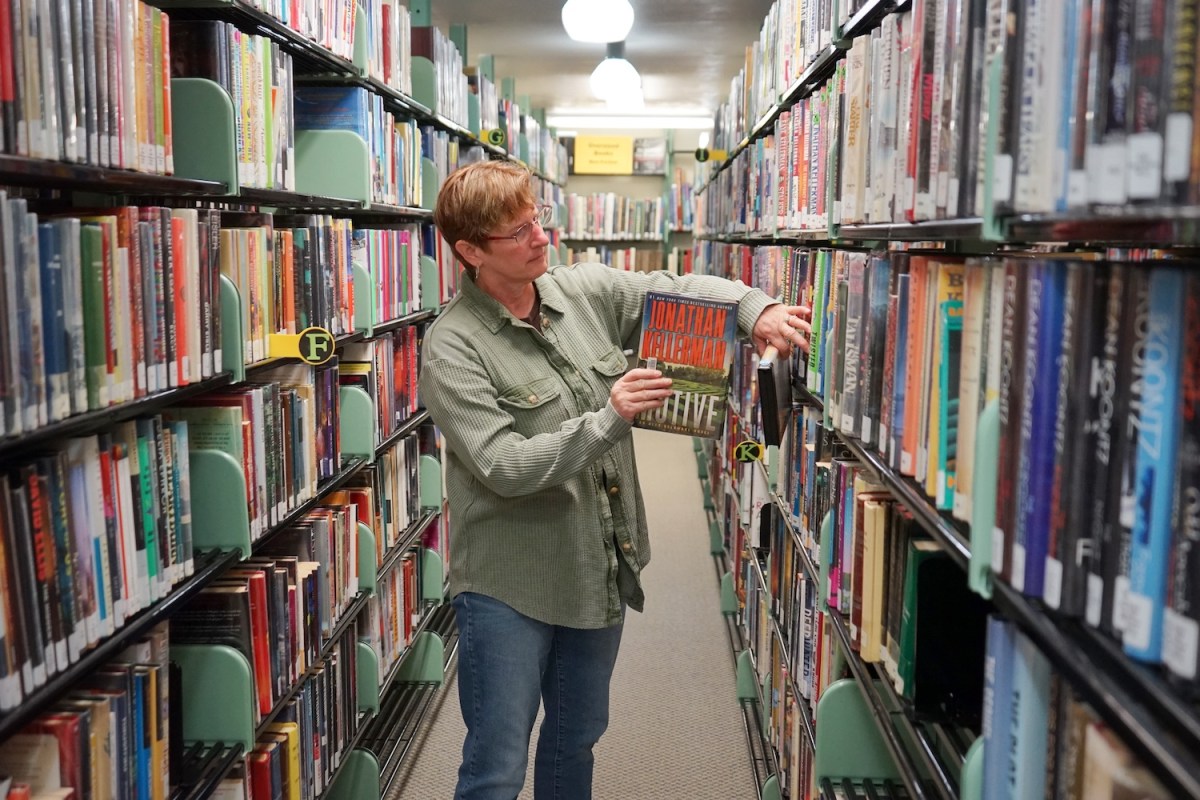
GREYBULL—Shawnea Chestnut grew up immersed in the books of her small-town library, which shares a building with the museum next door.
“Right over there,” she pointed toward the children’s section. “That’s where I was.”
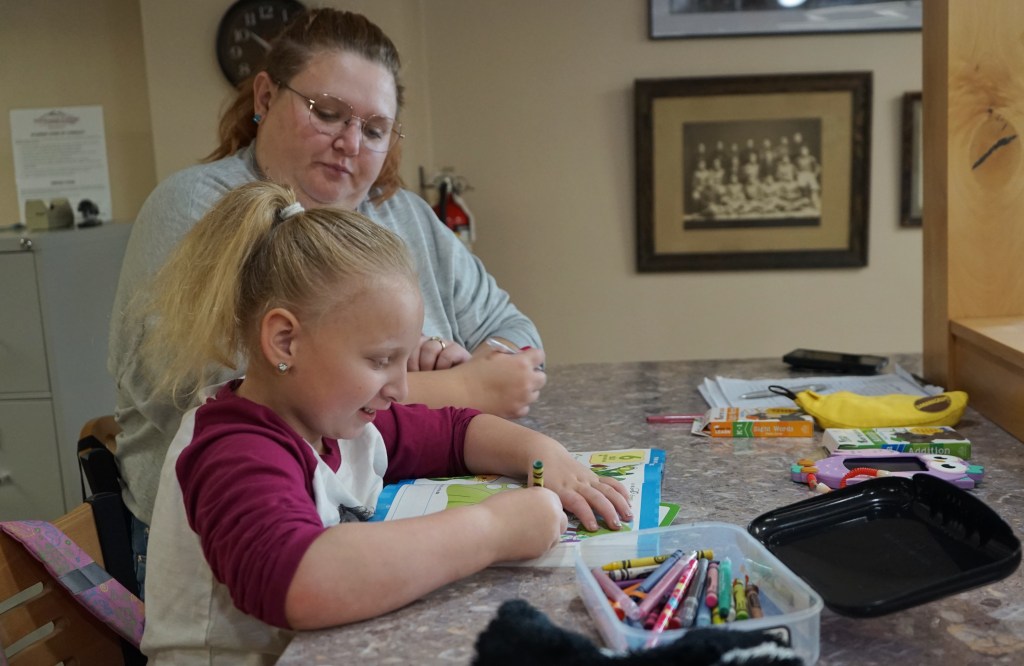
Now the 26-year-old is assistant library manager. Chestnut works here four days a week, organizing young-adult fiction programs, looking up books for patrons, assisting users on computers and offering after-school crafts for kids. Outside of her work, the University of Wyoming grad is pursuing a master’s degree in library science.
But Chestnut knows the Greybull library could land on the chopping block. With shrinking property tax revenues, budget cuts have already closed two branches and reduced services in the Big Horn County Library system.
“It’s depressing and scary,” Chestnut said.
If the Greybull library suffers a similar fate, Chestnut would lose a job she loves. But more than that, she said, kids would lose a safe place to go when school’s out, and locals would lose the chance to visit a welcoming space for resources and information.
It’s a scenario being batted about in library systems across Wyoming as county governments wrestle with declining tax revenue.
Nobody, it seems, wants libraries closed. But, many say, this is among the impacts advocates warned lawmakers about last spring when they urged them to vote against a measure reducing residential property taxes. The Wyoming Legislature passed a new 25% exemption on the first $1 million of a property’s fair market value, and as a result, the revenue pools for municipalities and special districts have diminished.
Impacts have touched everything from park maintenance to hospitals around the state. Several libraries have felt the pain acutely.
In Wyoming, county governments are required by statute to operate one library in their county seat, but they regularly operate additional branches in outlying towns. Because satellite branches are not statutorily mandated, many have been considered for cost reductions.
County officials say library system cuts are a matter of necessity and not a reflection of their support. The tough conversations around library budgets, however, are exposing tensions between library administrators and elected officials.
With more tax-cutting proposals on the horizon, the budget crunches are only expected to worsen.
“The reduction in property tax, obviously, is harming our counties,” Gov. Mark Gordon said at a recent town hall in Lander. “These consequences are going to be larger and larger.”
Communities are increasingly looking toward non-governmental organizations for fiscal lifelines and rethinking traditional funding of free public services. Outside options, many worry, may not be sustainable in the long run.
The situation distresses Tina Ely, the director of Big Horn County’s library system. The county’s library branches serve many roles, she said — people visit them to build their résumés, find summer activities for their kids, take continuing education classes and even select seeds for their gardens.
“It’s not just a place to check out books,” she said. “It’s a community place.”
‘Insufficient funds’
It was a warm and windy Thursday afternoon in Saratoga, and Jane Laughlin walked into the small library on the edge of town a little before closing time. The cottonwood trees were flaming in the golden tones of October, and a sign on the door advertised “books that’ll make you howl.”
Since the library recently cut its Friday hours, this was the last day of the week for Laughlin to run her errand.
She came to write a check for $100 to the Saratoga Friends of the Library. The part-time resident had recently heard the Carbon County Library System was facing a budget crisis, she said, and she wanted to help.
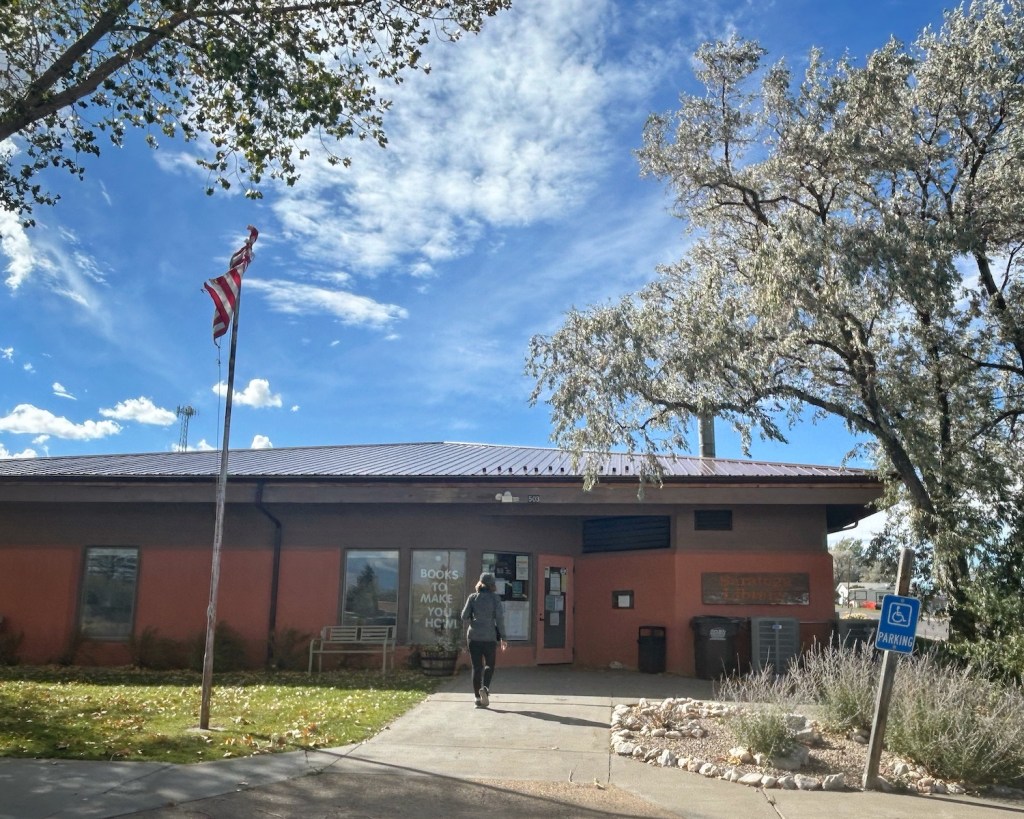
“I just hope we can keep it going,” she said. Laughlin brings her grandchildren here, uses the computer and checks out books. The nearest library branch is 40 miles away, she noted, too far to just pop in for a visit. She was optimistic that Saratoga patrons would find solutions.
“I think this community is good at rising to the occasion,” she said.
Saratoga is among the seven branches operating in Carbon County — a sprawling 8,000 square miles stretching from ranches near the Colorado state line to Saratoga along the North Platte River to county seat Rawlins on Interstate 80.
The system used to have eight branches. The Sinclair library closed in 2024 due to already-existing budget constraints.
When the Carbon County Commission tackled its budget this summer, plummeting property tax revenues meant it had to find $900,000 to cut, Commissioner Sue Jones said. In that process, the commission made a significant cut to the library system budget, dropping it from $350,000 in 2024-2025 to $164,462 for ‘25-26.
The 53% cut sent staffers, board members and patrons into an “all-of-the-above” strategy for keeping the library system afloat, said Library Board Chair Adelaide Myers. A public outreach campaign plastered branches with notices like this one: “OUR LIBRARIES ARE RUNNING WITH INSUFFICIENT OPERATIONAL FUNDS.”
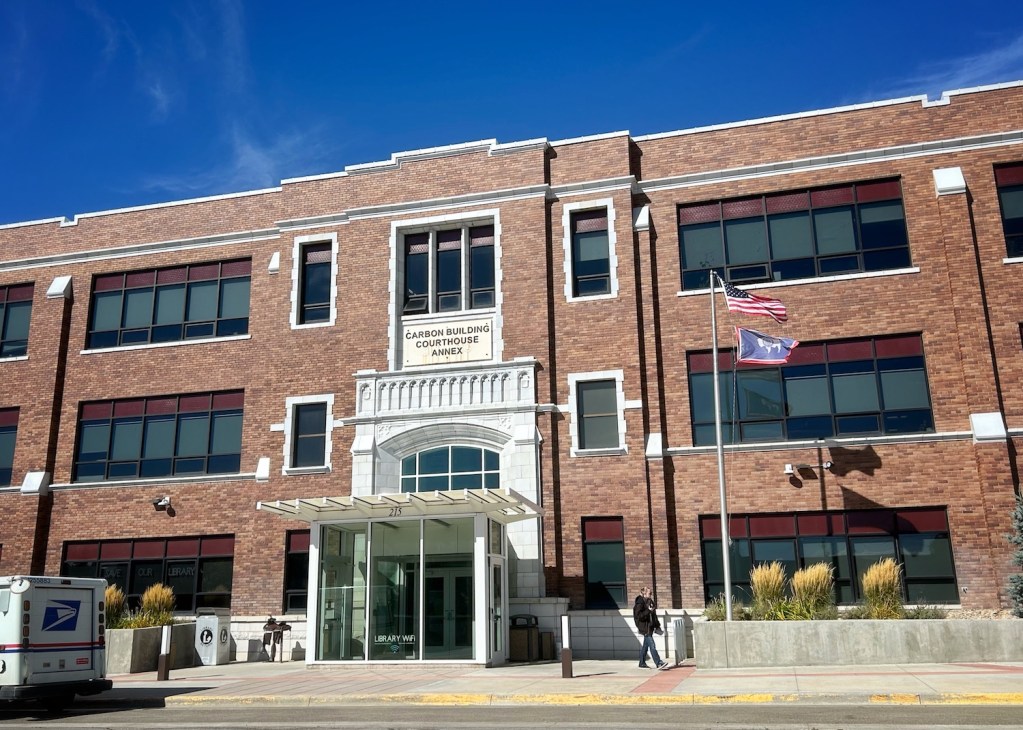
The library system reduced branch hours and dipped into savings, and the board voted to close small branches in Hanna and Medicine Bow. They also leaned into fundraising opportunities. The library system and friends groups managed to raise more than $130,000 in private donations and grants — largely via Embrace the Valley, a matching fundraising event through Brush Creek Ranch. Friends groups, particularly in Saratoga, raised the bulk of the money, and the library board is now working through the process of how those funds can help keep services alive, Myers said.
It’s not as easy as just replacing the library system’s losses, however.
“When we have a $186,000 shortfall, $139,000 goes a long way,” Myers said. “But we also have to recognize that that’s not our money. That is the friends groups’ money.”
The funds did spur the library board to delay the Hanna and Medicine Bow closures. However, there is no guarantee they will stay open, she said, especially with the budget picture trajectory.
“We have to plan for a really difficult year next year,” she said. “We prepare for the worst and expect the best.”
Tensions emerge
On a hot morning in July, a crowd of people gathered in lawn chairs and on the grass in front of the Lander Library for a silent “read-in.” Many brought signs that proclaimed support for Fremont County libraries. No one shouted slogans. They just read in silent solidarity for the library.
While they didn’t have an explicit message, the sit-in took place on the heels of the Fremont County Commission’s budget process, which created a ripple of dismay in the community after commissioners announced the county would cut library funding by $300,000, or 23%.
The library system was not the only department to suffer cuts. Fremont County made a total of $2.5 million in cuts to its overall budget. Positions were left vacant, contracts reevaluated and fees hiked.
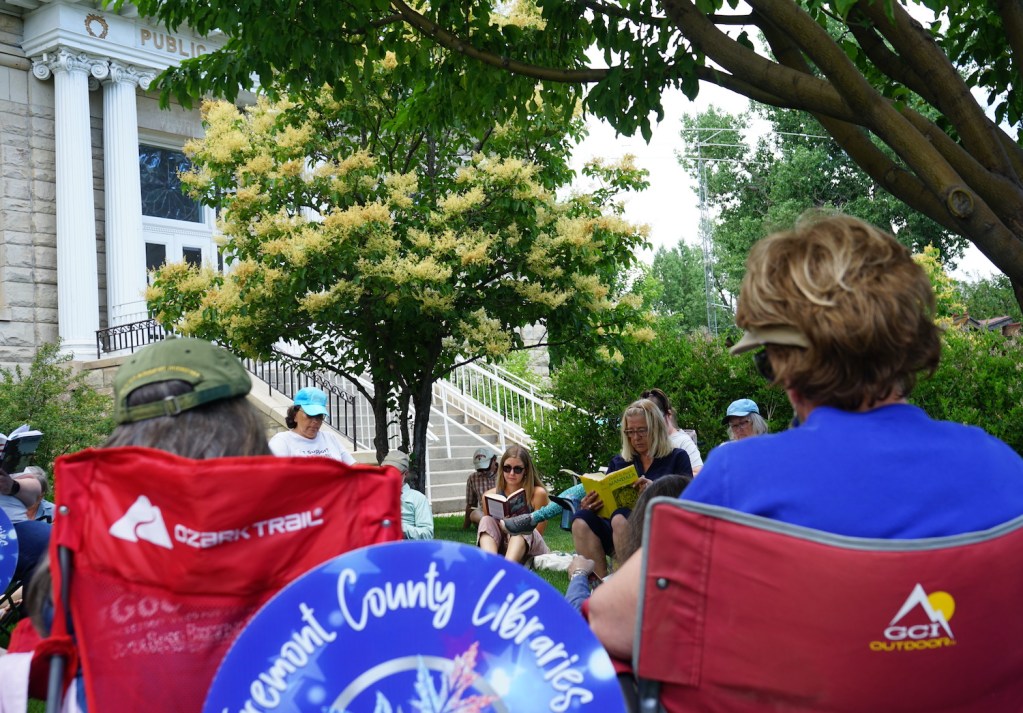
But many supporters felt the library cut was undue and carried a whiff of disapproval from the conservative commission. Fremont County commissioners denied this, pointing to the array of cuts they imposed to balance their budget.
Ultimately, the Fremont County Library Foundation stepped in with a $100,000 donation, and the system obtained county approval to re-allocate an additional $100,000 earmarked for collection development in order to backfill. And while the remaining shortfall will result in reduced staff hours, the system’s three branches in Lander, Dubois and Riverton will be able to continue most services.
Similar tensions are playing out elsewhere as county governments reckon with less revenue.
In September, following Carbon County’s budgeting process, Library Director Maria Wenzel resigned after three years on the job. Wenzel declined to comment to WyoFile about the reasons she left.
Commissioner Jones acknowledged that the process was fraught. But she defended the commission, which imposed hiring freezes and reduced office hours in county government while also making painful cuts to its so-called outside agencies. With the latter, that meant eliminating funding for economic development completely and reducing funding for senior services, the museum and library system.
“These little towns just tend to lose everything.”
Molly Yates, former Deaver and Frannie Librarian
The county’s budget is easily misunderstood, Jones said, leading the public to think the commission should spend money that it can’t. The commission’s hands are tied in certain matters, she said, and it needs to keep reserves healthy.
Jones sees encouraging signs like a library fundraising event she attended this fall. “They were doing fundraising for their local library in Encampment, which to me, is absolutely wonderful, because communities need to buy in,” she said.
Outside fundraisers could play an increasing role in propping up nonstatutory services like libraries and museums, Jones said, and should be seriously considered.
Little towns lose out
Big Horn County Library Director Ely doesn’t usually get sick, but in late September, she was fighting off the latest in a string of bugs.
It could have been the stress.
In the last year, she’s had to contend with the complicated equation of how to keep running the county’s five branches with much less money.
“We had gotten a cut the year prior,” Ely said, and “we had been kind of warned by the county commissioners that this budget was going to be even worse.”
And it was. When it was presented in July, Ely and her team discovered the county commission had cut the budget from $350,000 the previous fiscal year to $280,000.
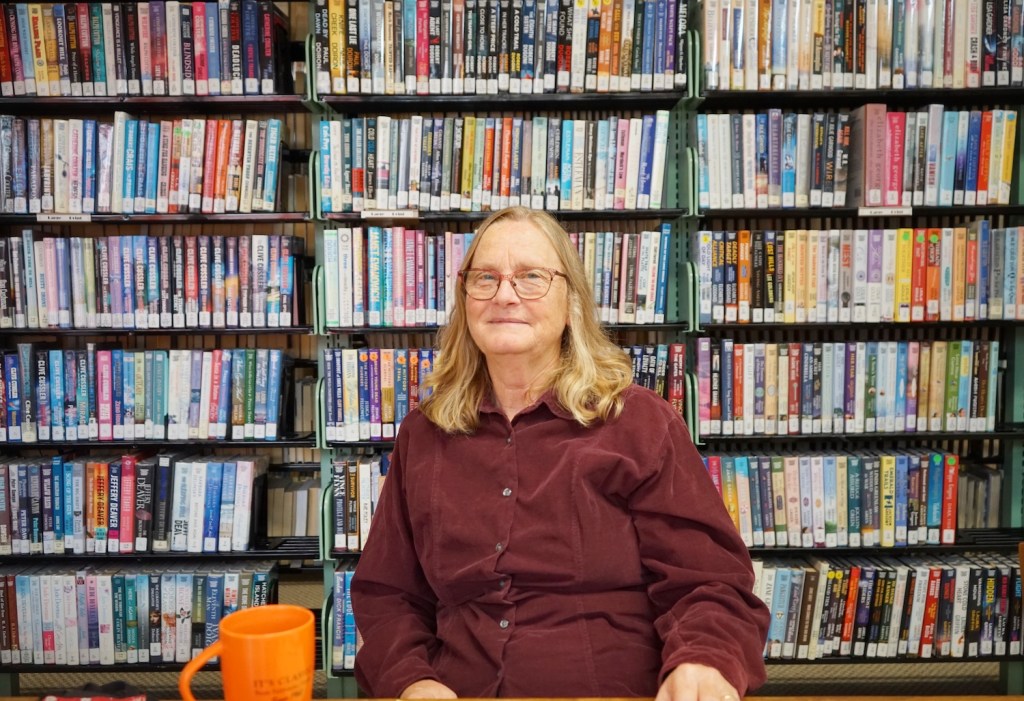
With the reduction, Ely said, they axed Wyoming retirement benefits as well as paid time off for all employees. They trimmed employee and operating hours. They cut programming funds and travel costs.
“The staff took a hit,” Ely said. “So far, they’re all able to hang in there with us. But of course, at least three of them have a second or third job, and they stay with us because they love the library.”
Hardest of all, they closed the Frannie and Deaver branches.
“We were just desperately looking for places to save,” she said. “It seems minimal, but we saved about $10,000 a year by closing Frannie and Deaver.”
Patrons in those small towns were devastated, Ely said. Even at the branches that remain operating, she said, patrons have been upset about cuts. There’s not a lot that Ely and the Big Horn County Library Board can tell them except the truth, she said.
“It’s been very difficult,” she said.
Molly Yates had worked as the Deaver librarian for 28 years and in Frannie for 25, splitting her time each week between the two one-room branches. In her post, she checked out DVDs, monitored computer use, chatted with patrons and shelved books.
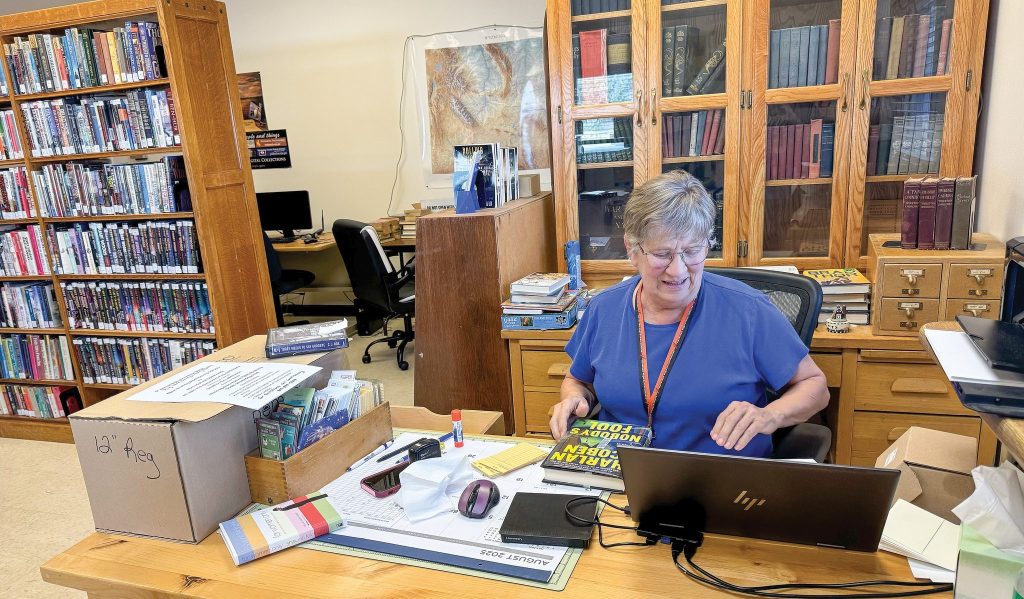
Budget cuts have mounted in recent decades, she said, so fretting about closures wasn’t new. But still, she was “very upset” when she heard the news.
“These little towns just tend to lose everything,” Yates said. Local schools have been consolidated, postal services diminished. “They were always kind of proud of having the little libraries, and now they were taking that away.”
In October, the towns of Frannie and Deaver reopened their branches, which now operate on volunteer labor one day a week. Yates intended to be part of that volunteer staff.
Vicious cycle?
Library directors who spoke to WyoFile feel they have been cut to the bone. When they contemplate future budget choices with ever-shrinking revenue, they’re at a loss.
“We are going to make it through this year,” Ely said. “I just don’t know what the future looks like.”
Ely thinks eroding services will likely come as a hard lesson, demonstrating the kinds of things property taxes fund. “I think it’s going to be a wake-up call,” she said.
Carbon County Library Board Chair Myers said the current fundraising fix “cannot be our forever plan. We need to be funded.”
She is reaching out to lawmakers and encouraging others to follow suit to let them know that property tax reductions are wreaking damage down the line.
The roundabout result of cutting residential taxes, she said, could be that property values fall, “because people don’t want to move to a community that doesn’t have a fire department, doesn’t have police, doesn’t have libraries, doesn’t have senior centers, it doesn’t have all these services that we take for granted that our property taxes pay for.”
It triggers a vicious cycle, she added.
“I don’t know what the answer is,” she said. “I just know that cutting property taxes without backfilling to the counties and municipalities and school districts that lost those revenues is not a good idea.”

I agree with all the previous comments about letting our state elected officials — controlled by the freedom caucus — know the pain they are causing. And we know it won’t end at library cuts, but will extend to police, fire, school & after school programs, community programs, and more. And its short sighted to think some wealthy people can come in and save the day (which is what the Repubs are hoping for) and will likely benefit the wealthier areas. So PLEASE have the hard conversations with your neighbors — point out who the cause of this is. Tell them to call their reps and testify at hearings. Relational organizing is extremley effective. The budget season is JUST starting now! And join Better Wyoming to get up to date info!
I can understand the anguish the people in this article expressed. However, if you are looking for anyone to blame, I suggest you go into your bathroom, look in the mirror, and the reflection you see is the person to blame. If you voted in the last election then you voted for the people that cut the property taxes that helped fund your libraries. If you didn’t vote, you are still to blame. Voting for people that represent your opinions on what is important is your only tool to shape the outcome. If you had conversations with you legislator that you felt property taxes should be cut, then they complied with the desires of their constituents so don’t complain. The fact that you never thought about the effect less revenue would mean to the services you receive from the county you reside in, means you didnt think. In my opinion that isnt a very good excuse. The same is true for the city and county elected officials and employees. I can understand how common citizens might not have thought this through but I find it reprehensible that the people who should have known what the effect of less revenue would mean to the services they provide but still voted for the very legislators that did the cuts. Perhaps rather than reducing library funding, we should attend upcoming county budget hearings and demand personnel cuts or cross the board pay reductions for the elected county officials. You reap what you sow.
Where’s the rainy day fund now? There is so much money there and could be used for several purposes, but there it sits. The people of Wyoming should be able to see use of those monies in situations like this. Why it is always so untouchable, I don’t understand. Our libraries are important community places, even though they are under constant attack by our state legislature. It’s a sad state of affairs and it’s no wonder people who come to this state think we’re backward.
Having chess to free reading materials is so precious to so many. I remember walking down to our library inroad Springs and entering this wonderful building, with such excitement. There was always some new discovery! As kids, we neighborhood girls formed a book group. We’d spread out our blankets nd red for hours, together, on warm summer days. I have always been a reader and encouraged my kids ( and my students) to be readers. I did graduate work at the University of Wyoming to become a reading specialist. It’s crucial today that people learn to read not just for pleasure but can do critical reading. There is so much disinformation floating around nowadays. It is extremely important to read well. It’s such a joy!
Yep! Plus… the Freedom Coalition wants to cut taxes even more! Our basic infrastructure is going to collapse since it’s hanging by a thread as is. The FC gets it’s marching orders from the national headquarters with no regard to actual state needs and circumstances. If you care one tiny bit about your communities you need to do your homework about the Freedom Coalition goals and vote accordingly.
This is Wyoming’s race to the bottom. Cuts to libraries, schools, basic infrastructure, human services and parks.
Perhaps, just perhaps, Wyoming will react the same way Kansas did after their race to the bottom under Sam Brownback, and vote these know nothings out. Hope so, but I am not particularly optimistic.
Such a devastating situation. Your comment is that “ nobody wants to see libraries closed”. I believe there are some who don’t care, or those who don’t want this source of knowledge available. Keeping people from reading books and getting truthful information is a way to control them.
Hopefully, the people’s of Wyoming will persist in keeping their libraries accessible to all. It’s so important.
Please contact your state legislators on the issue of cutting property taxes even more and possibly removing them altogether. Property taxes fund local government, not state government. More cuts in these taxes would decimate the local public services like libraries, roads, ambulance service, and public schools, to cite only a few examples.
Thank you non-freedom-caucus (not a clue how government is funded)
The answer to all of our problems is to vote the goofballs out.
Seem to recall one legislator felt it was ok if all the small places just dried up. Guess the residents are not as important as those in Gillette Casper Cheyenne Laramie and Rock Springs