


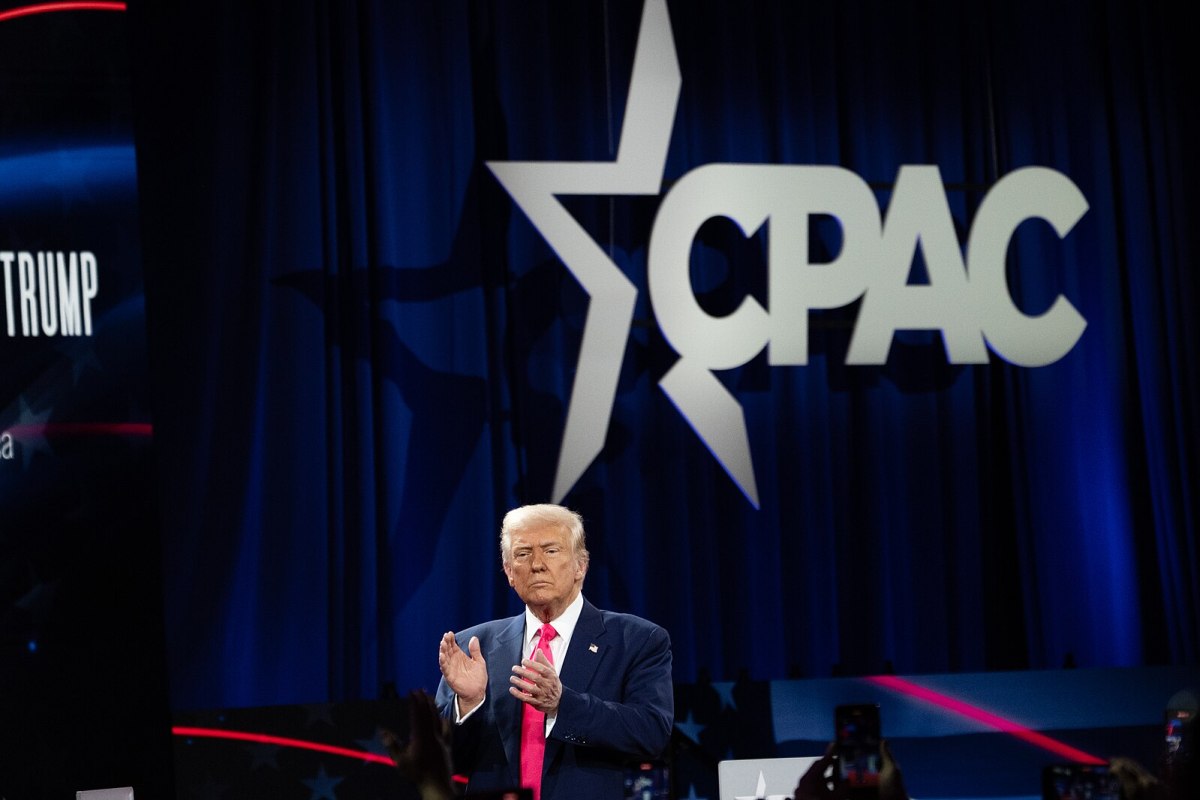
In a Nov. 2 interview with “60 Minutes”, President Donald Trump pretended that he did not know Binance founder Changpeng Zhao, the cryptocurrency billionaire whom he pardoned, even though in 2023 Zhao pleaded guilty and was sentenced to four months in prison for violating the Bank Secrecy Act. Specifically, Zhao had failed to implement anti-money laundering procedures.
Opinion
For those who think this a minor or vanilla offense, consider that the U.S. government had accused him of inflicting “significant harm to US national security,” and said that he had “violated US law on an unprecedented scale.” In the pursuit of profit, Binance’s money-laundering acts had allowed “money to flow to terrorists, cybercriminals and child abusers through its platform.” The terrorists included Hamas and al-Qaida. Why did Trump pardon such a criminal?
Trump said he had been told that the prosecution of the crypto king was an example of a “Biden witch hunt.” Trump said that Zhao “was treated really badly by the Biden administration,” although he claimed that he had “no idea who he is,” but acknowledged, in the same breath, that “he is a successful guy.” Skeptics doubt Trump’s explanation.
How about self-aggrandizement as a motive for Trump’s pardon of Zhao? Zhao’s company has had business dealings with World Liberty Financial, a cryptocurrency company owned by Trump’s sons, Eric and Donald Jr. While seeking a pardon, Zhao hired lawyers and lobbyists with connections to the Trump administration and struck a deal with Trump’s sons that was expected to generate tens of millions of dollars annually for the Trump family for years to come.
When “60 Minutes” host Nora O’Donnell asked Trump if he was concerned about “appearance of corruption,” Trump replied, “I’d rather not have you ask the question. But I let you ask it.” Trump stood alongside his sons in 2024 when they rolled out the family’s cryptocurrency business. The specter of self-aggrandizement, or more pointedly stated, a “pay-to-play” pardon, raises anew the need to amend the Constitution to check the constitutional grant of the pardoning authority to the president.
Various presidents have granted pardons that have rightly faced backlash. When Gerald Ford pardoned Richard Nixon in 1974 for “all” the offenses that “he has committed or may have committed” since his election, Ford sought, in his words, to free the nation from the paralysis of Watergate and spare Nixon from potential prosecution and his family further humiliation.
Ford declared to America: The rule of law has prevailed. On the contrary, the Nixon pardon foiled the application of the rule of law. If, and when, Nixon had been tried and convicted for his illegal acts, perhaps Ford might have found grounds to pardon the humiliated ex-president, but all he accomplished in granting a pre-trial pardon to Nixon was to spare the Watergate president.
Americans were deprived of the opportunity to learn whether the rule of law and the criminal justice system could bring an errant president to heel, and whether the rule of law would enjoy widespread support when a president is forced to stand criminal trial.
The Nixon pardon, alone, it seemed to me years ago, was sufficient to justify a constitutional amendment to place checks on the presidential pardoning authority. In a peer-reviewed, scholarly article, I argued in favor of Sen. Walter Mondale’s proposal in 1974 for a constitutional amendment that would arm Congress with the power to check presidential pardons that seemed, well, unpardonable. Mondale’s proposal stated: “No pardon granted to an individual by the President under Section 2, Article II, shall be effective if Congress by resolution, two-thirds of the members of each House concurring therein, disapproves the granting of the pardon within the 180 days of its issuance.”
In practice, few presidential pardons would be so worrisome to Congress that members would intervene to block it. Only controversial pardons would draw deep concern from Congress. Trump’s pardon of Zhao is such a pardon. His self-aggrandizing exercise of a constitutional power intended to temper justice is so fraught with conflicts of interest that it demands enactment of the Mondale proposal.
Congress should be suspicious of the motives behind a pardon to a convicted criminal that coincides with his investments to enrich a president’s family. The specter of corruption at the center of the Trump pardon of Zhao deserves scrutiny, even without the Mondale proposal.

In response to the David Adler opinion piece about passing a constitutional amendment which would give congress the authority to override Presidential pardons, does he really believe that ANY pardon would be so obviously odious that 2/3s of both houses would vote to override it? Fifty years ago, this was a good idea, in today’s world of alternate facts and hyper-partisan division between 2 warring camps there simply is no way any issue could garner that super majority in both houses. Evidence of this is the just ended, longest government shutdown in history, which lasted for 6 weeks before 7 Democrat Senators and 1 independent finally caved and voted to end it. Now those 8 aisle crossers are being vilified and castigated by their own caucus’ for being traitors. While I wholeheartedly agree that we as a nation really do need to find a workable, non-corruptible way to correct particularly egregious Presidential pardons, requiring an impossibly large majority vote isn’t going to get ‘er done, but then again, such an amendment has zero chance of ever coming to pass.
Obviously we need to check the ability of the president to issue pardons. Since congress has a weak spine, we’ll have to wait for a better time. I hope you MAGA groupies can see the disconnect between you and the people that can enrich Trump, or protect him.
Gordon, ALL the presidents issue ridiculous pardons. It’s in their “benefits package”.
That’s right. notice I didn’t limit it to Trump, although he’s the worst by far.