


Wyoming Gov. Mark Gordon released his budget recommendations Monday, outlining an $11.1 billion proposal to boost state worker pay, bolster wildfire-fighting capacity, renovate the veterans home in Buffalo and put $250 million into permanent savings, among other priorities.
“The state government we have should only provide what is absolutely needed and what people cannot do for themselves,” Gordon wrote in his budget letter. “It should function effectively and efficiently and focus on the essentials.”
Gordon is also proposing the Legislature — which ultimately holds the purse strings — use state dollars to cover a reduction in federal money for SNAP benefits, increase funding for waivers that support developmentally disabled residents, and immediately appropriate $9.3 million to the Department of Corrections to cover housing costs for inmates incarcerated outside the state.
“In the last six years, our conservative fiscal discipline maintained the state through two of its largest losses of income: a major pandemic and prior [presidential] administration bent on humiliating every industry that built Wyoming,” Gordon wrote. “After years of extraordinary budget volatility, this budget is an heir to our conservative philosophy and predicated on the fundamentals from which Wyoming emerged.”
The two branches
The governor’s recommendations now go to the Joint Appropriations Committee for consideration as the panel begins its budget hearings the first week in December. The panel is ultimately responsible for drafting a budget to present to the entire Legislature when it convenes in February.
Gordon’s two-year budget proposal marks his last in his second term as governor. It is, however, his first since the Wyoming Freedom Caucus won control of the House in 2024. Its allies and members also make up the majority of the House Appropriations Committee, and have committed to cutting the budget. The group has criticized Gordon in the past for not being conservative enough.
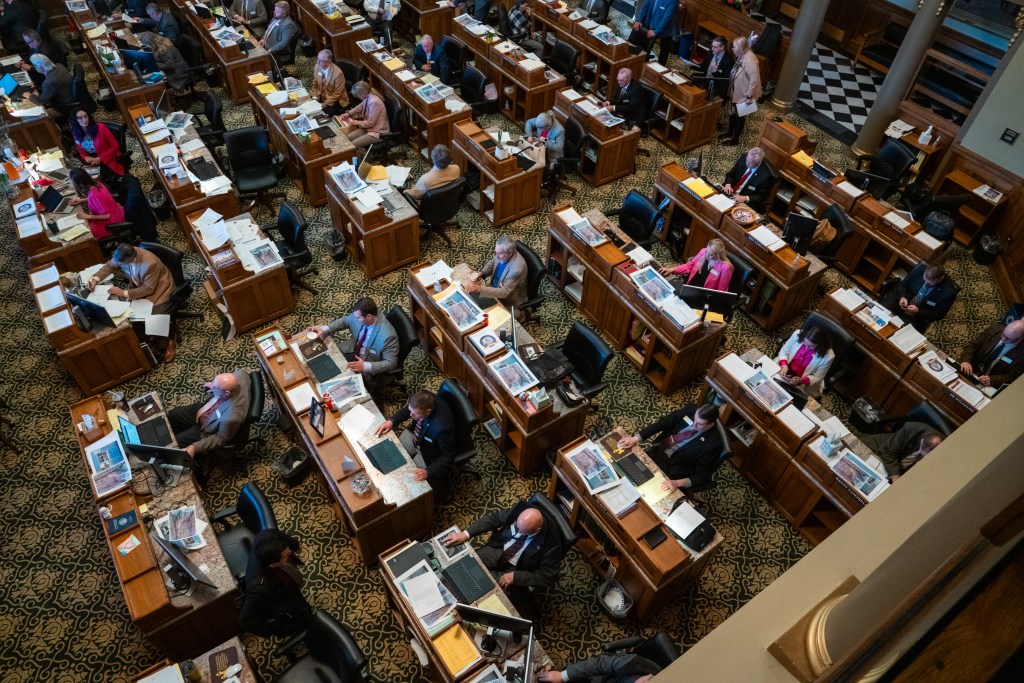
The Freedom Caucus hasn’t presented a plan for where and how deep those cuts may go, but the group of conservatives has at least said it’s aiming for “pre-pandemic spending levels.”
Gordon appeared to caution lawmakers against that approach in his budget proposal.
“Wouldn’t it be great if everything still cost what it did back a decade ago? Despite all that will be said, this budget — like those before it — is fiscally responsible, consistent with modest, essential growth to maintain the essential services our citizens expect, and within the norms of overall inflation,” Gordon wrote.
“Nostalgia is sweet, but it is not a recipe for the future. We cannot budget in the past to prepare for our future,” Gordon wrote.
Instead, the governor said his office “remains committed to four core principles.” They are to: “Protect Wyoming citizens and ensure their future,” “Support core industries, grow new ones, and expand opportunities,” “Maintain and improve effective and efficient government,” and “Respect the principle that the government is best when it is closest to the people.”
It’s not unusual for the Legislature and the executive branch to spar on the budget, nor is it out of place to see contentious debate between appropriators. The last two-year budget passed the Senate by just two votes after most Freedom Caucus members and allies voted against it in the House. Plus, lawmakers will have to deal with the decision they made earlier this year not to pass a supplemental budget — an unprecedented move.
Savings and SNAP
“Much has been made in the news about our investment income, which is expected to be the largest source of revenue this year,” Gordon wrote in his letter.
As WyoFile previously reported, earnings from the state’s investment portfolio realized a record high of $1.86 billion in revenue. That’s 25% more than Wyoming’s severance taxes and federal mineral royalties combined.
“But what does that really mean? This biennium alone, every Wyoming taxpayer can thank Wyoming’s Treasurer for the investment portfolio reducing the overall tax burden,” Gordon wrote.
And as such, Gordon recommended $250 million be added to permanent savings — which produce investment earnings — “to protect against hard times and benefit Wyoming’s future taxpayers,” he wrote.
The “One Big Beautiful Bill Act,” which was supported by Wyoming’s congressional delegation, cut federal funding for the Supplemental Nutrition Assistance Program that over 28,000 state residents, mostly children, rely on to buy groceries. Gordon proposed that lawmakers spend $5.5 million to mitigate that reduction.
“When working mothers and fathers are unable to meet the family’s wholesome nutritional needs, despite working sometimes three jobs, we have to acknowledge the problem,” he said.
Gordon also highlighted the newly formed Rural Health Transformation Program, another product of the “One Big Beautiful Bill,” which earmarked $50 billion to strengthen health care access and outcomes in rural communities.
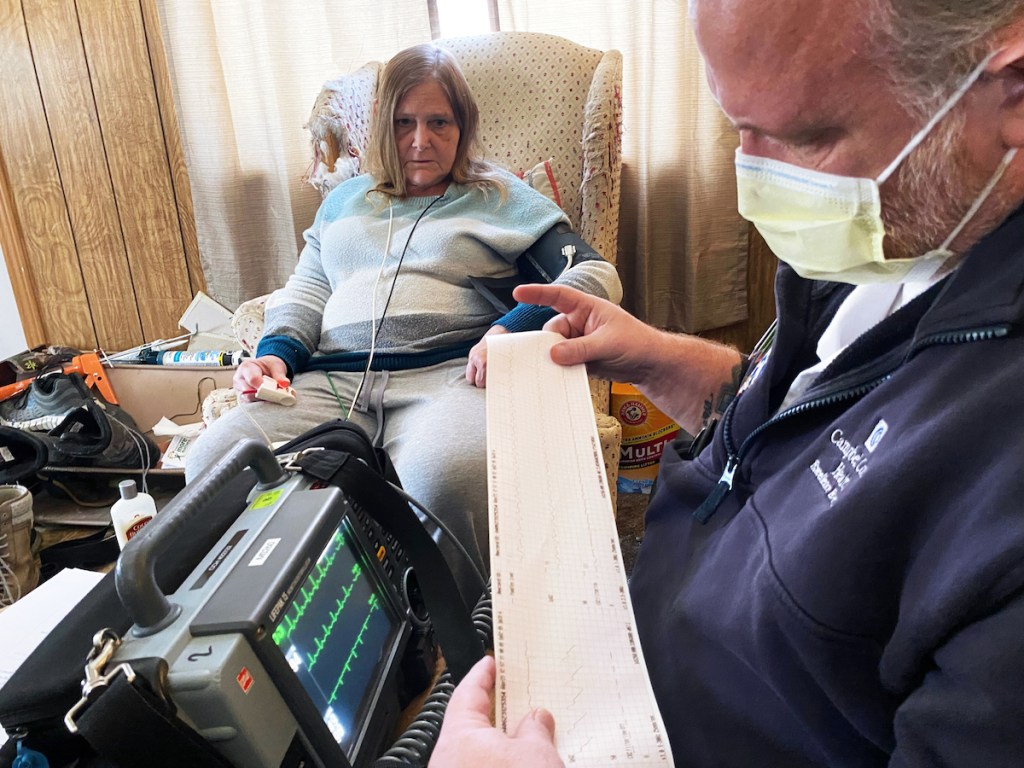
Wyoming stands to receive up $800 million through the program. The state’s application, Gordon wrote, addresses “the most pressing of Wyoming’s rural healthcare needs, such as adequate access to obstetric labor and delivery services, support for rural healthcare providers, including our small hospital and EMS services, and our behavioral health crisis system.”
Otherwise, Gordon suggested lawmakers “make reasonable adjustments” to several Wyoming Department of Health items to account for rising costs and to “maintain access to safety net services.”
Department of Health
The Department of Health has the largest budget of any state agency, which prompted lawmakers to form a subcommittee in the legislative off-season to scrutinize its spending.
Approximately 95% of the department’s budget covers medical services, including at facilities such as the Wyoming State Hospital in Evanston, the Life Resource Center in Lander and the Veterans’ Home of Wyoming in Buffalo.
“This has been a fact-finding thing,” Rep. Ken Pendergraft, R-Sheridan, who chairs the committee, previously told WyoFile. “This isn’t a grudge match. This isn’t going out and trying to hack with a meat cleaver or anything. But the necessary may well be there — that we’re going to be forced to do some cutting. And if that is the case, we want to do so as judiciously as possible.”
In its own budget proposal, the department requested $3 billion, with federal funding accounting for more than half of that sum. The governor recommended $14.1 million less.
“In accordance with legislative directives, I request the current year’s external cost adjustment for developmental preschools,” Gordon wrote in his budget letter. “Additionally, to sustain Wyoming’s provider network for critical services, my budget recommends increases to assure care for people with developmental disabilities, increase home health reimbursements for high needs children, improve access to maternity services for new moms and families, and continue providing community based resources that allow seniors and those with disabilities to stay in their homes longer.”
Prisons and fires
In even-numbered years, lawmakers craft the state’s upcoming two-year budget, also known as a biennium budget. In odd-numbered years, the Legislature works on the supplemental budget — which as the name implies, supplements the financial plan already in effect.
But because Senate leadership ultimately chose not to pass a supplemental budget earlier this year, Gordon said the Department of Corrections’ budget “needs immediate attention.”

“While the Department is successful in recruiting and training new correctional officers, the chronic high number of employee vacancies delay the return of many out-of-state prisoners,” Gordon wrote. “The Department used its flex authority to cover the out-of-state housing costs, but requires $9.3 million to be effective immediately to cover those financial obligations.”
Gordon also requested lawmakers earmark $9.6 million to help the Department of Corrections account for the increased food, medical and utilities costs after the Legislature did not provide inflation-related funds in 2024.
After a historic wildfire season in 2024, and another active one this year, the governor is asking lawmakers to “expand and rethink our ability and approach to wildland fires and other disasters.”
More specifically, Gordon is recommending the Legislature spend $4.5 million to establish two firefighting modules, including expanding the state’s Smoke Buster program, and to replenish the state’s emergency fire suppression account to $20 million.
“Wyoming is blessed with willing, competent, and committed volunteers, who drop everything at moment’s notice to go fight fire, especially when a neighbor’s place is ablaze,” Gordon wrote. “However, the size and scope of recent fire activity often simply exceeds a volunteer’s available time away from work and family.”
Local governments, energy and water
Lawmakers have been considering changing the way the state distributes sales tax to local governments. More specifically, there’s a proposal to increase the percentage local governments receive as well as codifying that formula — the idea being to provide more certainty for local budgets.
In the meantime, Gordon recommended the customary $105 million distribution, “with the caveat that it be suspended should the Legislature increase the current sales tax distribution to local governments.”
That type of “support is vital now,” Gordon wrote, “especially with recent property tax reductions affecting local funding for schools, roads, snow plowing, fire, water irrigation, and sewer districts.”
The governor warned lawmakers that “how our state, her communities and people will adjust to a new, narrower, tax structure is not yet fully understood.”
Meanwhile, Gordon wrote that the “2025 change in federal administration portends well for Wyoming,” quoting Teddy Roosevelt’s view that “conservation means development as much as it does preservation.”


As such, Gordon recommended that lawmakers fully fund the Department of Environmental Quality’s budget request of $165.5 million “to capitalize on this window of opportunity.”
“I also recommend expenditures that will continue internationally recognized leadership in energy-related research, including continued enhanced oil recovery research, the full development of our coal pyrolysis plant in Gillette to produce more products from coal, and research to extract critical minerals from coal ash,” Gordon wrote.
The governor also warned lawmakers about water.
“The prize of control of our water becomes ever more pronounced,” as the state continues to deal with drought, he wrote.
Gordon requested $5 million to buttress the Wyoming Attorney General on water litigation as well as two full-time employees in the State Engineer’s Office. The governor also recommended $9.4 million to run the Wyoming Water Development Office and $30 million for a new water development program.
The Joint Appropriations Committee begins its budget hearings on Dec. 1 in Cheyenne.
WyoFile’s Angus M. Thuermer Jr. contributed reporting.

The $105 million direct donation to cities and counties is a relic from when the sales tax on groceries was repealed in 2006. It never accurately reflected the impact the revenue loss to those political subdivisions and should have been gradually reduced over the following years, but here it is 20 years later.
I do not understand the 9 million for out of state housing for incoming prisoners? Why are there that many prisoners coming to Wyoming for prison? Can we fix that problem rather than pay for it?