

Dustin Taylor left the gate open when he kicked hundreds of cows into one of his pastures this fall. That particular gate had been a source of endless frustration. It’s in the middle of an elk migration corridor, and each year anywhere from 100 to 1,000 elk pour through, tearing down fences and often becoming tangled in barbed wire in the process.
That all changed this year.
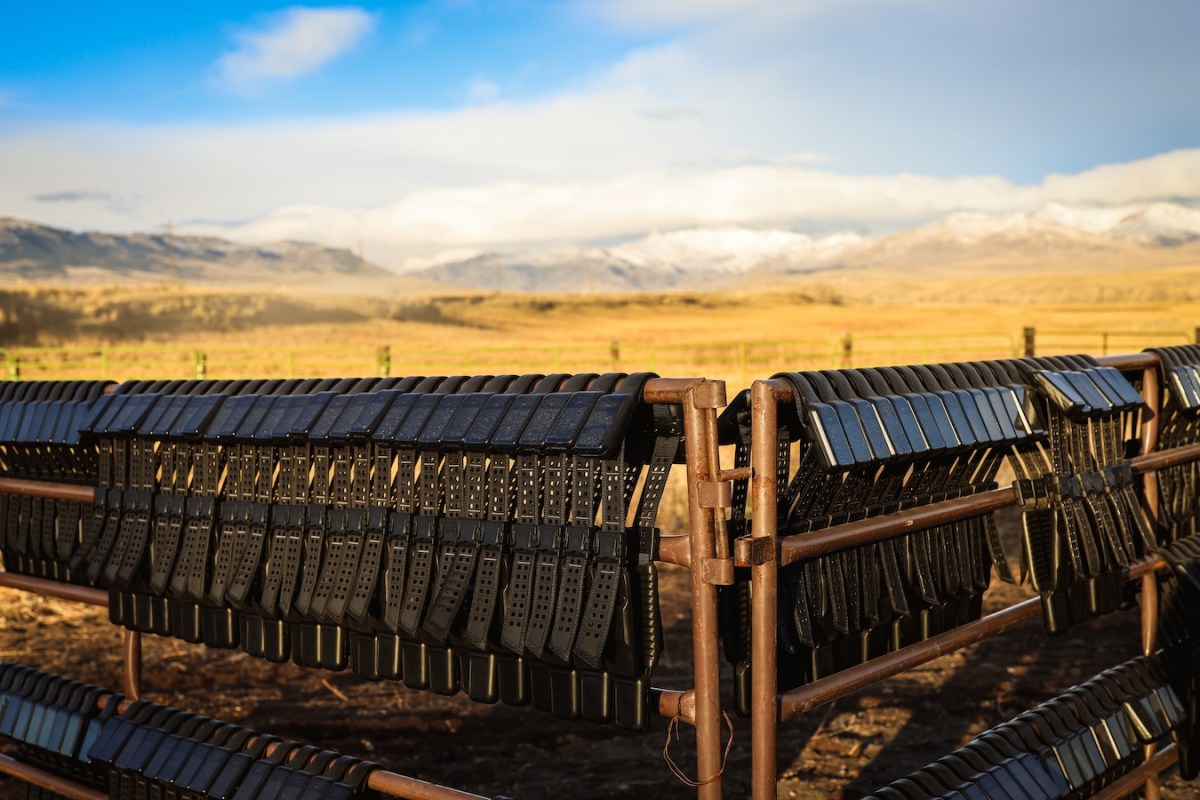
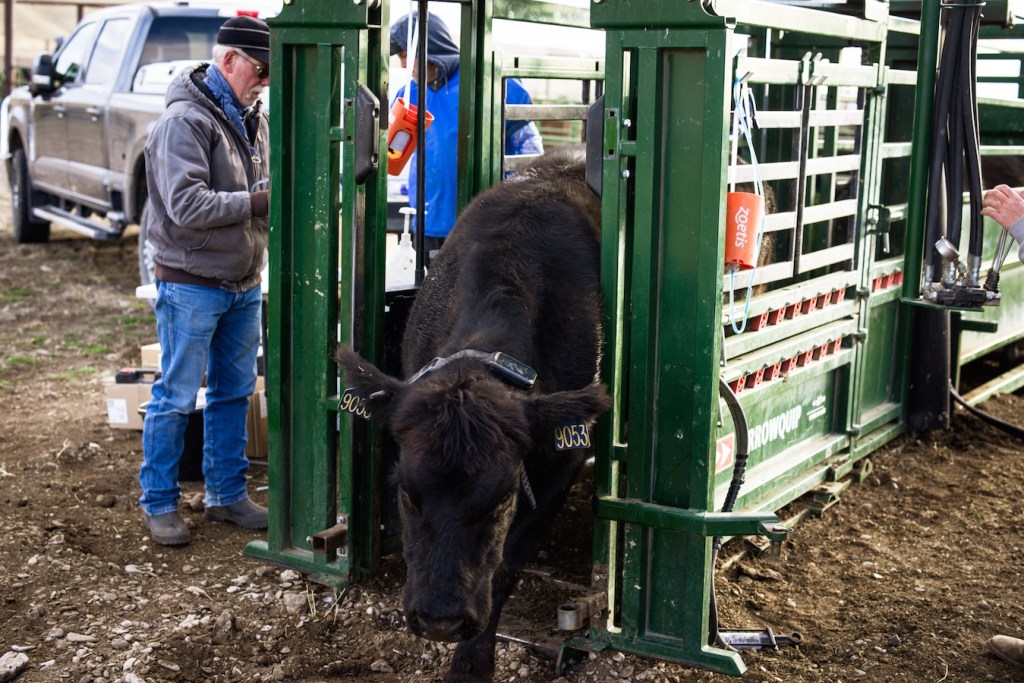
Over the summer, he adorned 50 cows with shiny black collars and turned on an invisible electric fence that gave the cattle a beep and then a shock if they tried walking through the open gate. Soon after, he placed collars on hundreds more.
Then he watched as elk flowed through his open gate, and his cows stayed put.
Taylor, owner of the E Spear Ranch outside of Meeteetse, is one of a growing number of ranchers across Wyoming and the West using virtual fences, a more sophisticated version of invisible electric fences people have been using for years to keep their dogs in their yards. Proponents of the virtual fences say they’re a way to not only lower the number of fences draped across the West but also to give landowners imminently more flexibility in how they move and manage their cattle on a complicated landscape.

For ranchers like Taylor, they’re another useful tool on the same harsh landscape his great, great-grandfather settled in the late 1800s.
“I like the traditional ways. We’re pretty much a saddle horse operation, and so it kind of makes you think when your cows are all wearing collars that glisten in the sunshine and have an LED light in the nighttime,” Taylor said. “But it’s a win-win with us. We’re not getting elk trapped in fences and cut up in wires and they’re not tearing our fences down. We’re able to better manage our use with wildlife interests.”
A dream comes to life
For decades, researchers and ranchers have dreamed of virtual fences, a way to contain cows that didn’t require spending tens of thousands of dollars building and fixing fences and a way to track cows as they move in real time. But for many of those decades, the technology felt as futuristic as perhaps what a smartphone would have felt like in 1980.
And while the technology is here, it’s still in its “brick phone stage,” said Drew Bennett, the University of Wyoming’s MacMillan Professor of Practice in Private Lands Stewardship.
“If you think about where cell phones were in the 1980s, you carried them around in a suitcase or there was the Zack Morris brick phone,” Bennett said, referencing the popular show “Saved by the Bell.” “Then think of where we are with iPhones today. They are the same technology, but in name only, not in functionality. We need to be anticipating where this technology will be in 10 years.”
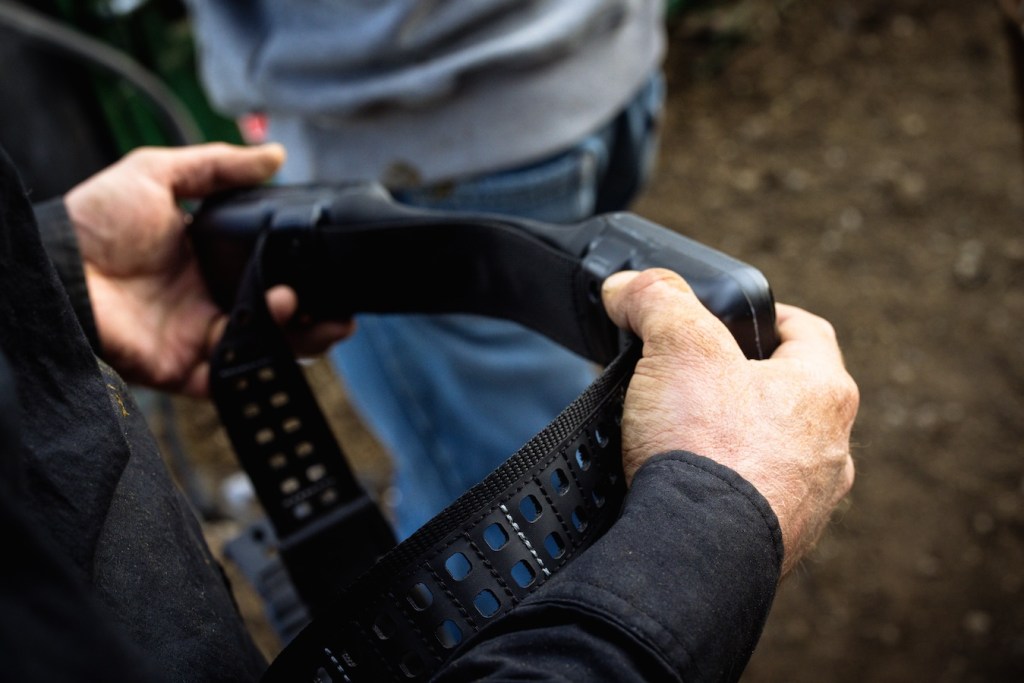
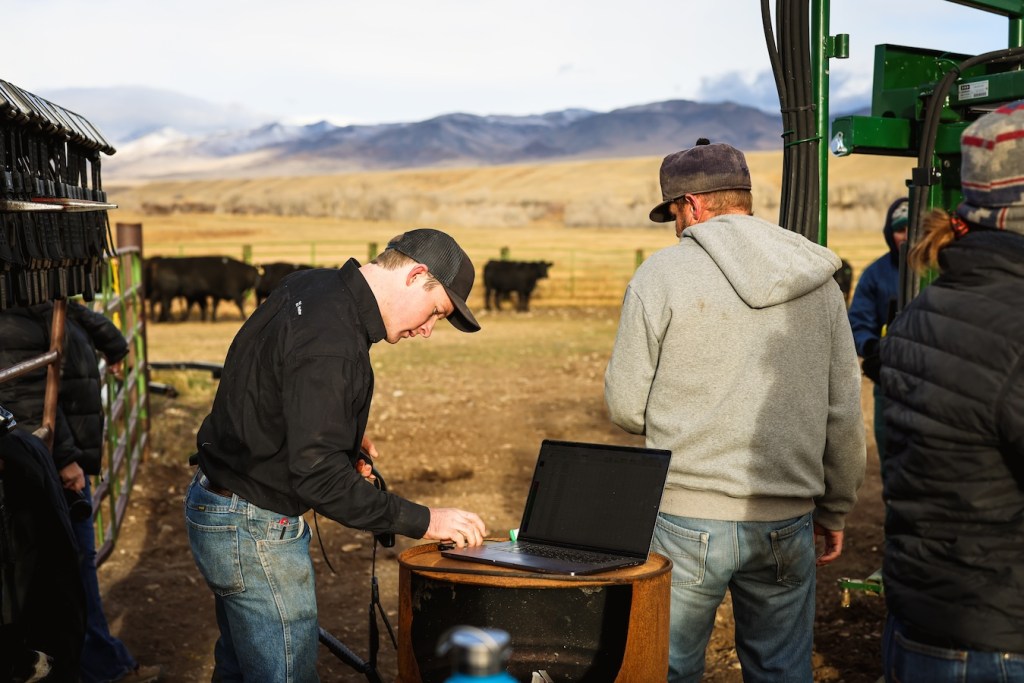
While technologically advanced, the concept behind virtual fencing is still relatively simple. Unlike an electric fence for a dog around a backyard, which requires burying a line underground that reacts to a dog’s collar, virtual fences operate using solar-powered towers scattered around a rancher’s land. The 20-foot-tall towers act as intermediaries between a cow’s collar, a satellite, and a rancher’s phone or computer. If a rancher wants to, say, change the perimeter of a grazing pasture, he or she needs only to open the computer program and modify the size or area of the fence.
Cows, for their part, require minimal training, said Taylor.
The collars first beep at a cow when the animal approaches an electrified fence line. If the cow keeps walking, it receives a small electric shock that pushes it back.
Cows can push through the fences, but rarely do once they’ve acclimated to the beeps and small shocks.
Ranchers may actually benefit from cows, when needed, walking through the fence, said Travis Brammer, director of conservation at PERC, the Property and Environment Research Center.
Predators like wolves sometimes use physical barriers like fences to trap and contain prey. If cows, while being pursued as dinner, can simply keep running through the beeps and shocks, they have a much higher likelihood of reaching safety.
As virtual fence companies evolve, they’re creating programs that will then beep on one side of the cow’s head until it turns back toward its assigned pasture, essentially herding it back home.
Ranchers require variable numbers of towers depending on the virtual fence company and, especially, the particular ranch’s topography. A tower in a flat landscape can cover 10 to 20 square miles. Pastures with steep cliffs and bluffs require more.
Ranchers piloting the collars say it’s been a learning process, and like all new technology, it’s come with its fair share of glitches, including collars falling off, software updates and issues with slow internet.
But many of those are actively being solved, said Brammer.
Bennett asks ranchers to think less about what the technology can do today and more about where it’s headed because the conservation benefits, he said, feel almost endless.
Thinking about the future
The biggest, most obvious benefit of collars is the reduced need for actual, physical fences.
In fact, more than 620,000 miles of fence likely covers the West, enough to stretch to the moon and back.
And most agree that adding more fence means causing more problems for wildlife, impeding migration, ensnaring legs and preventing access to desirable food.
The technology, Taylor and Bennett point out, won’t rid the West of all its fence lines. Wyoming is a fence out state, so even if one rancher’s cows have collars and respond to virtual fencing, a neighbor’s cows may not, which means perimeter fences will still be needed.
However, the bulk of fencing is actually internal fencing, those separating pastures. Virtual fences can get rid of those. Taylor said this year he did not build fences he had planned to construct because of the collars.
As for conservation benefits, Bennett’s team at the University of Wyoming is publishing a paper detailing how virtual fences can allow ranchers to give creeks and rivers a reprieve from cows and prevent fences from being washed out each year during spring floods. They can concentrate cattle in an area to help battle invasive species like cheatgrass, alert a rancher if a cow isn’t moving and needs to receive medical help, and even use grazing cows to target fine fuels in fire-prone areas.
Virtual fences also open land to grazing that had been off limits because it was too difficult to build fences. It can also be used to replace fences destroyed in wildfires.
The Property and Environment Research Center, the Wyoming Game and Fish Department and local conservation districts are holding workshops across the state to introduce the idea to more ranchers.
“This is a potential win for natural resources, biodiversity and wildlife, and a win for ranchers,” Bennett said. “When we think about where it’s going, we are limited only in our own creativity.”


Heard a story the other day from a rancher about how another rancher was able to move their cows to safety during a wildfire from the front porch of their house. If this tech is made affordable it will have innumerable benefits for all! Imagine being able to control where your cattle cross the road that goes through huge open range pastures. Vehicle/ cattle collisions could be greatly reduced. Hope this is is available to all!
If there could be collars put on the wolves, maybe the depredation would be a lot less. Any takers????? Seems to me it would help the ranchers and protect the cattle.
Electrically shocking animals is never a good idea.
Wonderful for sure. It is like learning to use a computer or cell phone. Once you get it mastered, it will forever change how you do business.
Barbara, we have gotten to the point where we are being mastered by tech, not the other way around.
With all this great technology, hamburger will be 10 dollars a pound soon.