


The Bridger-Teton National Forest has had so much trouble housing workers that it once considered moving its headquarters out of Jackson to escape the tight, high-priced real estate market.
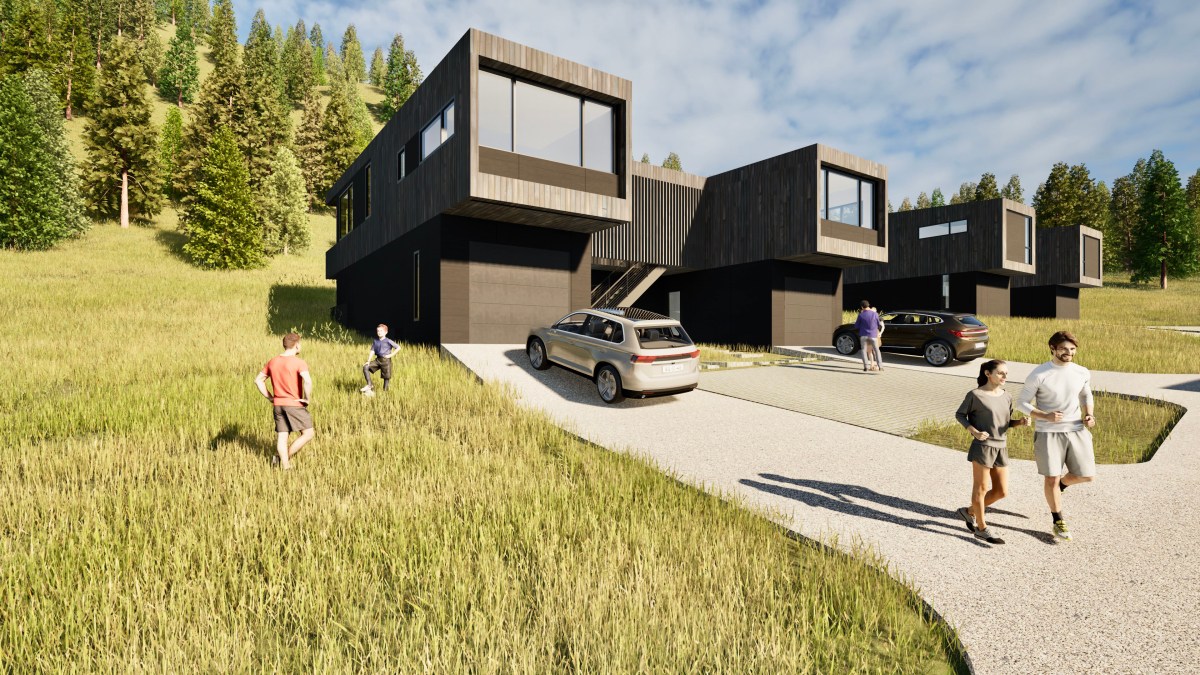
Now, the Forest Service is partnering with a nonprofit to build affordable rentals on 3.15 acres owned by the forest, an approach supporters say could serve as a national model for how to house federal workers on the lands they manage.
“I think the sense of urgency right now is greater than it’s ever been,” said Chad Hudson, supervisor of the Bridger-Teton National Forest.
While many embrace the concept as a way to keep vital workers in the valley with roughly half-priced rent, some worry it opens the door to privatizing cherished public lands.
“The slippery slope of using federally protected wildland to expand the urban boundary of Jackson in order to subsidize housing that includes private sector employees is frankly terrifying for the future of Jackson Hole,” said Judd Grossman, a neighbor to the project, former Jackson Town Council candidate and self-described “no-growth libertarian.”
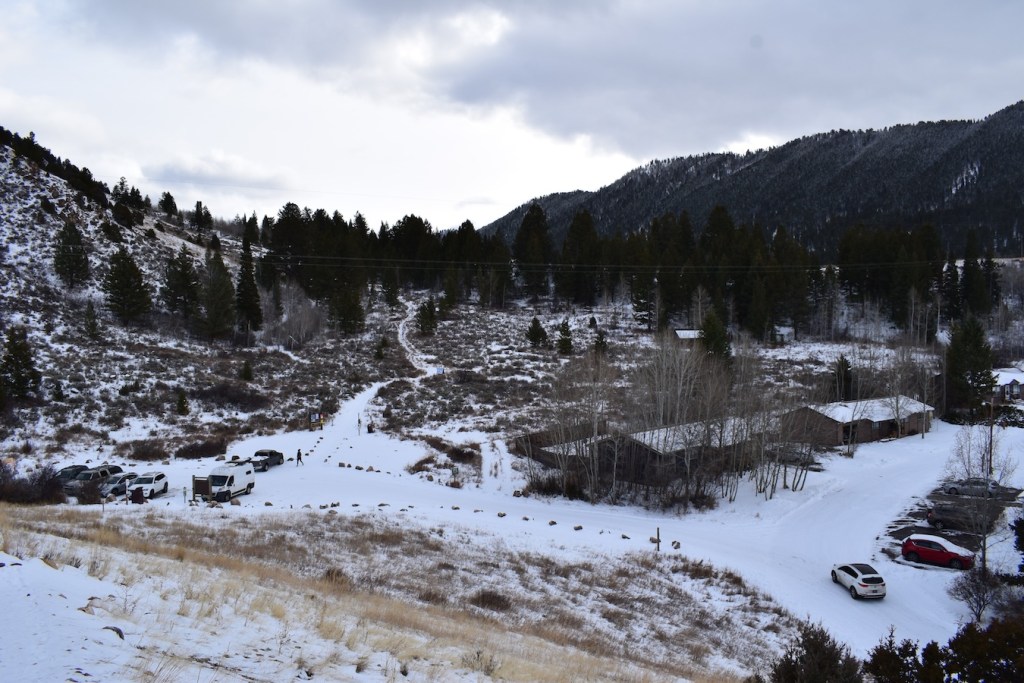
Grossman shared his concerns with a full room at the Jackson Town Council’s Nov. 30 meeting. But his resistance stood in stark contrast to the council, whose members signaled support for investing a little over $4 million of sales tax funds, earmarked for housing, in exchange for the right to rent six of 36 proposed units to town employees. Teton County has the same offer but has yet to consider the project, which sits next to existing Forest Service housing, the National Elk Refuge and a popular trailhead on the eastern edge of Jackson.
The Jackson Hole Community Housing Trust touts the project as a first of its kind in the nation and much-needed. Of more than 1,500 people on the affordable housing nonprofit’s waitlist, 114 are town or county employees.
Housing Trust Director Anne Cresswell said the project could break ground in April 2026 with modular units delivered by October. That timeline would be more likely if the housing nonprofit secures a combined $8.1 million from the town and county. It’s the last bit of funding needed to push the $33 million development over the finish line, she said.
The project will move forward with or without funds from the town and county, Cresswell said, albeit more slowly.
She’s eyeing funds restricted to rentals for town and county employees.
In 2022, Teton County voters passed a record-breaking $166 million in Specific Purpose Excise Tax initiatives to be collected over about 10 years in the tourism-driven county. About half — $80 million — in sales tax revenue is going to housing in some form. For example, St. John’s Health will receive $24 million, with half of that going to a nearly $54 million project to build 72 apartments for employees across from the hospital.
Voters also approved $20 million for town and county employee housing — $10 million for each entity. The request to support the Bridger-Teton project comes as the same pot of money is being mulled for a much larger housing complex, this one from the town and county’s housing department.
“So any money we allocate to this project would not be available to the Virginian Lane project or other projects,” Town Manager Tyler Sinclair said.
But Housing Director April Norton said there’s a good chance that over 200 homes planned for 90 Virginian Lane, which is facing a $17 million funding gap, would not require Specific Purpose Excise Tax funds. And if “The Virg” does need to dip into the same pool, she said the department would ask for a maximum of $5 million each from the town and county. Funding both projects would leave just shy of $1 million in SPET for each.
“It could be ‘both, and,’” Norton said.
Steep cost to stay put
Since at least 2008, the Forest Service has considered building office space and additional employee housing at Nelson Drive next to existing homes for federal workers. Around the same time, the agency was debating whether to keep its main office building in Jackson or move the headquarters to Alpine, Pinedale or Afton where workers would have better odds of securing housing.
In 2012, the Forest Service chose to build its new administrative building in Jackson on the same site where the old building stood, nestled against the National Elk Refuge at the northern entrance into town. It’s locked them into figuring out how to house their workforce in the Greater Yellowstone Ecosystem, where real estate prices have only become more extreme.
But Hudson, leading the Bridger-Teton National Forest, said it’s a price they’re willing to pay.
“I think that’s where we belong,” Hudson said.
Hudson said the more than 3-million-acre forest is key to one of the last nearly intact temperate ecosystems in the world.
“We’re a big player,” Hudson said.
Being in Jackson allows managers to form relationships across state and federal agencies in the Greater Yellowstone area.
To pay for a new administrative building, the Forest Service sold 10 acres of its public land to private developers for $12 million. Brothers Jim and Kirk Hansen, of the Idaho Falls company Conrad and Bischoff, bought the land and built Hidden Hollow, Jackson’s largest planned development since Cottonwood Park. Over time, the project morphed from ownership units to rentals, many deed-restricted as workforce or affordable.
“But we did not make much progress when it came to our housing, and we’re in a situation now where we’re struggling to maintain a viable workforce,” Hudson said.
Today, many Bridger-Teton employees continue to commute to Jackson. Others, who should work in Jackson but can’t afford housing, crowd the Pinedale district office.
“If we don’t look outside the box, these kinds of housing units won’t get built.”
Jackson Mayor Arne Jorgensen
Proponents see housing on the eastern edge of Jackson as part of the solution.
The Forest Service and Housing Trust unveiled plans for 36 modular rentals at the Nelson Drive trailhead for the first time this fall. The Forest Service issued a 30-year special-use permit for the Housing Trust to construct and manage the modular homes on the federally protected public land.
The permit is an alternative to an outright sale.
“Just like we do for ski resorts,” Hudson said, “they submit an annual operating plan that we approve every year. So we’re still actively engaged in the management of those particular lands.”
Why now?
The Bridger-Teton first approved housing at the Nelson Drive trailhead over a decade ago as part of an environmental review of the sale to Hidden Hollow developers. It’s taken this long to find the right partners and raise the capital, according to Hudson.
“Any kind of affordable housing project in Jackson is incredibly challenging,” Hudson said. “So it has to be subsidized to a certain extent, in this case quite a bit.”
Political will, at least for the town council’s part, also seems strong.
“This is something novel and exciting,” Councilor Kevin Regan said. “It’s a chance for the Forest Service and Community Housing Trust to serve as thought leaders for this community, this region, and potentially nationally.”
Mayor Arne Jorgensen, a founding board member of the Housing Trust, called the project an innovative solution to leverage local dollars to provide housing for an underfunded Forest Service.
“If we don’t look outside the box, these kinds of housing units won’t get built,” Jorgensen said.
Last chance to weigh in
The federal project is exempt from local development regulations or public comment processes. Recent public reaction has come out in the conversation about financing and it’s been mixed.
This summer’s congressional effort to sell Western federal public lands, which sparked nationwide pushback, has many leery of private influence on public lands.
Jackson Hole Conservation Alliance Advocacy Director Catherine Hughes noted the debate at the November meeting, where the town council was poised to vote on spending $4.05 million on the development.
“This project risks paving the way for the same solution just starting at a smaller scale,” Hughes said. “Our community can respond to the need for housing responsibly and protect public lands from a death by a thousand cuts.”
Others have cited traffic, environmental degradation and a potential precedent of sacrificing public lands for development. Grossman said neighbors had long been told the housing would be for federal workers, but the current proposal includes private sector employees too.
If the town and county don’t opt in, the number of private-sector employees could be even greater. One nonprofit, which Cresswell declined to name last week, has committed $3.5 million to the project for its employees. Eligible families still have to meet income and asset limits.

Proponents see the project as a model for housing public employees on the lands they steward. Chris Finlay serves on the Jackson Hole Community Housing Trust board and recently retired after a 32-year career with the National Park Service, over half of that time managing facilities in Grand Teton National Park. During his tenure, the Park Service struggled to build new facilities due to a multi-million-dollar maintenance backlog, he said.
“Every time we build a new facility, we typically don’t get enough money to maintain those facilities,” Finlay said. “We’re contributing to this deferred maintenance backlog and that’s really why the Park Service is pretty opposed to developing new facilities.”
With the Housing Trust as the permit holder, the Forest Service wouldn’t have to worry about maintenance costs piling up.
The Jackson Town Council will revisit whether to spend $4.05 million on the project when it meets Dec. 15.

A constitutionally grounded solution
The Constitution grants the federal government no general authority to own vast swaths of land inside a sovereign state. Article I, Section 8 allows federal land ownership only for forts, arsenals, dockyards, and “other needful buildings,” and only with state legislative consent. Three million acres of “federal forest” in Wyoming is not on that list. It never was.
So the real solution begins here:
Wyoming should reclaim legal title to all lands the Constitution never allowed the federal government to possess. Not by confrontation, but by statute. By simply affirming what the Constitution already says. Federal agencies may manage forests only through cooperative agreements, not ownership.
Once title is returned to the state, everything becomes simpler, cheaper, and far more accountable. No more D.C. agencies micromanaging land they don’t own, no more national-model experiments using Wyoming as a lab, no more 30-year special-use permits that smuggle private development onto “federal” land the feds never had the right to hold in the first place.
A Wyoming-led, locally controlled solution
After land reversion, the state can lease a small, already-disturbed parcel—not wildland—to the Forest Service for administrative use only, just as they would lease office space to any other tenant. If the Forest Service needs housing, Wyoming can lease them a small tract near existing development, under Wyoming’s terms, Wyoming’s zoning, and Wyoming’s accountability.
Three principles guide this:
The state retains title.
The Forest Service becomes a tenant, not a landlord.
Housing—if truly needed—is sited on previously developed lands, not trailheads, wildlife buffers, or Refuge edges.
This removes every constitutional and local objection:
No privatization of public wildland
No precedent of carving up protected land for development
No state-subsidized housing for private nonprofits disguised as “workforce housing”
No backroom deals where nonprofits get perpetual access to public land through special-use permits
It also solves the worker-housing problem cleanly and permanently:
The Forest Service pays a fair-market lease like every other employer.
Housing is built only on already-developed parcels.
The town and county are not asked to hand over millions in tourism tax revenue to subsidize a federal agency.
And the arrangement can be revoked if the agency ever oversteps.
A realistic transition path
Wyoming can adopt a phased reclamation approach:
Phase 1
Assert state primacy over all non-constitutional federal land. Require cooperative agreements for management, not ownership.
Phase 2
Identify administrative parcels already disturbed and suitable for lease.
Phase 3
Prohibit housing development on protected corridors, Refuge interface, and trailheads.
Phase 4
Lease land to the Forest Service—at market rates—for administrative use and worker housing.
A solution that de-escalates
Nobody loses access to trails.
Nobody loses wildland.
Nobody watches Jackson creep eastward one permit at a time.
And nobody fears a precedent that opens the door to privatizing America’s remaining wild spaces.
Federal workers get housing without the Forest Service turning itself into a real-estate developer.
The Forest Service gets to stay in Jackson without pushing “affordable housing” onto wildlife corridors.
Town and county budgets stop bleeding money into federal problems.
And Wyoming gets precisely what the Constitution already promised: control of its own land.
The deeper truth
The entire housing controversy exists only because everyone is operating on an unconstitutional assumption—that the federal government owns this land. Remove that assumption, and the problem collapses into clarity. The solutions become local, simple, and sane.
This reads like realtor wrote it. I can’t think of worse case for public land than a state like Wyoming or Utah getting their greedy hands on it.
The Constitution grants the federal government no general authority to own vast swaths of land inside a sovereign state. Article I, Section 8 allows federal land ownership only for forts, arsenals, dockyards, and “other needful buildings,” and only with state legislative consent. Three million acres of “federal forest” in Wyoming is not on that list. It never was.
So the real solution begins here:
Wyoming should reclaim legal title to all lands the Constitution never allowed the federal government to possess. Not by confrontation, but by statute. By simply affirming what the Constitution already says. Federal agencies may manage forests only through cooperative agreements, not ownership.
Once title is returned to the state, everything becomes simpler, cheaper, and far more accountable. No more D.C. agencies micromanaging land they don’t own, no more national-model experiments using Wyoming as a lab, no more 30-year special-use permits that smuggle private development onto “federal” land the feds never had the right to hold in the first place.
A Wyoming-led, locally controlled solution
After land reversion, the state can lease a small, already-disturbed parcel—not wildland—to the Forest Service for administrative use only, just as they would lease office space to any other tenant. If the Forest Service needs housing, Wyoming can lease them a small tract near existing development, under Wyoming’s terms, Wyoming’s zoning, and Wyoming’s accountability.
Three principles guide this:
The state retains title.
The Forest Service becomes a tenant, not a landlord.
Housing—if truly needed—is sited on previously developed lands, not trailheads, wildlife buffers, or Refuge edges.
This removes every constitutional and local objection:
No privatization of public wildland
No precedent of carving up protected land for development
No state-subsidized housing for private nonprofits disguised as “workforce housing”
No backroom deals where nonprofits get perpetual access to public land through special-use permits
It also solves the worker-housing problem cleanly and permanently:
The Forest Service pays a fair-market lease like every other employer.
Housing is built only on already-developed parcels.
The town and county are not asked to hand over millions in tourism tax revenue to subsidize a federal agency.
And the arrangement can be revoked if the agency ever oversteps.
A realistic transition path
Wyoming can adopt a phased reclamation approach:
Phase 1
Assert state primacy over all non-constitutional federal land. Require cooperative agreements for management, not ownership.
Phase 2
Identify administrative parcels already disturbed and suitable for lease.
Phase 3
Prohibit housing development on protected corridors, Refuge interface, and trailheads.
Phase 4
Lease land to the Forest Service—at market rates—for administrative use and worker housing.
A solution that de-escalates
Nobody loses access to trails.
Nobody loses wildland.
Nobody watches Jackson creep eastward one permit at a time.
And nobody fears a precedent that opens the door to privatizing America’s remaining wild spaces.
Federal workers get housing without the Forest Service turning itself into a real-estate developer.
The Forest Service gets to stay in Jackson without pushing “affordable housing” onto wildlife corridors.
Town and county budgets stop bleeding money into federal problems.
And Wyoming gets precisely what the Constitution already promised: control of its own land.
The deeper truth
The entire housing controversy exists only because everyone is operating on an unconstitutional assumption—that the federal government owns this land. Remove that assumption, and the problem collapses into clarity. The solutions become local, simple, and sane.
a big unwieldy issue, plus important. a somewhat small piece of it is, who will own the houses, the land? gtnp is considering building more homes for their staff, and the park will retain ownership. should btnf consider that?
Here were my comments at the 12/1/25 Council meeting:
“The Putt Putt trailhead is not an appropriate location for this development. The Forest Service study of the Nelson parcel and its conclusions are vague and inadequate. Town shouldn’t accept it at face value.
Over the past decades the Forest Service promised the neighbors that any housing on the Nelson Parcel would be similar in density to the existing Forest Service housing, and that it would be exclusively for Forest Service employees. This proposed development is double the density of the existing Forest Service housing and only a minority of the new residents will be Forest Service employees.
Federal wildland, far from services and shopping, embedded in quiet neighborhoods is the wrong place for high density. Everyone in these units will have a car and will drive through a quiet neighborhood to get to services and shopping adding to traffic pressure in the neighborhood and throughout Town. Over and over again we make the same mistake of allowing development out on the edge of Town where everyone will have a car and add to our traffic problem.
Your staff report conspicuously fails to consider the planning implications of adding high density on the periphery of Town. Where is the traffic study for this project? The proposal for Town to become an investor in this project should trigger a broader consideration to assure congruence with the Comprehensive Plan. Town may not have a say over what happens on Federal Land, but it also shouldn’t be investing in projects governed by other jurisdictions that violate the principles of good planning.
The proper location for dense development is in the urban core of Jackson along the highway commercial corridor – where the Forest Service happens to already own land.
The slippery slope of using federally protected wildland to expand the urban boundary of Jackson in order to subsidize the housing of under paid private sector employees is terrifying. As stated explicitly in our Comprehensive Plan, our protected federal wildlands are the #1 reason that Jackson Hole is the amazing ecological treasure that it is. We shouldn’t be sacrificing public wildland so that private businesses can increase their profit margins and continue to expand. This is a land grab to serve corporations and rich people that is hiding behind a thin fig leaf of housing a few public servants.
Town investing in this development creates a huge bias that prevents the Town from watching out for the concerns of the neighborhood. Town Council would become the prosecutor, judge and jury for yet another instance of inappropriate development. Who is watching out for east Jackson’s stable neighborhoods if the Town is an investor in this project? Who is watching out for the Crystal Butte wilderness? Who is protecting our public lands from development?
Town should leverage any investment, annexation or sewer and water hook ups for a reduction in the density of this project and assurances that private sector employees won’t be housed on this public land.
Thank you.”
Just keep chipping away at public land. In time there won’t be anything left.