


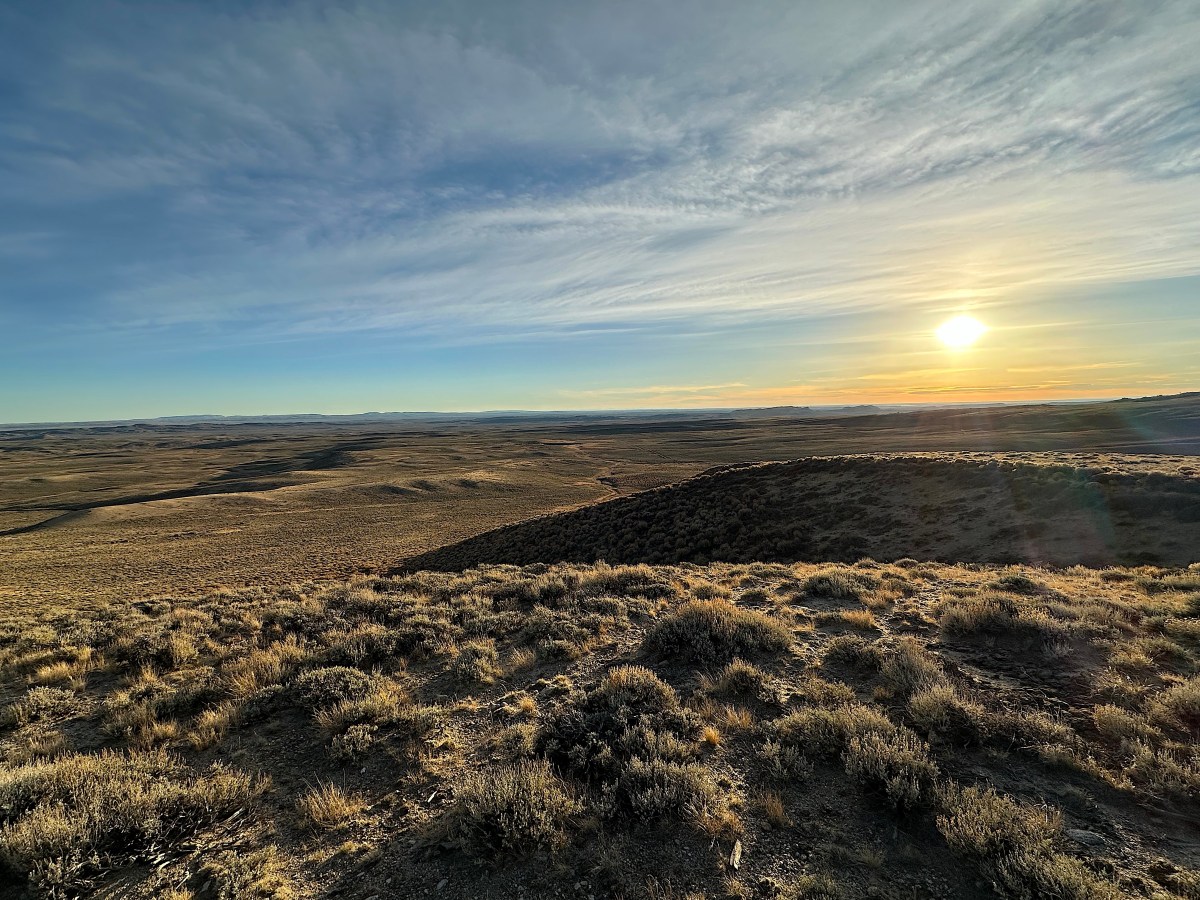
The Bureau of Land Management’s Wyoming office is shrinking its upcoming oil and gas auction by more than half, excising acreage that includes the contested leases in the vast, ecologically valuable sagebrush-steppe known as the Golden Triangle.
In October, the federal agency generated major interest in its June quarterly lease sale by proposing to auction nearly 20,000 acres of an area that is closed to leasing, including a parcel squarely in the middle of the world’s longest mule deer migration path and within two miles of the largest-known sage grouse lek.
But all those contested parcels ended up on the chopping block, BLM-Wyoming Acting State Director Kris Kirby told WyoFile.
“What we were trying to do is show our work,” Kirby said. “We were trying to be as transparent as possible.”
What happened, she explained, is that the BLM state office included the “whole list” of the “expressions of interest” from oil and gas companies and individuals when it was vetting the lease auction in the “scoping phase.” That included “parcels that can’t be leased,” she said.
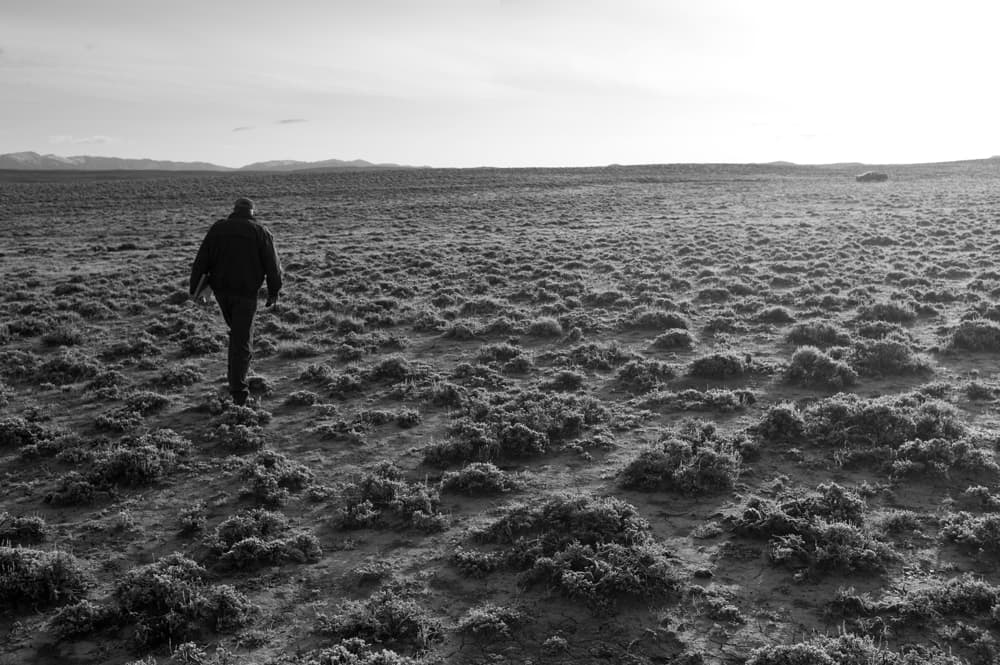
Adding to the confusion, the federal government was shut down in the fall when the BLM was accepting comments about the auction, leaving employees unavailable to say why they were proposing to lease an off-limits area.
Leasing of the Golden Triangle isn’t allowed in the current Rock Springs plan — which designates it as the “South Wind River Area of Critical Environmental Concern” — but that plan is being revised on a tight timeline in deference to the Trump administration’s “Unleashing American Energy” orders.
Federal officials pared down Wyoming’s second-quarter 2026 oil and gas auction well beyond removing the off-limits parcels. Between the proposal and the agency’s decision released last week, BLM downsized the area being offered from 227 parcels covering 250,931 acres to 112 parcels spread across 120,9267 acres.
Land was removed for many reasons, according to an environmental assessment the BLM released, but the single largest factor was “sage grouse prioritization,” which deferred 80 parcels. Ten Golden Triangle parcels were “deleted” because they’re located within an area closed to mineral leasing.
Seven parcels were deleted because of conflicts with existing coal leases and seven others were snipped because they fell within Wyoming wildlife habitat management areas.
Yet, leases moving forward to auction aren’t devoid of controversy and overlap with valuable wildlife habitat.
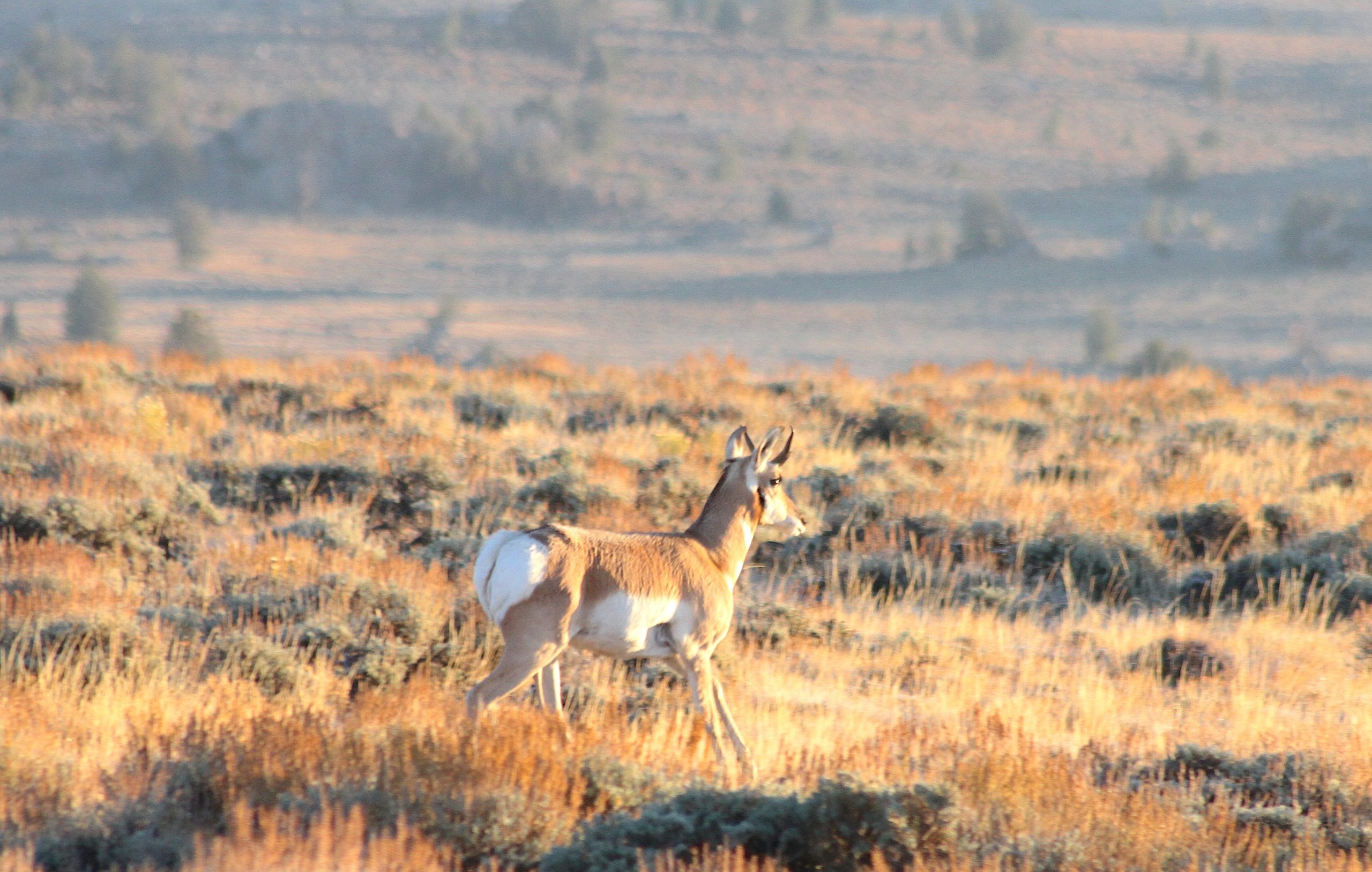
The auction is positioned to offer oil and gas companies tens of thousands of acres within mule deer and pronghorn migration paths. That includes the designated corridors used by the Baggs, Platte Valley and Sublette mule deer herds, where there will be some protections and stipulations. Other parcels set for auction overlap with the Sublette Pronghorn Herd’s migration, parts of which are being considered for protection. There’s also overlap with known-to-science, but unprotected routes, like the landscapes the Wyoming Range Mule Deer Herd migrates through.
In conjunction with its analysis, the state BLM released hundreds of maps illustrating wildlife habitat and its proximity to all the proposed parcels.
The federal agency also released dozens of public comments received in response to its proposal, although most names were removed. The overwhelming majority of feedback encouraged the BLM to reconsider leasing within the Golden Triangle and within some migration corridors.
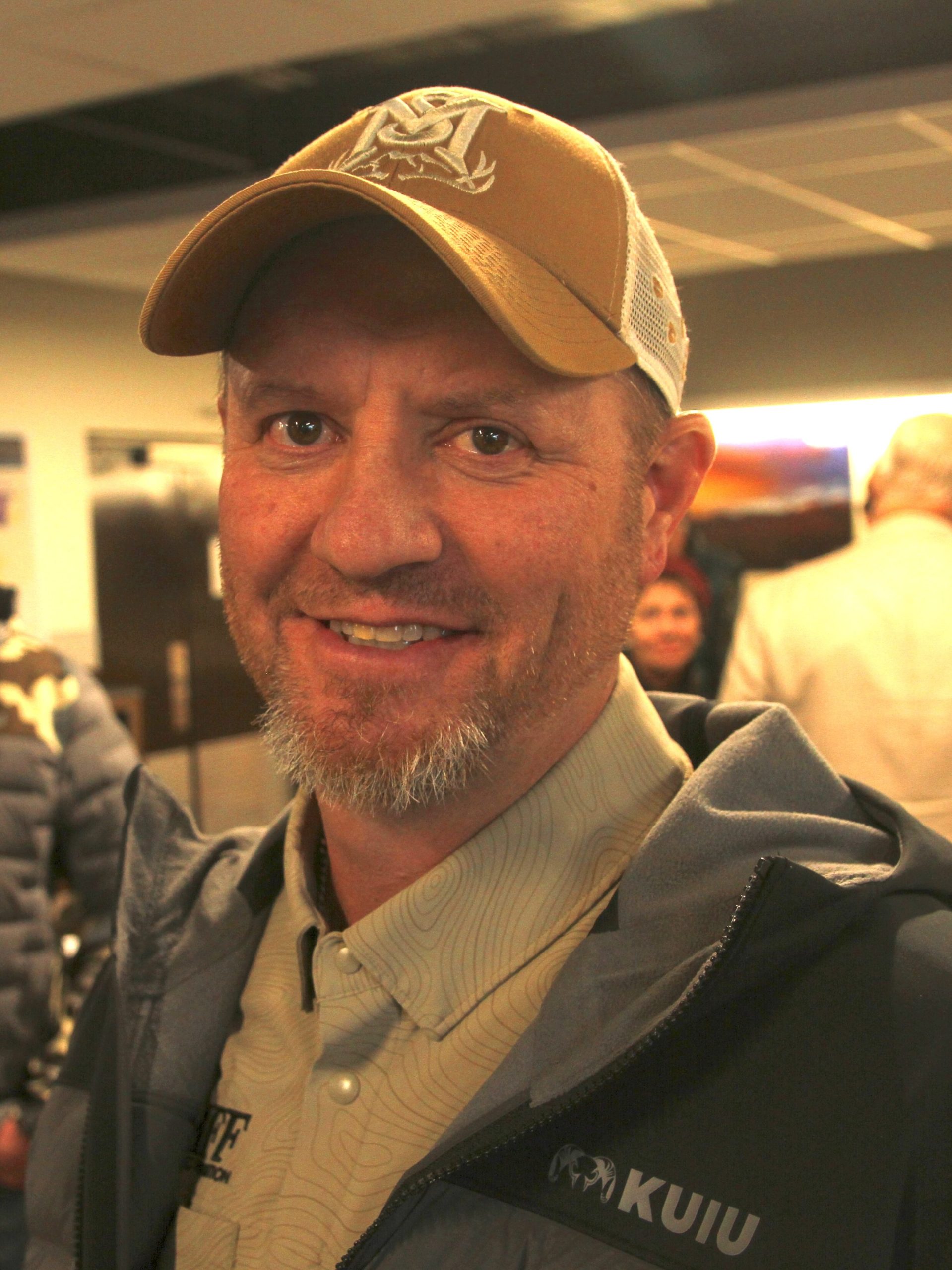
Muley Fanatic Foundation President Joey Faigl, whose co-founder departed for a Trump administration appointment, was among those making the request.
“These parcels have remained free of oil and gas activity to this point, and introducing development now would be tragic,” Faigl wrote to the BLM. “I want to emphasize that this position is not a criticism of the oil and gas industry. My family has been supported by that industry for over 20 years. Rather, this is a call to thoughtfully consider where development is appropriate — and where wildlife must take priority.”
An oil and gas industryman who’s been in the thick of the debate about leasing the Golden Triangle said he was “disappointed” that the BLM pulled back the contested parcels.
“Just because I think there are surface restrictions that can be applied that would still allow for development to occur,” said Steve Degenfelder, a landman for Casper-based Kirkwood Oil and Gas.

Kirkwood holds existing oil and gas leases in that area, and it may get another shot at acquiring more. BLM’s revision to the Rock Springs plan is specifically geared toward updating “areas of critical environmental concern,” like the one in the Golden Triangle, which have precluded leasing for now.
“The geology hasn’t changed,” Degenfelder said. “I’m convinced that surface stipulations can be put on leases that address environmental concerns.”

This Golden Triangle being usurped scares me. Wyoming identifies with our wildlife in big ways for a reason. Healthy wildlife is good for our State… and ultimately our Country.
OIL, OIL, and MORE OIL! What is with this insatiable greed! Presently there is an oil glut. More oil than we are capable of refining and no new refineries being considered! All this as we are positioned to seize another countries oil assets militarily! I can’t help but believe there has to be ulterior motive in all this. I’ve never been a conspiracy theorist but this is a head scratcher to me!
“I’m convinced that surface stipulations can be put on leases that address environmental concerns.”
This quote from Mr. Degenfelder is entire BS. That’s the same narrative that was spun when they started drilling on the Pinedale Anticline. It’s the camel’s nose poking under the tent. Pretty soon the camel is in the tent and the wildlife is on the outside.
Residents of Wyoming should be fighting tooth and nail over what the oil companies are doing to the wildlife habitat in the State. Wyoming has some of the best wildlife populations in the world. Why destroy it and the hunting that goes along with it?
A former resident of Wyoming.
If Mr. Degenfelder and Casper based Kirkwood Oil and Gas are so confident that surface stipulations can be applied to leases to address environmental concerns, please tell us Mr. Degenfelder what effect similar surface oil and gas stipulations have had on mule deer numbers on the Pinedale Anticline, the Mesa and the Jonah Field. In spite of the stipulations, oil gas developments have decimated the mule deer populations in those gas fields.
Oil and gas keep wanting more of the pie.
One should keep in mind too, that some of these deer herds whose migration corridors are being considered for lease, like the Sublette Mule Deer Herd Unit, have already seen previous impacts from oil and gas development
Now, if we could get other “wildlife” organizations to follow suit….how about it Federation?
Are you talking about the same “Federation” that sided with Magagna and agreed that chasing wildlife with snowmobiles to the point of sheer exhaustion, when the animal can no longer even move, and then brutally killing the animal, is a valuable tool for the livestock industry in Wyoming?