

This story is part of a collaborative legislative initiative by WyoFile, Wyoming Tribune Eagle, The Sheridan Press and Jackson Hole News&Guide to deliver comprehensive coverage of Wyoming’s 2026 budget session.
CHEYENNE—For the second year in a row, advocates are hoping to change the state’s zoning protest petition requirements to make it easier for developers to build multi-family, multi-unit housing in Wyoming.
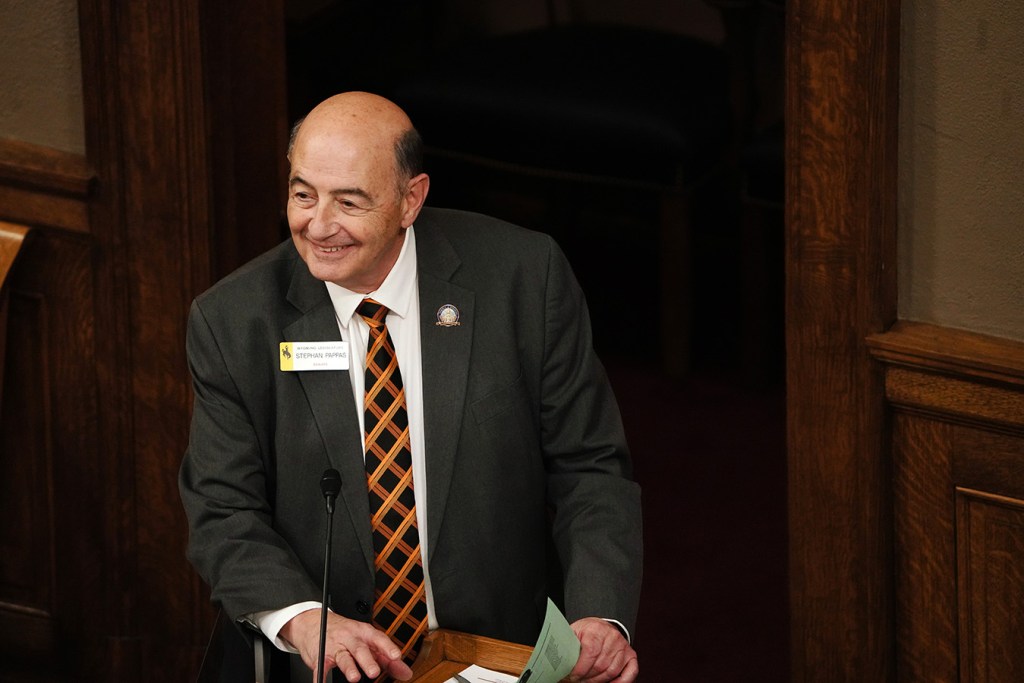
On Wednesday, the Senate Corporations, Elections and Political Subdivisions Committee voted 5-0 to support Senate File 117, “Zoning protest petition-amendments.” Bill sponsor Sen. Stephan Pappas, R-Cheyenne, said the measure is exactly the same as a bill proposed last session before it was amended to include limits on mitigation fees, which killed the bill in the final days of the 2025 general session.
Pappas said he was asked to bring the bill back by the Wyoming Business Alliance, which is focused on helping its members find workers.
“One of the biggest problems in increasing the workforce is significant housing shortages in Wyoming,” Pappas said, adding that 90% of communities surveyed by the Wyoming Association of Municipalities reported housing shortages. Behind the shortages, Pappas said, is an over-regulated housing market.
“That is what this bill aims to correct,” he said.
The bill increases the required percentage of neighbors protesting zoning changes from 20% to 33%, before triggering a supermajority vote of two-thirds by the local governing body to make the change. In Cheyenne, that would mean a 6-3 City Council vote.
Renny MacKay, president of the Wyoming Business Alliance, told the committee that SF 117 began even before the 2025 general session, when the change was recommended by the Regulatory Reduction Task Force.
“Two years ago, during the interim … [the task force] identified this as one of the main levers the state could pull when it comes to reducing regulations on housing,” MacKay said, adding that Wyoming developers have had projects stall, and fail, due to the current law. The WBA appreciates municipalities that have worked to reduce their own regulations on zoning, but said the state has a role to play as well, MacKay said.
“[This makes] the bar just a little higher to try to overturn a vote of the town council when you’re trying to move a project forward, especially looking at multi-family or denser zoning, which can really help if you need more doors for housing in Wyoming,” MacKay said.
After the meeting Wednesday, Cheyenne Mayor Patrick Collins told the Wyoming Tribune Eagle that he supports SF 117. Cheyenne has worked hard to reduce its own housing regulations to make it easier for people to build, he said.
“We’ve done everything we can do on our side, and we need a little help from the state to make it so that the projects we’re doing have a realistic chance of moving forward,” Collins said.
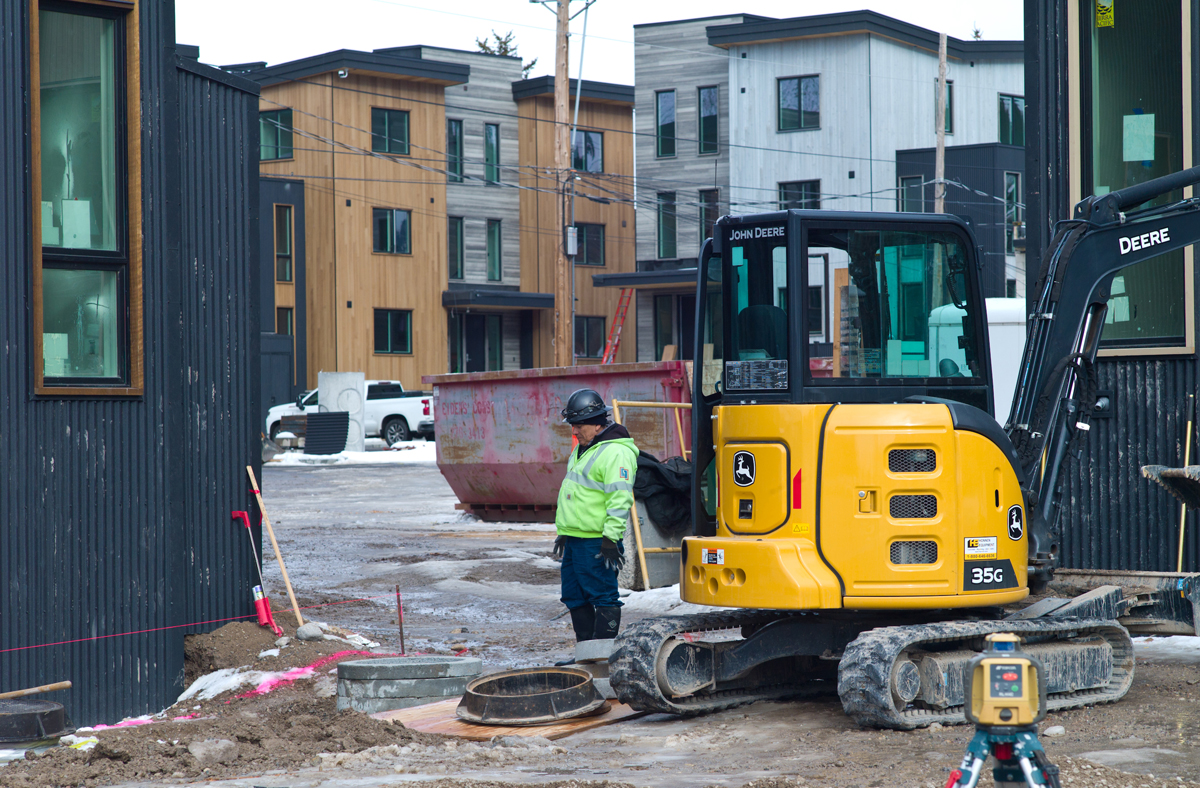
Attainable housing must be built densely, Collins said, pointing toward plans for 122 smaller, single-family homes going up southeast of where Storey Boulevard and Converse Avenue intersect in Cheyenne. That development, he said, is a reflection of the city’s work to incentivize more affordable projects by updating codes. Most homes in the development are to be between 900 and 1,200 square feet, two-bedroom, two-bath single-family homes for an estimated price in the high $200,000s or low $300,000s, according to the developers.
Senate File 117 still allows for protests, but moves the bar a little higher, he continued.
“What we’ve learned over the years is that sometimes neighbors struggle with this,” he said. “I’m very appreciative of that, but if we’re going to have attainable housing, we’re going to have to do things differently.
“We’ve done everything we can do on our side…”
Cheyenne Mayor Patrick Collins
“Sometimes people, the neighbors just aren’t comfortable with” higher-density housing, Collins said, referencing another lost development on Holland Court, where the City Council voted 7-2 in 2023 not to approve a zoning change that would have allowed for a new high-density apartment complex.
“We lost 200 housing units because of that,” Collins said.
Sen. Cheri Steinmetz, R-Torrington, proposed an amendment that was adopted Wednesday to strike language that a protester must demonstrate “concrete and particularized harm” to a development, adding that although she planned to vote for the measure in committee, she may vote no on the Senate floor.
“It’s concerning to me, because this is a balance between private property rights and what we are allowing in these zoning protests,” she said. “We have had situations in Torrington where people have not wanted these types of things to happen, and we are raising the bar for that.”
Senate File 117 will now head back to the full Senate for consideration in committee of the whole.
Connection to ‘Checkgate’
In the final days of the 2025 general session, a draft bill, which would have done the same thing as what SF 117 proposes, failed in a joint conference committee due to an unrelated last-minute amendment, debated at the time for its germaneness, supported by Jackson conservative activist Rebecca Bextel and added by Rep. John Bear, R-Gillette.
That amendment, concerning mitigation fees, is back this session in its own bill, House Bill 141, “Fifth Amendment Protection Act,” again sponsored by Bear. The bill would prohibit cities, towns and counties from imposing fees related to housing on residential or commercial developments, a practice common in Jackson.
This session, Bextel has been the subject of controversy after she handed out campaign checks to lawmakers on the House floor, a practice that was banned Tuesday in Senate rules and by executive order of Gov. Mark Gordon. Bear was on her list of recipients.
On Wednesday, Bextel had posted on her Facebook page that she would continue fighting “unconstitutional housing mitigation fees.”
For more legislative coverage, click here.

It’s a way of deceiving the populace about the effects of inflation.
Make everyone live in Apts because they can no longer afford to buy a single family home.
We do not have a shortage of land in Wyoming. There is no need to destroy the character of neighborhoods by building high density housing in neighborhoods that were not intended for it. Let’s not mindlessly import policies from Los Angeles that will do only harm here, lest we lose the quiet, uncongested areas where incoming workers WANT to live.