
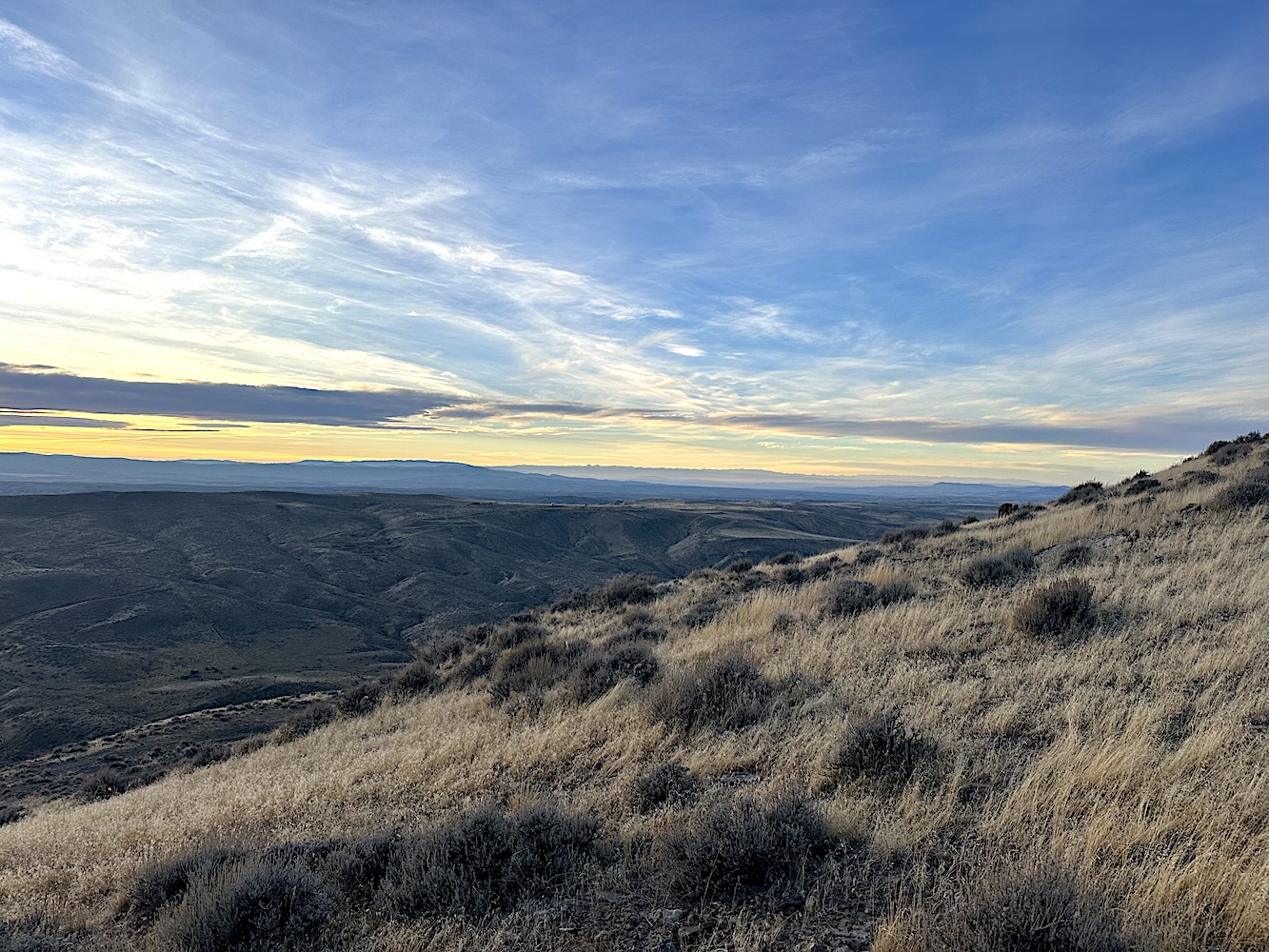

Hot Springs County residents watched the Red Canyon Fire explode in August. Driven by extreme weather conditions, the lightning-sparked blaze burned nearly 195 square miles of grassland, sagebrush steppe and pinyon-juniper habitat in the Bighorn Range foothills, and it happened quickly — most of the burn area was charred in a span of four days.
Dread in Hot Springs County communities like Thermopolis and Kirby wasn’t confined to the immediate effects, like lost fencelines and incinerated forage for livestock and wildlife. The inferno burned over landscapes that are plagued by a cheatgrass infestation. There are credible worries that, without costly chemical intervention in the near future, the fire scar could convert to an unproductive monoculture of invasive grasses.
“We’re going to really depend on [state] funding to treat this, because our district doesn’t have a budget to do any of it,” Hot Springs County Weed and Pest District Supervisor Heather Love told WyoFile.
Love’s district submitted a $9 million grant request to fight back, money that would enable restoration spraying on roughly 140,000 acres of private, state land and adjoining federal land near Red Canyon Fire.
That funding is currently being deliberated by Wyoming lawmakers. Prospects are looking good for $9 million to pay for the direct response to the fire. But there are dimmer odds that there will be much money available for treating cheatgrass in other reaches of Hot Springs County.

It’s not for lack of need. Hot Springs County weed and pest professionals have identified 340,000 acres in their district’s eastern reaches, where the cheatgrass invasion is becoming untenable.
“That much of our county could use spray,” Love said. “Actually, our entire county could be sprayed.”
Many other reaches of Wyoming share Hot Springs County’s plight. Cheatgrass is slowly taking over, and hard-fought dollars available through the Wyoming Wildlife and Natural Resource Trust and other state and federal sources aren’t enough to arrest its spread. It’s a grave problem for native wildlife like mule deer, for livestock producers and for the broader environment: Cheatgrass has been called the “most existential, sweeping threat” to western ecosystems.
Wyoming lawmakers are still in the process of deciding how much to spend on addressing cheatgrass and other invasive annual grasses in the 2027-28 state budget. Going into the Legislature’s session, Gov. Mark Gordon proposed dedicating $11 million: a funding request that traces back to the 2024 budget session. Those dollars were positioned to come through in 2025, but then were “stranded” and never allocated after the Wyoming Senate decided to go without a supplemental budget.
“That put us a year behind,” Wyoming Wildlife and Natural Resource Trust Executive Director Bob Budd told WyoFile.
Additionally, Gordon proposed another $29.4 million in funds dedicated to wildfire restoration projects. The bulk of that money typically goes toward spraying cheatgrass, Japanese brome and other invasive grasses.
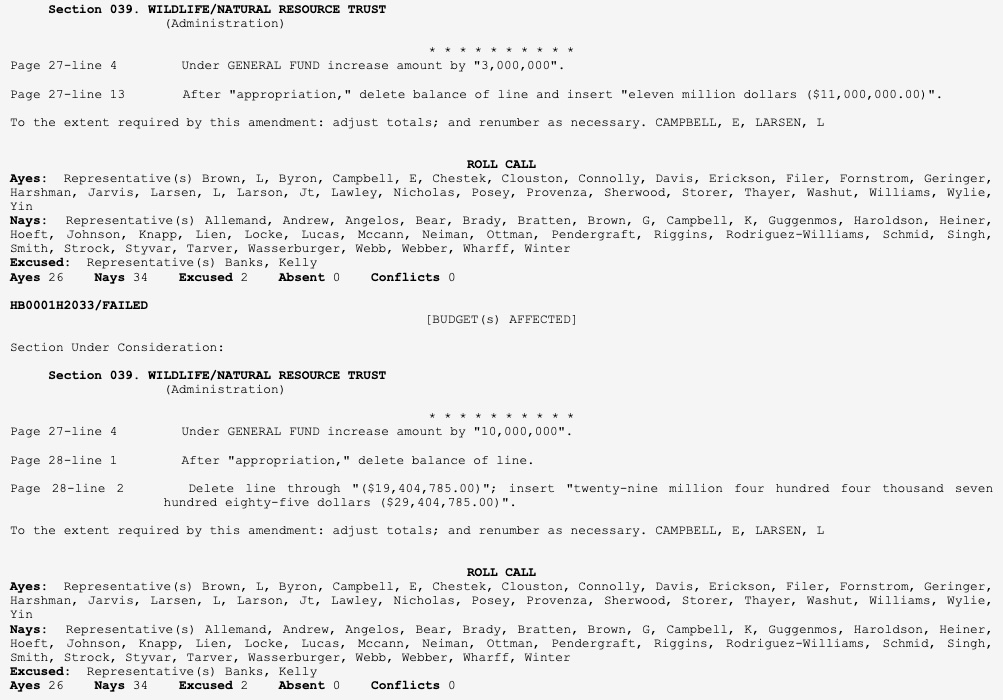
Those sums were trimmed down by $13 million in the budget bill that state senators and representatives began working with two weeks ago. Alongside high-profile cuts proposed by Wyoming Freedom Caucus-aligned lawmakers in January was a $10 million trim to the fire restoration funds and a $3 million reduction in the broader cheatgrass spraying pot. The budget session now underway is the first since the group of hard-line Republicans secured a majority of the seats on the powerful Joint Appropriations Committee.

Through two weeks of the legislative session, the Freedom Caucus-controlled House of Representatives has resolutely stood behind cuts to spending on Wyoming’s cheatgrass fight. During Tuesday’s marathon budget debate that stretched until 1:30 a.m., Casper Republican Rep. Elissa Campbell brought two amendments that sought to restore the $13 million in funds.
“These invasive annual grasses, the threat cannot be overstated to our ranches and our heritage lands,” Campbell said on the House floor.
A handful of other representatives argued in favor of the additional investment.
Rep. Lloyd Larsen, a Lander Republican, pointed out how the funds would quickly go toward on-the-ground work, and that the state spending is often leveraged with 3-1 and 4-1 matches from other funders.
Buffalo Republican Rep. Marilyn Connolly vowed support because a breakthrough herbicide, Rejuvra, is so pricey — it costs about $1,150 a gallon, she said.
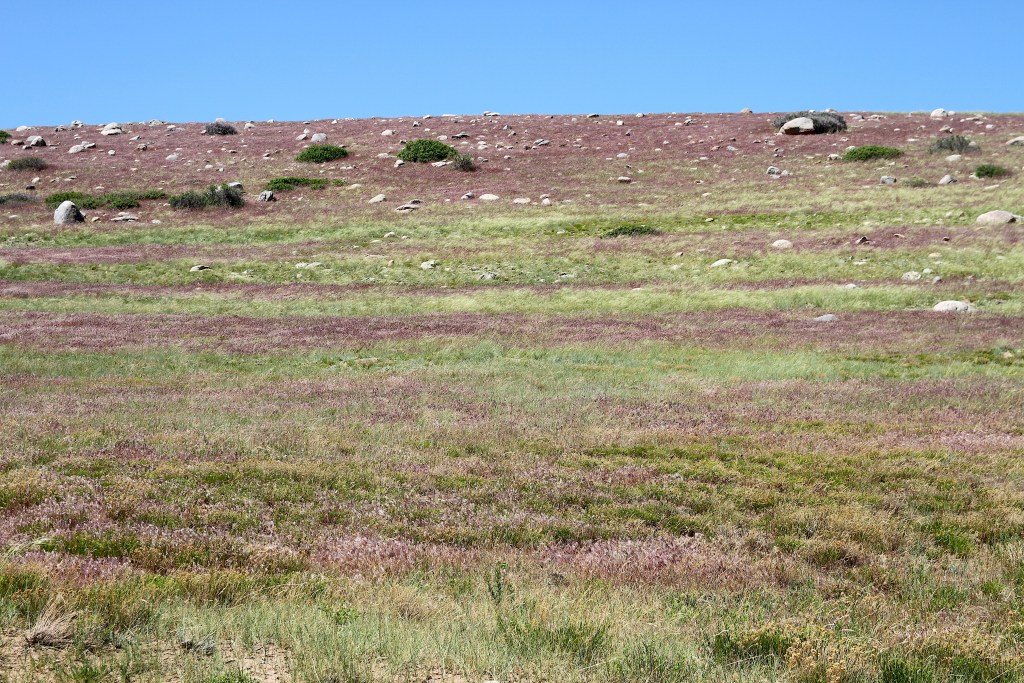
“This is a really emergent situation,” Connolly said. “Those grasses cut down on your productivity of your ag land, your grazing, it hurts the wildlife.”
Proponents of spending less on treating Wyoming cheatgrass mostly kept quiet, with only Gillette Republican Rep. Abby Angelos speaking up.
“On and against,” Angelos said Tuesday in response to Campbell’s first amendment. “We’re going to keep it at the $8 million.”
Both of Cambell’s amendments failed 28-34, with House members who typically vote with the Freedom Caucus voting against adding the $13 million. The same two amendments were filed for the House’s third reading of the budget on Friday. Neither passed the House.
State senators, meanwhile, replenished both cheatgrass-related pots to Gordon’s desired spending levels. The $13 million was restored on the first day of the upper chamber’s budget negotiations as part of Devils Tower Republican Sen. Ogden Driskill’s overarching budget amendment, which passed 20-11.
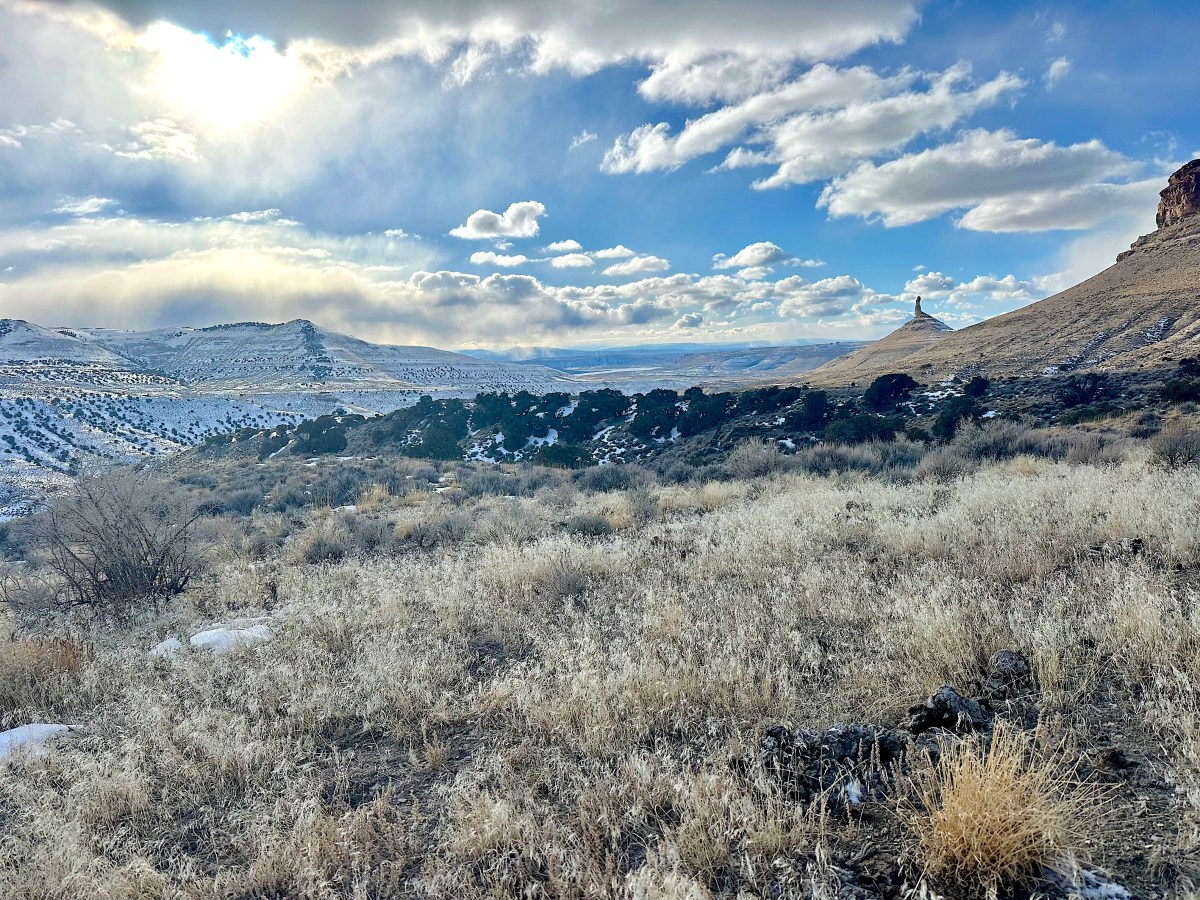
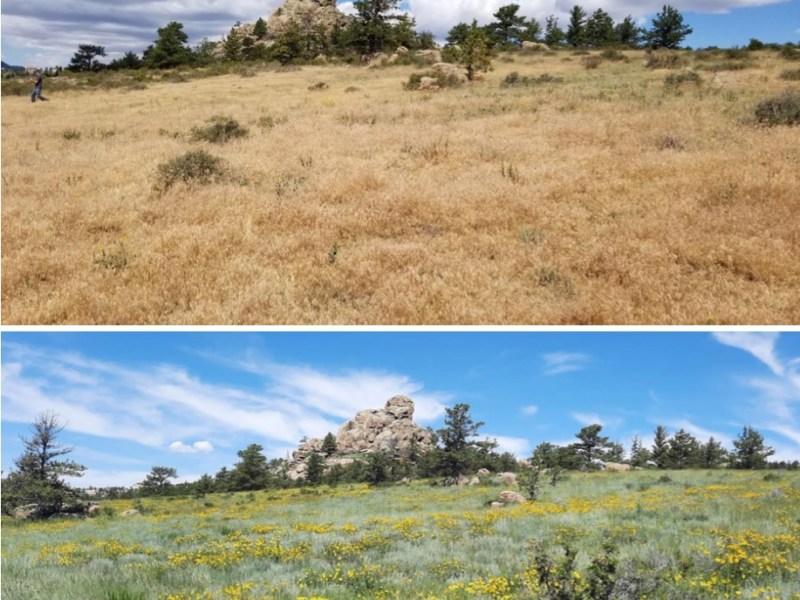
Negotiations between the House and Senate will likely determine what Wyoming weed and pest districts ultimately have available to fight the cheatgrass invasion the next couple years.
“Maybe in conference committee, we can scrape out a little bit more,” said Wyoming Wildlife Federation staffer Jess Johnson, who’s been lobbying for the funding.
It’s in Wyoming’s long-term best interest to tackle the issue now, she said.
“The need for work on cheatgrass far exceeds the funding available right now,” Johnson said. “Cheatgrass, we can all agree, is a huge problem. Big dollars are needed.”
For more legislative coverage, click here.

I think you are missing the backstory/ context for the cheatgrass issue. Park County Weed & Pest agency would be a great resource for you. As farmers & seed producers in Park County this has been an issue & topic of discussion for years.
$13M seems like chump change given the havoc that cheat grass is wreaking. Maybe that’s because I live in CO. Maybe we should just pony up to slow the spread from the NW. I often hear that some wind or solar project will “destroy” sage grouse habitat on a few square miles. And that the grouse is declining because of “habitat loss,” which makes most folks think of solar farms or big box parking lots. But 10s of thousands of square miles of sage steppe is being ruined by cheat grass. And it seems the sage grouse adapts better to solar or wind farms than to land where the sagebrush is choked out by the nasty dry grass. The longer I live the more damage I see from invasive species. I go to some lakes back east that are totally changed by snails or mussels or Eurasian milfoil. And not for the better.
I’m confused as to whom these people ‘represent’ exactly. This is just childish legislating yet again. I’ll add to the roof analogy: cutting ones nose off to….ya totally! Fools.
They never heard of cheatgrass (Bromus techtorum) at Mar a lago.
This is like selling the roof of of your house because “its not even raining, what do I need it for?”
Its expensive now but much much cheaper than letting the alternative happen.
At 25 acres per gallon and 4 years effectiveness it is certain to be cost effective tool reducing the explosiveness of wildfires we’ve seen lately. Gotta ask how expensive are these fires? Gotta ask how expensive is heads in dark smelly places refusing to pay attention to logic?
Just plain “DUMB” on the part of freedom caucus. They will pay far more than $13 million to contain cheat grass in the future.
They care more about Washington DC than they care about Wyoming. What a shame.
“An ounce of prevention is worth a pound of cure” – Benjamin Franklin.
It will never be cheaper to head off this landscape level catastrophe than right now, including on the 3.5 million acres of state owned lands. Kicking-the-can is not being fiscally conservative. It is just taking out a high-interest loan to be paid by your grandkids.
Reading this article it dawned on me that anyone can relate the horrible invasion of Cheatgrass to the idiotic ideals of the Freedom Caucus. Both will destroy Wyoming lands! The Cheatgrass problem can be helped with proper funding and planning. So a simple question is why not do all we can for the fertile yet fragile landscape of Wyoming. There is only one problem standing in the way! The moronic ideals of the spreading Freedom Caucus! I am not even sure they can be called ideals, generally ideals are thought through and there are reasons for them. Save Wyoming and rid us of the Freedom Caucus in August! Please!
All in for Wyoming eh? Cheat grass, UW, means nothing to the WFC. They are so far up DC they cannot think straight, or what is best for Wyoming. Who agrees?
They certainly don’t exhibit what is best for Wyoming in their rationale.
Imo, it’s about a whole lot more than just weeds….