


Joe Holbrook and his wife crouched in the September woods, listening for elk. His wife squeaked out a call, something meant to sound a bit like a cow or even a calf, an attractant to a bull during mating season.
They waited in the quiet. She called again. Then they heard a “thump, thump, thump,” a crash, and Holbrook’s wife whispered: It’s a bear.
Holbrook turned and yelled just as he saw the creature bursting through the trees running headlong at them.
As they locked eyes, the black bear screeched to a halt as in a cartoon. A moment later, it wheeled around and charged equally fast back into the woods.
Clearly Holbrook and his wife were not the morning meal that black bear was hoping to find.
The incident itself was shocking enough, but what really surprised Holbrook, a longtime black bear researcher and University of Wyoming professor, was that black bears don’t typically key in on elk calves in September.
“I’ve never seen a black bear behave that way,” he said.
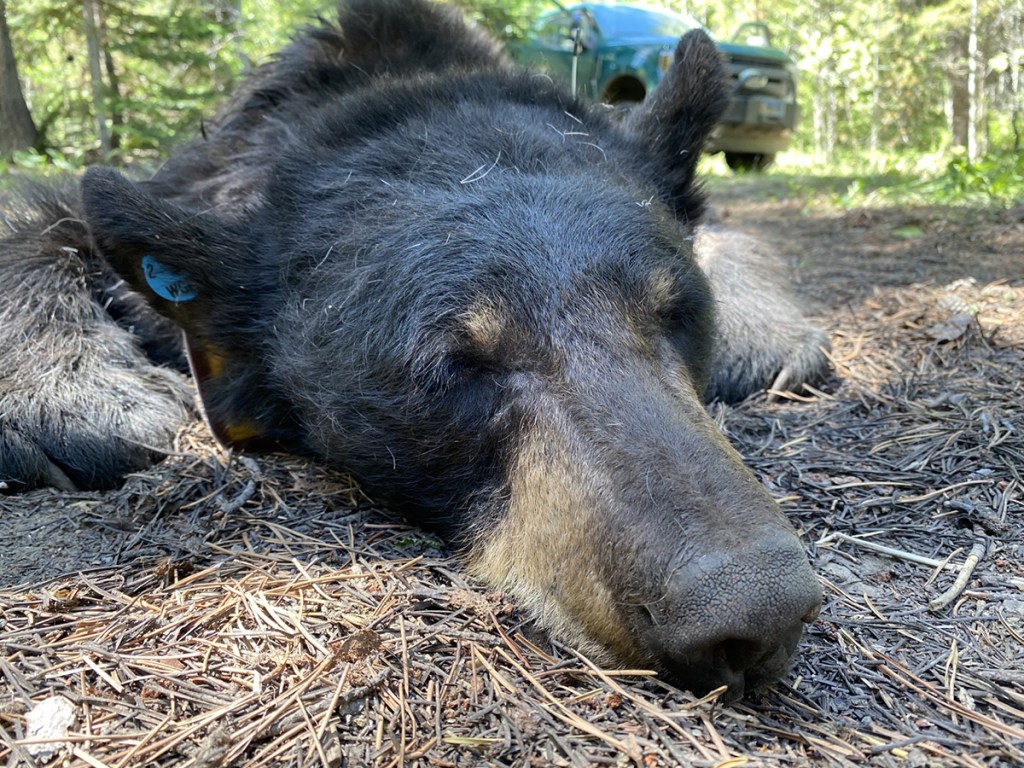
They eat plenty of calves early in the spring, when the newborn creatures are smaller and more helpless, but by fall an elk calf could weigh 300 pounds compared to a black bear that might only weigh a couple hundred pounds.
What the anecdote showed Holbrook is what years of research out of his group at the University of Wyoming would soon prove: Black bears follow their stomachs, and they’ll eat just about anything. And as a result, wildlife managers can’t rely on normal population models based on broad generalizations.
“Because the world is their oyster,” said Emily Davis, a Ph.D. student in Holbrook’s lab and the lead author on a recent paper outlining black bear behavior. “They will eat and move wherever they want to go.”
What’s a bear’s why?
Plenty of wildlife headlines focus on predictability of various species. Mule deer follow the same migration paths year after year, likely adopted from their moms who learned them from their moms. Black-footed ferrets hunt at night and eat almost exclusively prairie dogs.
Black bears, Davis said, are harder to pin down.
“We know bears are generalists and omnivores and eat well and den and repeat,” she said. And trying to find commonalities using average trends often leads to unhelpful conclusions like “bears use forests.”
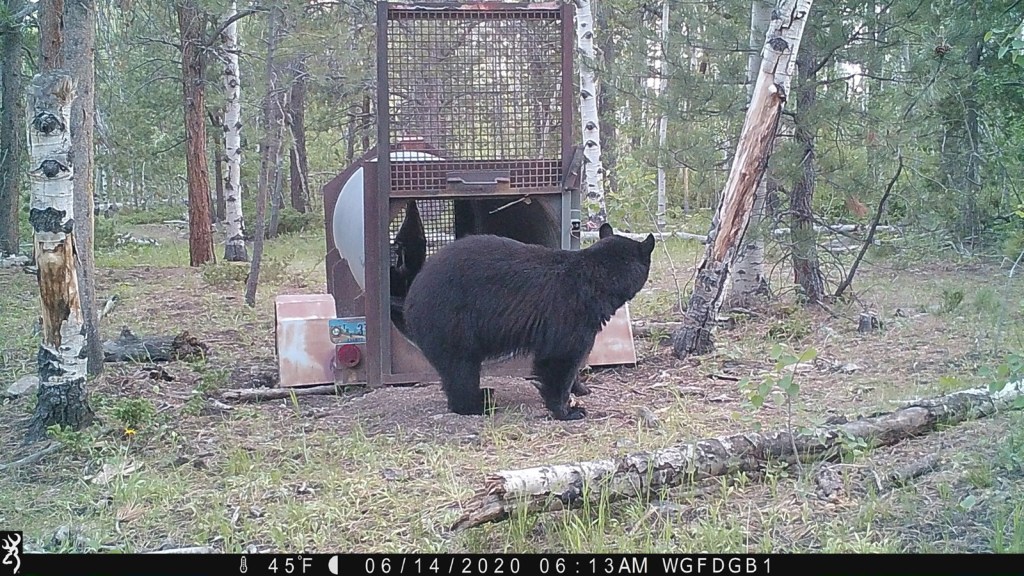
Black bears have always been the much-less-feared, much-less personified, and as a result much-less studied counterpart to their larger, more aggressive cousin the grizzly bear. While grizzly bears bring tourists from around the world to places like Yellowstone National Park, and back up traffic for miles on highways much to the chagrin of state law enforcement and wildlife officials, black bears tend to stay a bit more hidden.
But as managers continue to navigate black bear hunting season-setting meetings and build population models, they need more information on how black bears move, their modus operandi.
So Davis and Holbrook, with the backing of the American Bear Foundation and in partnership with the Wyoming Game and Fish Department, created a study to find those answers. And they reframed the question from what black bears are looking for to why.
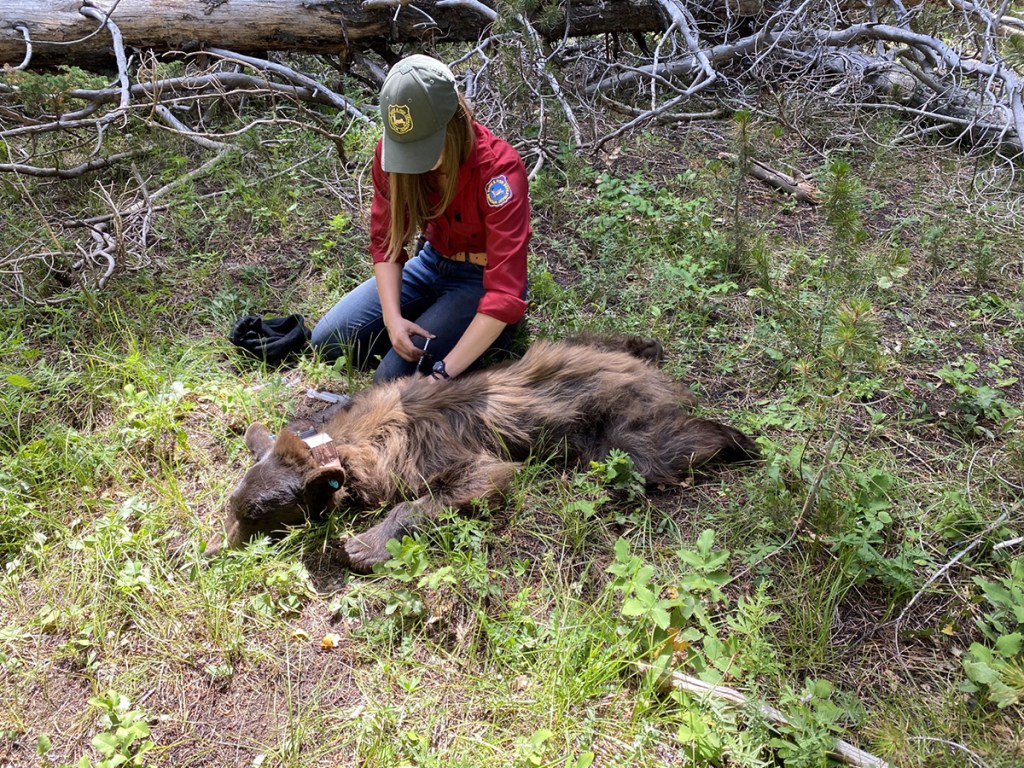
The group divided the state into four study areas, the Greys River region, Sierra Madres, Bighorn Mountains and Laramie Mountains and placed collars on 35 bears.
After seven years, Davis could begin to draw conclusions. First, black bears didn’t behave in certain ways based on age or gender — typical of many other species — but by how much body fat they had and what was available where they lived. She then realized that not only did bears in each region behave differently — bears in the Greys River region spent more time in wetlands than those in the drier Laramie Range — but individual bears in those regions did their own thing. In a black bear’s world, apparently, the grass is always greener.
“You would expect if bears are in an area where there’s a ton of forage they would think ‘I’m good, I don’t have to work hard, I will sit here and eat what’s around,’” Davis said. “But they actually did the opposite and kept seeking out forage to find more of it even in areas where there is already plenty”.
Like Holbrook’s story about the elk call in September, even though the bear likely had little chance of catching what sounded like a calf, Davis found black bears are simply that motivated to put on fat in the fall.
“There isn’t a single ‘best’ way to be a bear,” she said.
Proof of assumptions
For Dan Thompson, Wyoming Game and Fish Department’s large carnivore section supervisor, the research backs up to some degree what he already knows. Black bear populations can and should be managed differently depending on the region, he said. The research also explains why bear densities vary depending on the habitat and mountain range.
Joe Kondelis with the American Bear Foundation, agrees. The study is one more fascinating clue into the lives of the creatures he hunts and works to conserve. It also provides data to explain why Kondelis has seen so many black bears act in ways he would never predict.
“You will watch them on a perfectly good food source going 100 miles an hour, and then they look around and go to another spot,” he said. “When lots of food is out it’s tough for hunters to know where to look.”


Great article as usual for this writer. And a refreshing break from the legislative session! Thank you!!
“When lots of food is out it’s tough for hunters to know where to look.”
Interesting comment. I’m not sure what the author is trying to say. If I’m a bear biologist, and I come up with what appears to be a hint about where to find black bears during hunting season, is that meant to help the hunters or the bears that survive the hunting season?
Or, what else?