

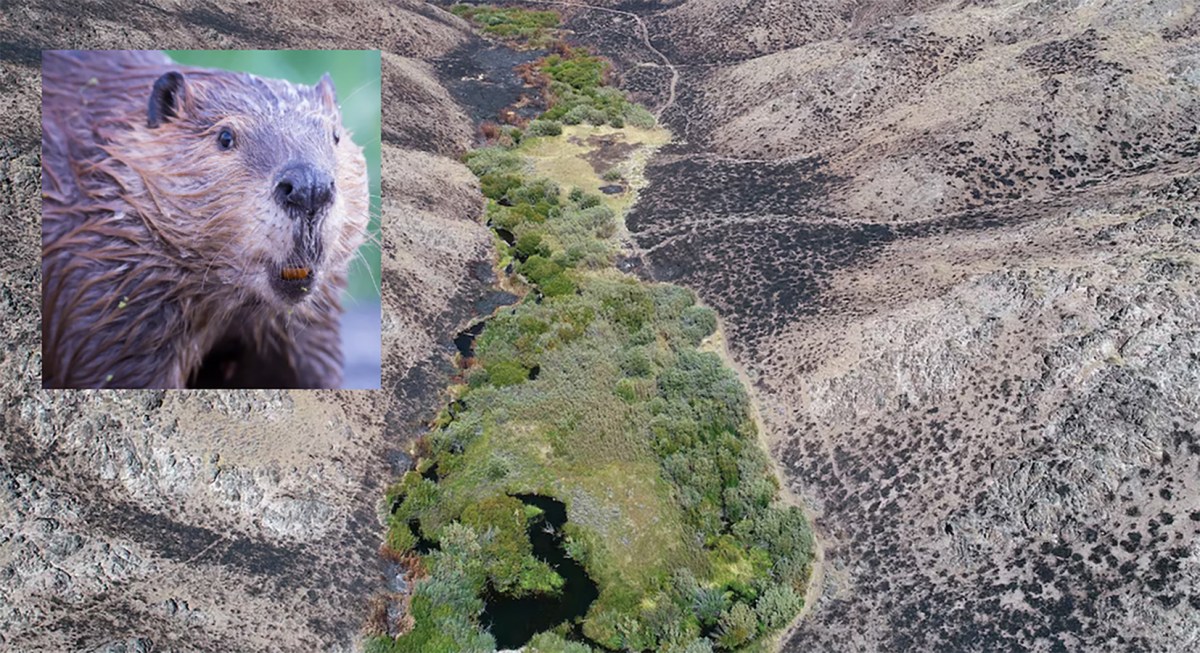
In parts of the West that have already burned, there are places where the fire simply stops.
Opinion
These are places shaped by ecological engineers. Streams spread into wide, green wetlands that hold moisture long after the surrounding land has dried. Created by beavers, these systems slow water, reconnect floodplains and store moisture in the ground, creating natural buffers against drought and wildfire.
Land managers and researchers across the West have shown that beaver wetlands can lower fire intensity and act as natural firebreaks, leaving green areas untouched while surrounding landscapes burn. The U.S. Forest Service noted that the loss of beavers has contributed to worsening drought and wildfire conditions, while their return is increasingly recognized as part of the solution.
People are beginning to recognize this. In Colorado, lawmakers recently introduced a bill to ban killing beavers on public lands, not as a symbolic gesture, but as a practical response to worsening drought and wildfire. Supporters pointed to the wetlands beavers create as natural firebreaks that store water, slow flames, and keep landscapes resilient in the face of extreme conditions.
Although the bill did not pass, the conversation itself marks a shift. Lawmakers were forced to consider that beavers are not expendable, but essential infrastructure. In a region facing drying soils and intensifying fire seasons, protecting beavers was framed as a simple, cost-effective way to restore watersheds and reduce long-term damage. What this moment shows is a growing recognition that wildlife are not just part of the landscape, they are active partners in its survival.
Here in Wyoming, this season makes the stakes clear. Snowpack in much of Wyoming’s low country fell to less than half of normal after one of the warmest winters on record.
We’re heading into spring already dry. That means smoke settling into our valleys, trails closing and families staying indoors. It means landscapes where one spark can threaten homes and livelihoods, and rivers running lower and warmer as wildlife struggles to keep up. It means quieter mountains ahead, fewer animals, shifting patterns and lasting impacts on the hunting, fishing, and wildlife watching that so many here depend on.
We’re already seeing these changes play out. A recent news story noted that mountain lions largely evaded hunters this season, simply because there wasn’t enough snow to track them.
Times like these call for a shift in perspective. It may not be easy, but continuing to treat ecological engineers as expendable, rather than essential to resilience, is a risk we can no longer afford.
In Wyoming, beaver trapping remains largely unregulated, with no bag limit across most of the state and no mandatory reporting to understand harvest levels. We are removing a species without a clear understanding of how many remain or what role they play in sustaining the systems we depend on.
Wyoming’s policies should reflect the reality we are now facing. No matter where you stand on hunting or trapping, we all share this landscape and a responsibility to recognize the changes unfolding around us and the resources already here.
I’m writing as someone who loves this place and takes pride in its landscapes, wildlife and our connection to both. It may require a shift in how we see the animals that share this land with us. That shift may feel unfamiliar, but it means recognizing species like beavers not as disposable, but as essential to the resilience of both human and natural systems.
In a changing West, resilience is already on the landscape. The question is whether we are willing to recognize it and ready to align our actions with that reality.


Interesting article. However, it’s a bit of a stretch to claim that trapping is “largely unregulated;” there are definitely rules, seasons, and licenses required. And while trappers are not required to report each harvest, they do receive an after-season survey that is used to measure harvest and population levels. Also, I don’t think that many Wyomingites, trappers included, view beavers as a “disposable” species that is not essential to the resilience of both human and natural systems.
Great article, thanks!
While the beaver is the most important animal to North American wildlife,We should not forget our ground squirrels!
They are also very important in raising water tables and creating wetlands where none would be without them.
It is very difficult to find information regarding ground, squirrel, preservation, etc.
Keep up the good work!
Ground squirrels? Like in “gophers”? Please back that up…..
How bad does your thinly-veiled sentimental anti-hunting argument have to be to not even get out of committee in one of the most urban-liberal-dominated state legislatures in the country? If you don’t like hunting, that’s fine, say that. If you have real scientific evidence that hunting and trapping are having population-level impacts on a species, please share it.
That bill failed in committee because Colorado Parks and Wildlife released an exhaustive beaver restoration plan that addressed the majority of the bill’s intent. The plan is available online so you can compare the two. If Wyoming Game and Fish Department adopts a similar plan we’ll be in good shape.
Finally they are starting to recognize the importance of beavers .