
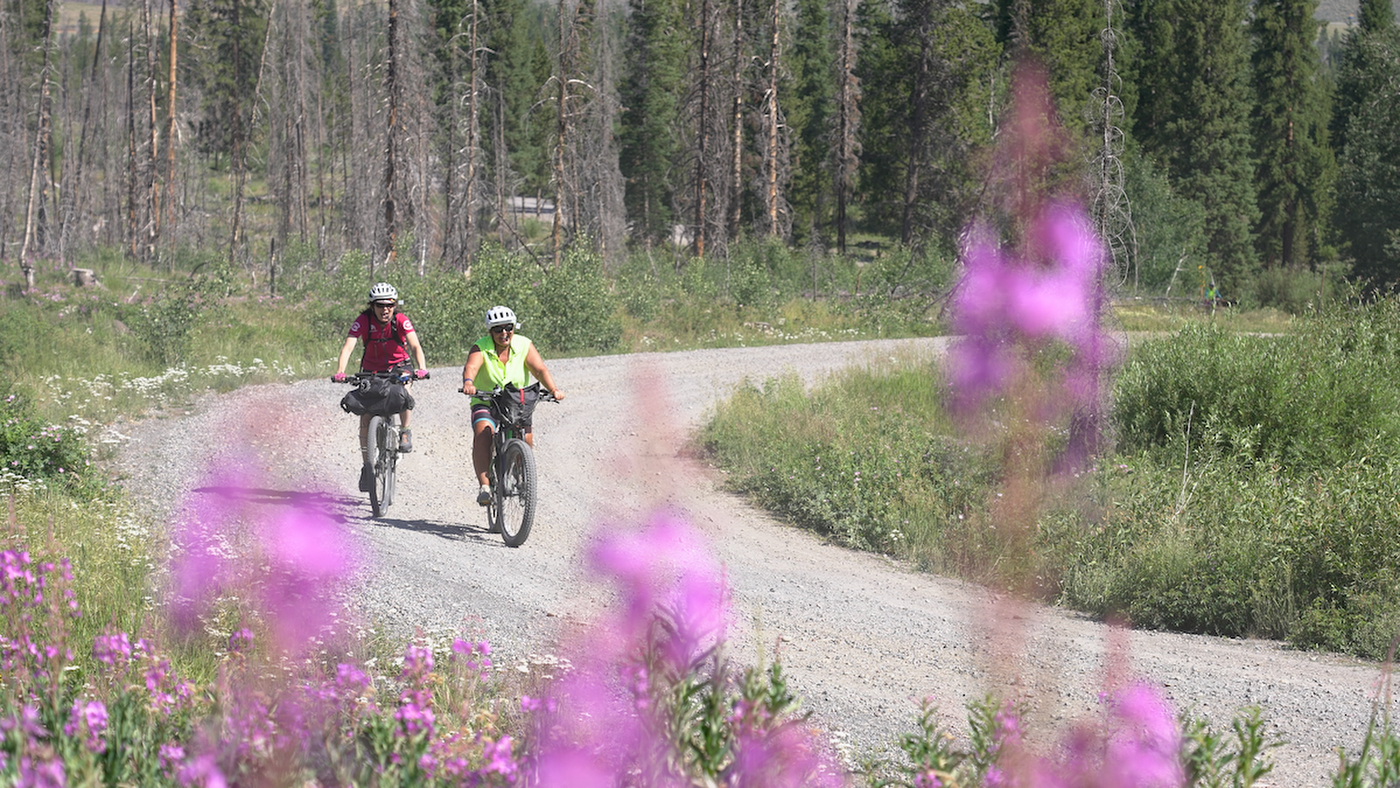
Long-distance bike expeditions are most often pursued by higher-income, educated men from urban areas. 

So when a small team from Central Wyoming College set out to ride a section of the Continental Divide Trail from Montana to Wyoming in 2021, it did not fit the mold. 

The student riders included four women and one man. Together, they had very little cycling experience, let alone on multiday expeditions. Three were Native American women who grew up on the Wind River Reservation, one a Belize native and military veteran and another was a grandmother who hadn’t graduated from high school.
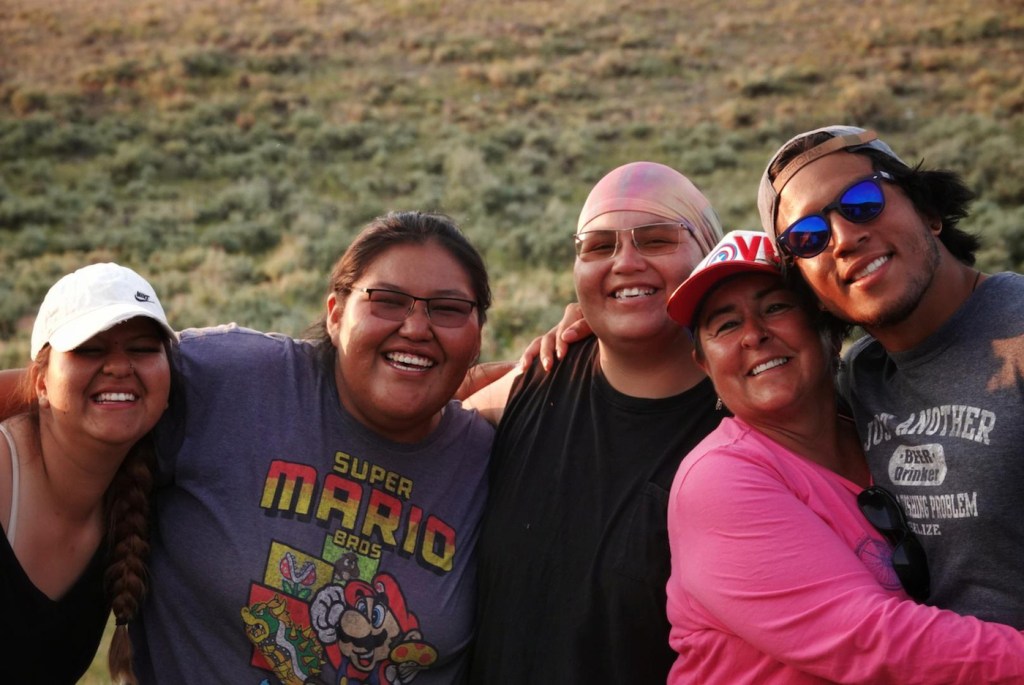
Student riders on a CWC bike expedition, from left, Aidan Hereford, Jada Antelope, Tara Jorgeson, Tammy Green and Alex Minge. (Kyle Nicholoff/Gravel & Grit)

But they set out together to ride roughly 1,000 miles. They slogged through mud and endured hail, experienced grizzly bear encounters, pushed up huge inclines and flew down the descents. And during the weeks spent pedaling, eating and camping together, the lines between them dissolved.

It was unreal, rider Tammy Green said, to get thrown together and connect in such strong ways. “We’ve all fallen in love as a family,” Green said. 

The story of their disparate backgrounds and shared adventure is the center of the PBS documentary “Gravel & Grit — Bridging the Great Divide.” The film premieres Tuesday at Central Wyoming College in Riverton, followed by a panel with several of the riders. CWC professor Jacki Klancher led the expedition, which was supported by guides, drivers, cooks and even a dog. 
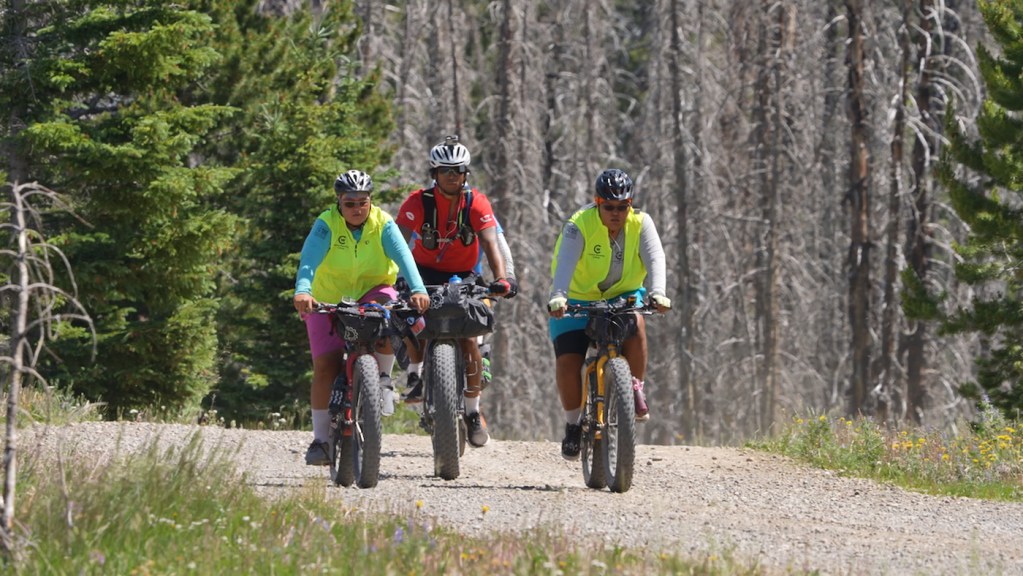
A group of students and guides rode along the Continental Divide for more than three months. Their adventure is the subject of the documentary “Gravel & Grit — Bridging the Great Divide.” (Kyle Nicholoff/Gravel & Grit)

Along with being an outdoor adventure, the riders incorporated a science element to the trip by carrying air-quality sensors to gather data. They endured plenty of mental and physical challenges, but the film goes beyond just the riding to examine the personal stories behind the cyclists. They include stories of overcoming health challenges, rethinking circumstances and experiencing loss. 

“It turned out that it was much, much more than just a bike adventure for these students,” film director Kyle Nicholoff said. 

The screening takes place Tuesday at 6 p.m. in the Robert A. Peck Arts Center Theatre at CWC. It’s free, and participants will have a chance to win a mountain bike.

Katie Klingsporn reports on outdoor recreation, public lands, education and general news for WyoFile. She’s been a journalist and editor covering the American West for 20 years. Her freelance work has...

Join the Conversation

2 Comments

WyoFile's goal is to provide readers with information and ideas that foster constructive conversations about the issues and opportunities our communities face. One small piece of how we do that is by offering a space below each story for readers to share perspectives, experiences and insights. For this to work, we need your help.

What we're looking for: 

  • Your real name — first and last. 
  • Direct responses to the article. Tell us how your experience relates to the story.
  • The truth. Share factual information that adds context to the reporting.
  • Thoughtful answers to questions raised by the reporting or other commenters.
  • Tips that could advance our reporting on the topic.
  • No more than three comments per story, including replies. 

What we block from our comments section, when we see it:

  • Pseudonyms. WyoFile stands behind everything we publish, and we expect commenters to do the same by using their real name.
  • Comments that are not directly relevant to the article. 
  • Demonstrably false claims, what-about-isms, references to debunked lines of rhetoric, professional political talking points or links to sites trafficking in misinformation.
  • Personal attacks, profanity, discriminatory language or threats.
  • Arguments with other commenters.

Other important things to know: 

  • Appearing in WyoFile’s comments section is a privilege, not a right or entitlement. 
  • We’re a small team and our first priority is reporting. Depending on what’s going on, comments may be moderated 24 to 48 hours from when they’re submitted — or even later. If you comment in the evening or on the weekend, please be patient. We’ll get to it when we’re back in the office.
  • We’re not interested in managing squeaky wheels, and even if we wanted to, we don't have time to address every single commenter’s grievance. 
  • Try as we might, we will make mistakes. We’ll fail to catch aliases, mistakenly allow folks to exceed the comment limit and occasionally miss false statements. If that’s going to upset you, it’s probably best to just stick with our journalism and avoid the comments section.
  • We don’t mediate disputes between commenters. If you have concerns about another commenter, please don’t bring them to us.

The bottom line:

If you repeatedly push the boundaries, make unreasonable demands, get caught lying or generally cause trouble, we will stop approving your comments — maybe forever. Such moderation decisions are not negotiable or subject to explanation. If civil and constructive conversation is not your goal, then our comments section is not for you. 

Your email address will not be published. Required fields are marked *