

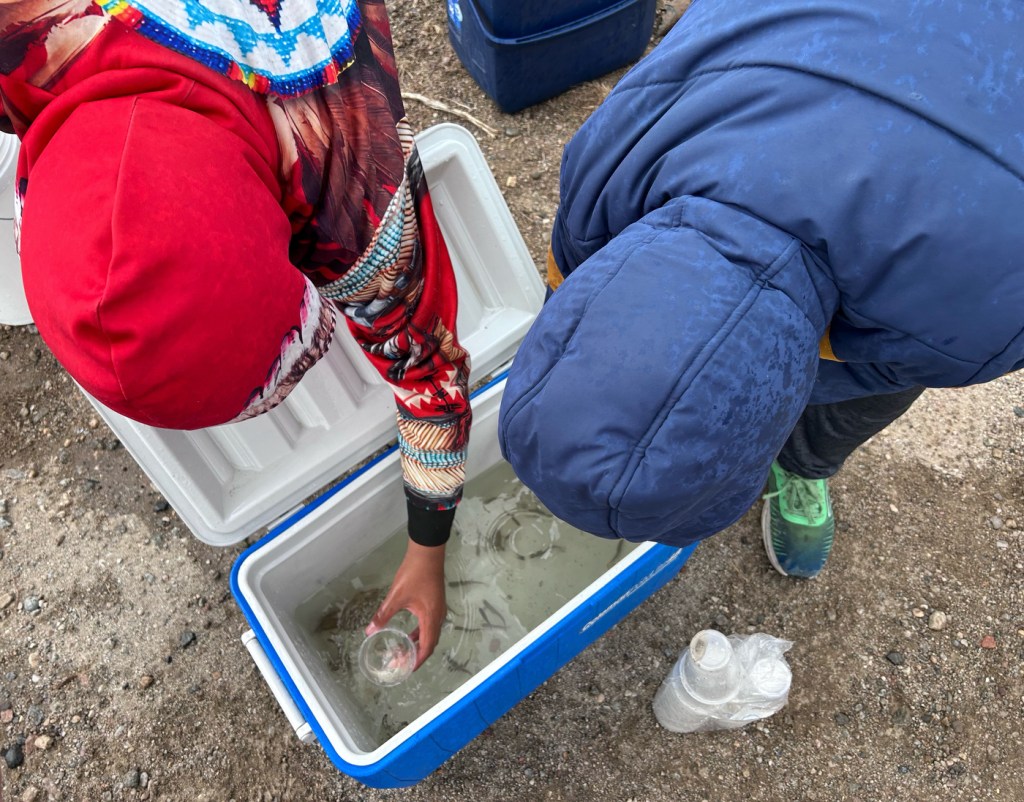
RAY LAKE—There was a lot of giggling in the parking lot as teenagers plunged bare hands into coolers filled with small, slippery rainbow trout fry.
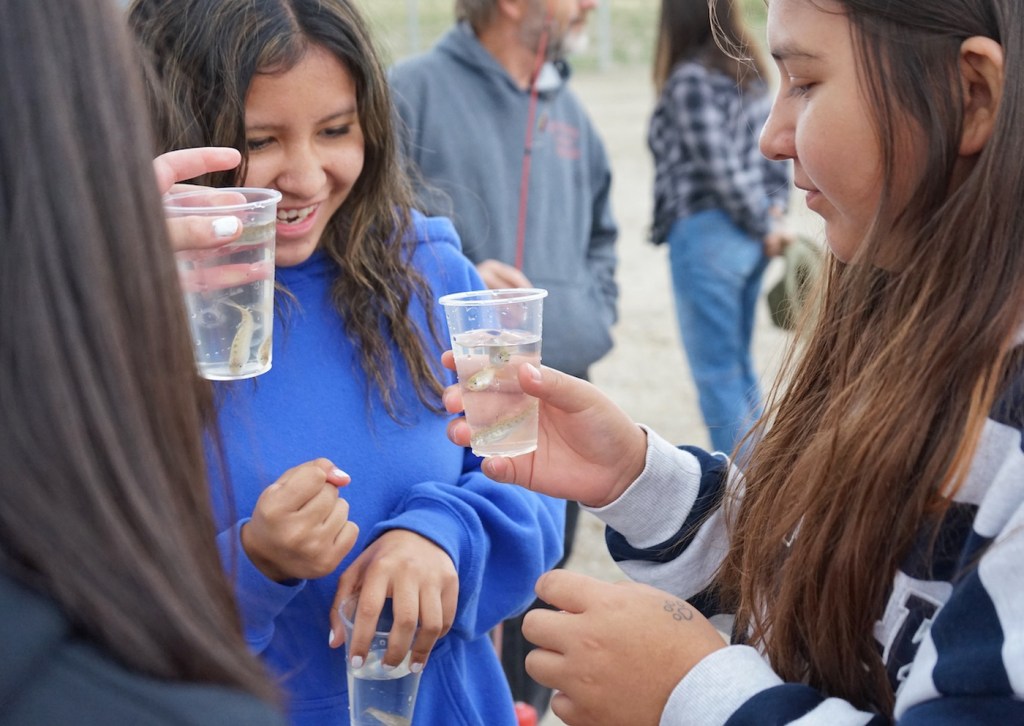
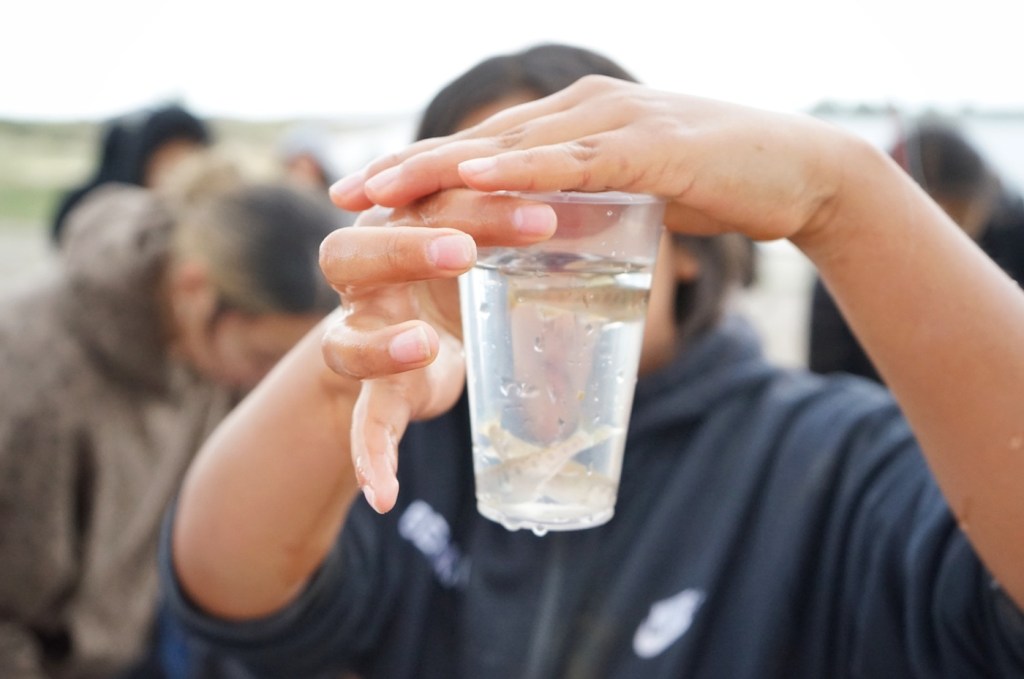
The objective was to catch the fish in clear plastic cups, but the juvenile trout were fast and very squirmy, and the effort elicited shrieks, splashing and laughter.
The kids — middle and high school students from Fort Washakie, Wyoming Indian and St. Stephens schools — were pretty comfortable handling the baby trout. That makes sense, given that they hatched them from eggs and reared them in classroom tanks over the previous four months.
Thursday’s fish release under leaky rainclouds was the culmination of the Trout in the Classroom program, which schools on the Wind River Reservation have participated in for three years.
The Wyoming Game and Fish Department funds the program, which Trout Unlimited facilitates and the Wind River Tribal Buffalo Initiative coordinates. Trout in the Classroom allows students to learn an array of scientific lessons as they do the hands-on work of raising the fish.
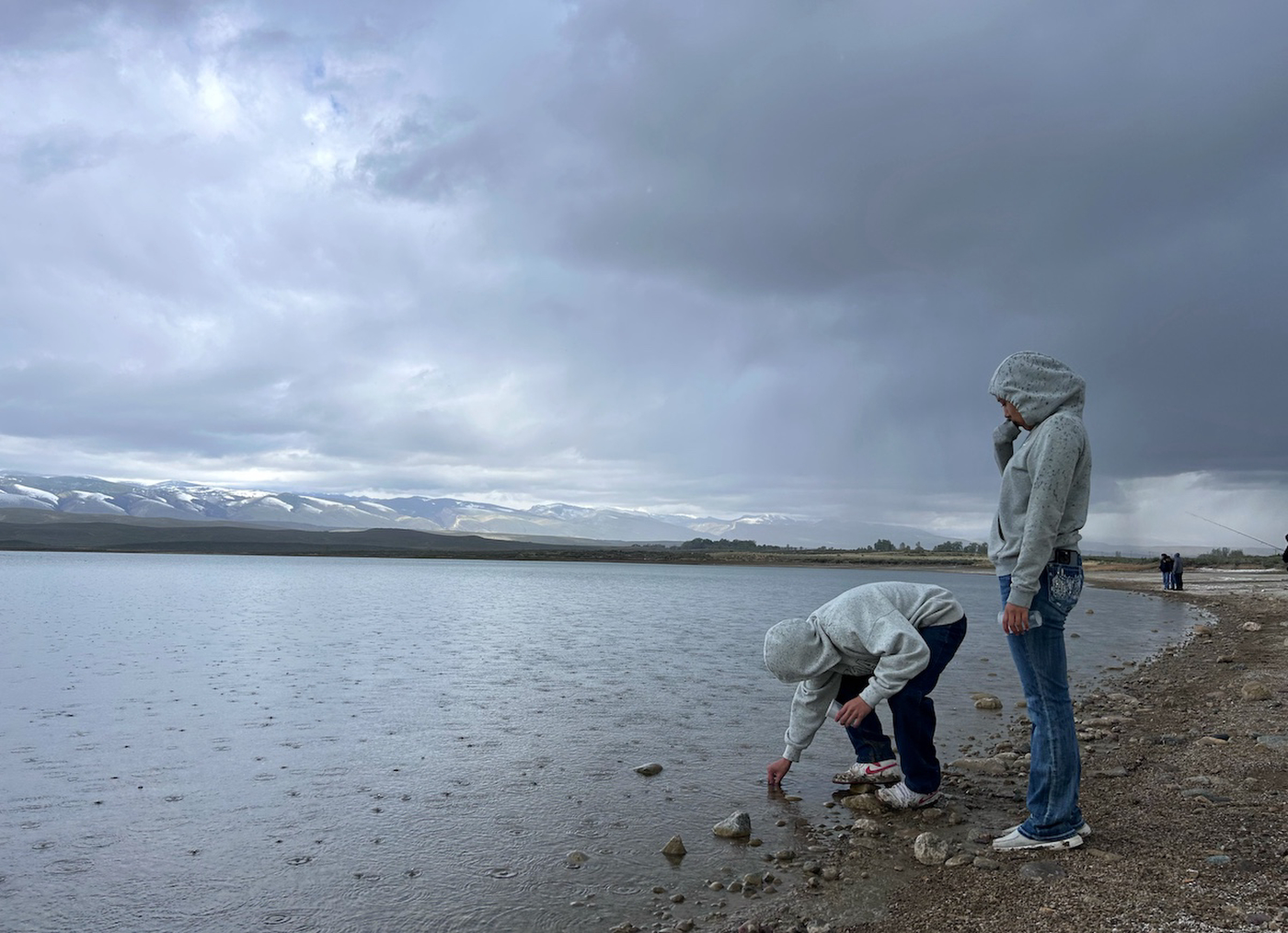
After circling up in the Ray Lake parking lot, talking about watershed ecology and listening to a tribal blessing, students and their teachers got busy transporting dozens of fry from coolers in the parking lot to the nearby lake’s muddy shores. There, they released them, cup by cup, into the shallows, nudging them to their new wild home
“OK, goodbye fishies!” a girl called as she knelt by the water.
“Swim free!” a boy chimed in.
Connecting the students directly to wildlife and its habitats helps foster emotional investment, Wind River Tribal Buffalo Initiative Education and Culture Coordinator Jeremy Molt said. That contributes to the ultimate goal, “which is to inspire responsible cultural stewardship of the land.”
Molt has seen the shores of reservation lakes like this one grow less littered since the trout program began, which he links to young people’s increasing awareness of ecological health and a desire to protect it.
Through the program, he said, “we’re kind of healing some of those disconnections” with the landscape and natural food sources. “We’re trying to rewire some of that.”
Fort Washakie science teacher John Gookin was among the fish transporters. The program gives educators like him opportunities to teach about topics like beneficial bacteria, the chemistry of water, how trout extract oxygen through their gills and the life cycles of freshwater swimmers.
“It engages the kids, and gives something operational for things like biochemistry,” he said.
For example, in the classroom, his students “test how much ammonia is in the water,” Gookin said. “Then we learn about the shape of the ammonia molecule, the cycles of it and why that even matters.”
Because his students are all anglers themselves, he said, they were excited to help stock the lake and perpetuate healthy waters.
And though they became wet with rain and mud, the giggles never died down.

This is by far the best way to practice responsible environmental stewardship. These kids will remember this experience their entire lives, and the majority of them will act on it in their own lives. Thank you Ms. Klingsporn, this is also the best way to practice journalism.
Great work, Katie. Imbuing ecology with human interest touches readers.
Great story, Katie. Imbuing ecology with human interest touches readers.