



Wyoming wildlife managers were blunt in their objection to a Caribou-Targhee National Forest draft decision that lets a ski area expand its boundaries into vital habitat for Teton Range bighorn sheep.
The decision left Wyoming Game and Fish Director Angi Bruce “thoroughly disappointed,” she wrote in a July 13 comment letter about Grand Targhee Resort’s approved expansion. The state agency’s memo suggested a single solution.
“The only effective remedy to the Department’s Objection Points is to avoid [ski area] expansion and the subsequent development into South Bowl,” Bruce wrote.
South Bowl is one of the two expansion areas that Grand Targhee Resort has been working to get approved for nearly six years. The plans were unpopular from the beginning, in part because of known incursions into the talus slopes used by the Teton’s bighorn sheep, which are part of a small and disease-free core native herd in Wyoming.
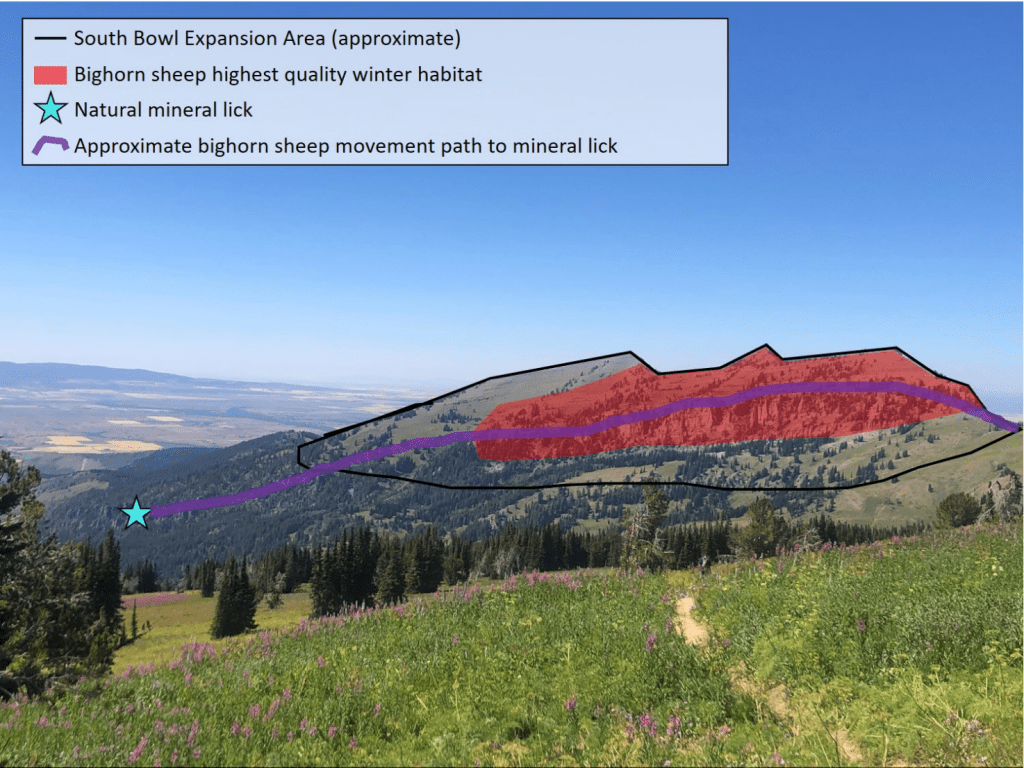
The Forest Service approved new developments and expansion of Grand Targhee’s boundaries in late May. The OK’d changes to the 57-year-old ski area include a host of new lifts, runs, an on-slope restaurant and mountaintop guest building and are intended to make Targhee more competitive as a destination resort. The two tentatively approved expansions would stretch Grand Targhee’s permit area by 694 acres, a 28% addition to its existing 2,517-acre footprint.
Caribou-Targhee Supervisor Kim Pierson reduced the proposed expansions in response to bighorn sheep-related and other environmental concerns, such as the loss of federally “threatened” whitebark pine: the Mono Trees area was reduced 24% to 459 acres. And the South Bowl area was trimmed 12% to 235 acres “to reduce the likelihood of human and bighorn sheep interactions,” Pierson wrote in the draft decision.
In that document, Caribou-Targhee officials disclosed potential bighorn sheep population declines as a result of the ski area’s expansion.
“Loss of habitat within and in the vicinity of the project area, particularly in South Bowl and in Teton Canyon, which is likely accessed through South Bowl, has the potential to harm viability of the Teton Range Herd,” the draft decision stated.
Wyoming wildlife officials were unsatisfied with that outcome.


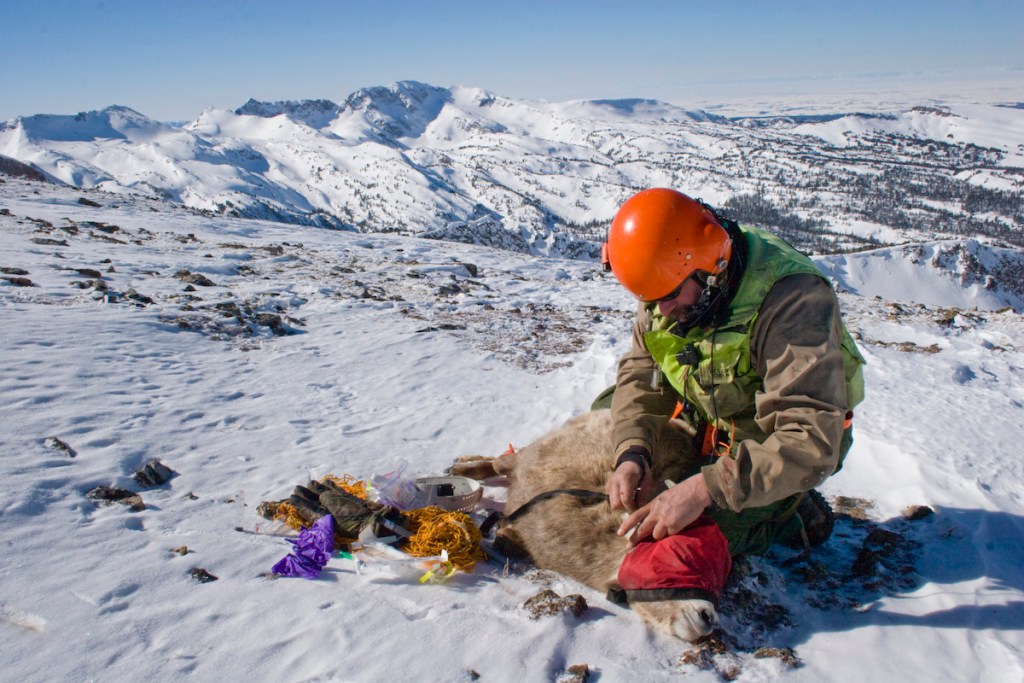
The agency’s wildlife biologist for the Jackson Region, Aly Courtemanch, studied the impacts of backcountry skiing on Teton sheep for her University of Wyoming master’s degree research, concluding that out-of-bounds skiing in the Tetons is directly displacing bighorn sheep.
Game and Fish’s objection letter stated that “minimization measures” and the removal of 31 acres of the South Bowl expansion “do not meaningfully mitigate impacts to bighorn sheep.”
A forthcoming review process could make the Targhee expansion more favorable to Bruce and her Wyoming Game and Fish colleagues.
“There’s an opportunity for the final record decision to be different than the draft, if substantial issues are shown,” Caribou-Targhee spokesman Jared Fisher told WyoFile. “Maybe something was missed in the analysis.”
It’s the forest’s job to address those potential deficiencies, he said.
Game and Fish argued in its objection that the tentatively approved Grand Targhee plans “not only run counter to Wyoming state law but also the shared agreements between the State of Wyoming and the Forest Service regarding management of bighorn sheep and their habitats.”
Wildlife managers argued the draft decision violated the Caribou-Targhee National Forest Plan and Forest Service policy for sensitive species. Game and Fish officials also objected to the forest’s exclusion of technical data they provided.
Caribou-Targhee’s draft decision was met by over 1,200 comments. Some of those bits of public input won’t have any real impact, because the submitting parties lacked standing or provided remarks that lacked substance, Fisher said.
But substantive remarks from other objectors could sway the final outcome. Objecting parties include both Teton Counties, which border each other opposite the Idaho-Wyoming state line, according to the Jackson Hole News&Guide.
There are also numerous comments from wildlife-focused advocacy groups that objected to the high-profile Teton bighorn sheep herd’s expected habitat loss.
“Of all the negative impacts a Grand Targhee expansion would cause for wildlife, the harm to bighorn sheep habitat is the most acutely concerning,” Wyoming Outdoor Council Wildlife Program Manager Meghan Riley wrote in a comment letter. “The Targhee Bighorn Sheep Herd exists as a small, isolated population confined to high elevations in the Teton Range where they remain year round.”
During surveillance flights, Wyoming biologists last tallied only about 80 animals in the herd, though DNA analyses of scat samples suggest some animals were missed and the population is somewhat larger.
The Greater Yellowstone Coalition, Idaho Conservation League and The Wilderness Society also objected to an expansion, arguing the boundary change “unnecessarily impacts” Teton bighorns.
“The only way to truly protect the Teton bighorn herd would be to remove the South Bowl expansion from the decision,” the groups wrote.
If that’s not possible, they suggested mitigation measures: Restricting summer operations, not allowing backcountry gates in the area and identifying suitable replacement habitat for displaced sheep.
A collaborative objection letter from the Wyoming Wild Sheep Foundation, Wildlife Wildlife Federation, Theodore Roosevelt Conservation Partnership and Wild Sheep Foundation also details misgivings “specifically and exclusively” about the Targhee expansion’s potential harms to Teton Range bighorns. The herd is “one of the most ecologically irreplaceable wildlife populations in the Greater Yellowstone Ecosystem,” the groups wrote.
“The expansion of Grand Targhee Resort into South Bowl is irreversible in any meaningful management timeframe,” the groups wrote. “The loss of the Teton Range bighorn sheep herd, or its reduction to a remnant population requiring augmentation, is permanent.”
Grand Targhee owner Geordie Gillett did not respond to WyoFile’s request for comment.
Related


Does the world really need another ski area? I feel the same way about golf courses.
I agree! With climate change and the lack of snow as of recently, why bother? Colorado ski resorts were basically closed this last season from lack of snow. Wyoming’s ski season in Natrona County was zilch. The whole state was snow deficient! I hope this expansion development does not happen.
In the article’s diagram, the proposed boundary for the South Bowl expansion is drawn about 3 to 4 times too large — larger than it ever was. The original eastern boundary was moved away from the steep cliffs over to the South Bowl itself early-on (as requested by Grand Targhee Resort). It originally followed the Jedediah Smith Wilderness boundary. The final EIS and draft ROD shrunk it some more. Although I am not for the expansion for a variety of reasons, the boundary should be re-drawn. It’s not even close to approximate. Wyoming Fish & Game should provide a more accurate map. Thanks
Maybe the Game and Fish should be more vocal about the severe overgrazing of our public lands. They sure seem to pick and choose their battles (cow towing to ranchers, etc.)
Good for the Wyo G&F, ski areas are as destructive to wildlife as coal mines.