To a future ancestor,
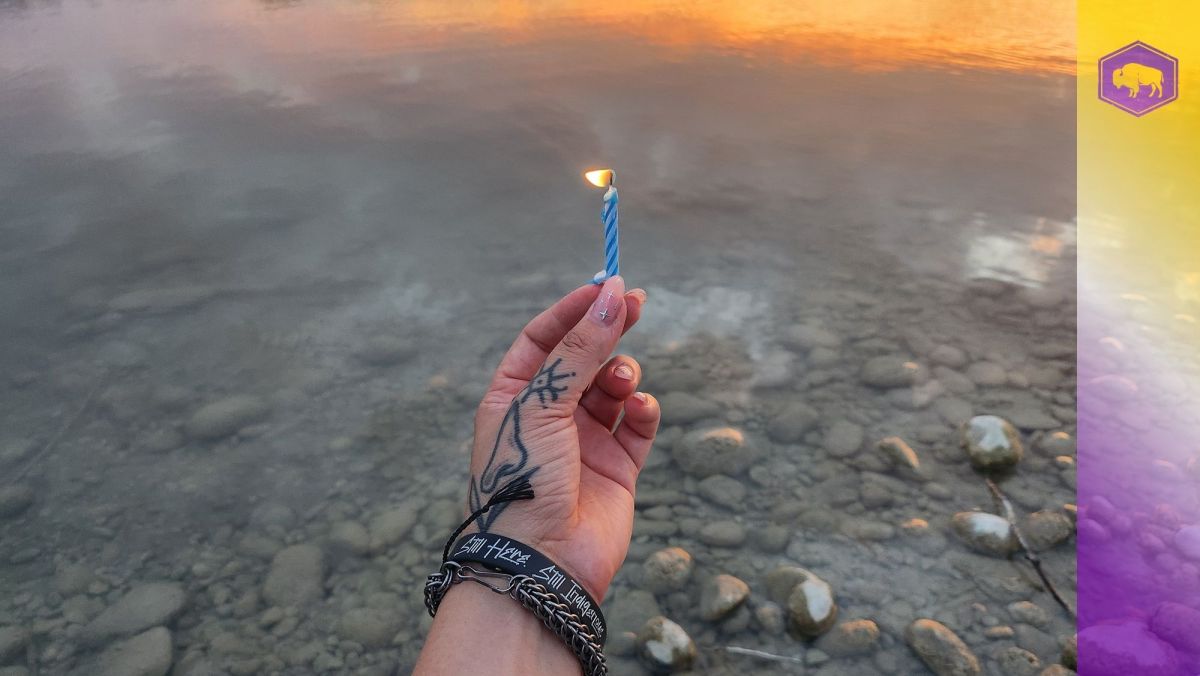
With my eyes shut, I hear the pop and crackle of far-away fireworks. I open my eyes and squint into the darkness, seeing the colors explode and disappear. They look like distant birthday candles.
Above, the clear night reveals thousands of stars and a bright but waning moon. It’s America’s 250th birthday, and July Fourth has never looked so small to me. Just matchsticks in the sky.
I’m at Arapaho Sundance, and the drums and singing drown out the pops of colorful light. From now on, when I think of America, I will think of two things: a tiny light in the distance and you.
My thoughts keep returning to you, future ancestor, on this night. I dream of who you might be 250 years from now.
Perhaps you will be majoring in Indigenous Studies at the University of Wyoming, learning the struggles and triumphs of our peoples. Or you might live in another town, far away from the reservation but speaking either Shoshone or Arapaho as you pray, offering tobacco and burning sage. Maybe you will stand where I’m standing, waxing poetically in the moonlight.
Generations from now, will you still be fighting the same battles for land, water and wildlife? There is a hope you will have already won protections for your plant and animal relatives. And perhaps even yourself.
In this future, long gone are the days of fighting for our rights, our languages and our cultures. The United States has finally lived up to its broken promises and has a good relationship with the Tribal nations who call this place home. I see it all so beautifully.
My greatest dream is that this information is so ingrained in you and all your non-native friends that it’s boring. I hope you whine, voice heavy with exasperation, “Please don’t make me read this! I’ve learned it thousands of times already.”
Don’t let this old ghost bore you.
But if the need to fight remains, we must begin long ago in a place now called Wyoming: the Equality State.
The Eastern Shoshone’s ties here on Wind River date back 12,000 years, according to petroglyphs, artifacts and villages. The area that would eventually become the Wind River Indian Reservation was the preferred wintering grounds for the Eastern Shoshone. They called it “yu’paakatete,” or the Warm Valley. A good place to be during the cold and windy winter months of the high plains. The Wind River Mountains continue to be a place of respite and reconnection for Tribal locals. I hope you have visited them often and for long periods of time.
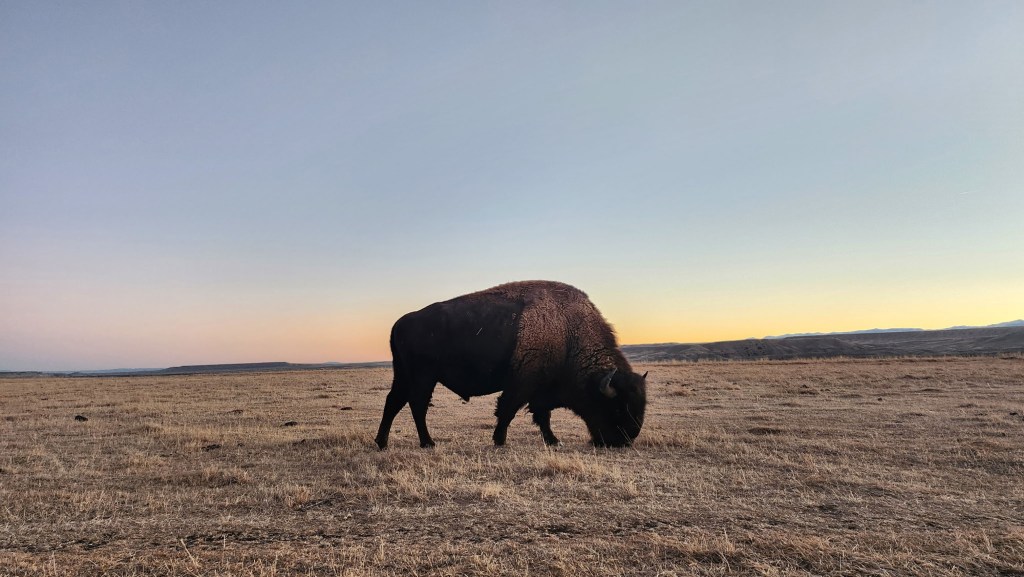
Buffalo nations, like the Eastern Shoshone, followed herds across the plains for thousands of years. They filled the continent — millions from Canada to Florida. The horse also made hunting Buffalo easier on the plains, and the Shoshone were some of the first tribes to adopt them in hunting Buffalo — called “boy-zhan.” I capitalize Buffalo to show the importance of the relationship.
The Eastern Shoshone are matriarchal, meaning women held important cultural power and political positions. The word in English comes from the Greek noun “māter” meaning “mother” and the Greek verb “archein” meaning “to rule”.
From this perspective, matriarchy could be seen as the foil to patriarchy, with women ruling over men. But this is not so. Our matriarchal societies were built on community care and kinship systems, guided by the mothers and their families in conjunction with the men. They showed leadership not through domination and control, but through community responsibility and generosity. There was conflict, of course, but it was a far cry from the patriarchal structure the United States lives under now.
Matriarchy is the sibling of patriarchy, not its twin. Like brothers and sisters, they do not mirror each other, but have distinct personalities and priorities.
As the United States built the railroad westward, and settlers slowly started to show more interest in this area, conflict grew, until eventually the United States struck a deal with Chief Washakie and the Eastern Shoshone. The Fort Bridger Treaty of 1863 facilitated a heck of a deal — around 44 million acres, plus food, medicine and safety. It was called the Eastern Shoshone Reservation.
Then five years later, in the Fort Bridger Treaty of 1868, a trend started to emerge. The United States began to rewrite the original deal they had signed, and the Shoshone Reservation shrunk as settlers arrived.
And on it went. The Brunot session reduced the reservation by a third and opened portions for white settlement, the McLaughlin agreement helped establish the town of Riverton, and the Homesteading Act further sold off lands north of the Wind River that bisects the reservation.
During this time, the Eastern Shoshone could not leave their dwindling reservation land and their traditional hunting, fishing and foraging dwindled as settlers closed in. The food provided by the United States government was notoriously poor in quality, and the attempts to make farmers out of a nomadic Buffalo nation were not well funded, as the main goal was to assimilate them into settler society. The settlers killed the Buffalo indiscriminately, policed water use and arrested or attacked Native people who left the reservation.
Treaties are important documents. While it might feel like ancient history to you, it’s important to remember that we gave up land to secure a future where the U.S. government would provide adequate healthcare and food. Around 370 of these promises were broken by the United States.
The Northern Arapaho faced injustices of their own. In 1864, the U.S. military killed around 230 Cheyenne and Arapaho people, mostly women, children and elders of both the northern and southern bands of Arapaho. Both tribes still recognize the Sand Creek Massacre to this day, and I hope you, future ancestor, have been to an event or two.
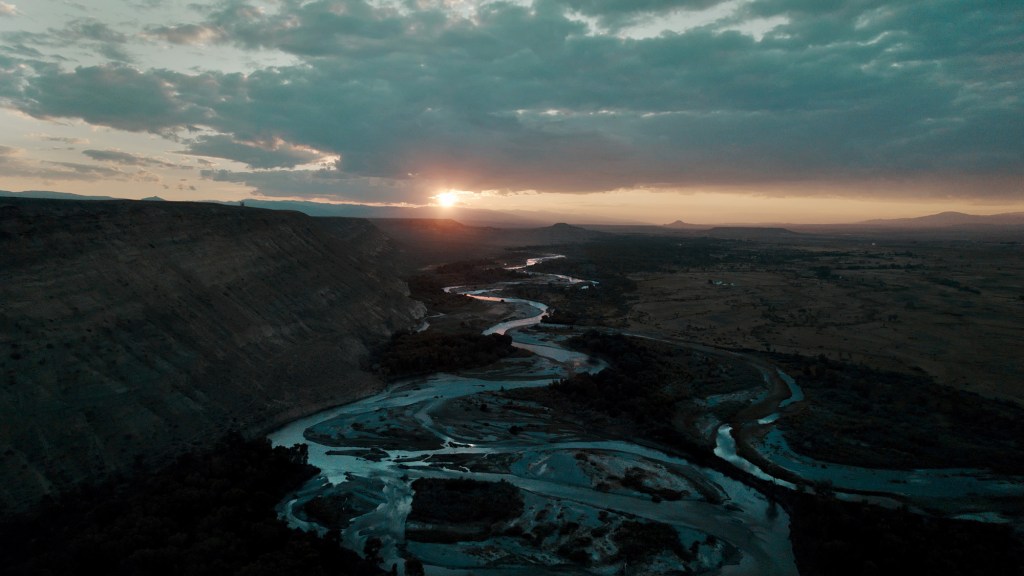
They had been promised a reservation in the Front Range of Colorado, but gold was found. The Arapaho were evicted from their traditional homelands. It took 14 years after the events at Sand Creek, but in 1878 the Northern Arapaho were brought to the Wind River Indian Reservation.
That’s how we got here. Stolen land and people taken before their time for no reason other than that they were Native. Not the story people want at their July Fourth barbecue, but it’s important for everyone to know.
The story of Indigenous peoples and the story of settlers. It feels like you are describing two different realities. Disparate histories that don’t sit well together. Do you make the reality more palatable, or do you throw your heart onto the page? I hope you know the answer for yourself.
In 1869, Wyoming’s first territorial Legislature passed a bill that allowed white women the right to vote. Indigenous women, who occupied a space of great respect and leadership, were losing more of their rights by the year. A year before this, the U.S. government kept around 2,500 Eastern Shoshone and Northern Arapaho on the Wind River Indian Reservation like prisoners. A cruel irony for a nomadic people used to foraging and hunting, now relying on subpar rations from the federal government to survive, while the new Wyoming government built itself upon stolen old hunting grounds.
Non-Native women had received a small leg up while our women ancestors were confined to the reservation.
The Buffalo by this time were close to extinction on the continent. Settlers killed them indiscriminately as the railroad made its way west. This was no accident, but rather a targeted attack on our food, on our self-reliance.
The Buffalo are also matriarchal, and both the Arapaho and Eastern Shoshone mirror Buffalo social systems in our own lives. Buffalo are often led by females that decide where to eat, when to bed down and when to go. They do all this while having a baby almost every year and often outlive their male counterparts by almost a decade.
I hope it’s not lost on you that the near extinction of Buffalo coincides with Indigenous women losing power and status in settler society. Today, Indigenous women are attacked and killed at higher rates than almost any other demographic. Our pain is not seen, and our voices are unheard.
Cattle replaced Buffalo on the plains, and extractive mining and oil operations moved in. Gone were the stewardship practices that protected the Bridger Teton and Medicine Bow forests, and Yellowstone National Park was purged of Indigenous presences in favor of a “fortress conservation” that erased the Eastern Shoshone and Northern Arapaho relationship with the area.
Yes, Wyoming became the first state to give settler women the right to vote 21 years before becoming a state, but it’s hard to hold that fact alongside our removal. This was a political act employed by a conquering nation, so it’s hard for me to celebrate. So I don’t. Not when I see so many persistent issues on the Wind River Indian Reservation.
If we went into all the bad things that happened during this time, we would have room for nothing else. The government made our ceremonies and traditional ways illegal, and the boarding school system tried to strip us of our languages and traditional ties to our lands. Our languages are now endangered and might disappear in the span of a generation.
These facts magnify everything else.
“Equality” did not exist for us here in Wyoming, and we would not gain the right to vote until 1924 with the Indian Citizenship Act. Voting power, while important, is hard to compare with our own societies, where women held considerably more political power. Settlers brought with them patriarchy and the dominance over women, and we now must learn to live alongside and within that power structure.
Maybe you feel different. And maybe you are less bitter than me, and you have moved forward, hand in hand, with this place now called Wyoming. I pray that you use this clarity to do good for the Shoshone and Arapaho peoples.
You are of this land. Your bones know the soil. Your blood and the Wind River flow with the same memory.
The problems on the Wind River Indian Reservation will not be fixed in one or two lifetimes. True equality demands a hard look at the past. I hope you already reside there, in that idyllic future, where our people, water, lands and wildlife are cherished and protected.
Where all this is common knowledge.
I hope you are happy and healthy. Our history is longer than a firework. It’s as enduring as our most precious ceremonies. When I see the brilliance of the night sky and its blazing moon, the explosions don’t seem as big and bombastic. In a forest full of teepees, what is a birthday candle to the moon?