

I’m ashamed to say I had no idea Wyoming was the first state to grant women the right to vote until I moved here in 2016. Ashamed because women’s history and the suffrage movement were a huge part of my upbringing.
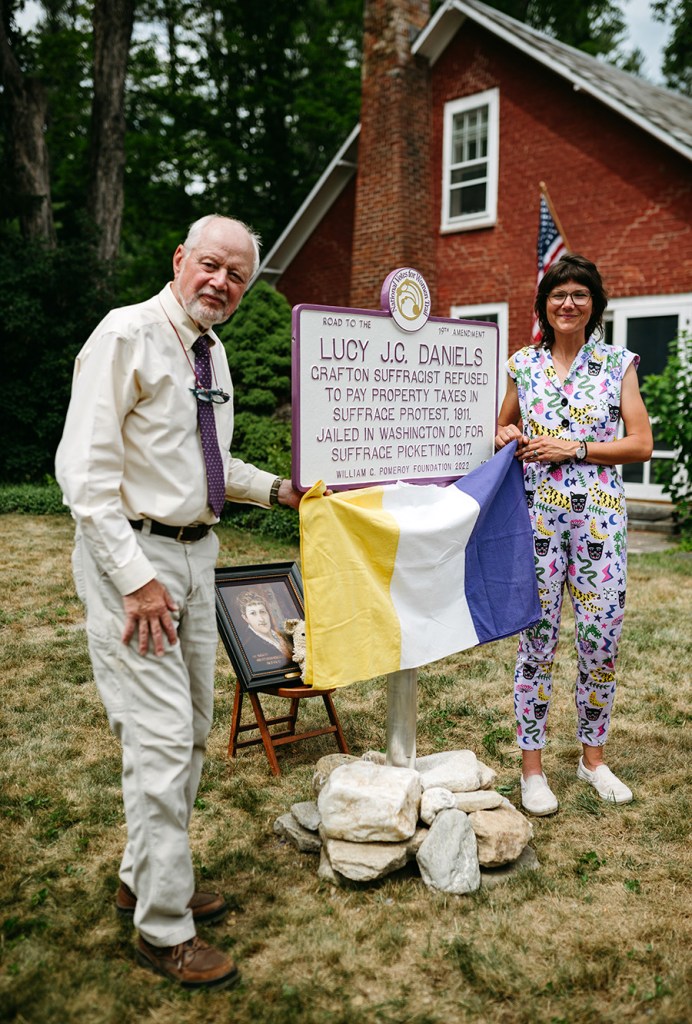
Lou Daniels, my great-great-aunt, was a suffragist who traveled multiple times from her home in Vermont to protests in Washington, D.C., calling for the passage of the 19th Amendment. She was arrested repeatedly and went on a hunger strike in 1917 with other jailed suffragists. They’re remembered as the Iron Jawed Angels for that act of civil disobedience. Without the right to vote, Aunt Lou refused to pay her taxes and painted “A Square Deal, Votes for Vermont Women” in large white letters on the side of her home.
I also spent a good portion of my childhood in Seneca Falls, New York, the site of the first Women’s Rights Convention in July 1848, which culminated with the signing of the Declaration of Sentiments. The document, authored by Elizabeth Cady Stanton, mimicked the Declaration of Independence, with the addition of the rights of women.
And my most constant reminder of the fight for women’s suffrage is my namesake — Tennessee Claflin, a prominent activist in the late 19th-century women’s movement. Her sister, Victoria Woodhull, was the first woman to run for president — and she did so before women had the right to vote.
If I grew up steeped in the movement for women’s suffrage from birth, yet missed Wyoming’s important role in that story, I’m likely not the only one. I take that as motivation to more deeply explore and amplify the Equality State’s contribution to the evolution of American governance for the people and by the people. Who this nation considers a person has expanded since its founding because of the tenacious efforts of activists committed to the ideals laid forth in the Declaration of Independence — that we are all endowed with certain inalienable rights.
Over the next few months, as a part of the ongoing celebration of the anniversary of America’s founding, WyoFile’s project — “America at 250: State of Equality” — will examine, through a series of articles and public events, Wyoming’s historic role as the Equality State and the degree to which it lives up to the moniker.
What’s in a name?
Wyoming is known as the Equality State because women here were the first in the nation to secure the right to vote, serve on juries and hold public office. Wyoming’s territorial legislature granted these rights in 1869, 21 years before statehood and a full half-century before the nation’s ratification of the 19th Amendment.
Wyoming was also the first state to elect a female governor, Nellie Tayloe Ross, in 1924.
This remarkable history is cause for celebration as well as curiosity. When Wyoming women first exercised their new right to vote on Sept. 6, 1870, were all women included?
While the election marked the first time in U.S. history that Black women voted, as historian Jennifer Helton wrote on WyoHistory.org, the lack of voter records from this election leaves questions about who they were and their experience going to the polls. The history of white women’s first vote is more prominently preserved.
“It is important to note that while this law did enfranchise Black women, it did not enfranchise Wyoming’s Indigenous women,” Helton wrote. “For the most part, Indigenous women were not considered American citizens until the passage of the Indian Citizenship Act of 1924.”
What equality means, and to what degree Wyoming embodies its nickname, are questions we hope to reflect on through WyoFile reporting, guest commentaries and essays, and public events.
We’ll look back at history, for example, to get a deeper understanding of how Wyoming impacted the broader American suffrage movement, and we’ll look ahead to women’s roles in politics and the 2026 election.
We’ll explore women’s contributions to Wyoming’s economy, civil society and land stewardship. We’ll examine women’s access to healthcare. We’ll focus on prominent Wyoming symbols, from the cowboy to the buffalo, and reflect on the complex stories they tell about gender.
We’ll invite you to share your family’s history, as well as your reflections on what equality means and women’s status in Wyoming.
A lasting legacy
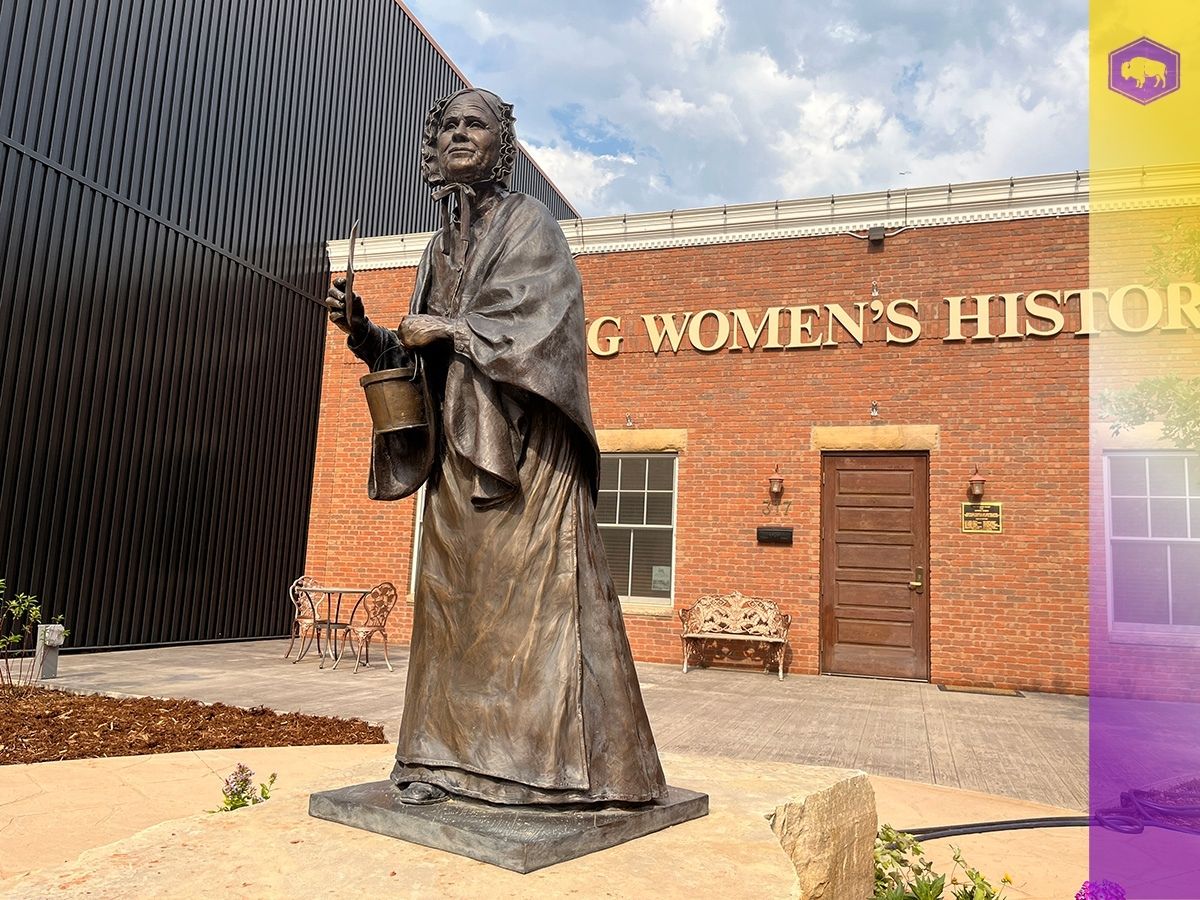
When I arrived in Laramie nearly 10 years ago, it didn’t take long for me to learn Wyoming’s special place in women’s history, but it felt like it happened by chance. On a chilly December stroll through my new hometown, I passed a bronze statue of Louisa Gardner Swain — the first Wyoming woman to cast a ballot.
Had I not encountered that public monument, I’m sure I would have learned eventually about Wyoming’s history as the Equality State. In the coming months, WyoFile will do its part to examine Wyoming’s pivotal role in American democracy and what that legacy means for the state’s future.
After all, shouldn’t we make history this important, this impossible to miss?
This column is part of an effort by local newsrooms supported by the American Journalism Project to reflect on the 250th anniversary of the Declaration of Independence. See coverage from other newsrooms here.

excellent article… thank you!
i look forward to the series.
Minor point: Wyoming was not the first state to ELECT a woman to be governor. Texas voters elected a woman in the same November 1924 election that Wyoming did. But Wyoming’s Nellie Tayloe Ross was inaugurated on January 5, 1925—beating Texas’s Miriam “Ma” Ferguson by 15 days.
Also, Wyoming brags about being the first government in the world to permit women to serve on juries. Kim Viner’s article in wyohistory.org discusses the Laramie women serving on a grand jury in 1870 but he notes that this was an aberration. The men in control stopped the practice for nearly 80 years: “Wyoming did not get around to changing jury qualification rules until 1949 and from 1871 to then (with one small exception) women did not serve on juries.” https://www.wyohistory.org/encyclopedia/women-jury-wyoming-makes-history-again.
Exactly Phil. I have not tracked down what time on that November election day each candidate was declared the winner. That is why it is best to first woman who served as governor.
Two things:
First – have you visited the Wyoming Women’s House recently?
Second – Folks need to know that the Suffrage Act was one vote shy of being repealed in the 1871 legislature. Democrats who passed the Act in 1869 were pretty sure that all women in the territory would vote for them at the next election. Did not happen. So in 71 while they were still in the majority they passed a repeal law. Republican governor John Campbell vetoed the act and his veto was sustained by one vote! That is why the act stayed on the books.
The jury experiment ended in October 1871 when Judge John Howe left Wyoming. Apparently his replacement, Joseph Fisher defaulted to the December, 7, 1869, jury qualification act which stated only males could serve on juries. Women did not serve on juries in Wyoming until 1950 after the legislature added females to those qualified to act.
Kim Viner Wyoming Women’s History House docent
Relevant to the times when revisionists tend to gloss over history. Looking forward to more exposure and celebration of women’s equal rights (healthcare and treatment decisions for their own bodies). Great article, Tennessee.