On the cusp of his first academic year as president of the University of Wyoming, retired Army Brig. Gen. Shane Reeves made national headlines in late August, though not for his new post leading the state’s sole four-year public university.
Instead, as The New York Times first reported, Reeves was named in a federal lawsuit against the U.S. Military Academy, filed by a civilian climate scientist who alleges he was fired after 17 years at West Point “because he taught that humans influenced climate change,” the complaint states.
Prior to taking the helm at UW, Reeves served as West Point’s dean of the academic board. The lawsuit accuses him and two other academy leaders of violating Dr. Adam Kalkstein’s First Amendment right to freedom of speech. The complaint also points to the Trump administration’s “hostility to the accepted scientific notion that human activity was a major cause of present-day climate change.”
The defendants, including Reeves, have not yet filed a legal response to Kalkstein. Reeves declined WyoFile’s request for an interview for this story.
West Point, like the University of Wyoming and other institutions of higher education across the country, is not new to questions over the rights of instructors, researchers or students to teach, investigate or discuss ideas without undue interference from the government, donors, university boards or administrators.
In Laramie, that tension has grown more acute in recent years as the Wyoming Freedom Caucus gained power in the Legislature and sought to restrict the university’s autonomy through legislation and the power of the purse. A 2024 budget footnote, for example, forbade UW from using any state money for diversity, equity and inclusion programming and curricula. The school closed its DEI office as a result. Earlier this year, the Freedom Caucus, citing specific concerns with environmental courses, tried but ultimately failed to reduce UW’s block grant by about 11%. But the group’s message was made clear by its members.
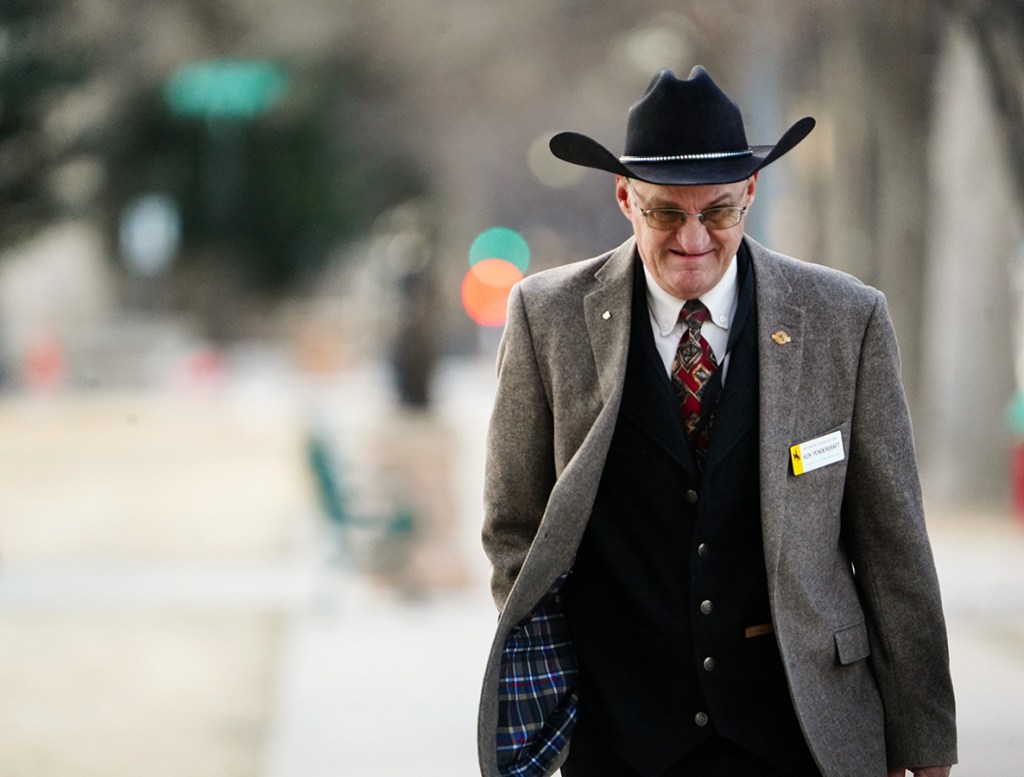
“We’re going to pull this money back,” Rep. Ken Pendergraft, R-Sheridan, said on the House floor in February. “And we want you to focus on ag, we want you to focus on engineering, we want you to focus on education, these other things that benefit Wyoming specifically, rather than training people in majors, minors, ideas and concepts where they’re not going to be, frankly, at home in Wyoming.”
Before voters ousted most Freedom Caucus incumbents in the primary election last month, the group had already taken aim at Reeves, accusing him of “bringing woke academics to West Point.”
However, Reeves’ arrival to Laramie has been marked largely by optimism. Much of that is thanks to the first impression the Rock Springs native has made on campus, including via a charming social media presence. The new president’s bullish outlook for the university’s future, despite challenges like declining enrollment and a $15 million budget shortfall, has also contributed to his early popularity.
“I think it’s on the ascent,” Reeves told WyoFile in August during a wide-ranging interview. “I absolutely think it has a lot of momentum behind it, and accelerating what already exists is going to be part of my job. And I’m really honored to have the opportunity to do it.”
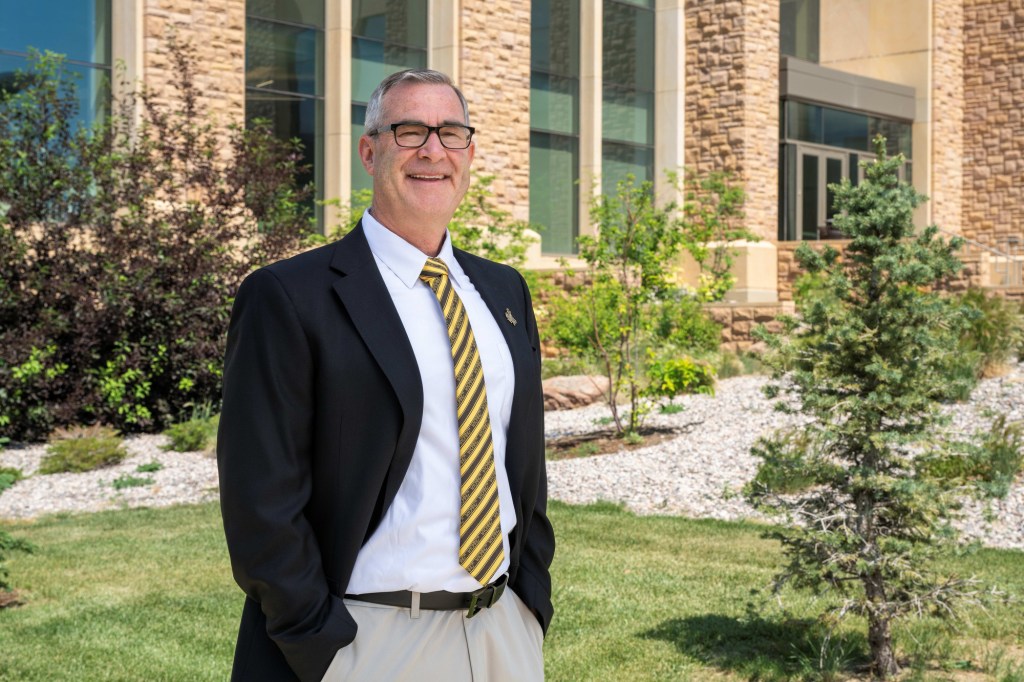
News of the federal lawsuit began to circulate on campus earlier this month, including via the faculty email listserv, according to The Laramie Reporter. But it hasn’t necessarily soured the mood on campus, according to Faculty President Rob Godby.
“I think the majority opinion on faculty is that they’re willing to give President Reeves the benefit of the doubt, and you know, are positive and hopeful that he’s as successful as he can be” Godby told WyoFile this week.
Godby, an associate professor of economics, also said faculty are eager to move forward after a tumultuous period with university leadership. In 2025, the faculty senate voted to adopt a no-confidence resolution against former UW President Ed Seidel amid the controversial ouster of a popular dean.
“It’s no secret there were some potential leadership challenges based on decisions that the previous president made,” Godby said. “And a lot of faculty just want to move forward and are glad to have those behind them”
Earlier this year, Godby served on the presidential search committee, and said Reeves stood out from the other candidates for a reason.
“One of things that impressed us the most about President Reeves was he was among the candidates who gave the strongest explanation and description of academic freedom and the importance and its value on a campus,” he said.
“And I’ll be honest with you,” Godby said, “not all of our candidates actually did a very good job on that question.”
In August, Reeves told WyoFile that “intellectual discourse is a very traditional Wyoming value, right?”
“We can talk about anything, and we can disagree and at the end of the day, we’re still neighbors,” he said. “As a son of the state of Wyoming, I was brought up with a healthy level of cynicism from being told what to think or what to believe. I think that this effort to have real discussion, real discourse, to have students engaged in ideas is a real commitment to the free marketplace of ideas that is the very purpose of an institution of higher education.”
Cautious optimism
Recently retired professor of philosophy and creative writing Jeff Lockwood is among those in UW’s community who are taking a wait-and-see approach.
“We’re in the honeymoon, right?” Lockwood told WyoFile.
“Actions speak louder than words. You know that’s kind of trite, but also, we’ve got some very nice words from the president,” Lockwood said. “He’s a wonderfully engaging, warm person. I mean, his interpersonal skills are on another planet compared to what we’ve had, without being too blunt about that. So we got that right.”
However, Lockwood said, “when resources get allocated and priorities get made via action and budget, that’s when we exchange words for actions, and we find out what’s really going to be going on.”
A sculpture on campus drew the ire of state lawmakers and the energy industry during Lockwood’s time on campus in 2011. Using charred logs arranged in a 36-foot-wide pinwheel design in the lawn south of Old Main, artist Chris Drury’s “Carbon Sink” sought to draw a visual connection between climate change driven by fossil fuel emissions and the region’s pine beetle epidemic.
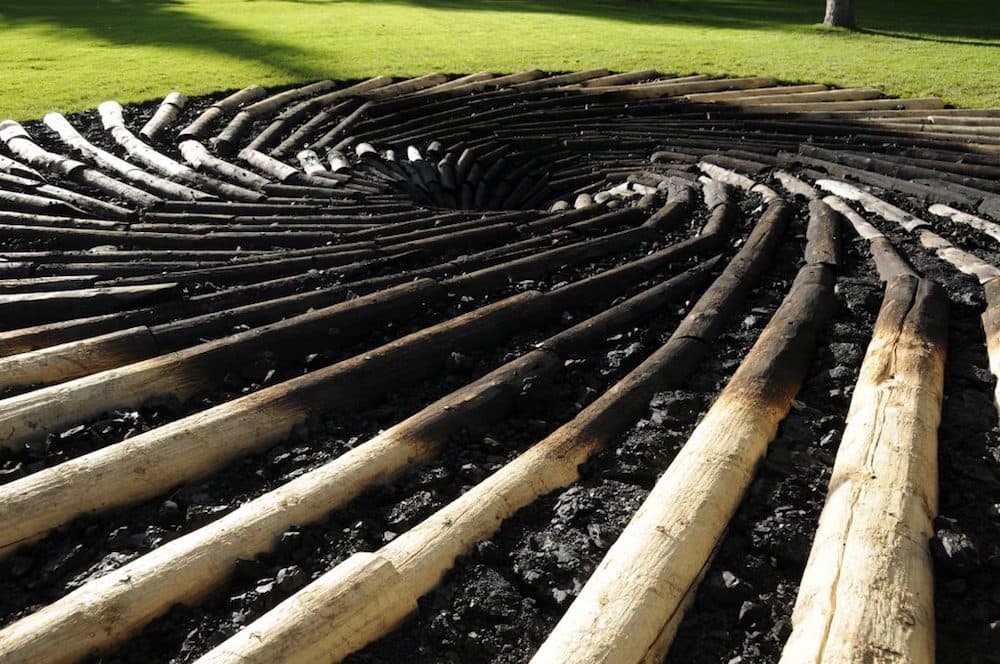
After lawmakers and energy industry leaders objected to the sculpture, it was removed from campus earlier than planned. University officials denied bowing to political pressure, though documents obtained by Wyoming Public Media in the aftermath indicated otherwise.
In the years afterwards, Lockwood wrote a book about the controversy and the larger theme of censorship imposed by corporate wealth and power. In 2017, he told Wyoming PBS he was inspired to write the book after “people started coming to me with stories, stories that they couldn’t tell because they were at much more risk than I am as a tenured professor.”
Lockwood told WyoFile this week that UW faculty are not naïve to Wyoming politics or the institution’s financial reliance on the Legislature. They’re also keenly aware, he said, that “there have been consequences for speaking or writing or teaching freely on subjects that might be uncomfortable to the political environment.”
“When resources get allocated and priorities get made via action and budget, that’s when we exchange words for actions, and we find out what’s really going to be going on.”
Jeff Lockwood, retired professor
The hard question becomes, Lockwood said, “how much will we, as an institution, or we as a faculty, or we as a bunch of administrators, compromise on principles in order to, if you will, protect the funding of the institution?”
There’s a certain point, he said, “at which the constraint on academic freedom is so egregious that it no longer functions as what it was supposed to be, or what the people want it to be.”
While Lockwood said he expects the university’s relationship with lawmakers to change in the wake of the Freedom Caucus’ defeat at the polls last month, the greater dynamic will persist.
“The conflict between the perceived interests of our industries and the perceived interests of our legislature and the principles of academic freedom on the campus, that’s not going to go away,” he said.
Seidel’s initiative
In 2022, Seidel, who Reeves replaced in July, launched a free-speech initiative.
He tasked a working group of faculty, staff, administrators, students and a trustee with defining the university’s “core principles in the areas of freedom of expression, intellectual freedom, academic freedom, and constructive dialogue.”
In 2023, the working group’s recommendations were officially adopted by the university.
“A fundamental principle is that the university plays a unique role by providing a neutral forum for the deliberation and debate of public issues,” Seidel said at the time. “Providing such a forum does not mean the university either endorses or condemns the different perspectives expressed. What it does mean is that, as our free expression group states, UW’s adherence to impartiality reaffirms the intellectual freedom of all at UW to seek and receive information without restriction and enjoy unfettered access to all expression of ideas through which any side of a question, cause or movement may be explored.”
The group was co-chaired by Martha McCaughey, who was then appointed in 2025 to lead the initiative fulltime. In an emailed statement to WyoFile, McCaughey said she had “no information” on the West Point lawsuit and pointed to the university’s statement of principles, which includes a section on academic freedom.
“UW is an R1 institution with strong academic standards where people examine evidence, discover new knowledge, and put knowledge to practical use,” McCaughey wrote.
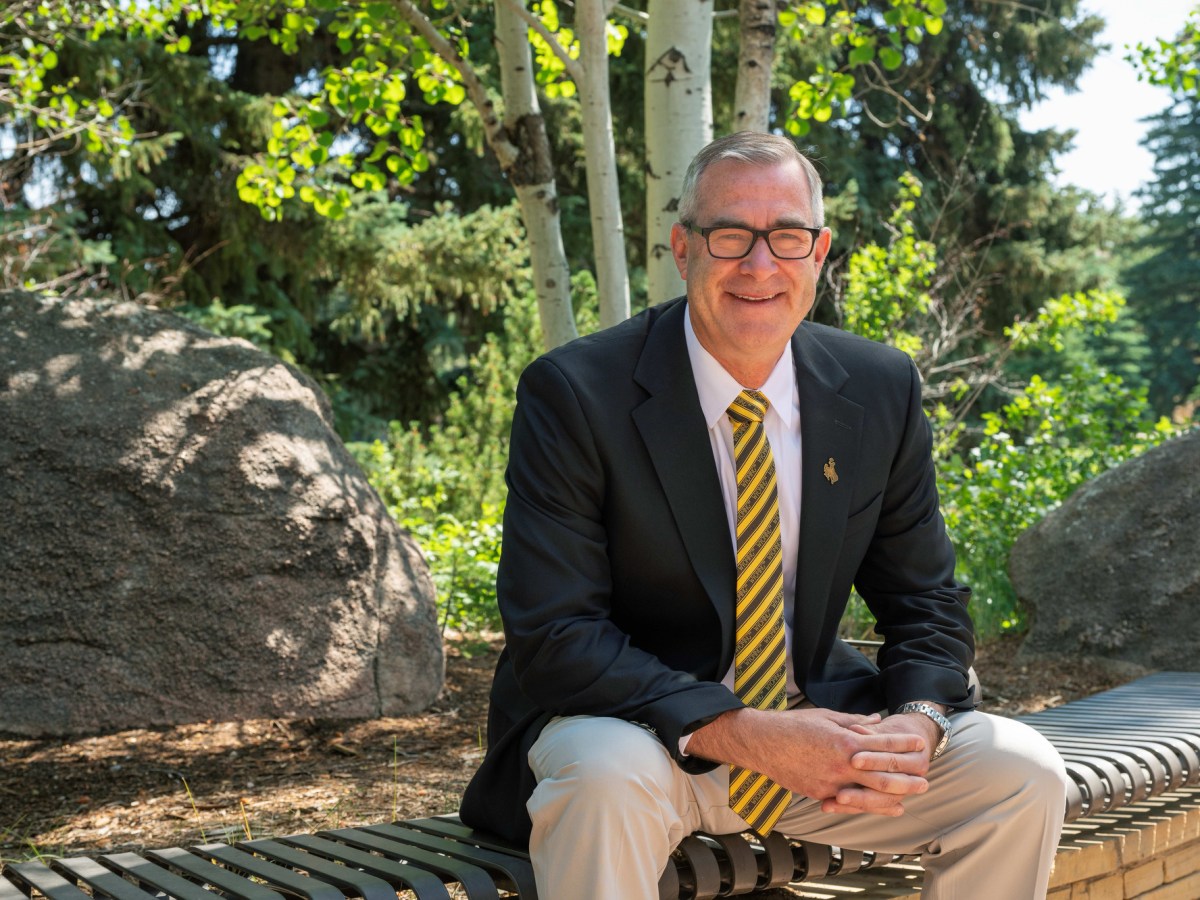
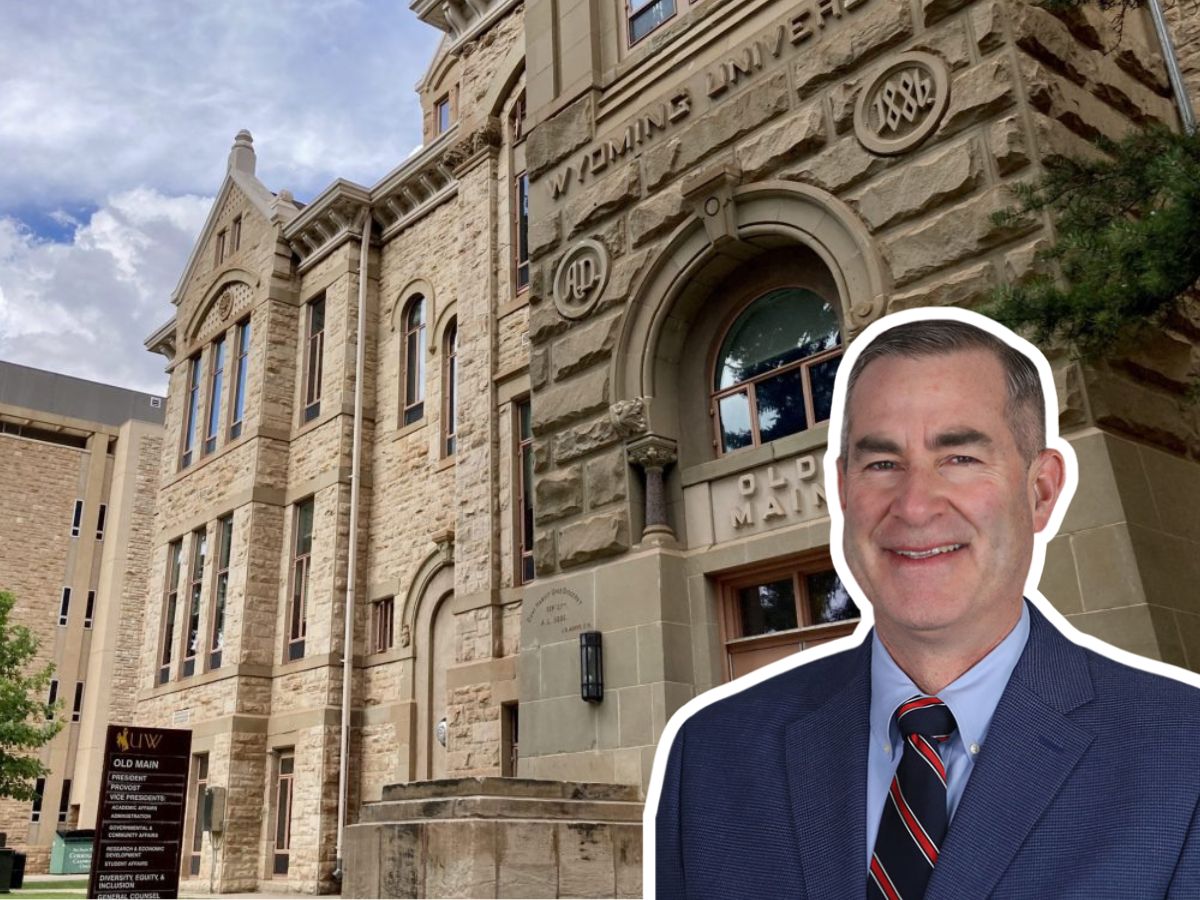
Matt Burgess, an associate economics professor, has also been involved with UW’s free speech initiative. Burgess told WyoFile he’s confident in Reeves and the direction the university is taking.
“Everything I’ve seen from him publicly and everything I’ve heard about what he’s been doing behind the scenes suggests very strong, very unequivocal support for free expression, free academic freedom, for the initiative,” Burgess said. “And as somebody who studies climate change, I have no concerns at all about any kind of censorship or pressure coming from Old Main about that.”
Like Lockwood, Burgess said public pressures are certain to exist, but it’s not the sole responsibility of the university’s president to ensure academic freedom.
“We decide whether we censor ourselves,” Burgess said. “And I think that we academics would do ourselves and our professions a service by doing that less.”
WyoFile reporter Dustin Bleizeffer contributed reporting.