

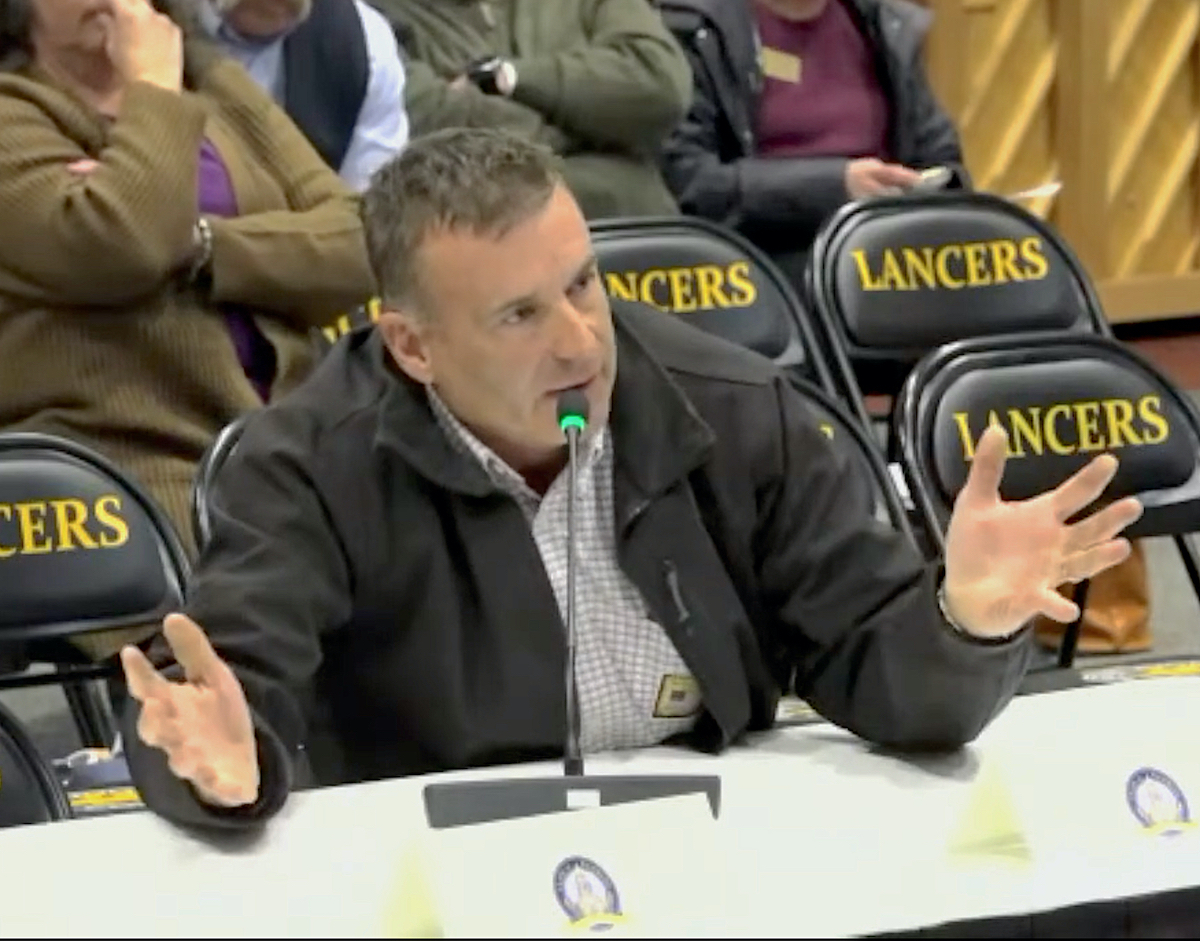
The Legislature’s Joint Agriculture Committee voted Monday to subpoena Attorney General Bridget Hill to testify on her role in a dispute over grazing permits. A ranching family involved in the dispute has accused her of having a conflict of interest.
On a 10-4 vote, the committee approved a motion for the subpoena and a request to the Legislature’s Management Council for the authority to hold an extra, so-far unscheduled, meeting at which Hill would testify.
The Joint Agriculture, State and Public Lands and Water Resources Committee had scheduled Monday’s hearing about the Converse County grazing dispute and legislation that could resolve similar disagreements in the future. Committee members sought information on how and why a temporary grazing lease was issued to the Wagonhound Ranch, apparently enabling it to bid on and obtain a long-term lease on land grazed for years by John and Gigi Leman of the Leman Ranch.
Hill made the leasing decisions as director of the Office of State Lands and Investments, a position she held from 2013-2019. Gov. Mark Gordon appointed her attorney general in 2019.
In that capacity, her office eventually advised the State Board of Land Commissioners on the leasing controversy — which she had been involved with in her previous post — according to discussion at Monday’s committee meeting.
The state land board — made up of Wyoming’s top five elected officials — was on the committee’s agenda for Monday but only Treasurer Curt Meier and recently appointed Interim Secretary of State Karl Allred attended.
“The attorney general can be impeached and I suggest that we start that process.”
Rep. Bill Fortner
Lawmakers appeared upset after Allred said Hill’s office had advised him, and presumably other state land board members, not to attend Monday’s meeting.
“The letter said that they knew that I was invited to come to this meeting and the advice was not to come,” Allred told the committee.
Treasurer Meier, speaking via Zoom from a meeting in Washington, D.C., told the committee he received similar advice. “I think that was a recommendation of counsel — that we are, we try, to stay put,” he said.
Principle, not acreage
After the vote to subpoena Hill, the committee Tuesday added specific language to its motion and request to the Management Council. The request and subpoena seek files, evidence, testimony and other information regarding grazing-lease decisions and conflicts of interest among decision makers — all involving the Leman-Wagonhound dispute over lease 1-8710.
The contested lease covers about 147 acres, according to committee discussion. The state land board approved a 10-year lease identified by that number to Wagonhound Land and Livestock Co, LLC to begin in 2020 with an annual cost of $1,360, according to state records.
The lease is a small portion of the 300,000 acres Wagonhound advertises on its website, but it’s land the Leman’s say they leased for years before they were outbid, in part based on a temporary lease Wagonhound obtained improperly. Committee members responded to those concerns with criticism for the land board’s decision, Hill’s role and the state’s top officials.
“According to the Wyoming State Constitution … the attorney general can be impeached and I suggest that we start that process because [s]he’s ducking coming to visit with us,” Rep. Bill Fortner (R-Gillette) said.
John Leman said he wrangled for years with the state lands office over the grazing leases and his renewals of them and was told by the office to back off and follow its procedures only to be undercut by “unwritten policy.
“How am I supposed to know about that?” he asked the committee.
“So if you’re not gonna be transparent, because there’s going to [be] preferential treatment to certain people, not extended to others, [that’s] bad business,” Leman said. “Especially when I’m really trying to engage the office in doing the job which they are charged.”

The Lemans appealed to the Office of Administrative Hearings which, John Leman said, decided in his and his wife Gigi’s favor. Nevertheless, the SBLC rejected that hearing recommendation and stuck with its original decision to award the lease to Wagonhound, John Leman said.
Hill’s office advises the SBLC, Leman said, creating the conflict of interest.
“If you’ve got a former director of an agency … they really cannot be in a position … to exert some sort of authority that … justifies what they [previously] did,” he said. “I would want to think that you want to put a check, roadblock [to keep] that from happening.”
The Lemans decided not to appeal in court, Gigi Leman said, because the only matter a court would decide is whether the state board considered all the issues before them, not whether they made an unjust or improper decision.
The state land board and other entities give deference to agency decisions, Treasurer Meier told the committee. When that’s the case lawmakers have a duty, Meier said, to not only pass laws that require agency rulemaking but to then follow up to ensure that those rules reflect the intent of the lawmakers.
Outgoing Rep. Bob Wharff (R-Evanston) said he tried to correct the perceived injustice but the committee leadership wouldn’t let him.
“I made the motion to hold a hearing,” he said of the committee’s meeting in September. “It was passed by this body, and it was ignored.
“There’s no two ways around it,” he said. The meeting, “it should have happened.”
At the last meeting, Wharff said, “we were asked not to do that and out of respect to the chairmen [Sen. Brian Boner (R-Douglas) and Rep. John Eklund (R- Cheyenne)], I deferred to them.”

grazing on public land is socialism
Disagree: Its welfare for the rich.
147 acres of land in wide open Wyoming is next to nothing. This is ridiculous – all these people being drug into a dispute over just 147 acres!!! Obviously, this is about the flawed process not the value of a small insignificant lease. Most Wyoming ranchers have all sorts of fences not on line, local roads without easements, shared fencing issues, etc. and ignore bringing the topic up because it isn’t that important and they want to get along with the neighbors – after all, you need to fight grass fires together and your kids probably ride the same school bus. This should have been easily resolved with a chat on the side of the road.
However, these things commonly get blown out of proportion as out of staters move in and buy large acreages – the article doesn’t say if Wagonhound is an old time Wyoming outfit thats been around for generations or new arrivals. Wyoming natives that have neighbored other long term land owners would be much more unlikely to get in this dispute. But then theres a few that keep everything stirred up. Much to do about nothing.
Right Wing nuts do nutty things.
The only way she could have a conflict of interest is if the decision she advised the committee about affected land owned by herself. Does she own any affected land? She is very likely Wyoming’s leading expert on these subjects.
Grazing permit is the correct term. The farmers get to let their livestock graze but are not permitted to keep the public off the lands where grazing is permitted.
Grazing on public lands should have been banned long ago. Calling the permit a lease makes it easier for livestock farmers to bully, and bluff, the public into believing they have no right to be on lands where grazing is permitted. I am sick of subsidizing the welfare queens, who produce a tiny portion of the beef supply. Wyoming cow farmers could all disappear overnight, and no one would know they were gone in terms of beef prices and availability.
The biggest issue about these state land issues is that long term lease holders have been given a property right to those leases that precludes other agricultural parties from ever having an opportunity to lease them. There is a fairness issue there that has been a contentious issue for years. While I have not kept up with all the changes, this was identified several years ago when I served on a committee to study how state lands were managed. I remember having a conversation with a rancher who had tried for years to lease some state lands.
Very succinct comment. Thanks.
We need to have more info as far as what Leaman was offering for the lease- too many old time ranchers control important leases- deny access or charge a large trespass fee to us- if we can not have access then maximize the lease rate!-
Seriously, what the Leman’s bid didn’t have a chance and this conduct is unacceptable and if it is unacceptable a serious investigation in the “lease winner” should be done.
Maybe the “lease winner” had no idea they won under these circumstances (wink, wink) they are the stewards of the land regardless if it is one square foot to the number they can afford because I am confident if the payments do reach the State of Wyoming the lease will be renegotiated… Great reporting!