


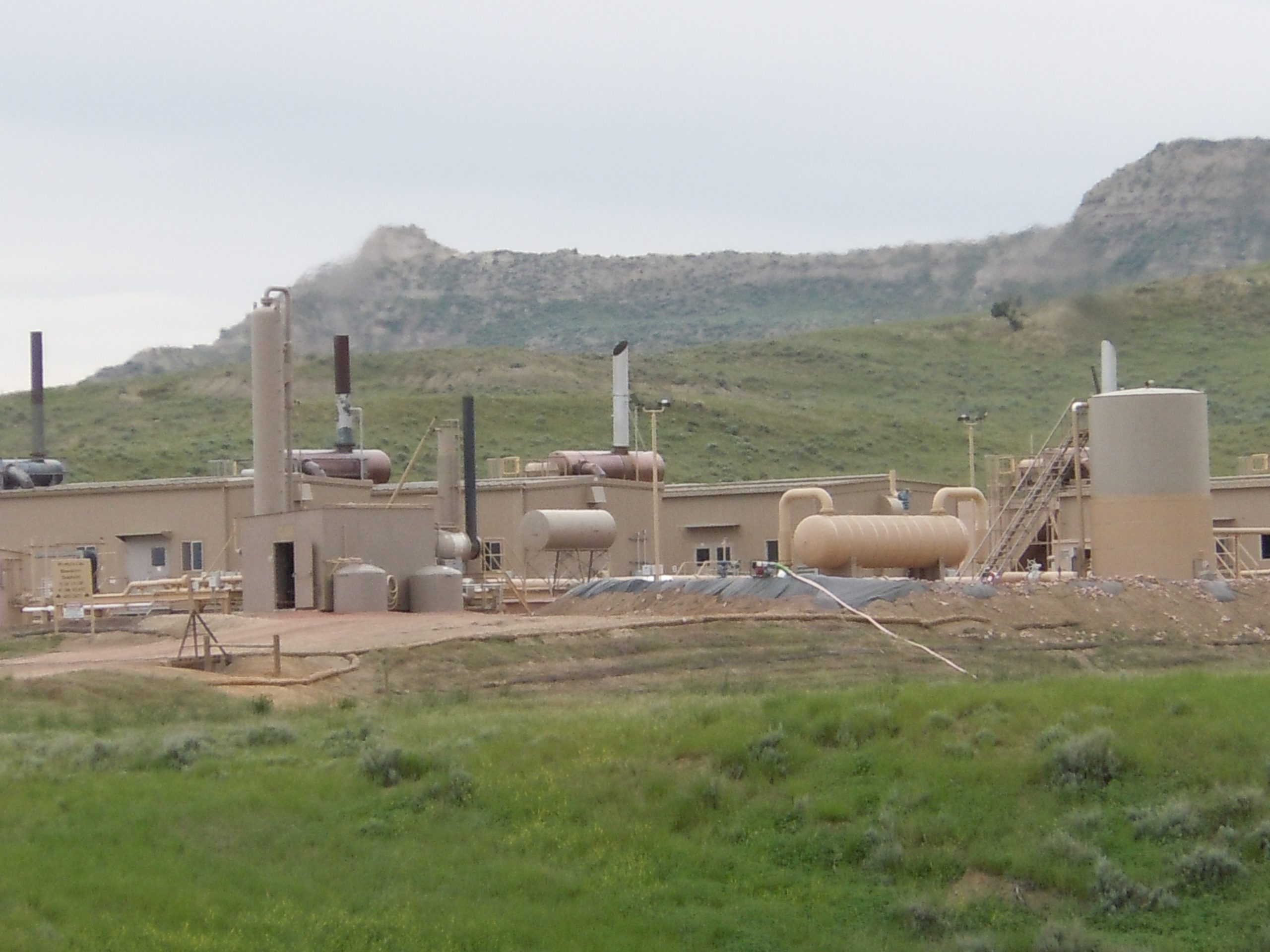
Many Wyomingites find it surprising when the federal government does something worthy of our approval, but the Bureau of Land Management actually did so last month.
Opinion
In mid-July, the BLM proposed new rules to hold drillers of oil and gas wells financially responsible for cleaning up after themselves.
The new rules would update 60-year-old requirements for financial assurance to plug and reclaim wells drilled into federal oil and gas leases under private property. Many of these wells in Wyoming have sat for decades unplugged and unreclaimed on our ranches, farms and other private lands. The new standards will do something landowner, conservation and taxpayer advocates have long called on BLM to do — make industry pay for cleaning up.
The need for this proposal is clear. Thousands of idle and orphan
wells are left abandoned, causing groundwater contamination, leaking methane, polluting the air, spreading noxious weeds, lowering property values and interfering with other uses of the land. Federal leases do theoretically require operators to plug their wells and remediate well sites. But the reality is today’s federal rules are so outdated that huge liabilities are left to taxpayers. Rules in place today require ludicrously tiny bond amounts that don’t come close to covering actual costs of plugging and reclamation. The half-century-old minimum sizes of cleanup bonds on federal leases have since never been adjusted for inflation.
Worse yet, bond sizes are unrelated to the specific wells they supposedly guarantee. They’re the same for a simple 1,000-foot-deep well on a flat field near a highway as for an 11,000-foot well with a five-mile horizontal extension in a rugged mountainous area. Today, the bond required for all wells drilled on one lease is only $10,000. Bonds covering all leases in one state are only $25,000. This is patently ridiculous given that it costs $71,000 to plug and reclaim the average single well. A driller can even purchase a nationwide bond that covers only $150,000 in cleanup costs — regardless of how many thousands of wells the operator may drill around the country.
Our current bonding system incentivizes irresponsible operating procedures. Wells become orphaned when companies that drilled and profited from them declare bankruptcy or simply walk away. This has become standard operating procedure for many companies because it’s the economically rational decision. Why spend $71,000 or more to plug and reclaim a well when it’s a lot cheaper to simply forfeit your $10,000 single-lease bond?
In my part of Wyoming, we’ve lived this reality through the bust of the coalbed methane industry. Thousands of wells have been left to languish on the landscape in the Powder River Basin as companies filed bankruptcy or simply evaporated. The companies understood the simple economics of BLM’s current rules — it was cheaper to forfeit the minimal bonds than pay to plug and reclaim the wells.
Wyoming state regulators have in recent years made great headway improving our bonding and financial assurance standards to ensure companies clean up after drilling, and Wyoming levies a “conservation tax” on production that pays to plug and reclaim orphan wells. But the federal government has yet to follow suit. Without strong rules in place, it is left to us taxpayers to pay for cleanup. Congress recently appropriated $4.7 billion taxpayer dollars to clean up wells that should have been the responsibility of companies that drilled them.
The proposed BLM rules raise bond amounts across the board and do away with nationwide bonds. Higher bond amounts will guarantee industry wraps up its oil and gas development in a responsible manner, benefiting landowners, taxpayers and the environment. Industry groups may bemoan this new level of accountability, arguing that higher bond requirements hurt smaller operators. However, the cost of a bond to the driller is usually only 1% to 5% of the bond’s face value. Purchasing a bond is NOT a financial burden on an operator, but just a small part of the cost of doing business.
Accountability is not a novel concept. The coal industry is required to post bonds sufficient to completely reclaim their mines when they close. Building contractors must be fully bonded. Each of us who owns a pickup is required to carry meaningful levels of liability insurance. But the oil and gas industry hasn’t been held to these standards for a long time. The new rules would change that. Those who profit from extracting public resources should be held truly accountable. I hope BLM does so by swiftly adopting this proposal to require bonds that will actually pay for restoring the private and public lands they have used, rather than seeking taxpayer dollars after the fact to clean up this multi-billion dollar industry’s mess.

One of my biggest concerns in addition to sufficient bonding to insure that wells are plugged but also some additional cushion that would cover future costs to cover failed plugs, caps as inevitably their will be some.
Randall Luthi fails to point out (or maybe does not know) that the wells plugged in Wyoming are state and fee mineral wells NOT FEDERAL MINERAL wells. Wyoming has improved the bonding requirements for state and fee wells due to pressure from landowners and citizens. This new BLM rule will now be required of all federal oil and gas wells. This critical rulemaking will require the thousands of BLM federal wells to be bonded for plugging and reclamation. The state of Wyoming does not plug federal wells. This rulemaking is desperately needed since federal wells only require a minimum blanket bond and bonds have not been raised in 60 years. The coal industry has been required to fully bond for reclamation since 1977, why should the oil and gas industry get a free pass? Taxpayers all over the county, including Wyoming taxpayers, paid for $5 billion dollars worth of plugging and reclamation of federal BLM wells across the US, including federal oil and gas wells in Wyoming. The oil and gas industry needs to be held accountable, be bonded and be required to clean up their messes and operate responsibly. This requirement is long, long overdue.
Yes – there is financial assurance for solar & wind projects in Wyoming through the Industrial Siting Act permitting process.
Has this been done for solar and wind?
Do abandoned wind turbines and solar panels currently create a public health hazard? Do they require state or federal funds to clean up?
Many states have indicated issues with orphan wells, and indeed, the coalbed methane boom resulted in an unusual number of wells determined to be orphaned. However, Wyoming has a system for clearing that backlog. Most wells have been plugged using bonds or the conservation fee that is charged to oil and gas producers not Wyoming tax payers dollars. Most recently, Wyoming used federal funding to ramp up the program. According to the Wyoming OIl and Gas Conservation Commision staff, once the 1200 plus wells currently under contracted are plugged and properly closed, that will leave under 50 wells on the list. The plugging work for those wells will be paid for by the bonds and convservation fee. Since 1997, over 5000 orphan wells have been plugged, none using Wyoming tax payers dollars. The proposed bond increases are not necessary and will just put more economic pressure on Wyoming based producers.
Perhaps you should mention that the $25M funding for the plugging of the wells in WY (other estimates have the number as high as 1,500) is coming from the Infrastructure Investment and Jobs Act (IIJA), written and passed by President Joe Biden and the Democrats, and argued and voted against overwhelmingly by the Republicans. This project is being funded by Federal tax dollars, so to say it is being done, “none using Wyoming tax payers dollars” is specious, at best. It is also another case of the decimation of the environment by private enterprise (small or large), as they walk away and let others pay the clean-up bills for them. As well, some of these wells have been unplugged for over 20 years I also do not see any timeline for when the plugging project will be completed. Another 20?
Of course, if operators had cleaned up their own messes there wouldn’t be thousands of orphaned, unplugged or abandoned sites to deal with now.
And using “conservation fee” money to do it is not what that fund is for! Conservation is not the State cleaning up what prívate companies leave undone! Conservation fees are meant to be used for…conservation!
Hi Mr. Luthi – I think you and Mr. LeResche would agree that Wyoming has done a good job (after some gentle nudging from the public and legislative oversight, along with excellent leadership from former Governor Mead). But as you know Wyoming’s rules & orphan well plugging program do not apply to federal wells in our state.
From Mr. LeResche: “Wyoming state regulators have in recent years made great headway improving our bonding and financial assurance standards to ensure companies clean up after drilling, and Wyoming levies a “conservation tax” on production that pays to plug and reclaim orphan wells. But the federal government has yet to follow suit.”
Let’s stick to the facts, please.
When I worked as an LLE, I understood the issues of the costs to plug and reclaim the orphan wells upon the company going into bankruptcy. The BLM is required to notify and work with other offices in Washington DC.
CFR 3105, I believe is antiquated and does need to be update. One must keep in mind the different agreements in place. Also, the economic impact on the companies, public or privately held. One must also
the companies well being. Unfortunately, a privately held company financial stability is difficult to determine. State, Fee and BIA wells are not the responsibility of the BLM.
I disagree with the public taxpayers picking up the bill.