Share this:

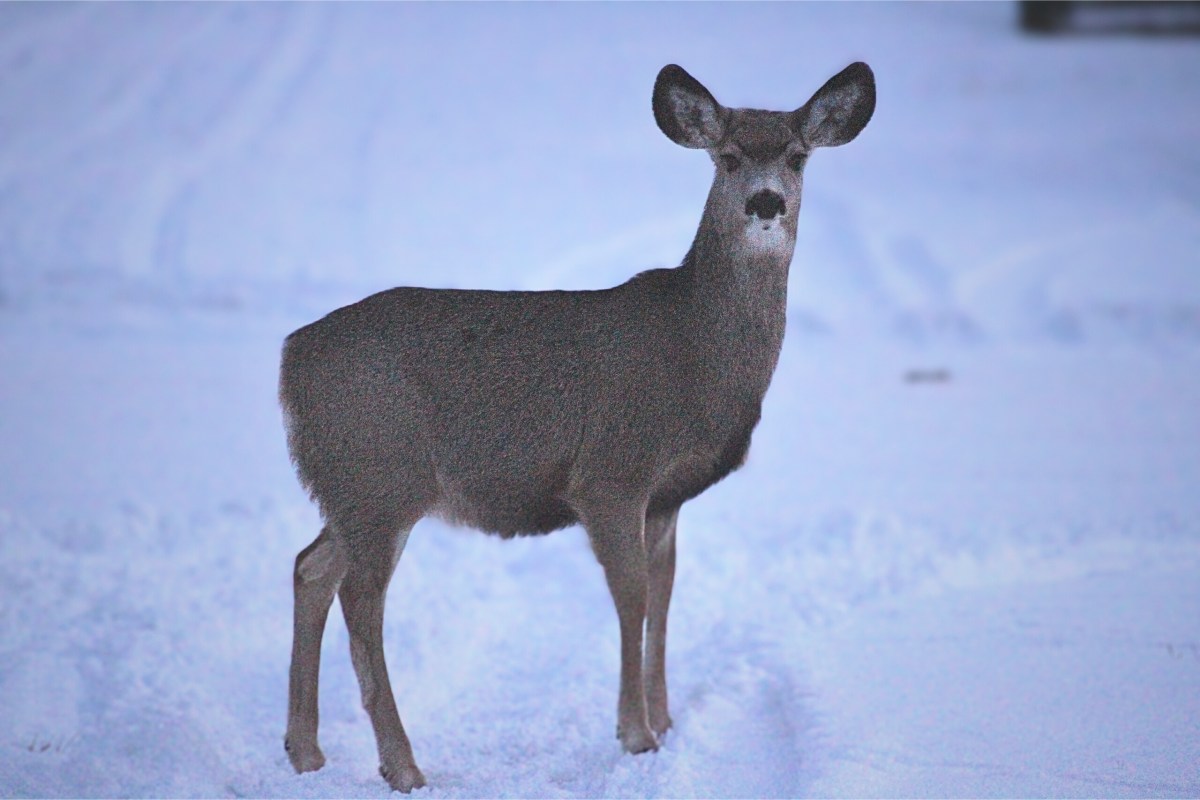
Deer F219 was lucky. Now she’s fat.

The 7-year-old doe survived a harrowing winter that killed off more than 70% of the female deer that researchers were monitoring in the Wyoming Range. Deer F219 even raised two fawns for about a month last spring, which siphoned precious energy and fat reserves. 

Yet when University of Wyoming ecologists captured and immobilized the collared doe on her winter range in December, she was still in remarkably good shape. Some 22% of her body mass was fat, an “exceptional” number and just a few percentage points off of the fattest deer ever measured by the now 11-year-old research project.  

“These are the fattest deer that we’ve ever seen on a population level,” University of Wyoming ecologist and professor Kevin Monteith told WyoFile. “Animals were impressively fat,” across the board in the Wyoming Range, he said. 


Mule deer were exceptionally fat in December 2023 on both the north (NorthWR) and south (SouthWR)winter ranges, . (University of Wyoming/Monteith Shop)

UW’s research team found portly deer to the south, to the north, and they found fat deer across ages and sexes. Even lactating mothers “were as fat as we’ve ever seen them,” Monteith said.  

“We had a number of animals that were pushing the physiological limits of their ability to gain fat,” he said. 

The Wyoming Range’s deer, in other words, were just about as fat as captive deer that laze about feasting on rich, provided feed. 

Like humans, fat deer don’t store their fat evenly across the body. Accumulation is not perfectly sequential, Monteith said, but it tends to start in the bone marrow, then around the organs. When they hit about 6% body fat, he said, the fat starts to layer around the rump.  

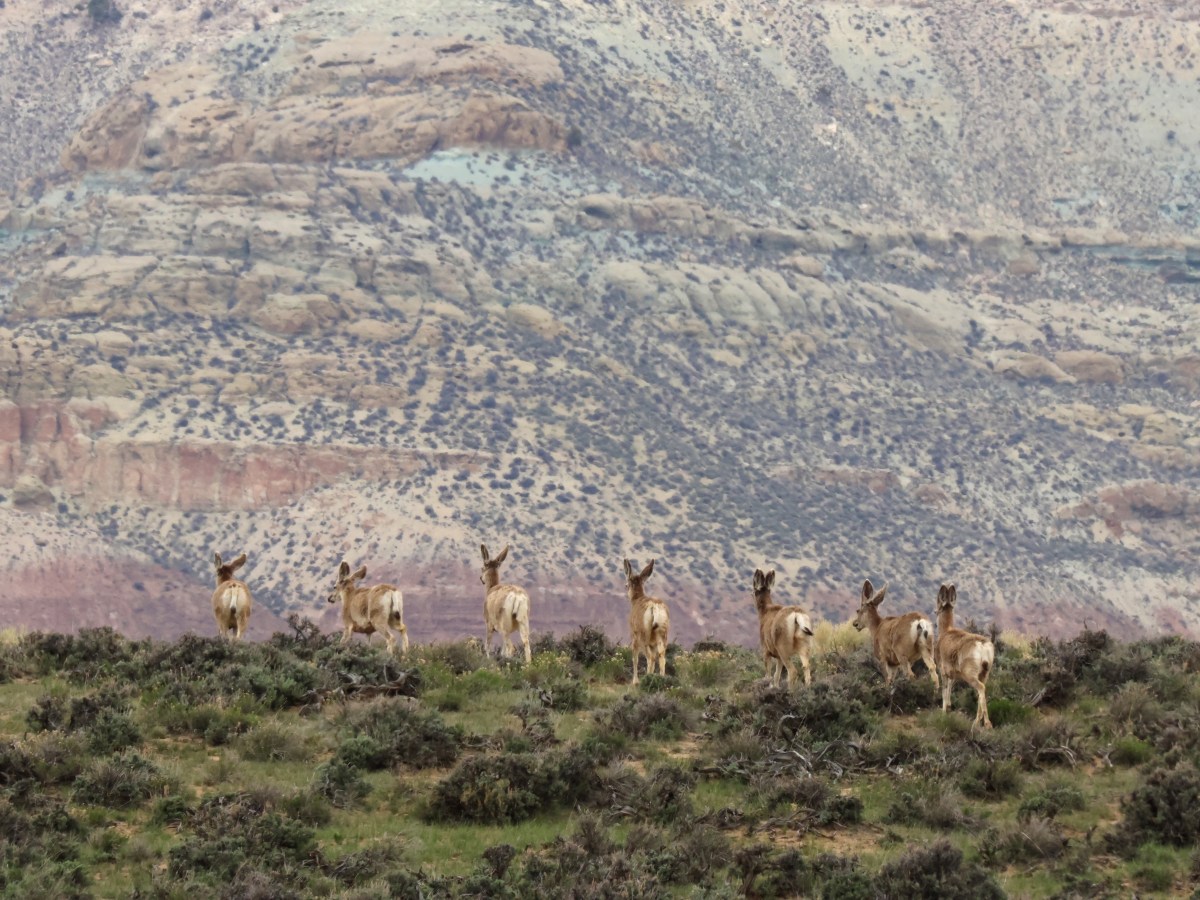
A rotund research deer tracked by University of Wyoming moves her tush through the Wyoming Range foothills. (Rachel Smiley/University of Wyoming)

“That’s where we measure it with an ultrasound,” Monteith said. “As it accumulates it kind of thickens, and it also moves forward on the animal toward its shoulders.” 

The chubby deer of the Wyoming Range do derive some benefits from those fat rumps. 

This winter has so far been mild, but if it turns into another severe one, they’d be likely to survive. 

“They’re set up for a knock-down, drag-out winter,” Monteith said. “Add to that the sagebrush growth, which was off the charts, and they’re prepared.” 
Mike Koshmrl reports on Wyoming's wildlife and natural resources. Prior to joining WyoFile, he spent nearly a decade covering the Greater Yellowstone Ecosystem’s wild places and creatures for the Jackson...

Join the Conversation

6 Comments

WyoFile's goal is to provide readers with information and ideas that foster constructive conversations about the issues and opportunities our communities face. One small piece of how we do that is by offering a space below each story for readers to share perspectives, experiences and insights. For this to work, we need your help.

What we're looking for: 

  • Your real name — first and last. 
  • Direct responses to the article. Tell us how your experience relates to the story.
  • The truth. Share factual information that adds context to the reporting.
  • Thoughtful answers to questions raised by the reporting or other commenters.
  • Tips that could advance our reporting on the topic.
  • No more than three comments per story, including replies. 

What we block from our comments section, when we see it:

  • Pseudonyms. WyoFile stands behind everything we publish, and we expect commenters to do the same by using their real name.
  • Comments that are not directly relevant to the article. 
  • Demonstrably false claims, what-about-isms, references to debunked lines of rhetoric, professional political talking points or links to sites trafficking in misinformation.
  • Personal attacks, profanity, discriminatory language or threats.
  • Arguments with other commenters.

Other important things to know: 

  • Appearing in WyoFile’s comments section is a privilege, not a right or entitlement. 
  • We’re a small team and our first priority is reporting. Depending on what’s going on, comments may be moderated 24 to 48 hours from when they’re submitted — or even later. If you comment in the evening or on the weekend, please be patient. We’ll get to it when we’re back in the office.
  • We’re not interested in managing squeaky wheels, and even if we wanted to, we don't have time to address every single commenter’s grievance. 
  • Try as we might, we will make mistakes. We’ll fail to catch aliases, mistakenly allow folks to exceed the comment limit and occasionally miss false statements. If that’s going to upset you, it’s probably best to just stick with our journalism and avoid the comments section.
  • We don’t mediate disputes between commenters. If you have concerns about another commenter, please don’t bring them to us.

The bottom line:

If you repeatedly push the boundaries, make unreasonable demands, get caught lying or generally cause trouble, we will stop approving your comments — maybe forever. Such moderation decisions are not negotiable or subject to explanation. If civil and constructive conversation is not your goal, then our comments section is not for you. 

Your email address will not be published. Required fields are marked *

  1. Wyoming and mountain big sage is the majority of thier diet through the winter, along with other mountain shrubs.

  2. The silver lining of a tough winter: fat moms make many healthy babies, including future big bucks. It’s great that both their summer range and winter range are robust enough to support excellent nutrition this year. Hope it all stays that way.