


From his Powell office, Josh Shorb has kept a close eye on the Wyoming Capitol this legislative session, watching to see what lawmakers do with a $20 million request for spraying lethal chemicals on destructive cheatgrass and other invasive grasses.
The funding — requested by Gov. Mark Gordon to be used for projects across the state — was cut down to $5 million, then via amendment bounced back up to $10 million.
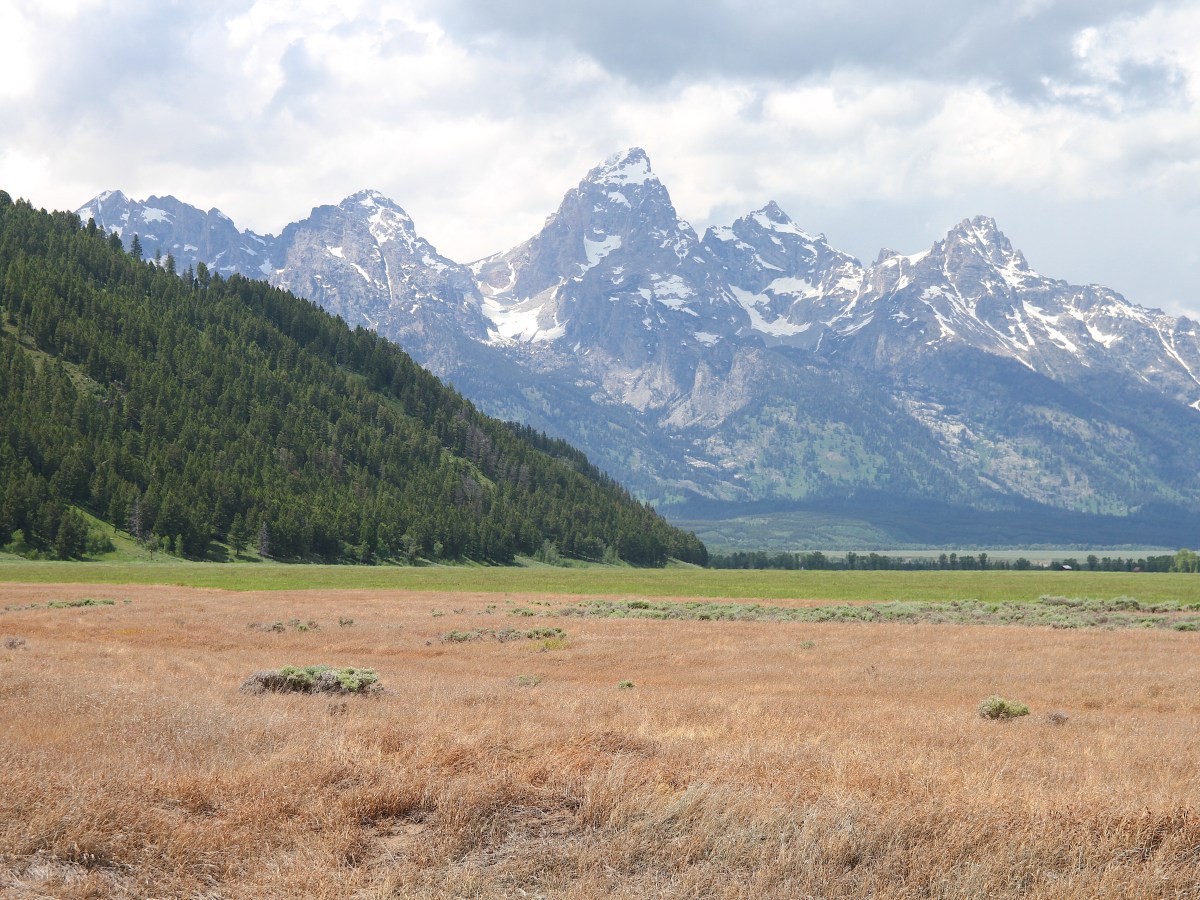
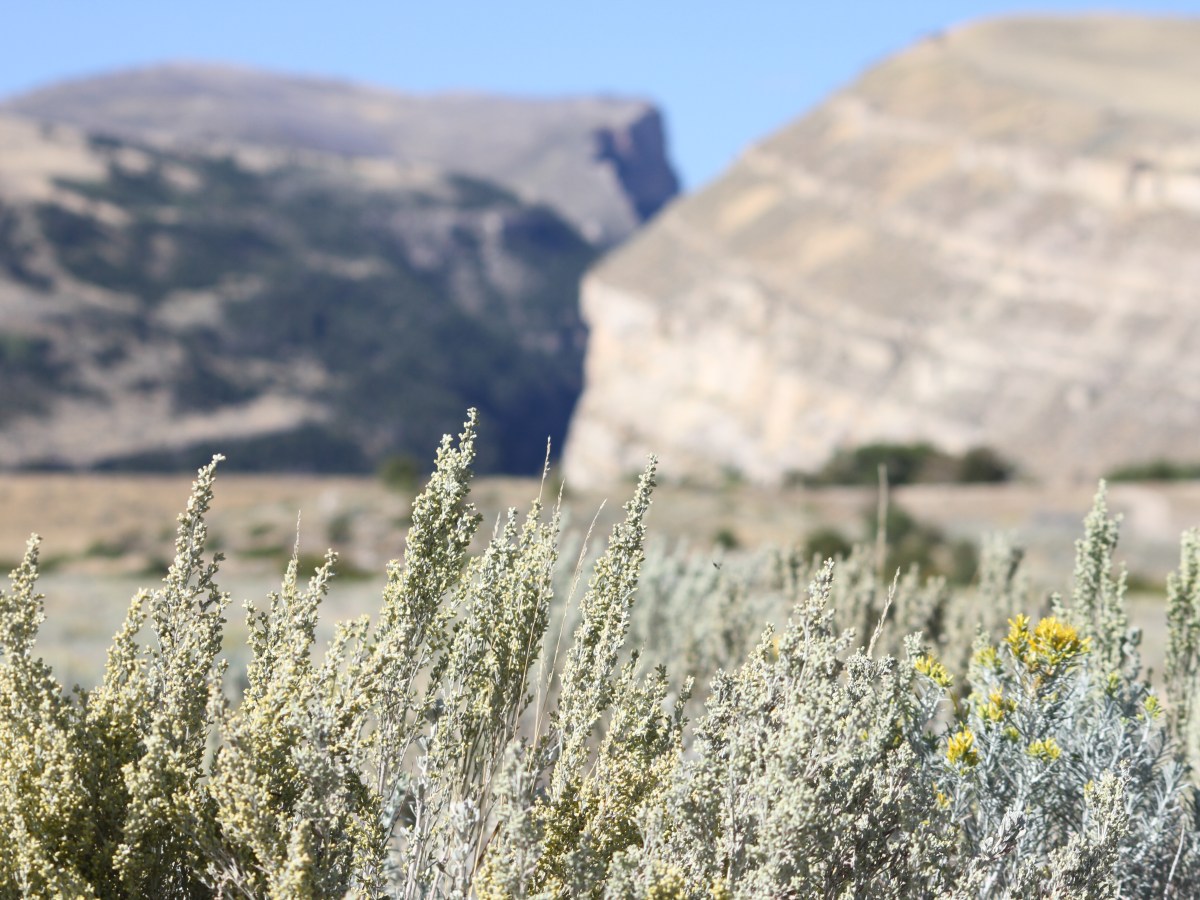
Where the funding lands will make a big difference to Shorb, who supervises the Park County Weed and Pest District. It’ll also make a big difference to the high desert of the Bighorn Basin and the foothills of the Absaroka Range. Those are wild landscapes that are being besieged by cheatgrass, a nonnative species that poses a grave threat to Wyoming’s unparalleled sagebrush sea and its inhabitants.
“With access to more money, we’ll either be able to start other projects in different parts of the county,” Shorb told WyoFile, “or the projects on the ground that we already have are going to get bigger.”
Wildland advocates and landowners with an interest in keeping cheatgrass at bay need those projects to get larger and more numerous. The focal point of the Park County Weed and Pest District’s current cheatgrass spraying efforts — a nearly $1 million project — covers a stretch of the Bighorn Basin from near the tops of the McCullough Peaks down to the Meeteetse Rim, Shorb said.
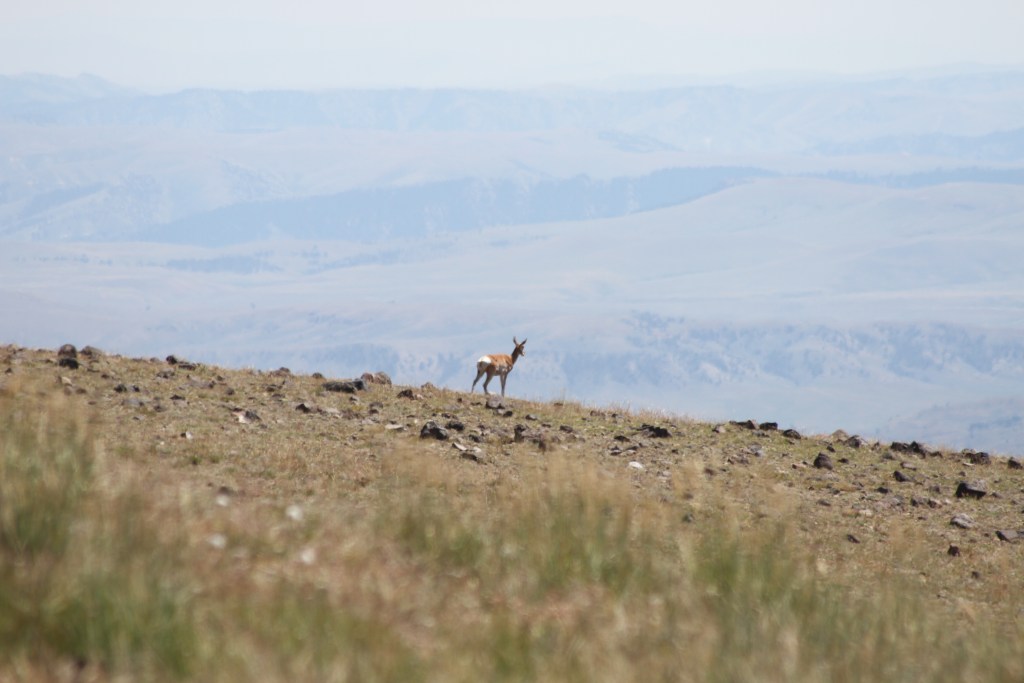
“We’re taking a big stab in the middle of the county where we can defend intact ecosystems with sage grouse breeding areas and wintering ground that’s important for big game,” he said. “If we treat the cheatgrass now, we have enough of the native rangeland intact that it can revert back. We have a puncher’s chance.”
Although there are causes for optimism, the cheatgrass fight in Park County has been a losing endeavor. Cheatgrass was “here and there” when Shorb started working at the district around the turn of the century.
“Now we’re flying it with aircraft” to apply herbicide, he said.
The same goes for the whole of Wyoming, where climate change has facilitated cheatgrass’ spread into high-elevation, harsh landscapes once thought to be inhospitable for the grass species, which is native to Eurasia.

“Wyoming is currently losing the battle against invasive annual grasses, such as cheatgrass, medusahead and ventenata,” Gov. Mark Gordon wrote in a letter requesting $20 million to treat grasses on private and state lands. “These noxious plants are outcompeting more beneficial grasses and changing our Wyoming landscapes, causing significant negative impacts to native wildlife habitats and rangelands.”
Members of the Wyoming Legislature’s Joint Appropriations Committee evidently were not convinced that the allocation was a wise use of money in a state that’s on sound financial footing, at least in the short term. When the committee rolled out the proposed budget that senators and representatives are now in the midst of tussling over, the governor’s cheatgrass request had been slashed 75% to $5 million. Additionally, lawmakers holding the state’s pursestrings were going to make accessing those funds contingent upon a 3-to-1 match, with the matching funds all coming from non-state sources.
“At $5 million with a 3-to-1 match — which is how it left Appropriations — it was kind of not worth the effort [for applicants],” said Era Aranow, a legislative advocate for the Wyoming Outdoor Council. “But with more money and/or removing the match, we think we can get some good work done.”

Lawmakers in both the Senate and House filed amendments to restore some or all of the funding requested by Gordon. In the upper chamber, an amendment from Sens. Lynn Hutchings (R-Cheyenne) and Dan Laursen (R-Powell) — both normally cautious of spending — sought the full amount, $20 million.
“We need to do this,” Laursen said on the Senate floor.
The U.S. Forest Service and Bureau of Land Management, he said, are “not ponying up very much money,” and because of that Wyoming needs to “reach out further and focus on those that aren’t taking care of the problem.”
Shorb, at the Park County Weed and Pest District, had a different view of the federal agencies’ culpability in the spread of cheatgrass. They are doing their part in the fight, he said.
“They spend more on cheatgrass management across Wyoming than anybody else,” Shorb said. “They typically pay for their own projects with their own funds.”
Laursen’s proposal failed, but another amendment brought by Sen. Larry Hicks (R-Baggs) to restore funding to $10 million eked by. In the House, an amendment brought by Reps. Barry Crago (R-Buffalo) and Reuben Tarver (R-Gillette) also succeeded in bumping funding up to $10 million — plus it did away with the match requirements. Lawmakers will need to reconcile the differences in match requirements between the two budget bills in the Joint Conference Committee, which should start this week.
The Outdoor Council’s Aranow and other wildlife advocates lobbying in the statehouse are happy with where the funding shook out.
“We are pleased that it’s been increased,” she said, “and we think it’s great for wildlife and ag[riculture] alike.”
Aerial spraying of cheatgrass takes place all across Wyoming, from the buttes rising above Jackson to the Wind River Range foothills to the Mullen Fire scar near Saratoga. Typically, the operations use an herbicide, Indaziflam, to target the invasive annual grass that so often outcompetes the native grasses and forbs better suited for wildlife and livestock.
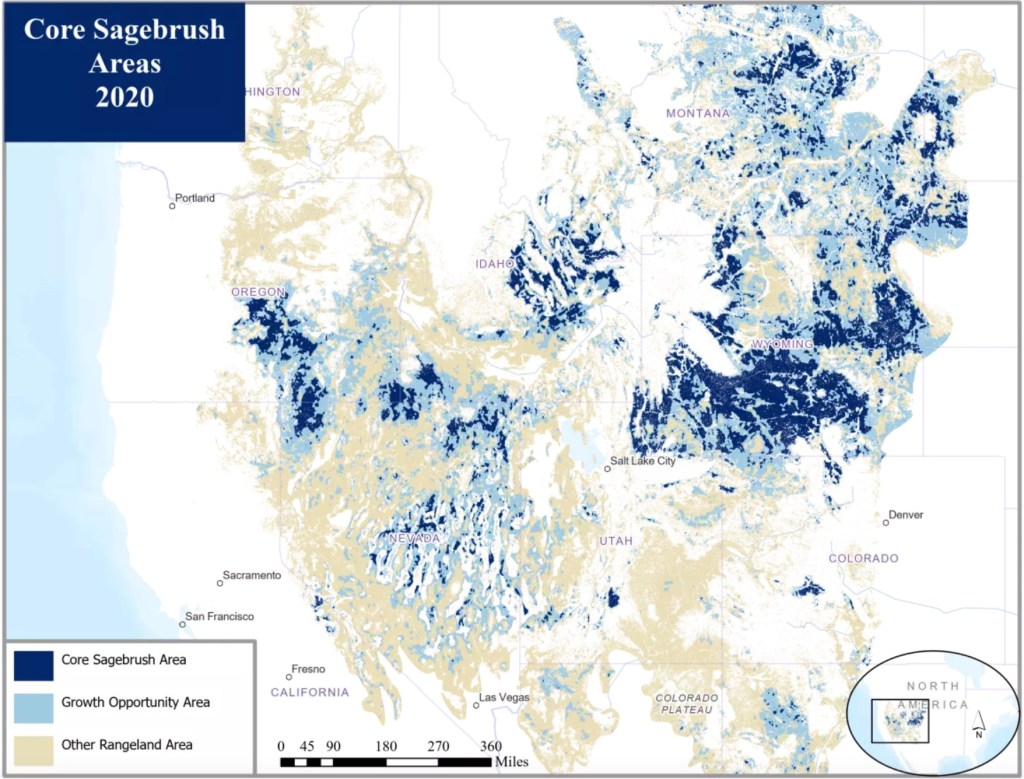
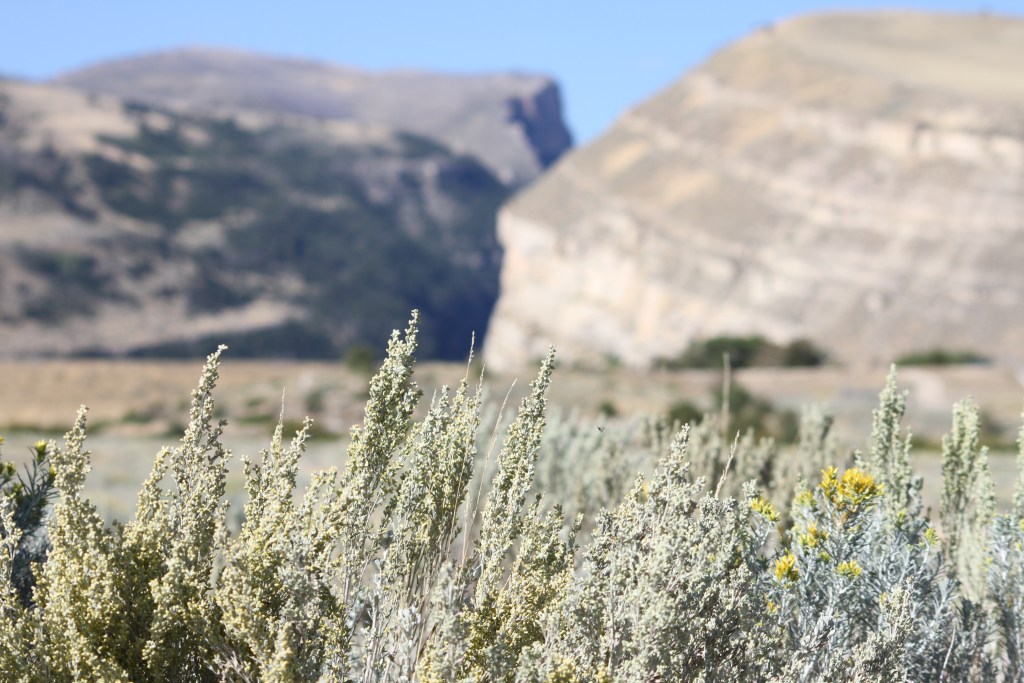
“We’ve got to get comfortable with the uncomfortable story of using chemicals to protect biodiversity,” Matt Cahill, director of the Nature Conservancy’s sagebrush sea program, told WyoFile in October. Cheatgrass spraying and other “preventative restoration” techniques, he said, are needed to protect Wyoming’s prized expanses of sagebrush, which are considered the core of a reeling biome.
A $10 million pot will pay for about 70,000 acres of cheatgrass spraying, said Bob Budd, who will administer the disbursement of the funds in his role leading the Wyoming Wildlife and Natural Resource Trust. People like Shorb will be able to make a pitch for the funds through a standard grant process.
“We’re just keeping up the pressure on a serious problem that we have in Wyoming,” Budd said.
Some figures — and Gordon’s proclamation that Wyoming is “losing the battle” — suggest that far more pressure is needed. Already, invasive annual grasses affect 26% of Wyoming’s landmass, according to a fact sheet that Aranow, the lobbyist, distributed to lawmakers in support of Gordon’s funding request.
Wyoming’s landmass amounts to roughly 62 million acres. That means the tentative $10 million in funding will only address a tiny fraction of the overall problem. Meanwhile, the spread of other lesser-known invasive grasses just as worrisome as cheatgrass is picking up speed.
“Species like ventenata and medusahead are most concentrated in northeast Wyoming,” the Outdoor Council’s fact sheet says, “and are poised to spread to the rest of the state.”


Cheatgrass can be controlled for free by grazing early at high density then resting the area for the rest of the grazing season so native grasses can establish.
Severe overgrazing of our public lands has promoted the growth of invasive weeds. When all of the native vegetation is pounded down to nothing, a door opens for cheatgrass and other noxious weeds. Hmm, for some reason these govt agencies won’t address this and if Mr. Shorb in Park County thinks he can make some headway, the local public land managers won’t be of much help
Truth is that cheat grass was introduced to the area. Second truth is that government policy has been reducing cattle numbers for decades. This has created a situation where the problem is under grazing, which is just as detrimental as over grazing.
What can we, as natives, do to help.
A more accurate figure for treatment would be approx $70 per acre and therefore 140,000 acres covered for that 10 million.
Cheat grass is the states own created problem. For years it was mandated to be in the “approved” grass seed blend on restoration projects. I believe it still be in the BLM approved blend.
As a native, how can I help keep the cheatgrass from destroying our sagebrush? I am on a fixed income but am willing to help physically, let me know how.
Why do we have to give money to Wyoming?
They only have 500,000 citizens like Trump said in CA rake rake rake that will fix the FIRE PROBLEM! This state LOVES RUMP maybe they should ask him personally to give them money! LOL!
Widespread cheat grass infestations provide very little forage for cattle and sheep, except in the spring, while it is still green. Ranchers, along with wildlife, have the most to lose as cheat grass takes over range lands. The Feds should increase the grazing fees on BLM and USFS range and use the increased fees for cheat grass and other weed species suppression/control. Hunting licenses should have a surcharge, with the increase in funds used exclusively for cheat grass control on Federal and state lands. Once cheat grass takes over range lands the value for livestock grazing will be close to zero. What will the ranchers do then?
According to the Environmental Working Group, in 2021, US taxpayers, gave WY farmers and ranchers $127.4 million. Ranchers and farmers should seriously consider giving back a portion of these payments for noxious weed control. It is unfair to expect taxpayers to foot the entire costs of weed control on public lands.
Other noxious weeds are also a problem. Several knap weed species, musk thistle and others come to mind. I have seen spotted knap weed and musk thistle infestations become the climax vegetation crowding out most native species.