

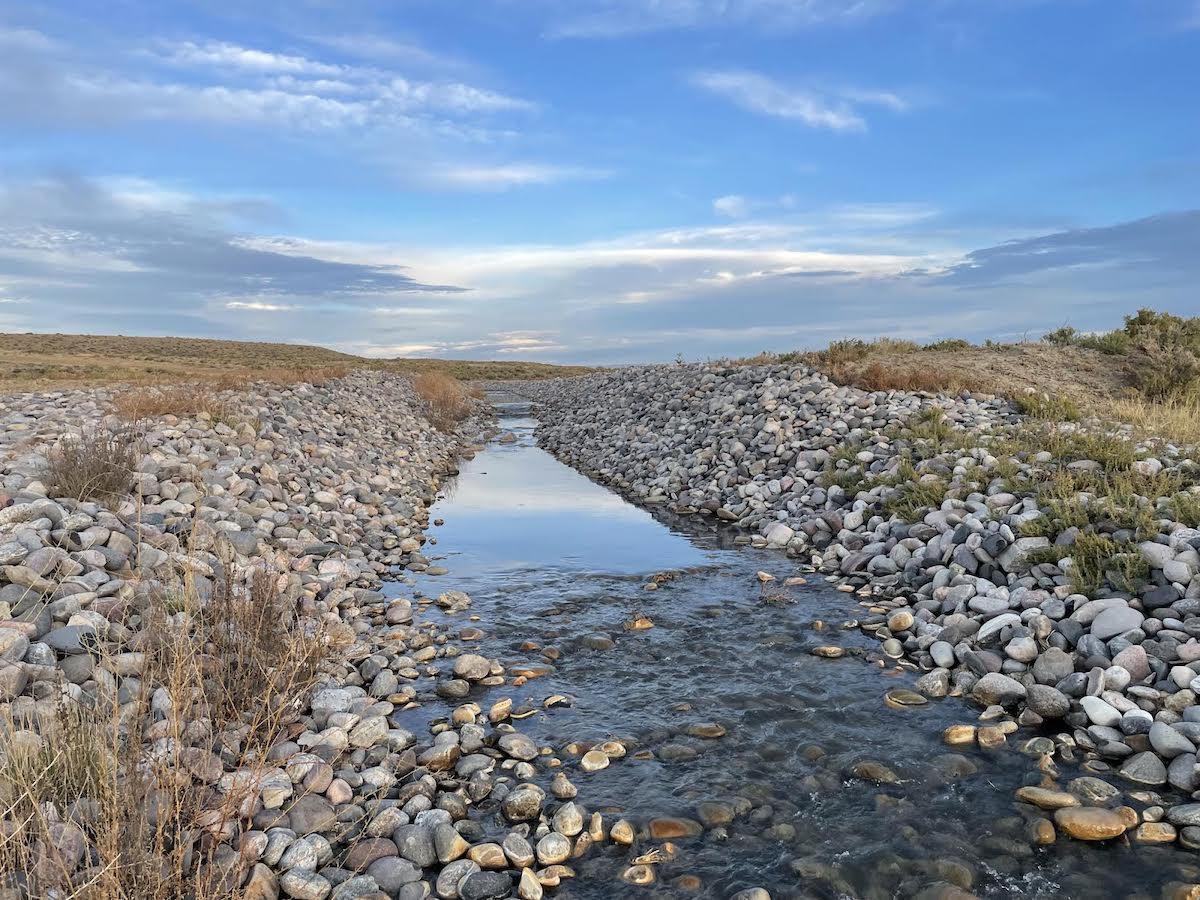
The principal operator of the Moneta Divide gas- and oilfield told the Wyoming Department of Environmental Quality it isn’t exceeding limits for barium and radium in wastewater as regulators maintain.
Dallas-based Aethon Energy Operating responded in May to DEQ’s letter of violation that said the company had exceeded permit limits for pollutants the company lets flow into Alkali and Badwater creeks in Fremont County.
The DEQ earlier this year officially listed those waterways as “impaired,” saying oilfield pollution made parts of them incapable of sustaining aquatic life. Parts of the Fremont County creeks are polluted to the point they don’t meet standards for drinking, consumption of resident fish or sustaining aquatic life, a DEQ report states.
Aethon contested DEQ’s charge that its effluent didn’t meet standards for barium and radium, saying regulators modified a permit and “removed compliance requirements” for those two elements.
“[The Wyoming Oil and Gas Conservation Commission] updated Aethon that the EPA is undertaking several actions regarding the [Marlin disposal well] application that are not appropriate or decisional based on current law.”
Aethon Energy
Other problems in the surface waste stream, including high temperatures and large concentrations of chloride, will be resolved once a water treatment plant comes online later this year, Aethon told state regulators.
In November, however, Aethon requested a discussion with DEQ about changing standards for the daily discharge of chloride into the two creeks. DEQ’s permit limits the salty brine to a daily maximum concentration of 230 mg/L.
Aethon wants DEQ to “consider extending the chloride compliance schedule if a significantly lower average chloride concentration could be achieved over a month in lieu of ability to achieve a daily maximum,” it stated in a progress report.
Extraction of natural gas and oil from the 327,645-acre energy field requires the pumping up and disposal of millions of gallons of tainted “produced water.” Federal and state laws and regulations control disposal of the wastewater.
In addition to letting some produced water flow into Alkali and Badwater creeks and the downstream Boysen Reservoir, Aethon hopes to pump some of the effluent underground.
Aethon and Burlington Resources, another Moneta operator, need to dispose of 58.8 million gallons of produced water a day, according to plans the federal government approved for drilling 4,250 wells there. That’s enough water to fill 89 Olympic-sized swimming pools. The energy field lies east of the Boysen Reservoir in Fremont and Natrona counties.
Underground disposal contested
In pumping wastewater underground, Aethon would use two methods. One would be to send low volumes of polluted water into the 2,000 to 3,000-foot-deep Shotgun formation through existing but converted energy wells near Moneta Divide. The other would be to employ the 15,000-foot-deep, high-volume Marlin well to send tainted water into the Madison aquifer and other deep geologic provinces.
The Madison is a source of drinking water in Wyoming, including in parts of the Bighorn Basin and Crook County. Wyoming’s Oil and Gas Conservation Commission authorized disposal in the Marlin well, located south of the energy field, agreeing that the underground reservoir of potable water there was too remote and small, among other reasons, to justify protection from contamination.
The U.S. Environmental Protection Agency, however, must approve the Marlin well for disposal. Aethon’s November update indicated that approval remains in question and a source of conflict between Wyoming and federal regulators.
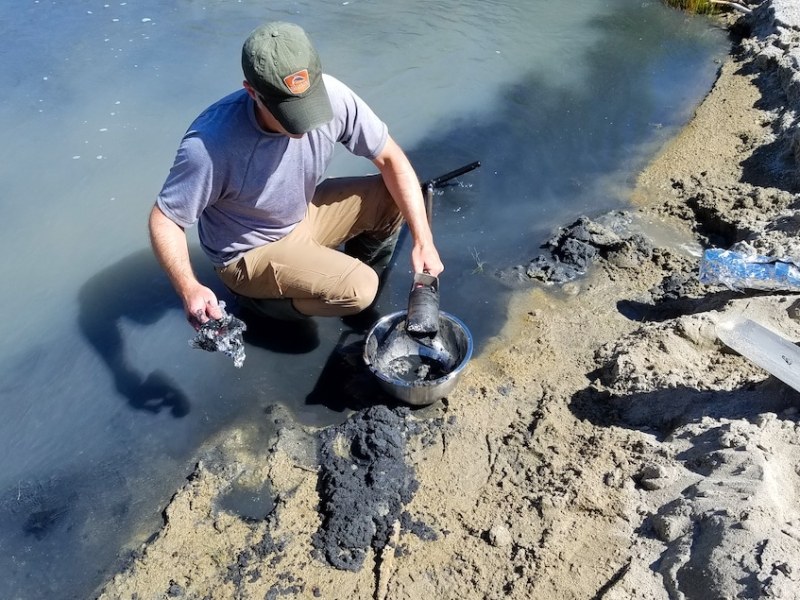

“In January 2023, [the Wyoming Oil and Gas Conservation Commission] updated Aethon that the EPA is undertaking several actions regarding the [Marlin disposal] application that are not appropriate or decisional based on current law,” Aethon’s November progress report to the DEQ stated.
“Aethon’s understanding is these actions [by the federal EPA] include receiving additional public comment(s), initiating consultation, and conducting additional analysis regarding aspects that are not legally decisional,” the energy company wrote.
Wyoming’s apparent challenge to the EPA, and perhaps other factors, has stalled consideration of using the Marlin well and Madison aquifer for disposal, the progress report states.
“In March 2023, WOGCC provided an additional update to Aethon that EPA was in a hold regarding all aquifer exemptions pending internal guidance.”
Meanwhile, Aethon continues with its low-volume effluent disposal plan for the Shotgun. It has successfully tested three conversions of energy wells into disposal ones.
Many such wells will be needed, the company wrote. “Aethon has submitted a total of 28 Shotgun formation applications to the WOGCC to convert existing wells into [water disposal wells] all of which will require EPA review and concurrence,” the company told the DEQ.
The state oil and gas commission has approved two of the converted wells for disposal, and the company withdrew four applications because the conversions failed.
All three disposal methods — discharging effluent into Alkali and Badwater creeks, pumping it underground into the shallow Shotgun formation, and also pumping into the deeper Madison, would resolve Aethon’s needs, the company said in its progress report.


Of course Aethon is disputing any clean water violations. It’s all a delay tactic. They are banking on a change of federal administration to one more industry “friendly”. The last (and probably future) administration, minimized EPA oversight and regulatory enforcement of longstanding, federal, environmental law and policies. Wyoming’s lone congressional representative has made a career out of fighting the EPA, and it’s no secret that she would love to eliminate it and it’s regulatory authority all-together. The Wyoming DEQ has been woefully lacking in any kind of oversight or enforcement of environmental law, especially when it comes to the oil and gas industry. Wyoming State Government, including the Legislature and Governor’s Office will not stand for anything getting in the way of mineral production. I applaud Wyofile and normal Wyoming folks for bringing these issues to light. But, with all of these political headwinds, nothing is likely to change with the water pollution issues at the Moneta field.
Doesn’t it seem the tiniest bit unwise to bend, contort, and break the rules protecting water sources to produce massive amounts of oil and gas, which will contribute to the growing crisis of climate change. The water for the future deserves, even demands, protection much more than the profitability of Aethon.
HOW ABOUT THIS FOR IRONY: When the debate over Aethon’s last renewal of its water discharge permit was ongoing, a consultants report was commissioned which showed there were 128 water discharge permits into the Wind River and Little Wind which flow into Boysen Reservoir. Of these permits, 48 were water discharge permits for production water from oil fields on the WRIR; and that, discharge permits on the reservation were issued by the EPA since Wyoming does not have jurisdiction over the Shoshone nation. Previously there was an excellent article about these discharges which indicated all was not well with the quality of water flowing into the two rivers. The journalistic report was : ” Loophole lets toxic water flow over indian land” – National Public Radio https://www.npr.org/2012/11/15/1
There is a high probability that more pollution flows into Boysen from the 48 EPA issued water discharge permits than Aethon discharges into Boysen. So the question arises – who is monitoring the discharges on the reservation and is EPA enforcing their own discharge permits. I wonder if anyone is diligently monitoring and enforcing the permits – the NPR report was very alarming. Could the scenario be that EPA is just amiss about enforcing the discharge permits as DEQ is off reservation. How ironic is that.
Mucho thanks again Angus for keeping us updated.
” — EPA was in a hold regarding all aquifer exemptions pending internal guidance.” It appears to me that EPA is well aware that Wyoming DEQ is not enforcing water discharge regulations in spite of numerous Notices of Violations; and that, the Wyoming Oil and Gas Commission decision on deep injection was manipulative since the commission voted to change a previous request for deep injection into the Madison via the Marlin well – inconsistency at best. Now, DEQ’s own listing of Alkali and Badwater creeks as impaired and unable to support aquatic life will be interpreted as further proof something is amiss in Wyoming. No wonder the Federal agency and the State of Wyoming are at odds over Aethon’s continuing pollution – Wyoming looks the other way and allows it to continue whilst the EPA expects Wyoming to enforce CWA standards – which the state hasn’t done. Just an uneducated guess, but I’ll predict EPA will not approve the deep injection permit based on Wyoming’s failure to enforce CWA standards.