


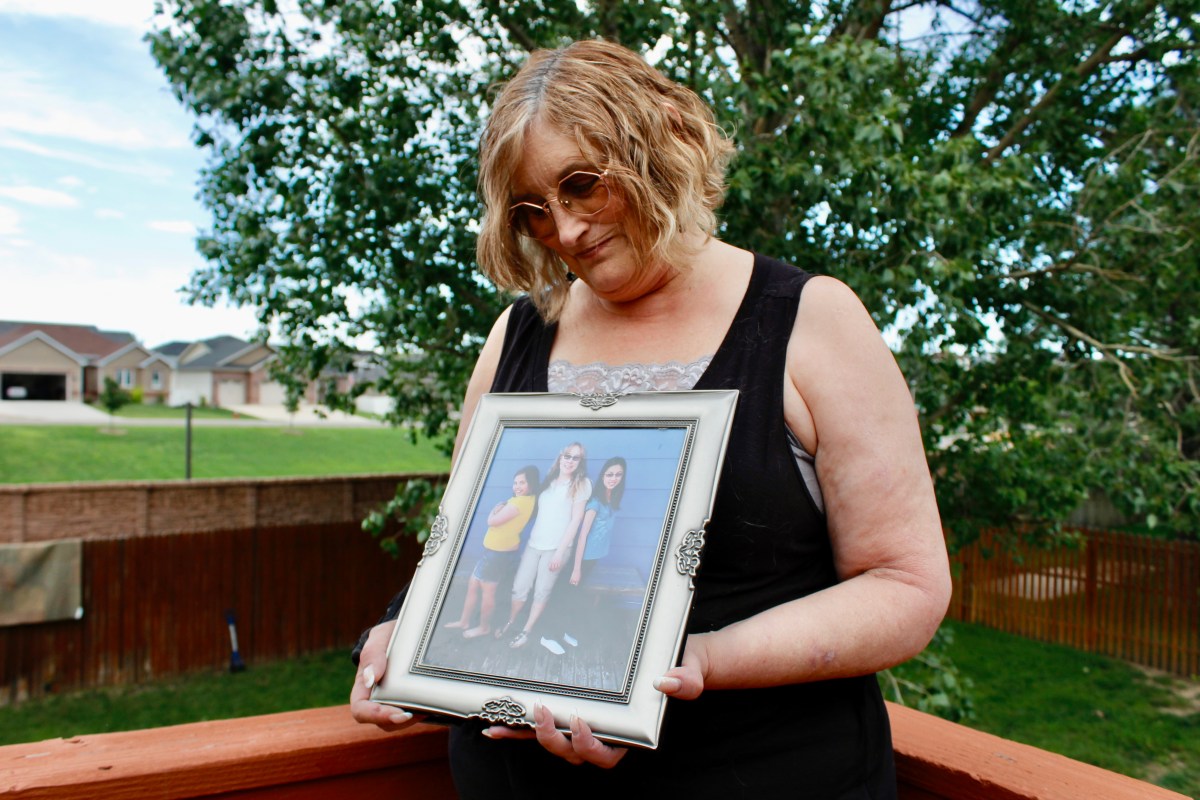
Debbie Richardson knew her daughter was in danger.
Crystal Town had seemingly escaped a bad situation. The 29-year-old was in recovery from a substance use disorder, had moved out of the Cheyenne home she once shared with her abusive husband, Christopher, and had filed for divorce. But Debbie was still afraid.
The days after leaving an abuser are often the most dangerous time for a victim of domestic violence. And Christopher was angry that Crystal was ending their marriage. He was struggling with bipolar disorder and self medicating with drugs and alcohol. He had a gun.
“It made me scared to death,” Debbie said. “I knew that something was gonna happen.”
Fearing she couldn’t protect her daughter, Debbie turned to the authorities. She knew police had responded to domestic violence complaints at the couple’s home more than once before.
“He has a gun, and he is going to kill her or kill himself or kill all of them,’” she recalls telling the police.
The two shared custody of their 10-year-old daughter, Marie, and Debbie didn’t want a gun in the mix. Domestic violence is five times more likely to escalate to murder when the abuser has access to a firearm.
“And the cops told me, ‘Well, there’s nothing we can do,’” Debbie said. Wyoming law doesn’t authorize, much less require, law enforcement to remove firearms or ammunition at the scene of a domestic violence incident.
Christopher kept his gun. Crystal moved out. Then, on Oct. 2, 2013, she went to his home to pick up Marie.
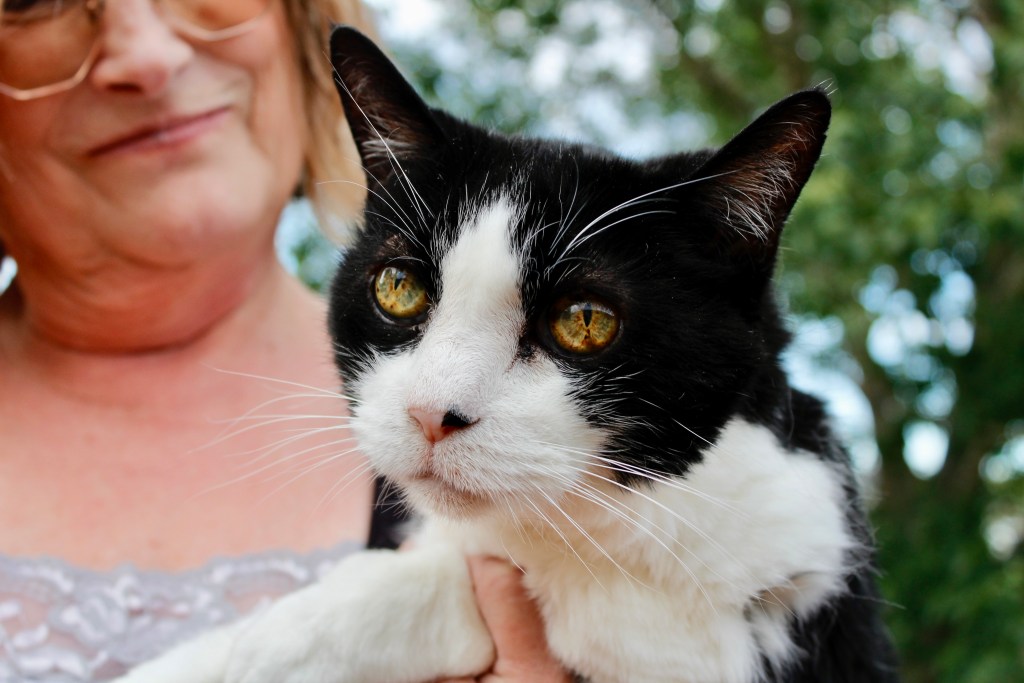
Interviews and court documents describe what happened next. Crystal stopped in the yard and briefly greeted the family’s black-and-white cat. She walked inside. Christopher was there. The couple began to argue. The argument escalated. He drew a .45-caliber pistol and fired eight shots. Crystal died at the scene.
“She was my only daughter,” Debbie said. “She was my baby.”
The murder received considerable attention. But in the 10 years since Crystal’s death, Debbie said, that attention has yet to result in any significant changes to state law or policy that could help prevent domestic violence, especially when it comes to gun deaths.
The problem may be getting worse, too. The most recent research from the Violence Policy Center, a national gun control advocacy group, shows Wyoming has the third highest rate in the nation of women murdered by men — a significant jump from the state’s typical position between the middle and bottom half of states.
“I just wish there was better laws to protect these people,” Debbie said. “They’re so afraid to leave. And what I really feel bad about is Crystal left, and she still got killed.”

Mirroring laws
Debbie went to the State Capitol in January as she has repeatedly since Crystal died.
She was there to testify on legislation designed to prevent deaths like her daughter’s.
Lawmakers were considering a measure that would restore the right to serve on a jury, hold public office and use and possess a firearm for those convicted of a nonviolent felony.
Recognizing that the legislation touched on a related and problematic legal contradiction — federal law prohibits those subject to a protection order or convicted of misdemeanor domestic violence crimes from using or owning firearms, but state law doesn’t — the original version of the bill sought to simultaneously close that gap by adding such restrictions to state law too.
Wyoming is known for its gun culture, with an emerging firearms manufacturing industry and a gun ownership rate of approximately 60% — second only to Montana and nearly twice the national rate.
At the Capitol, Debbie told lawmakers about her daughter. She told them she’s not against guns — her family hunts and often goes target shooting — but the system that failed her daughter is still broken. It didn’t make sense to Debbie that legislators would focus on restoring gun rights to one group of residents when a lack of confiscation from another group was costing lives.
Despite her best efforts, lawmakers deemed the domestic violence misdemeanor facet of the legislation too complicated and chose to go in another direction. The rights restoration bill passed, but the domestic violence prohibition provision ended up on the cutting room floor.
This month, the bill became law, creating a process for Wyoming residents with a first-time, nonviolent felony conviction to restore their rights to own or use a firearm, serve on a jury and hold public office.
“To drop this kind of bill this year, and not take into account domestic violence just was really heartbreaking for us and for survivors across the state,” said Tara Muir, policy director for the Wyoming Coalition Against Domestic Violence and Sexual Assault.

Worse yet, by partially aligning state law with federal law, Muir worries that many lawmakers walked away with the wrong impression that the mission was accomplished.
“What is a little painful is legislators now thinking that we actually worked on that issue, when we really didn’t dig down deep to find a remedy,” Muir said.
Having a federal gun prohibition on the books is only helpful if it’s enforced, Muir said. It’s more common in Wyoming, she said, for local law enforcement to simply ask perpetrators to place their firearms in the care of friends or family. But that provides little reassurance for those facing abuse, Muir said.
“If we want to be a state that isn’t going to be super clear about where you live and what law enforcement is willing to do, victims and their children are going to live in fear,” she said.
Memories and milestones
Holidays are difficult without Crystal. It’s those times when Debbie misses her daughter the most. There are also the moments when the past just sneaks up on her. Scrolling on Facebook, Debbie will come across photos of a friend who has just returned from a mother-daughter vacation.
“I don’t have a daughter to go a weekend away with,” Debbie said, pausing. Estes Park, with its charming downtown and mountain flair, was once a favorite nearby getaway of theirs. “You know, I don’t have those anymore. I have two sons. But Crystal was my baby.”
Crystal loved to camp at Vedauwoo with the family or spend a Saturday afternoon at the park. She often made these outings extra special with her cooking, like her made-from-scratch pineapple upside-down cake. One Mother’s Day camping trip, Debbie recalled, they feasted on steaks and homemade potato salad.
Debbie raised Marie after Crystal died. They were already very close. The first year after Marie was born, the young family of three lived in Debbie’s basement, and Debbie can remember Marie calling out from the bottom of the stairs, “Nana, Nana.”
But as Marie grew up, milestones have been bittersweet for Debbie.
“I shouldn’t have been the one getting Marie ready for prom,” Debbie said. “It should have been her mom.”
Successes and failures
Before Crystal’s death, Debbie hadn’t spent much time at the Capitol building, let alone testifying before panels of lawmakers. Things changed when she lost her daughter.
“I’ve got to be her voice,” Debbie said. “And we’ve got to protect other women.”
In 2019, she helped get a bill passed to strengthen animal cruelty laws. The bill made it possible to transfer pet ownership in cases of domestic violence. It also allowed restraining orders prohibiting abusers from having contact with the animal.
It was a victory that felt especially meaningful, Debbie said, because Crystal was such an animal lover. When she died, she left behind three cats and a dog. Her whole life, Crystal treated strays with great tenderness, always bringing them home.
The animal protections were a success, but other legislative aims have remained elusive.
It’s painful for Debbie knowing state law doesn’t offer someone in a situation like Crystal’s much more protection than it did 10 years ago.
“It’s very frustrating,” Debbie said. “Very, very frustrating. It’s like, don’t they care about these people? I mean, look at how many people have died.”
Interim
Every October, the When Men Murder Women report is released. The national study aggregates the circumstances of all reported homicides of women by men in single-victim/single-offender incidents in each state. It then ranks the states based on their rate of women killed by men.
Muir, with the anti-domestic violence coalition, has traditionally only given the document a quick skim. That’s because she’d never seen Wyoming make the top 10 — until now.
“I was just shocked that we were number three,” Muir said.
The most recent report examines 2020, when eight women were killed in Wyoming. None of the women were killed by strangers. Instead, the report found that each were wives, common-law wives, ex-wives or girlfriends of the offender.
“For homicides in which the weapon used could be identified, 86% of female victims (6 out of 7) were shot and killed with guns,” according to the report.
Muir assumed that sharing the report’s findings with lawmakers earlier this year would startle them, too.
“I thought it would open up some time that we could really work through and fix the [gun rights restoration] bill,” she said.
Instead, some lawmakers expressed an interest in holding off until after the session to tackle the issue. Sens. Bill Landen (R-Casper) and Cale Case (R-Lander), for example, submitted several topics related to domestic violence for the Joint Judiciary Committee to consider over the 2023 interim — the off-season when much of the Legislature’s work is completed. Neither lawmaker’s domestic violence priorities made the cut.
The Legislature next meets for a budget session, which means time is limited and non-budget bills have a harder time getting past an introductory vote. For that reason, Landen said there’s wisdom in holding off until lawmakers can commit the time it takes to get it right.
“The domestic violence set of statutes, it’s pretty deep water when you jump off the bank,” Landen said. Over the years, Landen has championed several domestic violence related bills, earning acknowledgment and respect from advocates.
“I just don’t think we quite have our statutes tightened up and shined up the way they could be,” said Landen, who most recently brought an unsuccessful bill to strengthen Wyoming’s strangulation laws. When it comes to the prohibition discrepancy between federal and state law, Landen said “we owe it to ourselves to at least take a look at that.”
Landen co-chairs the Judiciary Committee with Rep. Art Washut (R-Casper).
“I don’t know that you could ever prevent domestic violence. It’s been around as long as households have been around,” said Washut, a retired police officer. “So you do what you can to try and deter people from resorting to violence when pressures mount within a household and so forth.”
Instead of removing access to guns, Washut said, “we’re much better off to remove a dangerous person from that environment.”
“Guns are just one of many options for violent people,” he added.
Still, Washut said, there’s always room to evaluate Wyoming’s domestic violence laws.
“If there might be evolving case decisions that suggest that the law needs to be changed in some way, we’re always open to new ideas and new concerns,” he said.

In fact, the U.S. Supreme Court has agreed to consider in its next term whether the government may forbid people subject to domestic violence orders from having guns. The case concerns Zackey Rahimi, a Texas man who had his handgun license suspended after he assaulted his ex-girlfriend in 2019 and threatened to shoot her if she told anyone. A lower court ruled that prohibiting abusers like Rahimi from possessing firearms is unconstitutional under the Second Amendment.
“Rahimi, while hardly a model citizen, is nonetheless part of the political community entitled to the Second Amendment’s guarantees, all other things equal,” the ruling stated.
“I think the case is patently absurd, but the fact that a lower court ruled in favor of the abuser is shocking,” Rep. Ken Chestek (D-Laramie) said. Chestek also sits on the Judiciary Committee and made an attempt on the House floor to amend the restoration bill.
“I’m hoping SCOTUS agreed to hear the case in order to reverse the lower court and restore protections for the victims of domestic violence, but with this court, anything is possible,” Chestek said.
How the high court rules in the Rahimi case may determine what bills Chestek brings next session. While a different set of statutes could offer better protections, Muir said it will take more than that.
“Legislation as a silver bullet never works,” she said. If Muir could snap her fingers and make something happen, she said it would be a government-supported, statewide community response team that brings together law enforcement, prosecutors, probation officers, community advocates and other stakeholders “to the table with survivors. And let’s all talk about what we all really need.”
Muir points to the Human Trafficking Task Force as a potential structural blueprint.
“Domestic violence, and sexual assault for that matter, just don’t seem to be the fashionable topics right now,” Muir said. “Yet, the harm continues.”
Anniversaries
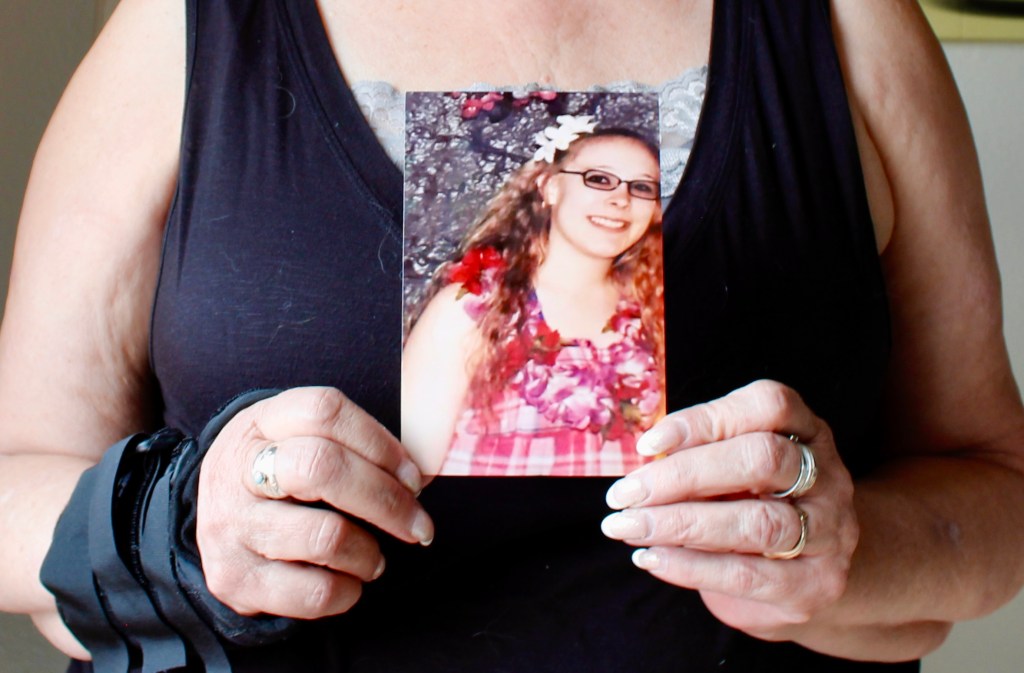
This October will mark 10 years since Crystal’s murder. Debbie hasn’t decided how she’ll mark the anniversary.
But this time of year, when it’s warm and the sun is shining, she likes to visit the cemetery in Cheyenne where Crystal is buried. The heart-shaped gravestone is engraved with roses, ballet slippers and an angel holding a small child. A weiner dog adorns the lower left corner, a kitten the right.
“I’ll take a blanket. I’ll take my lunch. I’ll go out there and sit and have lunch with Crystal,” Debbie said. “And I’ll talk to her.”
Debbie may end up sharing in writing Crystal’s story with the U.S. Supreme Court for the Rahimi case. She’s been thinking about what it will feel like to describe Crystal to the country’s highest court. It’s a story she’s shared many times before. She’s told it to police, to prosecutors, to lawmakers, to reporters.
She’s hoping Crystal will mean something to the court.

In 2004 I was a victim of domestic violence. What should have been a clear case of self defence for me, i was convicted of battery family member. I lost my gun rights. Ive lived in Wy my whole life, no prior violent or domestic charges. The other party in the case got charges dropped in a plea agreement, 6 other charges. He has also got a mile long record of violent crimes and assaults. This is how backwards our laws are. Ten plus years later I was victim again of domestic violence. Each time I called law enforcement, they gave him unlawful contact wich is a slap on the hand. Each time got worse and they still did nothing. Luckily I was able to get away from him thanks to my son being bigger. Or i might not have been so lucky. Quit slapping these violent guys on the hand and letting them get charges dropped or lessened. Im not allowed guns for defending myself but the can even though theyve been convicted time and time again for felon eith firearm more then once or assaults or dm. Get real people! Frustrated and angry about this.
Another instance of the Wyoming legislature failing to value the lives of women. Shameful.
Great reporting. Thank you, Maggie.
Women aren’t the only ones who are abused. Men are abused also but most of the time ashamed to report it. I was in a relationship and was abused by my partner and was stupid to put up with it. But also, afraid to leave. The physical abuse is only part of it. Usually, you’re tortured and belittled to think you can’t leave because who else would want you. And it takes years of counselling to regain your self-worth and dignity back. It’s not a nice place to be and guns only add to the fear. Somethings got to be done soon because we are losing a lot of people who don’t deserve to die. I often repeat a phrase I heard from a wise woman to anyone I find is being abused that rings so true. “Hit me once, shame on you. Hit me twice, shame on me.”
Law enforcement doesn’t take domestic violence seriously, this is the crux of the issue. In my own experience of being in a six-year abusive relationship in Wyoming proves this. My abuser would be removed temporarily, or even jailed, but always came home sober and contrite. That never lasted long. I was unable to leave because of economics, he controlled all of the money, and the women’s crisis center would only fund a single night in a local motel, hardly enough time to gather enough resources and make one’s escape safely. My breaking point was when, despite numerous calls for help over the years, the town’s police arrested me for “abusing emergency resources” after my abuser had slapped me in public where anyone could have seen the attack. He no longer feared arrest or consequences, this frightened me to my core and he was correct. Because he hadn’t left enough of a mark, he was allowed to stay in the home and I was arrested and held over a weekend. It all came to nothing, other than now having an arrest record, when two weeks later he assaulted me badly enough that I had to go to the hospital. But he wasn’t arrested then either, he was just made to leave. Again. Two weeks after that the town dropped the prosecution against me and I continued to formulate my escape plans, finally leaving the state in May of 2022. If you’ve ever wondered why Wyoming has such a low female population it’s because we aren’t safe there. We have to move to another state to save our lives.
Mary. It not they don’t take it seriously. Look at the facts. Responding to calls they walk into deadly danger. By time they are called the problem has escalated. One Best off being able to defend your self. YOU are in charge of your destiny. YOU are in charge of how it turns out. One is always better off being armed and NEVER needing it than to need one and unarmed. It does not have to be big caliber. 22 works just fine. 22 mag is better yet. Why not try it. What we have is not working.
Instead of limiting domestic abusers access to guns, you expect everyone else to start carrying?
The low information voters answer for everything is more guns, no abortions, more christian nationalism, and more chrump. What a joke.
Exceptional reporting and a great example of emphasizing with prose.
I volunteer for Ceasefire Colorado which works with the legislature to institute public safety laws around guns. Think red traffic lights. This year several new laws were passed including a waiting period to buy a gun and an expansion of The Red Flag Law which might have saved the young woman’s life, as well as her bipolar killer who will now go to jail for a very long time. And dont forget the lives of the thousands of people who kill themselves in Wyoming every year .The new expanded Red Flag Law lets a number of people who know the threatening person to request law enforcement to remove jis or her gun. Very effective! Not in Wyoming, you may say. Well, wait until a bunch of your kids get killed in their school! Wyo hould send a delegation to Ceasefire to find out jow it was done. We passed out hundreds of free trigger locks which gun owners were happy to accept at two festivals,too.The religious community in Colorado is very involved in these efforts .
Sorry to hear about your daughter. But reality is one can’t count on law enforcement to save us. We have to take control of our own destiny. Self Defense/gun handling should be mandatory education from kindergarten on. Self Defense was priority 1 in old days. Jesse James/Younger gang got whipped by farmers in Minnesota. Armed society is polite society. Society it’s self now pushes the life is cheap agenda. Starts with aborting the young. Animals don’t do it. Why are humans
Actually, some animals such as pronghorn do abort their fetus based on the current environmental conditions. I have seen housecats eat their own young. But why rely on anything factual when you can confuse the abortion issue with spousal abuse?
Hi Larry. Maybe you could help me out with how this scenario would play out. A woman goes to pick up her daughter from her ex. Does she have the gun strapped to her hip? Should she have it out and cocked just to be safe, or leave it holstered until the ex makes his move? Should she call ahead and tell him she was coming armed and ready, so just be polite? Could you share how you see this working?