


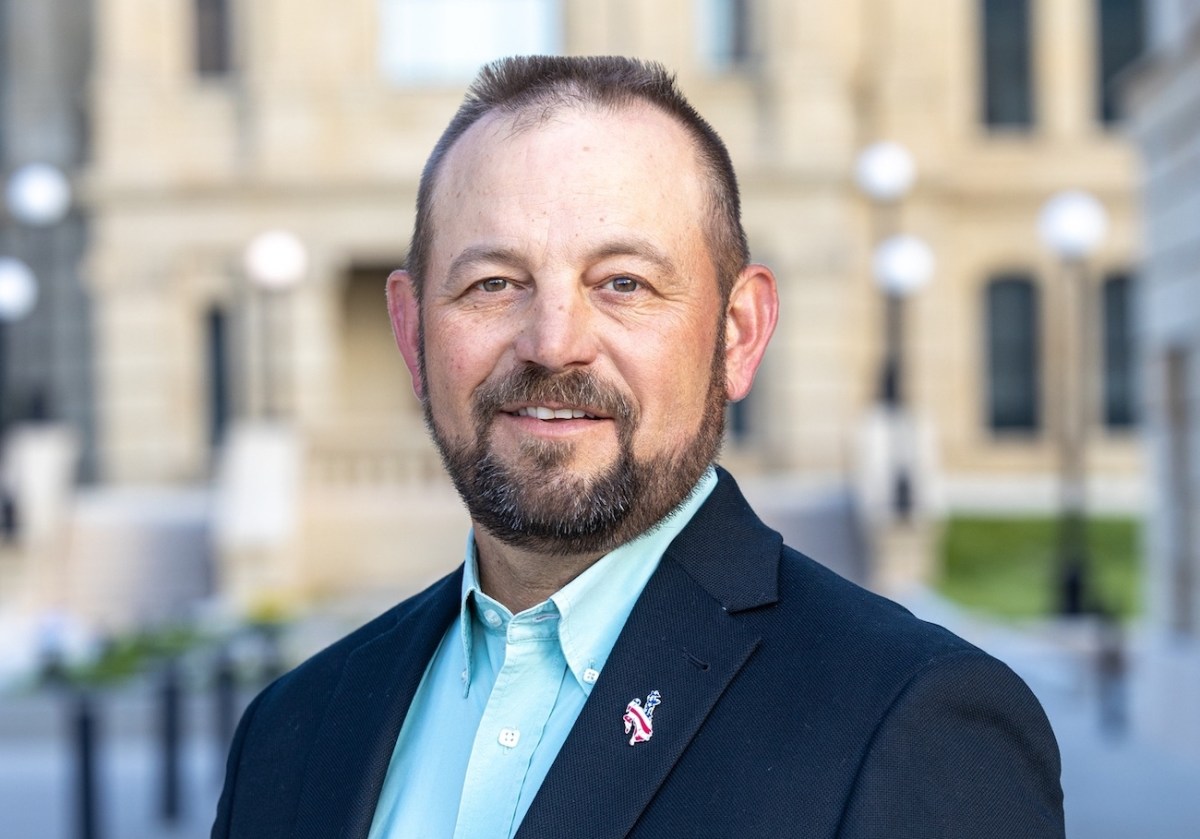

Taft Love of Cheyenne will be sworn in Tuesday as a state lawmaker, filling a vacancy in Senate District 6 left by Darin Smith, who President Donald Trump nominated as U.S. Attorney for the District of Wyoming.
Love, a rancher and business owner, previously served on the Laramie County School District 2 Board and as chairman of the Laramie County GOP.
Senate District 6 encompasses Platte County and a rural swath of northeastern Laramie County. The process to fill its vacancy began late last month with a meeting in Guernsey, where GOP precinct committee members nominated Love alongside Roy Birt of Wheatland and Jeff Barnes of Cheyenne.
Last week, the two counties’ commissioners gathered in Cheyenne to make the final determination, selecting Love out of the three nominees.
Love was born in Charleston, South Carolina, and grew up the son of a Navy man. When he graduated from high school as Indiana’s bareback rodeo champion, a Laramie County Community College coach recruited him to ride bucking horses.
Love went on to earn a Bachelor of Science in wildlife management and range management from the University of Wyoming. He worked for the Wyoming Game and Fish Department as a biologist and in the state’s former tourism division before starting several businesses, including a construction company and TKO Ranch.
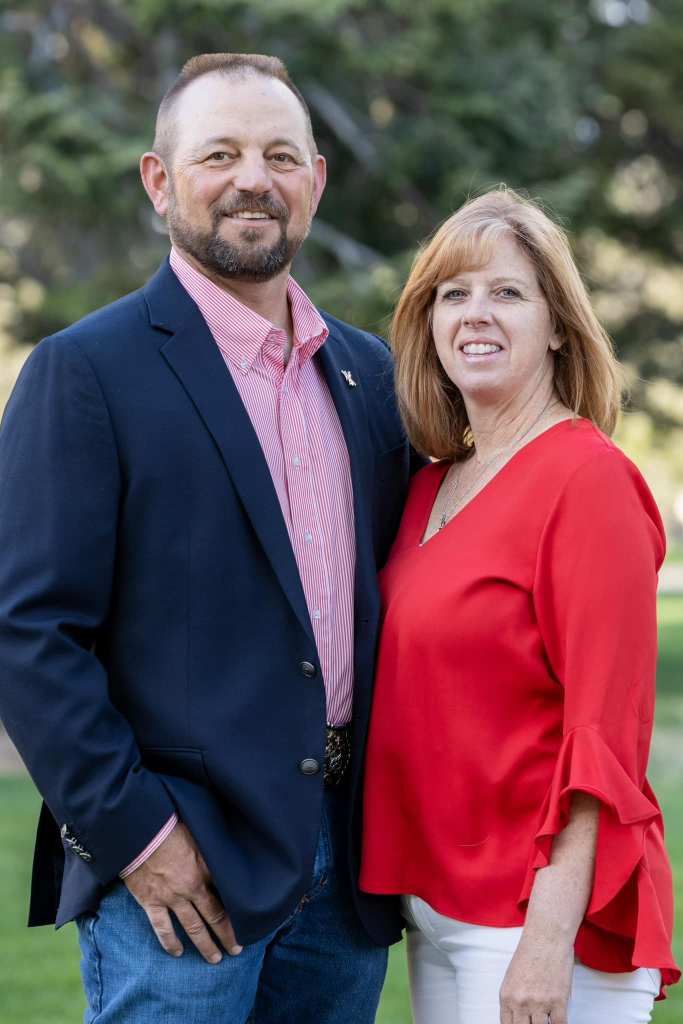
Love and his wife, Jill, have three children.
In 2024, he ran in the Republican primary against Smith and four other candidates for the district he will soon represent. He said he plans to run again in 2026 to keep the seat.
WyoFile spoke with Love by phone Thursday ahead of his swearing in.
WyoFile: Starting about halfway through the term, how are you preparing for the job?
Sen.-Elect Taft Love: Really, the appointment is going to impact the budget year, and then we’ll have to run again next year. Then if we win that seat, it will sustain for two years, and then we’ll have to run again, and it’ll go back on its normal four-year schedule. So there’s actually a pretty aggressive schedule to make sure the people have the say as quickly as possible in this. Barring a special election though, we still go through the appointment process, and the appointment is truly focused on the budget session. And so what I did is I dove into the Platte and Laramie County budgets and the state of Wyoming budget and the supplemental budget to make sure I understood where we were at and what was being presented as we move forward.
I understand there’s another property tax [proposal] that is being presented to the voters in this election cycle as well. The voters will determine what happens with this. I know counties are extremely concerned about additional property tax cuts because it’s going to start impacting their infrastructure. And it may actually start putting faces to the cuts, because you can only go so deep before, you know, personnel is, in general, the largest expenditure of most government agencies. So it’s hard to cut too many things before you get to the point where you have to start cutting personnel.
WF: Unlike Laramie County, Platte County is a hardship county, so it generates lower revenues and that can make it challenging to fund public services. Do you think the Legislature has been sensitive to Wyoming’s hardship counties, particularly when it comes to property tax cuts?
TL: I think they keep it in mind. I think if the intention is to continue to do deeper tax cuts on property tax then I’m not sure one-size-fits-all is going to work anymore for some of those poorer counties that — and I don’t want to say poorer counties, I want to say that they have less revenue than what others have. Such as Platte County, they don’t have a lot of the minerals and petroleum and those revenues coming in, where Laramie County does. And so I absolutely think we have to be cautious as we move forward and make sure those counties are able to sustain their essential services for sure.

WF: What role, if any, should the Wyoming Legislature play in economic development?
TL: I don’t believe we’re supposed to pick winners and losers in economic development. I think that we set the framework at the 30,000-foot view, and we allow our local governing bodies to make those decisions as far as recruiting and bringing businesses into the state of Wyoming. They are best suited to know what fits their community and their community needs in that growth-and-development scenario. So I think the state needs to stay at that 30,000-foot view and not pick winners and losers.
WF: Having served on the Laramie County School District 2 Board, you’ll be able to bring the perspective of local government to the Legislature, where there’s been an evolving conversation about local control. I’m wondering how well you think lawmakers have followed the conservative principle of local control in recent years?
TL: I do think that everybody feels strongly about local control, and the best government is the government closest to the people. And I intend to uphold that as I move through the process, and be very cognizant of that as I try to make decisions.
WF: You mentioned in Guernsey that education would be a priority of yours as a lawmaker. Can you elaborate on any specific ideas related to education that you’d like to pursue?
TL: I have not started with any specific bill draft ideas. I’ve got a few in mind. I’m going to hold those until I can develop them a little bit more. There’s a lot that can be done in education, and as we work towards the defederalization of our education system and more of a state-run and state-guided education system, I think Wyoming lawmakers are going to have the ability to make influence into that. And maybe there’s an opportunity for us to get more efficient, both economically and in the education itself of our children, and make sure that we are industry ready when we’re graduating from high school, and any trade schools that we might have going on as well. We need to very much focus on making sure that we’re meeting the industry needs with the graduates. And so there’s a tremendous opportunity to be able to grow and to write some new laws and take some new opportunities in those areas.
WF: And related to that, Wyoming has a youth exodus problem. What, if anything, should the Legislature do to keep young people here?
TL: Business recruitment and entertainment are the two things that are going to keep our kids here. And so making sure we have an inviting tax structure that allows growth of small business in our communities, and making sure that we recognize the needs of those communities, making sure our land use, land-use regulation, water and [the Department of Environmental Quality,] the state engineers office — the DEQ do a great job of helping guide those paths. And we need to be creative in the way we make opportunity for new industries to come into our communities, so that our kids have the opportunities to stay and not have to seek jobs outside of the state. That’s the age-old question in Wyoming is, “How do we retain our children?” I think as time grows and things change, we need to figure out ways to protect some of our legacy ag and ranching industry. We need to find ways and be creative in how we can maintain a good, healthy growth and keep Wyoming’s values in that growth. And that’s the true challenge we see. I’ve watched other areas of the nation where their values have deteriorated in certain areas based on what has been allowed through their legal system. And so I think we have to be really cautious as we grow our communities.
WF: Lawmakers have spent a lot of time in recent years aiming to overhaul the state’s election system. One thing they have not pursued is a ban on mail-in ballots. Last month, the Trump administration announced it plans to prohibit states from using mail-in ballots. I’m wondering, do you think that kind of restriction would be a good fit in Wyoming, where a lot of residents cast their ballots by mail?
TL: So mail-in ballots by and large, I think it’s another one of those things where you can’t use a one-size-fits-all. I think we have elderly communities that it will be very difficult for some of them to go to a polling location. I think we have disabled veterans that are going to have issue with that. We have traveling veterans and military personnel that are not going to be able to get there. There’s a good place for the use of mail-in ballots, and I think we can be careful with how we do that. And so I’ll be anxious to see what’s presented. And I guess I’d withhold any decision until I’m able to see the full documentation on it.

WF: You’ve been an active member of the Wyoming Republican Party, having recently served as Laramie County GOP chairman. I want to ask you about the divide among Republicans about who is a true conservative and who isn’t. Where do you fit into that conversation?
TL: I’m really disappointed to see the divide inside of the Republican Party. And by and large, I believe most of everybody who calls themselves a Republican in the state of Wyoming has conservative values. And they agree on probably 80 or 90% of the platform, and what we need to be doing. The issue we have is that we’re spending 90% of our time talking about the 10% we don’t agree on, instead of doing the business of the people and working together for the 90% we do agree on.
WF: What else would you like your constituents to know about you?
TL: I am very honored to be serving and grateful for the opportunity and that I will be present in their communities, and that my email and phone are open to them anytime they need to reach out. I intend to be there for different community functions and opportunities, and I want to hear about their concerns. I’m very much here to serve the people of Senate District 6.
Great….another out-of-state legislator. Just what we need.
Wyoming needs more than Big Ag, coal, oil and gas to choose from for jobs. It’s getting hard to live here with high costs for food and health services. Plus, we need mail in voting, Wyoming is to vast and there are to many seniors and others who live a long way from ballot boxes. Keep mail in voting in WY.
The mail in ballots allow those who live in outlying areas to make sure their ballot is counted especially if there are problems with weather or illness to make it to town to vote. Wyoming appears to not have a problem with ineligible people trying to vote, Why would someone who is not a citizen draw attention to themselves by attempting to vote. What and who would be designing the paper ballots. There was a problem with hanging chads.
Yes, you need a one size fits all for mail in voting. There is nothing wrong with mail in voting. Get off the Trump train, it’s destroying America. To keep our kids here, we need a varied political system. The Republican party is scaring our kids out.
Gordon, mail in voting is an absolute open door for fraud that can be bipartisan.
Why it has been allowed in the first place, I will never know.
Let’s see the proof.
Nonsense chad/jack/doug. People like you have only been concerned with mail in voting since chrump started his stolen election lies.
Chuck, Trump doesnt live inside everyone’s heads.
Computerized voting machines and mail in ballots cannot be proven to be 100% secure.
2004 Ohio…. Diebold. John Kerry “lost” to W in Ohio. Hacking was screamed from the rooftops by Democrats. And you know what, they may have been right. Enjoy your show chuck.
Your argument is as flimsy as your multiple names that you use here.
Who else do you pretend to be?
You must be a Bot, Chad/Jack / Doug. You spread misinformation and cast doubt on something that there is no doubt about. Mail in voting is safe. Hand counting can definitely be manipulated, which is what the Repubs would like to do.