

Under pressure to strike a compromise on water cuts, and amid talk of litigation, Wyoming and other upper Colorado River Basin states are pointing to the climate-driven disaster unfolding in the West to insist they can’t cut what Mother Nature isn’t providing in the headwaters.
While some observers suspect that argument is cover for withholding more cuts in water use, the upper-basin contingency insists it has negotiated in good faith and still hopes to strike a deal with its lower-basin counterparts despite missed deadlines. They simply cannot commit to calculations that are beyond their control.
“If the water is not there, our water users don’t get to use it, and that is typically the case,” New Mexico’s water negotiator Estevan Lopez said. On paper, it might appear the headwater states are being stingy, Lopez added. New Mexico, Colorado, Wyoming and Utah, however, live with “very real and mandatory reductions that are imposed by nature, which we refer to as hydrologic shortage.”
Lopez met with Wyoming State Engineer Brandon Gebhart and other Upper Colorado River Commission members Tuesday to discuss what they say are ongoing negotiations with lower Colorado River Basin states Arizona, California and Nevada, as well as 30 tribes and Mexico. The complex Drought Response Operations Agreement expires later this year and must be updated. It dictates how the stakeholders — and the 40 million people who rely on the river system — share cutbacks when water supplies don’t meet prescribed allocations.
Failing to strike a deal so far, federal officials are prepared to impose their own plan — a prospect, many agree, all but ensures a tangle of competing lawsuits and court rulings that fall short of expectations and the river system’s changing hydrological realities.
“We have offered every tool that we have,” Colorado Water Conservation Board Director Becky Mitchell said during Tuesday’s meeting. “We’ve offered releases from our upstream reservoirs, a basin-wide contribution program and a generous release curve from Lake Powell that puts greater risk on Powell, particularly in the short term.”
Lower-basin states, Mitchell added, need to go beyond their proposed water-use cuts to “adapt to the new normal,” which includes higher losses due to evaporation.
One major rub between the lower- and upper-basin states, for decades, has centered on water use, according to Kathryn Sorensen, director of research at the Kyl Center for Water Policy at Arizona State University’s Morrison Institute for Public Policy. While stakeholders downstream are using their full allocations, upstream states like Wyoming have not — and they want to protect their potential full allocation. So when negotiations narrow to whether both sides are equally feeling the pain of cuts in water use, the lower-basin stakeholders say their proposed sacrifices far outweigh those offered upstream.
“Both arguments have some reasonableness, and that’s one of the reasons why we are where we are and negotiations have stalled,” Sorensen told WyoFile. “Fundamentally, this is an existential battle over whether the lower-basin states get to continue using full allocations, or whether [upper-basin states] get to increase uses to the detriment of the lower basin, because it looks like there’s not enough water for both.”
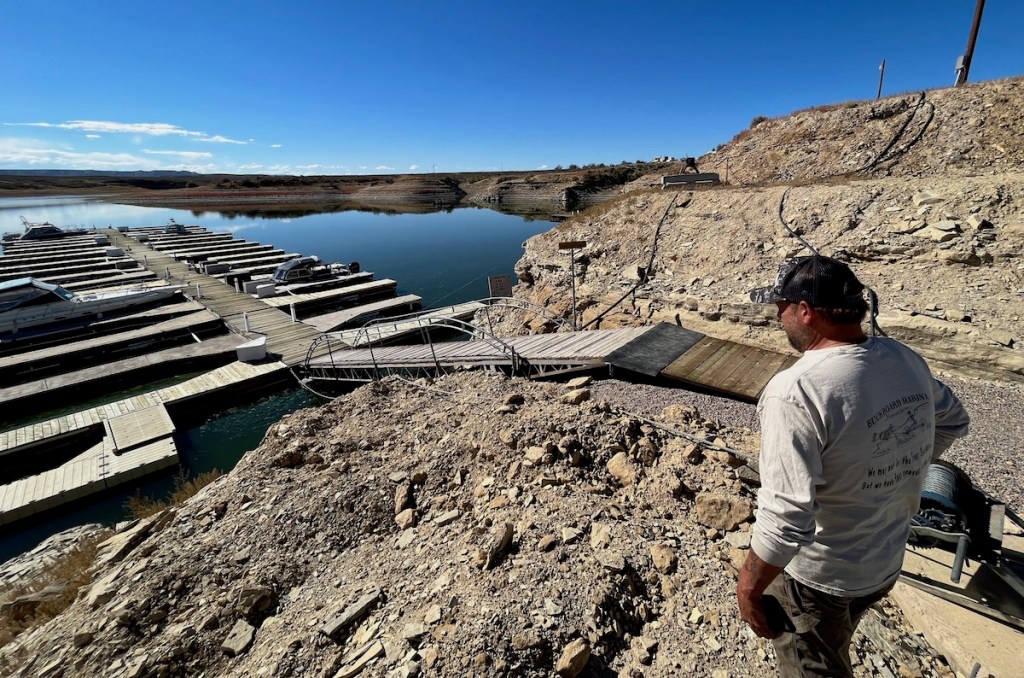
In addition to striking a new, long-term drought operations protocol, stakeholders — along with the federal Bureau of Reclamation — are contemplating stop-gap measures to share the pain of a climate-driven hydrological disaster unfolding in the region.
A severe lack of snow this winter, combined with blistering, historically high temperatures, demands immediate action, New Mexico’s Lopez said. Extra releases in the upper basin to help deliver water downstream and sustain hydroelectric generation at Lake Powell, which includes backup water from Flaming Gorge Reservoir on the Wyoming-Utah border, need to happen as soon as possible “if we’re going to be able to get the full benefit of those activities,” he said.
“We’ve mentioned over and over, the situation is dire.”
What does it mean for Wyoming?
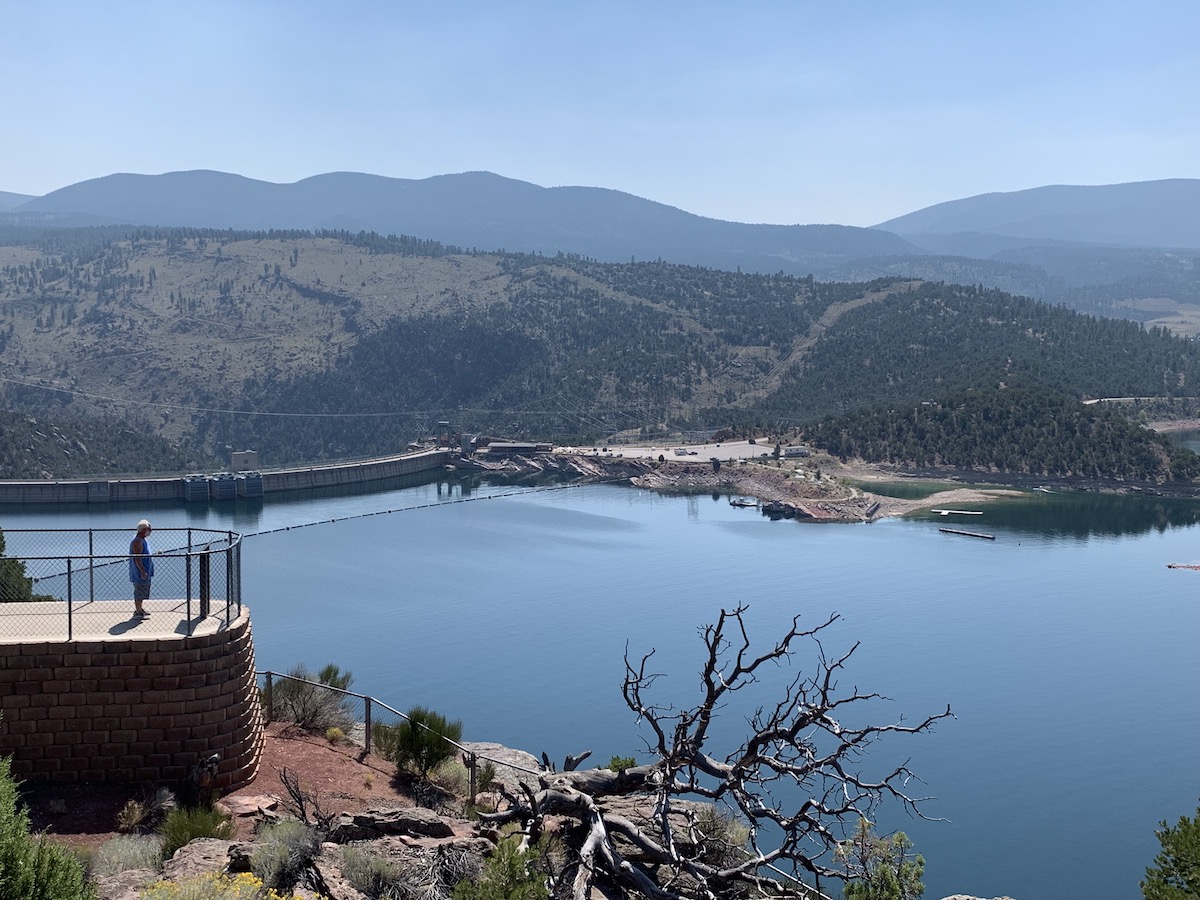
In addition to a significant, extra water release from Flaming Gorge this spring, locals in the southwestern portion of the state worry about future “calls” for mandatory water-use restrictions.
Such “calls” are imposed on a pecking order of senior-versus-junior water rights. Those who acquired their water rights most recently are the first to be ordered to close their spigots. In southwest Wyoming, those junior water rights include municipalities and industrial facilities.
“We have 2,300 employees at risk in southwest Wyoming if we don’t find a solution,” Jody Levin, speaking on behalf of the trona industry and the Wyoming Mining Association, told Wyoming lawmakers earlier this year.
While the state has initiated water efficiency and voluntary water conservation efforts to help in the overall Colorado River effort, Gebhart said, the state intends — as Sorensen noted above — to protect its existing rights to tap its full allocation of Colorado River-bound water.
“That authority is not open for negotiation,” Gebhart told WyoFile via email. “As such, Wyoming continues to consider new applications for water use in accordance with Wyoming’s constitution and statutes.
“We also continue to pursue and support increased efficiency of existing uses,” he added. “As such, new permits and new uses don’t necessarily result in increased total use.”
Some observers assert the upper-basin states fail to recognize that new permits to pump groundwater that can be considered part of the Colorado River system, for example, make their claims of conserving water “ring hollow.”
“Regulators in those states are actively approving new uses,” Great Basin Water Network Executive Director Kyle Roerink told WyoFile. “Until we collectively understand the deleterious nature of that permitting, we are just spinning our wheels.”
From bad to worse
The Colorado River has long been considered overly prescribed for what it can deliver — the result of a 1922 compact, growing demands on the system and a changing climate.
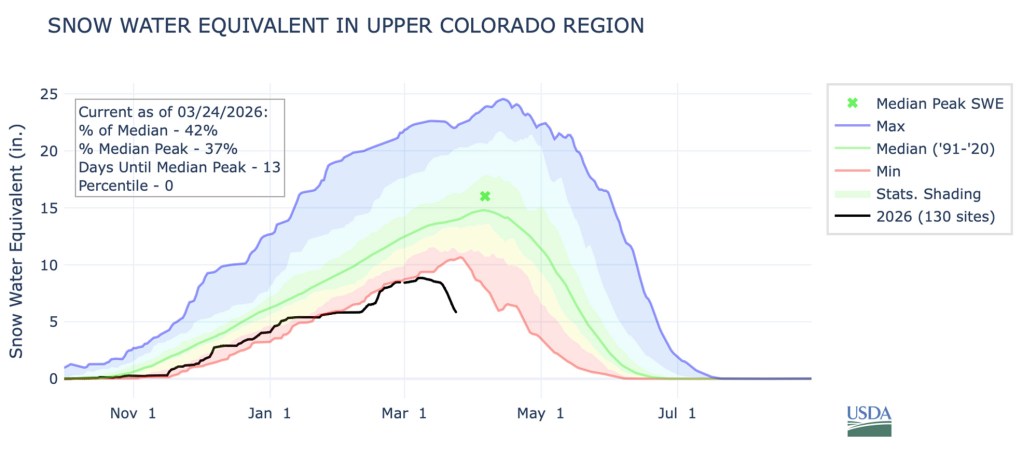
The river is mostly fed by seasonal snowpack in the upper basin states. So far this year, the “snow-water equivalent” in the region is 42% of normal — the lowest since 1986, according to federal sources. Measurements show earlier-than-normal and record-low runoff to feed the system, starving upper basin reservoirs that serve as a water bank to balance allocations among users.
“I think those [who] live in the headwaters already know that 2026 is going to be a rough water year — maybe the roughest on record,” Mitchell said. The Colorado Division of Water Resources, Mitchell said, is already warning water users on the Western Slope — some with rights dating back to the 1880s — that they might be ordered to cease water diversions this year.
“Cities throughout Colorado, East- and West Slope, large and small, are enacting water-use restrictions in response to this drought,” Mitchell added. “Nobody is immune.”
The situation is equally dire in Utah, which recorded its warmest winter on record, Utah’s negotiator Gene Shawcroft noted. “That’s unheard of. Most of our rivers have peaked already — four to five weeks early.”
Though snowpack in southwest Wyoming might be “decent” compared to other Colorado River-headwater regions, “We continue to lose that snowpack earlier than normal,” Wyoming’s Gebhart said. “We’re setting record-high temperatures. Our soil moisture and conditions in the lower elevations are very poor.”
Gebhart said he’s talked to some ranchers in southwest Wyoming who say they might not be able to put up a first hay crop. “Our expected water supplies aren’t clear,” he added. “This year appears to be very different and indicates very dire supplies for us.”