

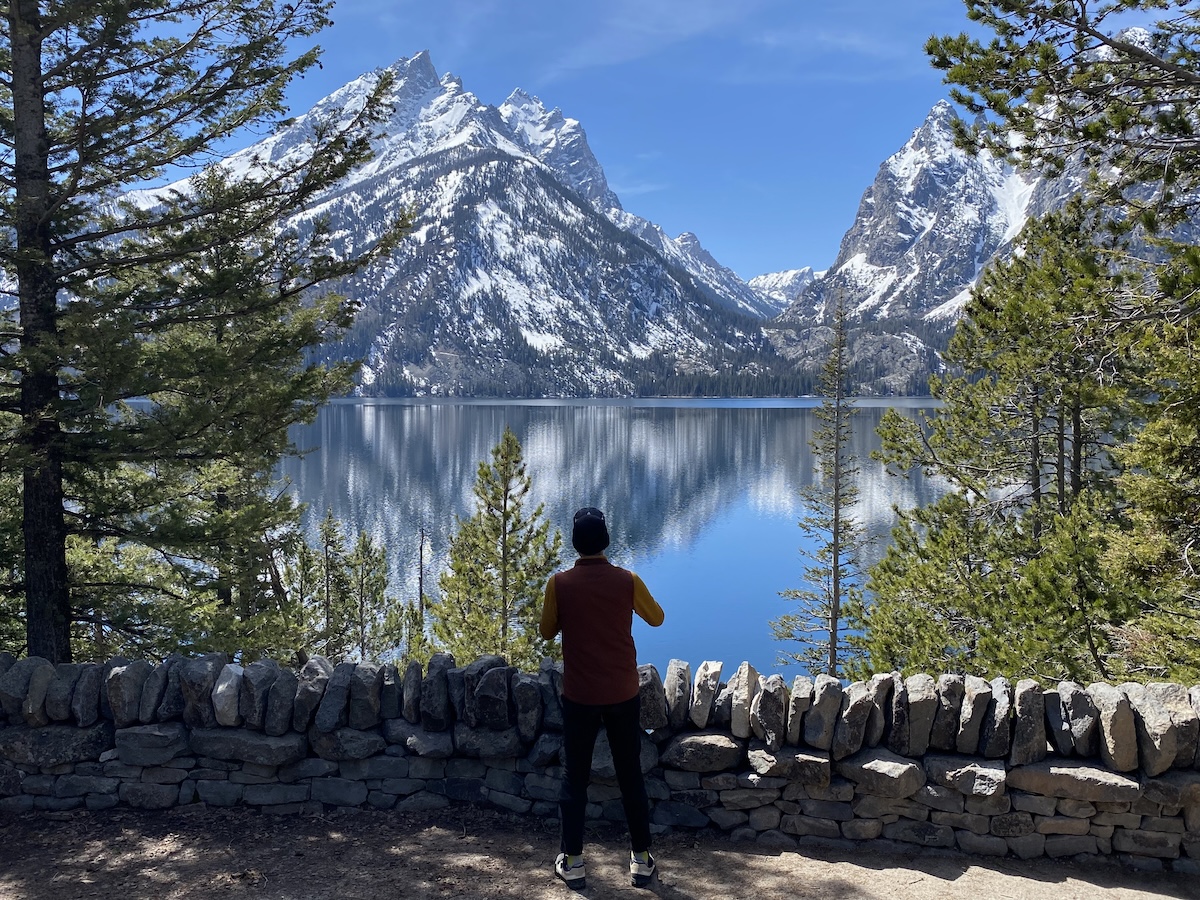
Major national park units in Wyoming face a combined $1.6 billion maintenance backlog for roads, trails, sewerage and more, as critics say locally generated fees are being spent on President Donald Trump’s “vanity” projects in Washington.
Yellowstone National Park alone needs $523 million for paved roads, $218 million for housing, $211 million for water systems and $74 million for sewerage, a 2025 federal inventory shows. In Grand Teton, roads need $167 million, buildings are $118 million behind, trails need $16 million and wastewater systems another $8.8 million.
Critics have needled Interior Secretary Doug Burgum and other administration officials about millions of dollars being spent to paint the Lincoln Memorial Reflecting Pool on the National Mall and for a July 4 fireworks show while parks are in disrepair. Reports that national park entrance fees are being used in D.C., not to preserve the parks where they are collected, aggravate the discontent.
“The administration has been plundering our national parks since it came into office, and Freedom 250 [the July 4 celebration in D.C.] is now the latest affront,” Emily Thompson, executive director of the Coalition to Protect America’s National Parks, said in a statement Thursday. “The administration’s decision to now take those hard-earned fees away from parks and put them towards the President’s vanity projects adds further insult to injury.”
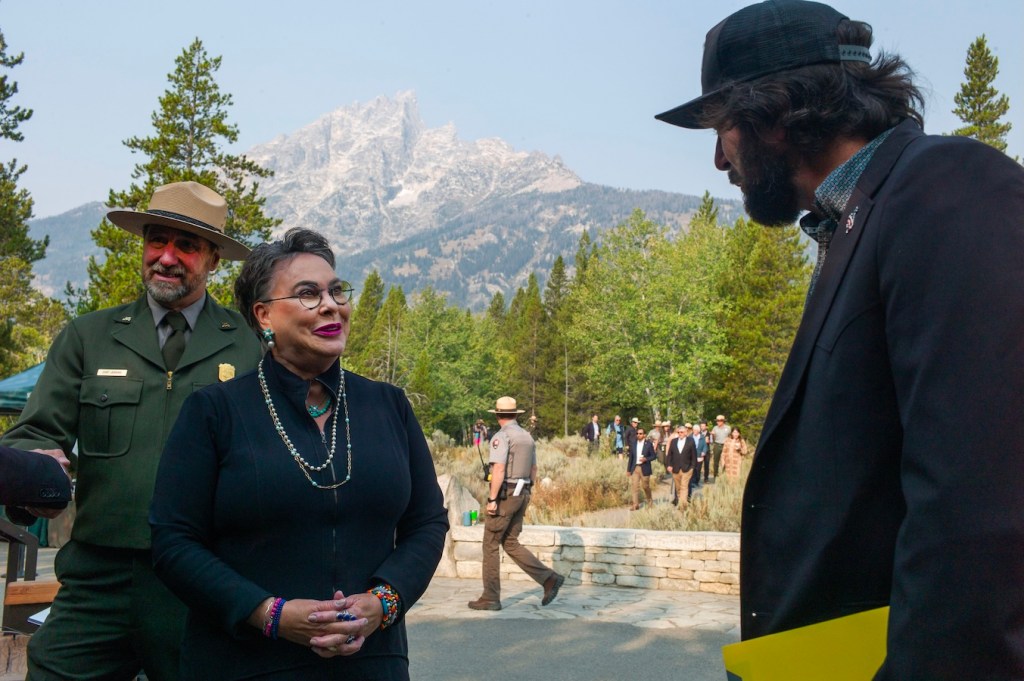
The Department of the Interior said Wednesday it has “many funding sources available” to address the parks’ backlog. “The Trump administration is looking at different funding mechanisms which include endowment funds and revenue brought in from the sale of park passes,” a spokesperson at the Interior Department wrote WyoFile in an email.
‘Wrong, misguided’
Criticism of the Trump administration’s parks budget priorities began in May at the U.S. House Natural Resources Committee’s hearing on the president’s 2027 budget.
“It seems to me that you are more focused on D.C. [than] over roads, trails, and buildings in our national parks across the country,” Washington State Rep. Emily Randall, a Democrat, said to Interior Secretary Doug Burgum. “Your budget asks for $10 billion for a new, ‘Presidential Capital Stewardship Program for priority construction and beautification projects in and around Washington, D.C.,’” she said.
“At the same time, your budget asks for less than $3 billion for repairs and maintenance in parks in the rest of the country next year.”
Burgum’s critics on the committee cited Trump’s “vanity projects” eight times. Burgum challenged the characterization.
“Everybody wanted to have a clean, safe, and beautiful Washington, D.C.,” he said, but if this president makes it a priority and personally says, ‘We’re gonna get it done for our 250th,’ then the word vanity gets inserted.”
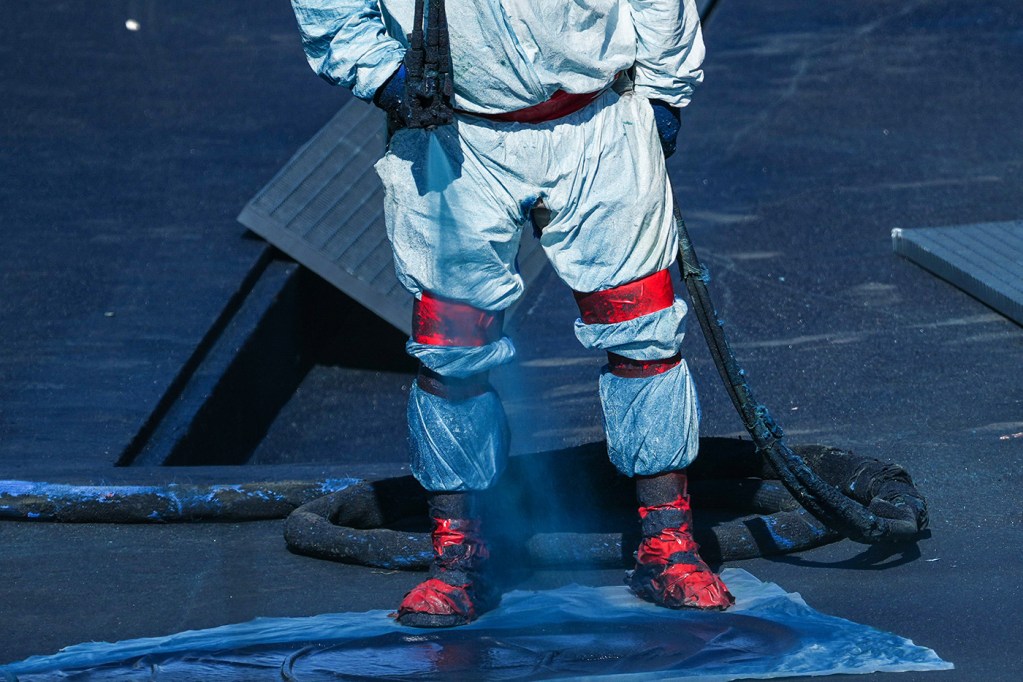
Just after the hearing, The New York Times reported that the administration is using at least $67 million in visitors’ fees on the reflecting pool and D.C. fountains. The Washington Post recently reported $1.6 million in park entrance fees are being spent on a July 4 fireworks show while parks are in disrepair.
Burgum’s department defended its priorities this week. “The National Park Service has not only been focused on beautifying the district but has also been working on many deferred maintenance projects throughout the country,” its Wednesday statement reads.
Unconvinced
Conservationists aren’t buying it.
On America’s 250th anniversary, “we should be preserving America’s best idea by investing in our parks — not looting them,” Thompson, whose organization represents former and current park employees, wrote to WyoFile.
“Since the administration cut 25% of permanent National Park Service employees but required parks to remain open, overburdened staff have been diverted from their normal roles to man entrance booths and collect fees,” her statement reads. “Exhausted staff are being denied leave and others sent to Washington D.C. to support the events, while operations at the parks continue to struggle.”
“The administration’s decision to now take those hard-earned fees away from parks and put them towards the President’s vanity projects adds further insult to injury.”
Emily Thompson
At the budget hearing in May, Rep. Randall held up a photograph from Olympic National Park, which is in her congressional district, to challenge Burgum’s priorities.
“This is a popular trail taken by young families, and is very clearly a safety hazard,” she said, citing a $300 million maintenance backlog at Olympic. She contrasted that with a photograph of the reflecting pool.
“Which do you think should be the higher priority, fixing a bridge that is a safety hazard for hikers or changing the bottom of the reflecting pool?”
Burgum replied: “Well, my answer would be both.”
“This is wrong,” Randall said of the budget priorities. “It’s misguided.”
Devils Tower, Bighorn Canyon too
Wyoming national parks’ $1.6 billion in “deferred maintenance and repairs” accounts only for “correction of existing deficiencies,” according to agency fact sheets. Upgrades to meet building codes, new fire systems and expansions to match increased visitation are not included in the figures, nor are annual maintenance needs.
“Without this investment, asset conditions will continue to deteriorate, compounding long-term costs and increasing the deferred maintenance backlog,” the fact sheets state. Nationwide, the parks face “more than $30 billion worth of deferred maintenance,” Burgam told Congress in April.
In addition to the deficiencies in Yellowstone and Grand Teton, other National Park Service units in Wyoming are suffering. At Devils Tower National Monument, the nation’s first national monument, there’s a $10 million backlog.
That includes $3.9 million for roads, $2.2 million for buildings, almost $1 million for housing, $825,000 for campgrounds and $601,000 for water systems.
Bighorn Canyon National Recreation Area suffers from a $74 million backlog. Paved roads are $26 million in the red, unpaved roads add another $7.7 million. At Fossil Butte National Monument, paved roads need $5 million in deferred maintenance and other facilities also are degraded.
Americans love their national parks and are willing to support them, contributing millions of dollars to rehabilitate worn, eroding trails and popular public spaces to acceptable, inviting conditions. In Grand Teton National Park, for example, a project completed in 2019 to rehabilitate the popular and heavily used Jenny Lake area drew $14.5 million in private donations.
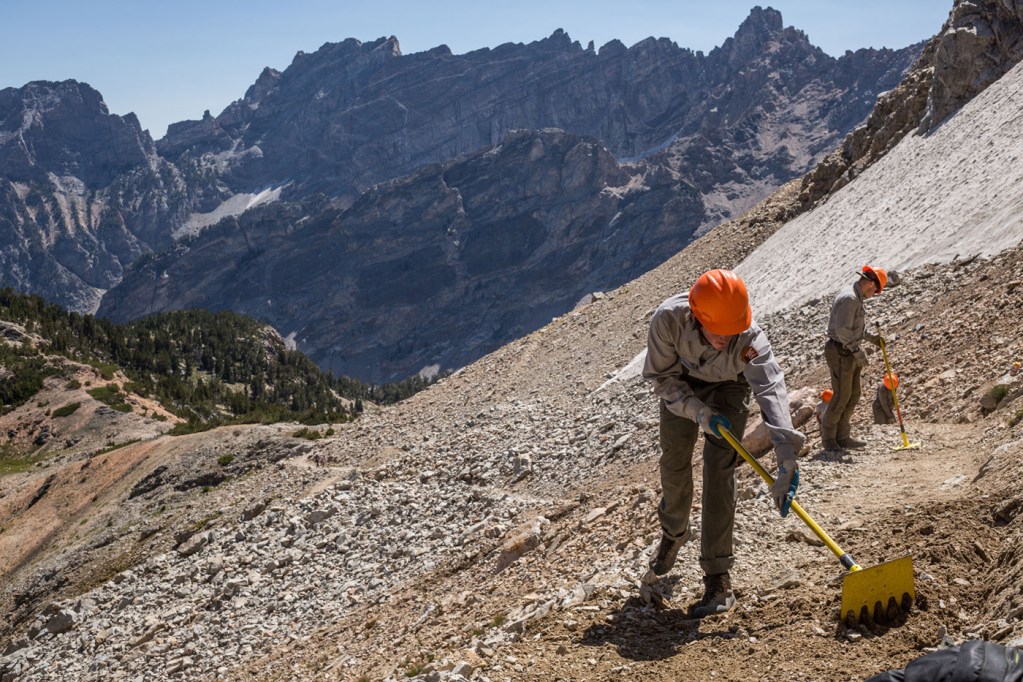
The Park Service contributed more than $6 million, according to the nonprofit Grand Teton National Park Foundation. Workers moved 2,550 tons of stones and masonry, reconstructed 5.2 miles of trails, built five bridges and rehabbed three historic structures.
“National Park Service crews dramatically improved access to iconic places such as Inspiration Point and Hidden Falls by building new stone steps, smoothing and leveling trails, and ensuring better drainage for rainwater and snowmelt,” the nonprofit wrote about the accomplishments. The rehabilitation “reduces congestion and ambiguity by creating suggested directional trails, larger boat docks, increased restroom facilities, and designated areas to rest and take in the stunning views.”
Thompson, director of the Coalition to Protect America’s National Parks, suggested it’s uncertain whether the Park Service could do as much today.
“Repairs and maintenance specifically have long been difficult to manage, and with neither the staff nor the money to handle them, parks are put further at risk,” she said in her statement.

Sadly this administration does not have to work for the people. I watched the round table with farmers in Wisconsin 5 June — displaying little pieces of papers with pictures of all the vanity projects in DC, and saying Fertilizer cost are low now. Not one farmer had the courage to say sir — fertilizer is up as well as gas and food. We need leaders that work for us and protecting and maintaining our public land is high on that list.
11.5 million visitors go through Smokey Mountain Nat’l Park without paying a dime.
YNP, GTNP, and the rest of Nat’l parks pay its staff, pave its roads, etc.
Why is that Park the only one without a entrance fee, pretty big revenue stream being missed?
” The sky is falling, the sky is falling.” Get a grip. The National Park System has about 440 areas. The few millions in fees collected in Yellowstone would not even touch the backlog of that park let alone any of the others. Remember the areas in DC are also National Park areas and just as worthy of upkeep as any other area especially in this special year. Parks have always been under funded so don’t blame this administration. NPS fee collections make up only a fraction of the overall NPS budget and no park depends on fee collections as a substantial part of their budget. Comments from people like Thompson are suspect. Their organization does not represent “former and current NPS employees” though some may be involved in the organization. I am a retired NPS employees as was my father, so I’m calling BS on the implications of this article. Yes, Parks are underfunded so take it up with congress.
The over budget monstrosities that Trump is building are not for “up keep” or beautician of our capital – they are monuments to his ego.
Well said.
So you being a retired NPS employee, calling BS on this article are ok with all of the cuts this administration has done to our National Parks, particularly employees? Thank gawd you are retired. You are a voice of a minority. Seeing all of these unnecessary vanity projects Trump is proposing and is doing is an outrage! All of these are his ideas, not the American citizens. GOP congress are a bunch of spineless cowards. If this was a Democrat presidency, this would not be happening.
Thank you very much for the informative article about our National Parks. I am very interested and concerned to hear about the lack of available funds for maintenance and improvement. I’m glad you are informing your readers. Most of us were unaware that money designated for parks was being used for other purposes.
Keep in mind that the monument s in DC are part of our National Parks. The money being used to beautify Washington never left the parks department. This is our 250th year of a successful Republic, something that should be respected and memorable. The disrepair of National Parks is not new and not the current administration’s fault. There have been a lot of previous administration’s that had more than just 2 years to do something about the problem.
Check your TDS at the door, and wake up.
You are so right!
Remember there are more then 400 other parks then Yellowstone and the Tetons.
“Most of us were unaware that money designated for parks was being used for other purposes.” The “other purposes” are other NPS areas including the Reflecting Pool.
80% of the fee’s collected in a specific national park are federally mandated to stay in that park. The other 20% are pooled to be used in other parks that don’t collect fees. Are you saying that Trump broke federal law and took more than 20% or did he just direct that 20% all to DC instead of dispersing it amongst the other national parks that could use it? Because, if he broke the law and took more than he was supposed to, there should be consequences and he should have to return the money to the specific parks. If not, and he just diverted the entire 20% that is allocated to all other national parks to the DC area national parks, then you should make that clear in this article. BTW, I don’t think he should have used all the 20% in DC and I certainly don’t think any of those funds should be used for the fireworks display, but, there is a larger problem here, that isn’t being addressed, which is the continued underfunding of our national parks. Maybe we should be looking at the percentages Xanterra & Delaware North pay the parks to operate in the parks. Maybe it’s time for an increase there as well as, a sensible, increase in entrance fees.
Maybe someday, those that are thinking and voting with a party, any damn party will learn that we are all humans, all the same, and that doing good is best, IF it harms no one, and that the greed of those in control, that are for the party and not people, humans and the dang place we live (the Earth for those too buried up the backside of a politician) are what’s important. DO what you can to do the right thing, not the easy thing.
Hey Chemtrail Caucus and tRumpublicans, this is exactly what you voted for. Build more golden idols for Drowsy Don. If you don’t like the result quit sending the same people to Washington to represent Drowsy Don (they damn sure don’t represent you). If the first thing in their campaign blurbs is “I support the President 100%” you keep getting the same blind obedience.
Trump is for Trump not America
BS