


The developer of a proposed pumped-water-storage hydroelectric project at Seminoe Reservoir has submitted a revised plan and asked federal officials to consider it as they evaluate the proposal and draft regulations.
Utah-based rPlus Hydro says the alternative plan addresses a host of local concerns, including threats to critical bighorn sheep habitat and a destination trout fishery. Project opponents, and at least one state agency, say they haven’t had adequate time to evaluate the new proposal and remain unconvinced that it accomplishes that aim.
The developer also filed a request in December with the state to certify water quality assertions made in its applications for federal licenses. The Wyoming Department of Environmental Quality will review and prescribe conditions related to “dredge-and-fill” activities associated with the project, according to the agency.
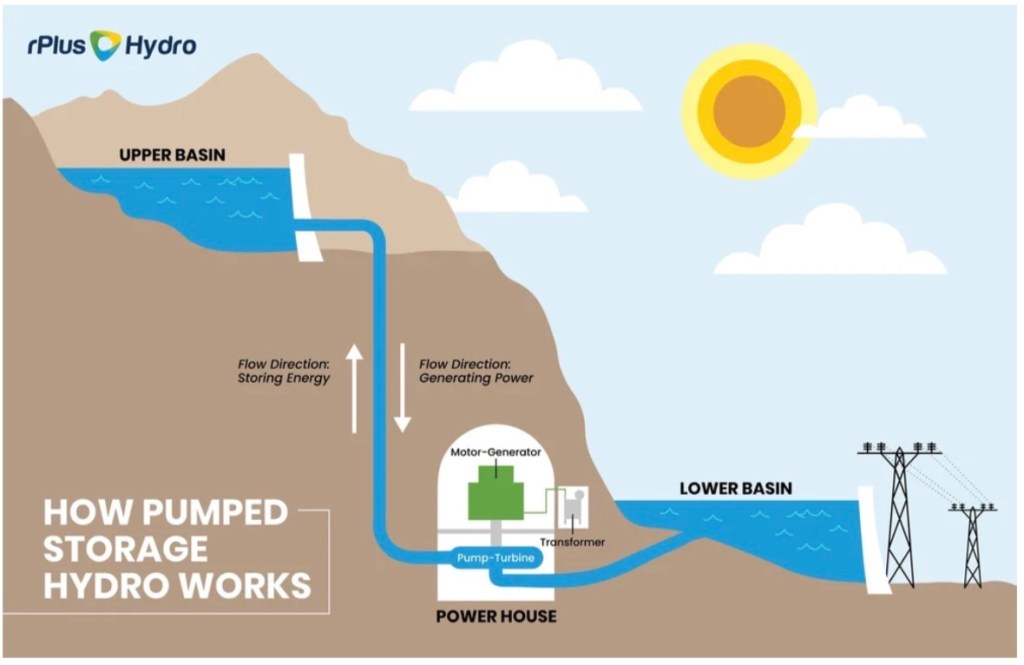
If built, the pumped-water storage system would generate electricity by pumping Seminoe Reservoir water uphill during daytime “off-peak demand” hours when wind and solar power are plentiful and wholesale electricity is cheapest, and then releasing that water back downhill through hydroelectric turbines during higher-demand hours in the evening.
Wildlife impacts, waivers and an alternate plan
The project is ultimately subject to federal approval and regulation, though which agencies should handle which aspects is still a matter of debate. Several state agencies and local government entities, meanwhile, also have roles to play as evaluators, commenters and advocates.

On the federal side, rPlus Hydro wants the Federal Energy Regulatory Commission to consider its newly proposed “Alternative D” in the draft environmental impact statement for the project. The company, responding to an outpouring of concern and analysis from locals, says its newly crafted option would result in less heavy-truck traffic and a smaller construction footprint, reducing likely impacts to wildlife in the area, including a prized bighorn sheep herd.
“From a recreation standpoint,” rPlus wrote in a Dec. 15 letter to FERC, the company’s revised proposal “relocates the primary construction activities for the main access tunnel — including the batch plant and spoil pile — farther from the state park. As a result, recreational resources and visitor experiences are expected to be less affected than under [FERC’s currently preferred plan].”
Wildlife and outdoor recreation advocates have railed against the company’s request for a long list of waivers to timing stipulations designed to protect wildlife and habitat in the area. Likewise, the Wyoming Game and Fish Department has objected to some habitat impacts that FERC appears willing to accept, including variance requests to override “timing stipulations for the crucial winter and [birthing] ranges,” Game and Fish wrote in a December letter to FERC.
“Bighorn sheep have very specific habitat requirements which the minimization and mitigation measures proposed in the [draft plan] will not be able to adequately compensate,” the letter states. “Bighorn sheep habitat is irreplaceable.”
rPlus Hydro’s new option is a welcomed effort, as well as an acknowledgement of threats to wildlife and recreation, Trout Unlimited’s Patrick Harrington said. But it doesn’t go far enough. The project would still disturb big game and other wildlife and chip away at vital habitat. The new alternative also doesn’t address potential impacts to the Seminoe and North Platte River fisheries.
“It’s a [public relations] strategy, not meaningful mitigation,” said Harrington, who serves as Wyoming governmental relations director for Trout Unlimited’s Rockies Region.
A major flaw in the proposed new alternative, Harrington added, is that it appears to shift much of the federal government’s mitigation planning for the project from FERC to the Bureau of Reclamation, which doesn’t have comprehensive authorities to address the myriad environmental and recreation impacts.
“This just creates an administrative loophole that makes permitting simpler,” Harrington said.
Existing wildlife timing restrictions, which are enshrined in the U.S. Bureau of Land Management’s Rawlins Resource Management Plan, increase the cost of construction, rPlus Hydro told WyoFile. The company is asking for waivers that are “narrowly tailored to allow construction to proceed efficiently.”
“Under the BLM Resource Management Plan,” rPlus continued in a written response to WyoFile inquiries, “seasonal activity restrictions would limit construction to roughly four months per year. This constraint would significantly extend an already complex, multi-year construction effort and require repeated mobilization and demobilization of crews and equipment, adding costs and inefficiencies that would make the project uneconomical to build.”
The public comment period for FERC’s draft environmental analysis ended Friday, before the agency formally responded to the company’s new proposed alternative. Trout Unlimited and several other entities, according to Harrington, are asking FERC for additional time to review and comment on the revamped proposal. rPlus Hydro “does not oppose” additional time for public review and comments, the company said.
Without the benefit of formally reviewing rPlus Hydro’s proposed alternative, Wyoming Game and Fish reiterated to FERC its frustration with the federal agency’s draft plan.
“We have articulated our concerns to the project proponent and Federal Energy Regulatory Commission through numerous exchanges,” Game and Fish Director Angi Bruce wrote. “And yet our most significant concerns, direct and in-direct impacts to the Ferris-Seminoe bighorn sheep herd and the fisheries of Seminoe Reservoir, Kortes Reservoir and the Miracle Mile segment of the North Platte River continue to be inadequately addressed or disregarded in the [draft environmental impact statement].”
Seminoe project
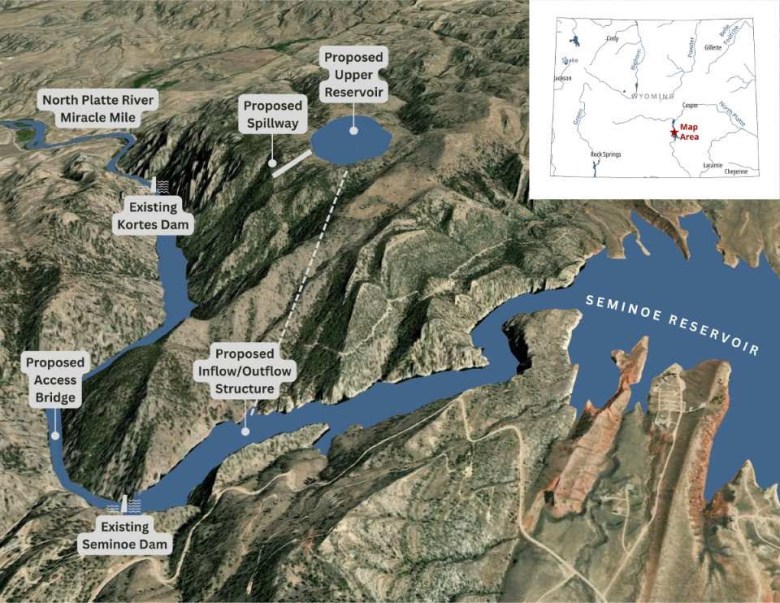
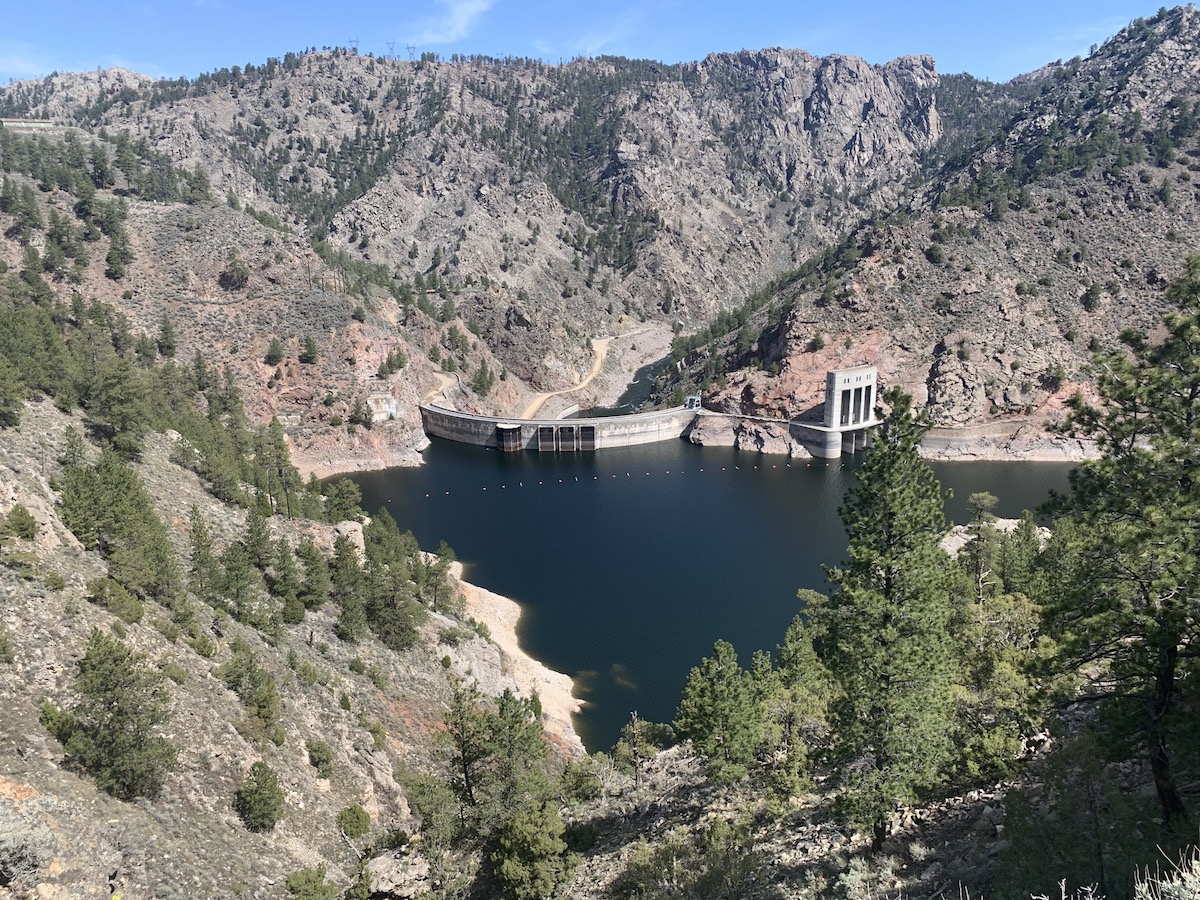
rPlus Hydro, and its subsidiary Black Canyon Hydro, propose building a 13,400-acre-foot reservoir in the Bennett Mountains overlooking Seminoe Reservoir near the dam — one of several reservoirs on the North Platte River.
Water from Seminoe would be pumped approximately 1,000 feet uphill to the new storage facility during the day when the market price for electricity is typically cheapest, then the water would be released through hydroelectric generators in the evening when daily power demand peaks, according to the companies. The facility could generate more than 900 megawatts of electricity when operating — slightly more than the generation capacity of the Dave Johnston coal-fired power plant, and enough to power roughly 675,000 homes.
The project also requires a new bridge and about 30 miles of new power transmission line connecting to PacifiCorp’s Aeolus Substation near Medicine Bow. The estimated cost ranges from $3 billion to $5 billion, and it could take up to five years to construct, according to federal documents.
“The project will bring substantial economic benefits to the local community and will serve as an important element of Wyoming’s modernized and reliable energy infrastructure,” according to the company’s website.
State’s review, and water quality
As stakeholders await word from FERC about its next steps, Wyoming DEQ has posted technical and modeling reports regarding rPlus Hydro’s request to the state. DEQ will host a public meeting from 5:30 p.m. to 8:30 p.m., Jan. 21, at Casper College.
Among other water quality considerations, the agency noted “discharges of water used for power generation may influence water quality in Seminoe Reservoir, the downstream Kortes Reservoir, and the segment of the North Platte River below Kortes Dam known as the ‘Miracle Mile,’ primarily with respect to temperature.
“This segment of the North Platte River,” DEQ continued, “is designated as an Outstanding Resource Water where the existing quality is maintained and protected.”

Trout Unlimited, as well as Friends of the North Platte and other groups, worry that a potential increase in turbidity and temperature may damage the fisheries, noting that trout, in particular, are sensitive to warmer temperatures. That’s a concern for local governments that rely on fishing tourism revenue.
“Any negative impacts upon the North Platte fishery, specifically the Miracle Mile, could have a devastating impact on our tourism industry,” Casper Mayor Ray Pacheco wrote in a draft letter to FERC.
The Casper City Council, joining Natrona and Carbon county officials, objects to FERC’s currently proposed path forward for the project.
“This project will have a substantial impact on the health, safety, welfare, custom, culture and socioeconomic viability not just of Carbon County, but Natrona County and the City of Casper,” Pacheco wrote. “It is imperative that any potential impact this project has on hunting and fishing must be considered and properly mitigated.”
rPlus Hydro reiterated to WyoFile that it “takes seriously” and “recognizes the tremendous importance of fish and other wildlife to Wyoming and to the communities surrounding the proposed Seminoe Pumped Storage Project.”
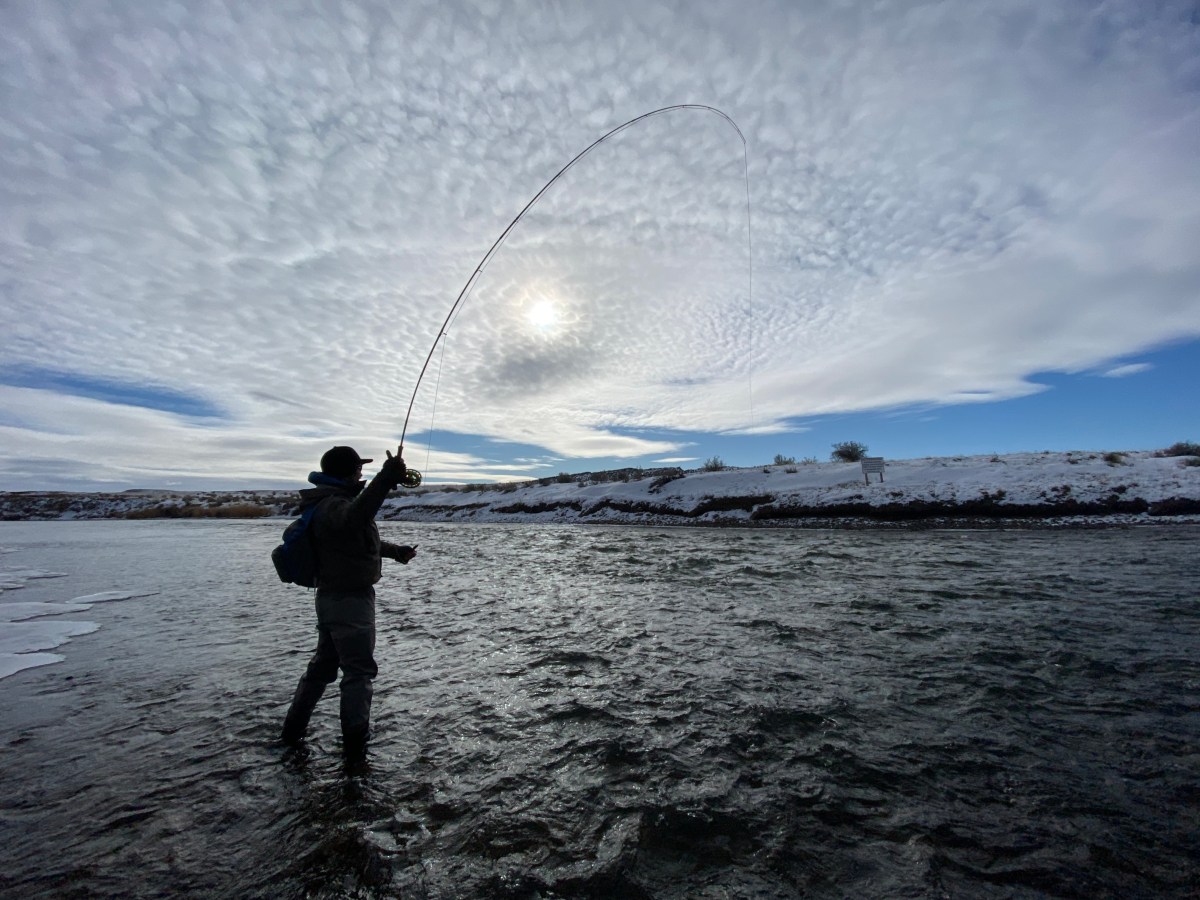
The company noted that its own study concluded “that normal project operations, under typical conditions, would not harm Miracle Mile water quality or its fishery. rPlus has agreed to operational restrictions to ensure temperature thresholds are not exceeded and that the Miracle Mile remains fully protected.”
Conservation groups, including Trout Unlimited, are not convinced. All things considered, Trout Unlimited’s Harrington told WyoFile, the project appears to require so many environmental exceptions and acknowledged fish and wildlife impacts that it is simply a bad fit for the location.
“Energy and conservation are not mutually exclusive,” Harrington said. “We’re not against the project. We’re just proponents of fish and wildlife and the habitat that supports them.”
In addition to DEQ’s Jan. 21 public meeting, the agency is accepting public comments regarding water quality issues related to the project through Feb. 2. Written comments can be submitted via DEQ’s portal here, or mailed to Eric Hargett, Wyoming DEQ/WQD, 200 W. 17th Street, Cheyenne, WY, 82002.
If you have questions about DEQ’s role in the project, you can call Hargett at (307) 777-7079, or email eric.hargett@wyo.gov.
So, looking at the map provided, and the long distance from the inflow/outflow above Seminoe and Kortez dams, does anyone have any data how much this would raise the temps in “The Mile”? Seems to be a pretty limp argument. Indeed the argument that the sheep herd and other wildlife in the area need protections from disturbances especially in critical times I’m all for. That is common sense. Undeniably this area of the state needs some good construction jobs and if those jobs last an extra year or even more because of environmental occupancy regs well I don’t think we should whine too loud about that. Let’s do this job but make sure it’s done right!
This project will only benefit out of state users and interests the most af the expense of Carbon County’s natural resources that will never be the even close to being like they are now for many decades to come. You can’t tell me that with all this disturbed land will not cause an increase in turbity to the waterways and watersheds in the area after heavy rain, hail storms and snowmelt after warmer than normal spring times. Go blow smoke up some other States behind and leave Wyoming alone. NO TO THIS PROJECT.
Please correct me if I am wrong. Windmills kill raptors and other birds, solar panels kill off prairie dogs and other fauna as well as flora underneath the panels all in the quest for “clean” energy. Yet because they don’t supply sufficient electricity it is also necessary to dam the river to rectify the loss of power when the “sun don’t shine and the wind don’t blow”.
Okay, more electricity. Do we need more? Are people without electricity? And is my electric bill going to go down on a monthly basis? So kill off a sheep heard. Kill off a legendary fishery and what do we get? A simple question.
Just say no to this boondoggle project.
Listen, rPlus Hydro, WE DON’T WANT IT.
Thank you in advance for scuttling this outrageous plan
Big Tech needs more power. They will go after it whatever way they can.
You can tell they don’t care about the fisheries by their focus on impacts to the “state park” rather than the Miracle Mile. It’s called a miracle for a reason. We don’t squander that.
Thanks Patrick.
Well said.
Like a lot of things, wildlife are the last consideration.
just say no!