

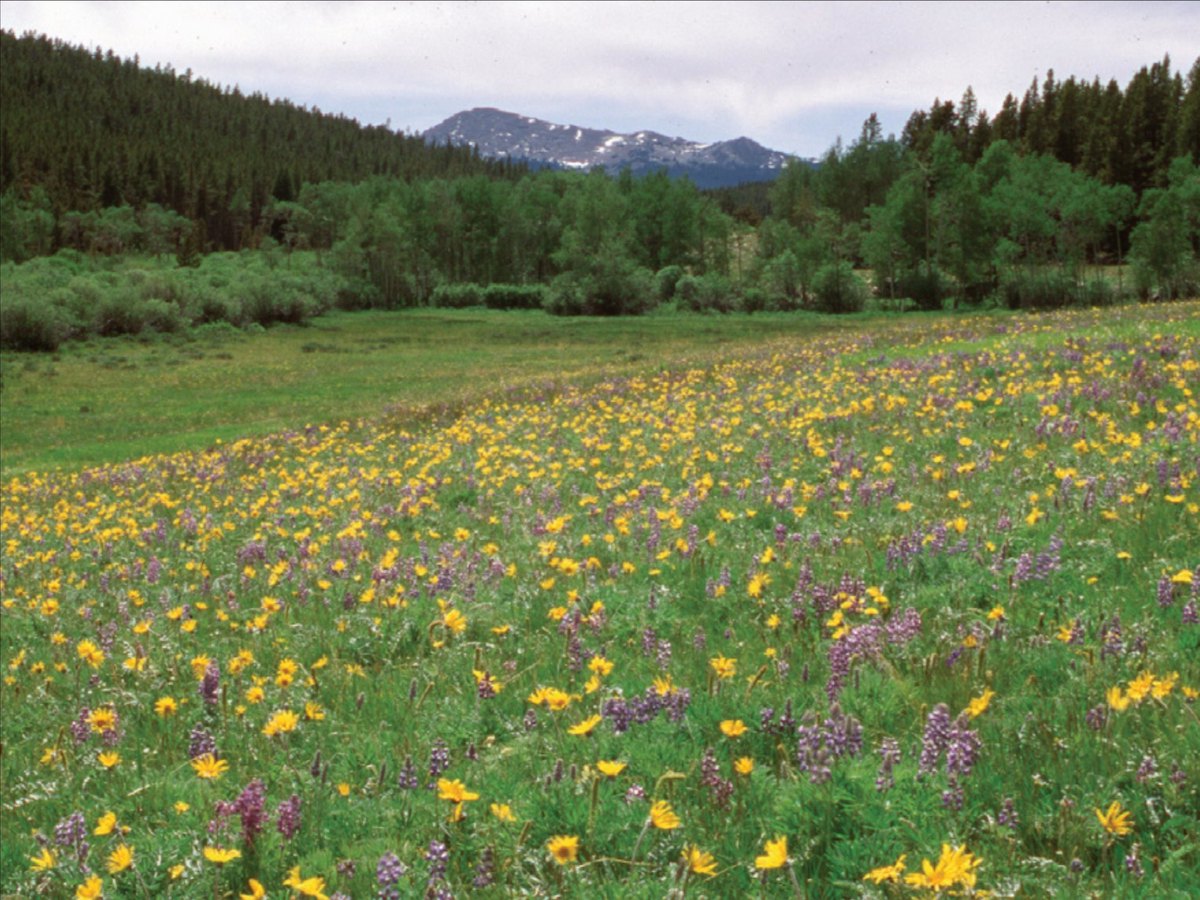

The U.S. Forest Service has tentatively agreed to drop a Bighorn National Forest plan to kill native plants like sagebrush and larkspur as the agency battles invasive weeds on the sprawling federal reserve in north-central Wyoming.
Following a hearing with five groups that objected to the plan, Forest Service Deputy Regional Forester Jacque Buchanan told them native plants would no longer be targeted. In exchange, the groups — Bighorn Audubon Society, Forest Service Employees for Environmental Ethics, Western Watersheds Project, Council for the Bighorn Range and Bighorn Native Plant Society, will agree to drop their objections, according to an email Buchanan sent them.
Conservationists objected to the Forest Service killing native mountain big sagebrush and larkspur as it targets exotic noxious weeds ventenata and medusahead. The Bighorn planned to attack the vegetation with toxic herbicides, some of which would be applied by aerial spraying, in part to improve grazing for domestic stock. The plan called for burning and mowing sagebrush as well.
“This is great news for birds, other wildlife, native plants, and the Bighorn National Forest.”
JoAnne Puckett, Bighorn Audubon
Under the pending agreement, “all sagebrush treatments, as well treatments of other native plants, to include duncecap larkspur” will be dropped from the plan, Buchanan wrote. In agreeing to not further challenge the plan, the objecting groups appear willing to no longer protest the aerial spraying of herbicides on invasive weeds.
Buchanan’s email followed a public hearing with objectors held Oct. 19. Bighorn Audubon hailed the pending change.
That’s “great news for birds, other wildlife, native plants, and the Bighorn National Forest,” JoAnne Puckett, Bighorn Audubon president said in a statement. “As we all learn more and more about the importance of native plants in having functioning ecosystems, we are encouraged that the Forest Service staff took our concerns to heart.”
Hummingbirds, sage grouse at risk
The national forest had targeted up to 76,000 acres of sagebrush and several hundred acres of native larkspur, protesters said, across the 1.1-million-acre reserve covering the Bighorn Mountains northwest of Buffalo. Sagebrush covers about 15% of the forest, and the plan would have targeted some 42% of that.
Critics worried that sagebrush removal would further imperil greater sage grouse, which depend almost exclusively on that landscape. Larkspur, considered toxic to cattle, helps sustain broad-tailed hummingbirds and other wildlife, objectors said.
In its 246-page environmental review that sparked the objections, the Forest Service said reducing sagebrush would also benefit several wildlife species. Stock interests had supported the plan, including attacks on sagebrush and larkspur.
The Wyoming Stock Growers Association had urged the national forest to “employ all available resources” to destroy the maximum amount of sagebrush annually — about 5,100 acres. The Wyoming Game and Fish Department backed the forest plan but said sagebrush should be burned, not killed with chemical spraying.
Competing views regarding forest, environmental and range health clashed during a two-year review of the plan. The Forest Service planned to use tebuthiuron, an herbicide banned in Europe that critics say will leach into groundwater, on sagebrush.
But stock growers hold native larkspur in contempt. Some counties that underlie the forest have designated native larkspur as a weed because of its perceived toxicity to grazing livestock, the federal environmental review stated.
The Bighorn National Forest wants to provide range for 113,800 Animal Unit Months of grazing, an AUM being the amount of forage a cow and a calf consume in a month.
Non-native invasive plants are deleterious to the forest environment, the “Invasive and Other Select Plant Management” plan stated. “Invasive plant species like the Medusahead and Ventenata grasses threaten native plant and wildlife habitat, undermine the health of watersheds, and increase wildfire risk,” the environmental review stated.
Neighboring Sheridan County treated 28,000 acres of those two exotic grasses in 2020, according to the agency’s draft environmental study that now awaits final approval with the proposed changes.
The other news is the Bighorn National Forest (BNF) will go forward with an Invasive Plant Management plan with aerial spraying on invasive species just like other National Forests in Wyoming. BNF still has a program of altering the mountain big sagebrush landscape through burning and mowing that treats nominally abut 800 acres a year. BNF was only forest to blindly plunge ahead with the native plant management to it unpinning down to the wire. The EPA an the US FWS opposed it as well.
who is paying for this? the answer is taxpayers!
just another example of how public land grazing is socialism!
Hello cattlemen! Pesticides are bad! Understand this! Don’t get in line to become cranial rectal implants. Cattle are only visitors and this earth cannot follow this dead end trail for them! All of this poison can not be tolerated by the animals that are original habitats. Quit pandering to these out of control ranchers and consider the heath of Mother Earth!