

Gravel miner Prism Logistics has lost its two final leases on state-owned “school trust sections” at the base of Casper Mountain, where the company’s proposed gravel pit on the west side of town has contributed to a broader controversy over state-versus-local control of industrial activity throughout Wyoming.
The Wyoming State Board of Land Commissioners voted 3-2 on Thursday to deny extending the leases. The board, composed of Gov. Mark Gordon, Superintendent of Public Instruction Megan Degenfelder, Secretary of State Chuck Gray, Treasurer Curt Meier and Auditor Kristi Racines, similarly denied Prism’s request in June to extend the two-year terms for six other leases in the area.
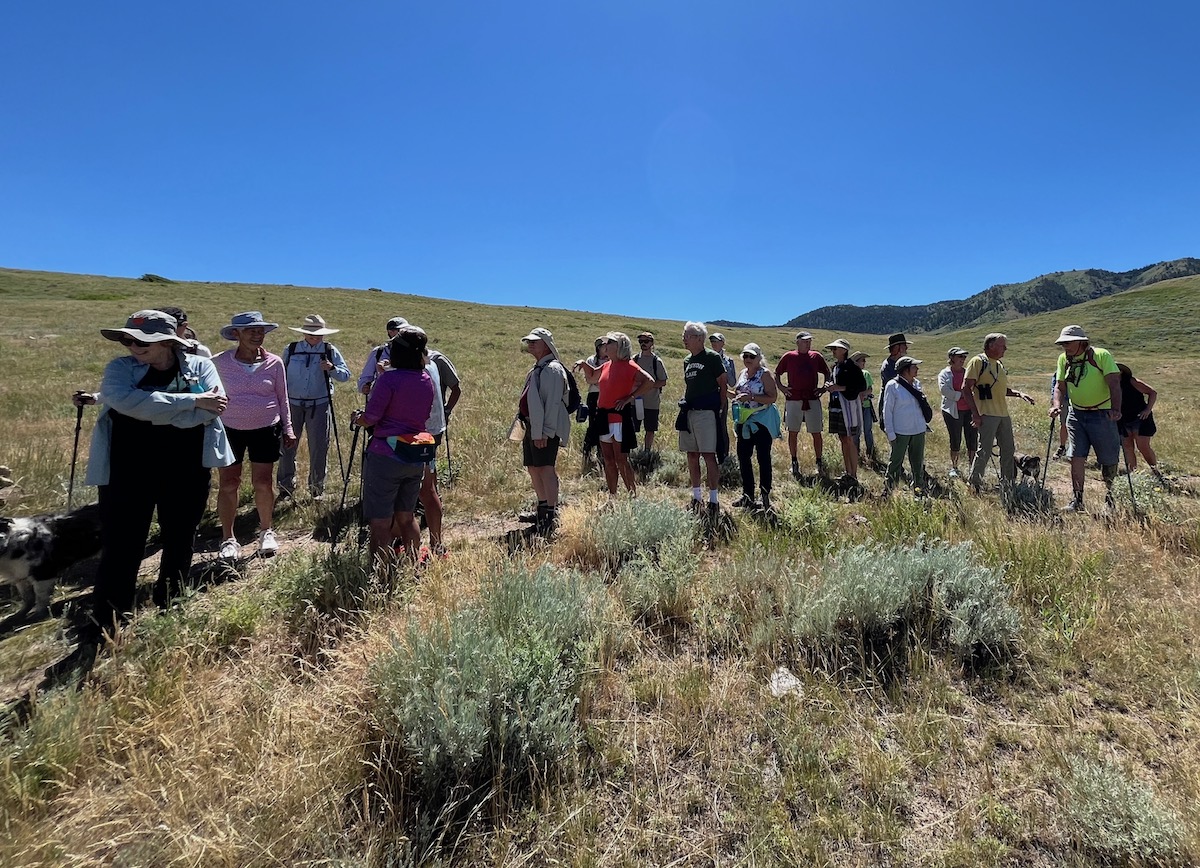
Prism obtained all eight leases in 2023 and met fierce opposition from neighbors and residents throughout the county when the leases came to light in 2024. The Casper Mountain Preservation Alliance was formed in response. The group collected more than 20,000 signatures in opposition to the gravel pit. Casper Mountain is a popular local recreation area, drawing hikers, cyclists and skiers.
“We feel a big relief,” Casper Mountain Preservation Alliance cofounder Carolyn Griffith told WyoFile. “It’s not about [the Preservation Alliance]. It’s about the community, the state and what will be most beneficial for everyone.

“We’re supportive of gravel mining,” Griffith added. “But we’re also supportive of it in the right place.”
The winning argument, which Gray noted in his motion and denial vote, was that Natrona County — after the state leases were issued — banned heavy trucks on multiple roads, including Coates Road, which Prism would solely rely on to access the area. The county also modified zoning to ban mining in the area.
Those restrictions preempt Prism from obtaining other permissions both at the county and state level, Gray said.
“I don’t believe Prism is going to be able to [obtain] the necessary authorizations, and I think that’s very important when we consider the fiduciary aspects here,” Gray said. He added that mining the state lands, which are adjacent to a rural neighborhood that relies on a shallow alluvial aquifer, would unduly harm private property rights.
What are state trust lands?
Upon granting statehood in 1890, the federal government bestowed some 4.2 million acres of “state trust lands” to Wyoming, and it now manages about 3.4 million acres of trust land. The Wyoming Constitution prescribes that the primary use of those lands, which are scattered throughout the state in a checkerboard pattern, is to generate revenue to support public schools.
The Office of State Lands and Investments commonly leases those lands — often referred to as “school sections” — for grazing and industrial development such as mining and oil and gas drilling.
“Again, this is just wrong,” Gray said.
Prism Logistics Manager Kyle True, as well as his attorney, told board members the controversy has been highly “politicized,” obscuring what should be a simple regulatory process.
“In this small state, those who contribute are asked to serve and function in many ways,” True said. “I think there’s a political realm and there’s a regulatory realm.”
The board, despite the political nature of those who serve on it, True suggested, is obligated to extend the leases based on the company’s due diligence to test the gravel resource and the fact that it filed notice with another state agency for a limited mining operation exemption. He urged the board not to be swayed by those opposed to the gravel pit.
“What we’re dealing with is a veritable tempest in a teapot,” True said. “There are sincere passions by people that don’t understand our industry and are bringing up things that simply are inapplicable here.”
Treasurer Meier and Gov. Gordon voted against Gray’s motion to deny the lease extensions.
“I think this has been politicized, and this necessarily isn’t the right place to play politics,” Meier said. He noted that the Casper Mountain Preservation Alliance is exploring ideas to create recreational and educational opportunities on the state lands that might generate revenue as an alternative to mining.

“It struck me that the course of action that you probably should entertain,” Meier told Griffith, “is to let us run the regulatory aspect of it, but go to your politicians within your district and ask them to make that a state park.”
State versus local control
True still holds out hope that Prism will eventually win its way to mining gravel at the base of Casper Mountain, he told WyoFile. The board’s denial to extend the company’s leases, he noted, seems to counter its contention that counties may not impose zoning and safety regulations that might impede state-sanctioned activities on state-managed school trust sections.
In fact, the state-versus-county question was already simmering before Prism’s controversial gravel pit.


The state sued Teton County several years ago to prevent it from enforcing its codes and regulations on a glamping operation, which the state had permitted on a school trust section. The state won and, upon appeal, the Wyoming Supreme Court confirmed in April that “the State Board and its permittees on state land are not subject to a county’s land use and development regulations.”
Meanwhile, Prism is asking for judicial review, challenging the Natrona County Board of Commissioners for imposing zoning and safety regulations that were enacted after the company acquired its state leases. Prism has also filed a petition for judicial review in the 7th District Court in Natrona County in July, claiming the state’s lease extension denial in June was “contrary to law” because the company insists it had met conditions qualifying for an extension.
Both lawsuits are still pending.

Hypocracy is so easy to see in others: a bit harder to see in yourself. From reading the article and the comments, it seems obvious to me that for many, many decades the good people of Casper have enjoyed recreating for free on the school trust lands that adjoined them–never thinking that they should offer to lease and pay for that priviledge on someone else’s land. Do Wyoming schools need the money? Let’s just say, “Wyoming’s public school funding system is currently under a court-ordered “recalibration” after a judge ruled it unconstitutional for underfunding education and violating the state’s constitution. A recent court ruling found the state failed to properly fund teacher salaries, inflation, mental health services, and adequate facilities, requiring the state to modify its funding model.” So please think—when you are denying the gravel pit, yet not offering to pay a similar amount, you are stealing from all the children of Wyoming. Money paid for the production of gravel will go into the Public School Fund and will fund schools forever after. Wyoming supports private property rights. Perhaps Casper Mtn. Preservation Alliance needs to rethink what they stand for. As for myself, I would never want to stand as someone who steals from children. Perhaps that Alliance could let the gravel pit move forward while they could lease other parts of the land for recreation. Win-Win. Otherwise they look gready while they steal from all the students in the state.
I don’t have a dog in this fight, but I will say this; the mentality is, it’s OK as along as it’s not in my back yard. Let it be in someone else’s back yard. That’s what’s behind all of these ruling fights. It’s OK, until it’s not OK.
The leases were originally approved by all 5 votes when it was placed on a consent agenda ballot. Then the uproar happened, then back peddling began by some of the Board members. Perhaps, if our politicians had done some due diligence before approving these leases, we would not be in the current situation. Just sayin’
I hope Casper Mountain Preservation Alliance wins. There are many other places, I am sure, where Prism can create a gravel pit.
The state has over 3 million acres of lands available to generate funds to support our public schools, most of which are likely suitable for sand and gravel extraction. But the Casper Mountain lands are special, both from an environmental standpoint and because of their particular location within the community. They are not appropriate for gravel mining, as determined by Natrona County through its land use regulations. Fiduciaries do not have a blank check to do whatever they want so long as it serves their beneficiary’s interest. They must operate within the same confines of the law that bind everyone else—and that includes respecting local land use regulations. Kudos to the three members of the Land Board who respected this limitation on the state’s management authority. They should do the same when considering the renewal of the leases for the glamping hotel in Teton County.
The governor and treasurer voted correctly on this question, following the constitutional mandate to generate school revenue from these trust lands and following their duty as trustees for the beneficiaries. The lands were created at statehood for the sole purpose of supporting public schools, and, yes, that means financial support. Schools pay bills are paid with actual money. All the other things mentioned here that people appreciate do have value, but the job is to figure out how to monetize that. (That is, make money.) Of course, not all money-making uses are good for the trust. Uses that ruin the land’s value and ability to generate revenue would fail to meet the board’s fiduciary duty.
Another aspect of this vote is the presumption by the secretary of state to skip over the board’s leasing authority and go straight through to the regulatory permitting process, which he seems to know will fail.
Of course, the land commissioners may reject proposed deals for leases, sales and exchanges, but decisions must rest on what best serves the intergenerational trust beneficiaries. The beneficiaries are the public schools, which need actual money to pay their actual bills.
Was that trust duty served by this vote? I guess the courts will tell us.
As a society, we need to stop using the dollar as the only measure of value for lands. The land supports many indirect values, watershed, water supply, wildlife, open space, buffer against climate warming and so on. Recreation is not a panacea as it brings disturbance to wildlife, noise and erosion along driven paths.
We need to protect the land for the sake of the land itself and what it means for the future in which we are intertwined with it. Perhaps if we lowered our consumption of everything, we could live in a more balanced way with the land.
Happy for all the people who were fighting this in Casper and appreciate Chuck Gray siding with the people and property rights. The governor ended up on the wrong side of the fight sad to him against regular people.
Perhaps Mr. True should act in good faith and allow a gravel mine next to his house.
There is one correction to this article that is important: nowhere in the Wyoming constitution does it say “generate revenue to support public schools.”
The words are SUPPORT the public schools. This is especially vital in this case because our Casper public schools including Casper College have a long tradition of using those State Sections as an outdoor classroom. Those lands are indeed supporting the schools!