



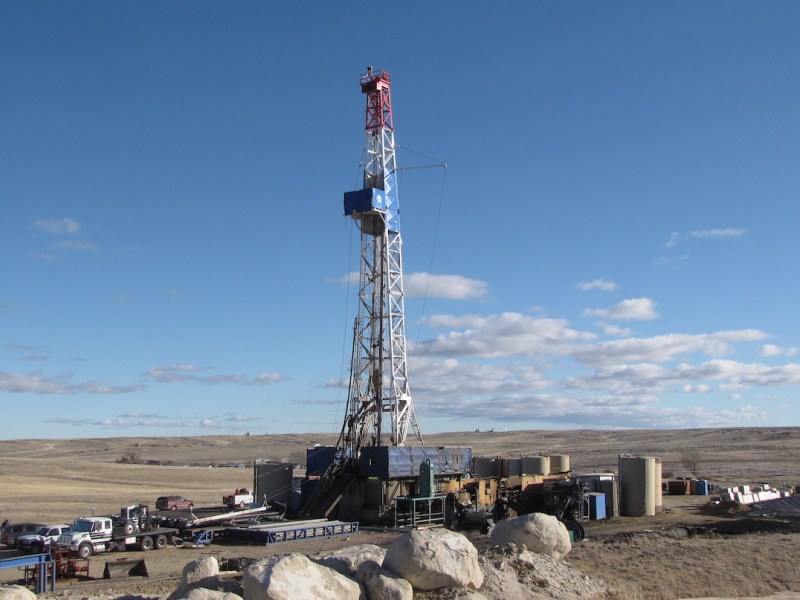
A judge has temporarily blocked the federal government from issuing new oil and gas drilling permits in a Delaware-sized energy field in Converse County, citing erroneous data that overstated the amount of available groundwater.
Two conservation groups and the defendant — the U.S. Department of the Interior — must now suggest a remedy, U.S. District Judge Tanya Chutkan of Washington, D.C., ruled. An annulment of the project’s approval by the U.S. Bureau of Land Management could be one such remedy, the judge noted.
“Defendants concede [the groundwater estimates] are off … by a factor of 10,000.”
Chutkan hung her hat on groundwater, required for drilling, as she found the defendants — BLM and Interior — crossways with the National Environmental Policy Act. “Defendants concede [the groundwater estimates] are off … by a factor of 10,000,” the judge wrote.
The government and its allies claimed that inaccurate groundwater information was a harmless “errant parenthetical citation.”
“The court disagrees,” Chutkan wrote. The BLM’s flawed data “may have resulted ‘in a substantial underestimation’ of groundwater drawdown,” she wrote.
The Powder River Basin Resource Council and Western Watersheds Project sued the government claiming flaws in an environmental review of the 5,000-well project. On Dec. 23, 2020, at the very end of the Trump administration, then-Interior Secretary David Bernhardt approved the project across 1.5 million acres.
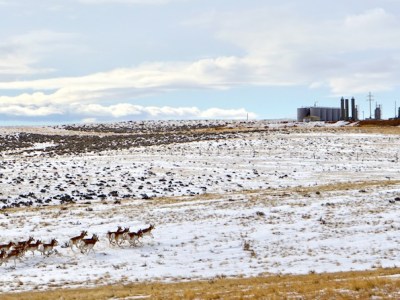
The conservation groups claimed in their suit that the BLM failed to acknowledge and protect numerous environmental values at the Converse County Oil and Gas Project. Among those worries were that impacts to wildlife – including nesting migratory raptors and sage grouse — and air quality were not adequately accounted for.
Poster child field?
When the suit was filed, Ryan McConnaughey, vice president of the Petroleum Association of Wyoming, called the environmental review and approval “a poster child for what thoughtful and collaborative work should be.” Chutkan’s ruling was disappointing, he wrote in a statement, and PAW hopes deficiencies can be “quickly remedied.”
Developers projected the field would generate 8,000 jobs and $18 billion to $28 billion in federal revenues. But the WI Moore Ranch Co. Inc. said at the time of the environmental review that its operations could be harmed by a groundwater drawdown from energy development.

The BLM underestimated the amount of water needed for drilling by 1.5 billion barrels — some 63 billion gallons, a ranch representative wrote. “[A]ny analysis done on the numbers provided by the Operators in regards to water use is not valid and should be rejected as wholly insufficient,” the ranch comment reads.
The BLM has already permitted 2,500 wells in Converse County since approval, most of them inside the project boundary, according to Sara Stellberg, staff attorney for Advocates for the West who represented the conservation groups. Only 582 of those wells are producing, 220 are being developed, 936 permits are unused, and 750 permits have expired, she wrote in an email.
The suit illustrates “ongoing efforts by anti-oil and natural gas groups to utilize the Courts to stop all development on federal lands,” industry representative McConnaughey said in a statement that called for changes in the leasing system.
Stellberg said she hopes the court’s decision will require the BLM to address other shortcomings conservationists find in the approval, elements Chutkan didn’t explore after she landed on the groundwater error.
Conservationists are wary that the troubled Douglas Core Area protecting greater sage grouse is on the chopping block. The BLM has proposed changes to grouse rules that would “cave in to state demands and abolish the Douglas Core Area,” the conservation groups said in a statement.
“It is entirely appropriate to temporarily pause approval of new drilling permits until the shortcomings in the EIS are addressed and real-world remedies are lined out by the companies involved,” said Maria Katherman, a board member with Powder River Basin Resource Council and a resident of Douglas. “We hope that slowing this boom will also allow for proper seasonal protections for wildlife, especially in light of the massive wildfire that burned through this summer, and allow nearby communities time to prepare.”
Oil and gas are neither vegetable, fruit or dairy, thus oil and gas will not spoil in the ground. Take your time and get it correct. Future generations are depending on you to get it right.
Too bad things of consequence take so long to come to fruition.
The Bernhardt legacy, approval based on fudged facts as a basis to proceed with an oversized play, is typical of what the Trump administration relied on…poor facts or no facts as a basis to get what some wanted. Fudged water data is a crime. Glad the court at least got this one right!