


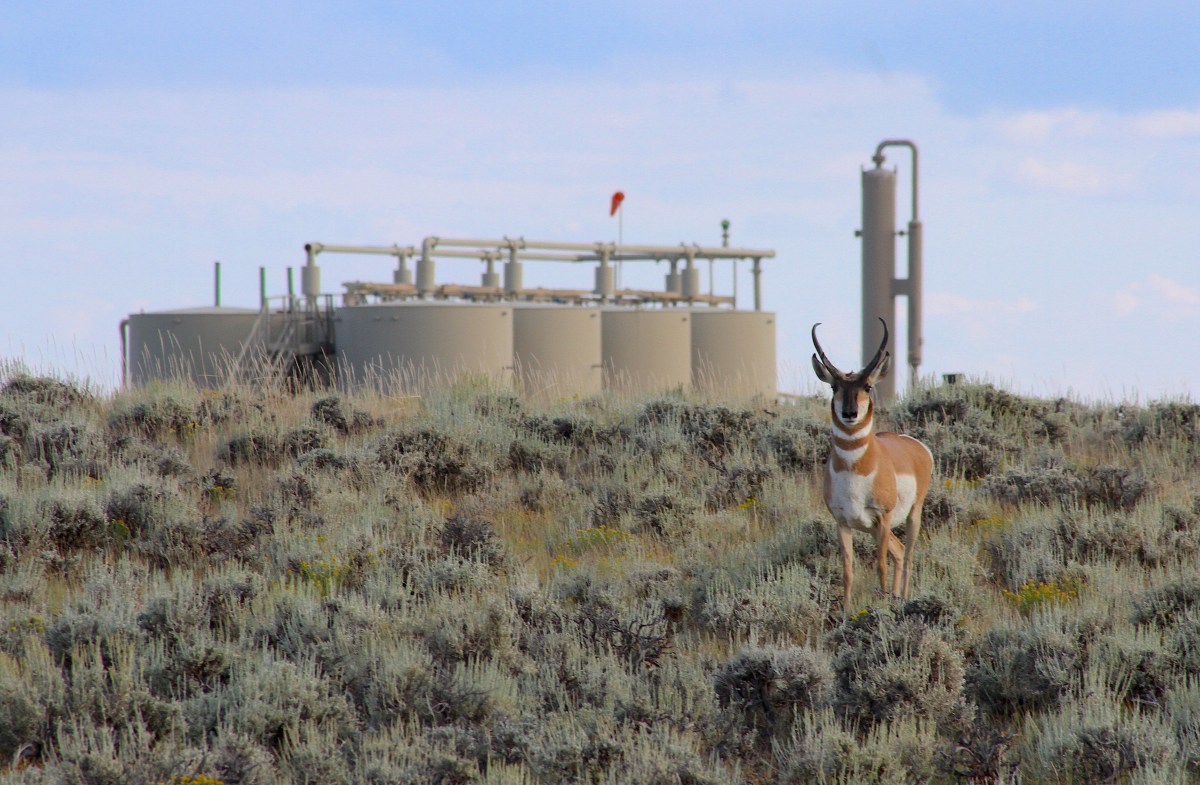
A panel of appellate judges has rejected a suite of claims brought by environmental advocates trying to halt a 220-square-mile gas field planned for a sagebrush expanse housing a famous pronghorn migration path and Wyoming’s largest-known sage grouse winter concentration area.
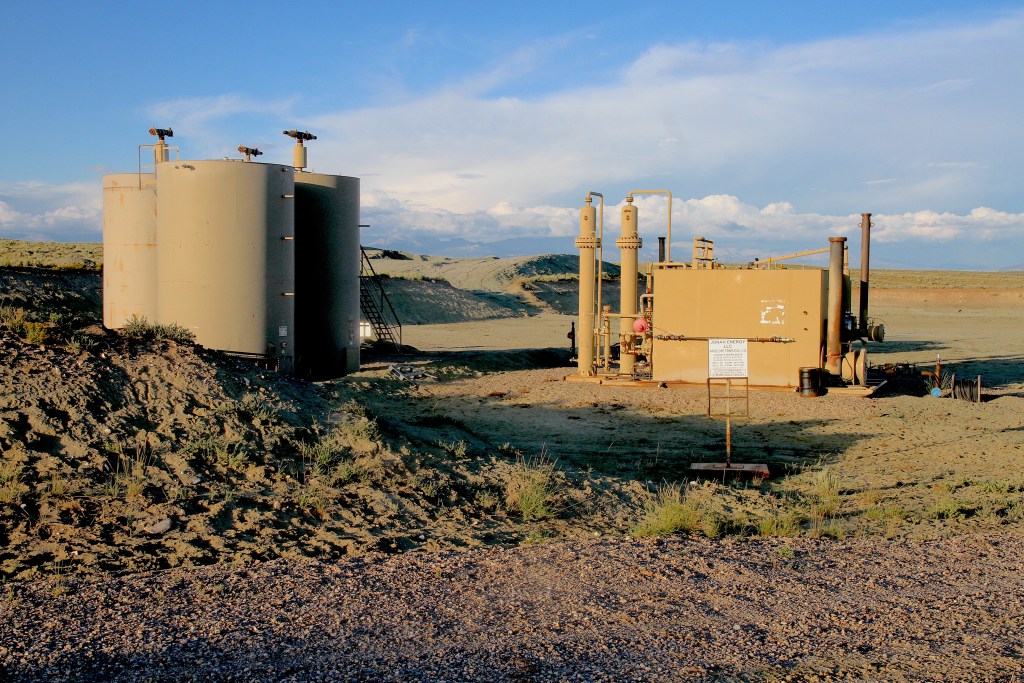
The developer, Jonah Energy, now has more clarity about whether to commence drilling 3,500 gas wells in the Normally Pressured Lance field, which was approved via a Bureau of Land Management environmental review seven years ago.
In its ruling, the 10th Circuit Court of Appeals affirmed what U.S. District Judge Scott Skavdahl decided a year ago: That the National Environmental Policy Act prohibits uninformed decisions, but allows for environmentally harmful decisions. In the 10th Circuit, judges Timothy Tymkovich, Nancy Moritz and Veronica Rossman quoted precedent from a 1989 U.S. Supreme Court ruling in their 31-page decision, writing that NEPA, “merely prohibits uninformed—rather than unwise—agency action.”
The statute, Tymkovich, Moritz and Rossman wrote, “does not even require agencies to promulgate environmentally friendly rules.”
That was the takeaway from a decision that denied all four claims brought by the plaintiffs: Western Watersheds Project, the Center for Biological Diversity and the Upper Green River Alliance.
“We’re disappointed in the ruling,” Western Watersheds Project Executive Director Erik Molvar said. “The judges ruled that the Bureau of Land Management was justified in not considering in great detail the impacts to the Path of the Pronghorn migration, the herd of pronghorn that summer in Grand Teton National Park. And [they ruled] it was perfectly permissible to consider impacts to pronghorn only at the broadest possible scale, the scale of the Sublette Herd.”
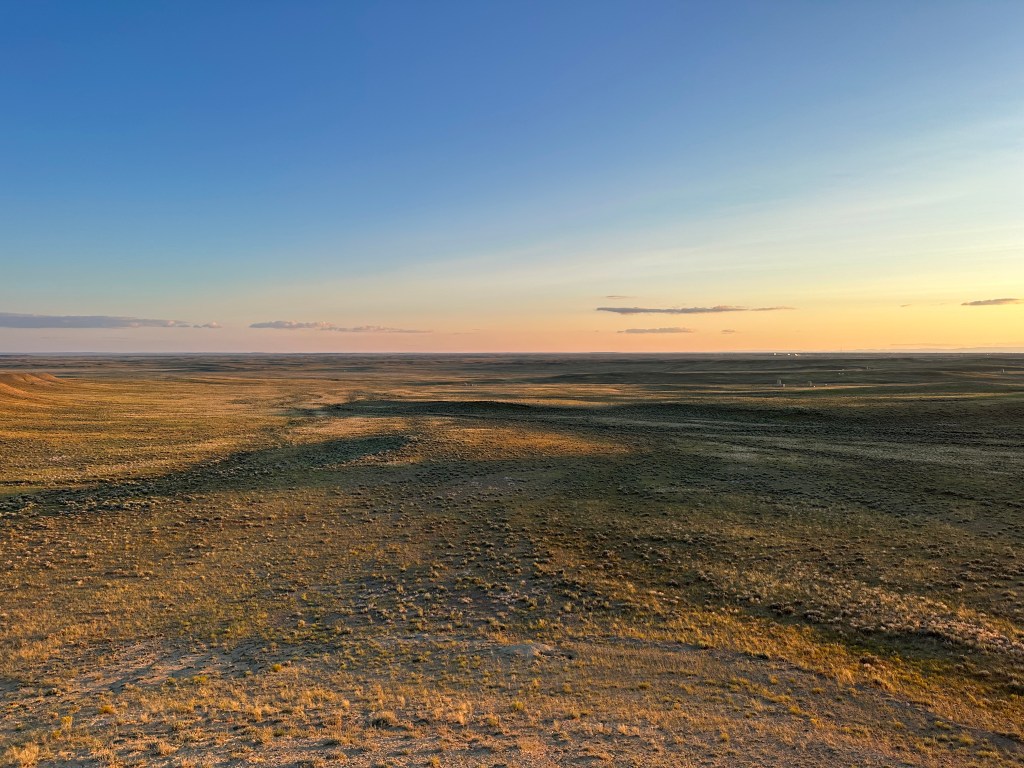
The dispute over pronghorn — which took center stage during oral arguments — comes at a time when the famous migration treading through the Green and Snake River basins is under siege from a host of pressures, ranging from a deadly winter that shrunk the herd by 75%, to housing developments infringing on the herd’s habitat.
The state of Wyoming recently offered a section of land in a bottleneck portion of the migration for oil and gas leasing, and it went to the high bidder, Kirkwood Oil and Gas, for $19 an acre — though that sale has been stalled. Meanwhile, the state has dragged its feet at designating the migration path, which could buffer the Path of the Pronghorn from intense drilling in places like the NPL field.
Arguments shot down
In their appeal, the environmental groups argued that the BLM violated federal environmental law by failing to take a “hard look” at how the gas field would impact the Path of the Pronghorn.
Tymkovich, Moritz and Rossman weren’t persuaded.
“The [g]roups misunderstand the regulations,” the appellate justices wrote. “They do not require the Bureau to pay special attention to special resources.”
The 10th Circuit panel found that analyzing the larger Sublette Herd was adequate. And the harm the gas field, which sits 25 miles south of Pindale, would cause was properly detailed, they wrote.
“The [environmental review] squarely confronted the ‘displacement’ and ‘disrupt[ion]’ of pronghorn ‘migration patterns’ and discussed the ‘[d]egradation’ of ‘migratory routes’ that ‘connect crucial winter range and other pronghorn habitats in the analysis area and the region,’” the opinion reads.

Other arguments brought by the plaintiffs concerned the phasing of development within the 140,000-acre gas field, and alleged NEPA violations for inadequate data gathered about impacts to Grand Teton National Park and sage grouse winter concentration areas.
The NPL gas field overlaps about half of a complex of sage grouse wintering ground that housed an estimated 2,000 birds in 2015. Highly protected sage grouse “core” habitat has also been kept out of the gas field — and it isn’t being added through an ongoing revision process, leaving birds in the project area vulnerable.
In denying the plaintiffs’ argument, the appellate judges found the BLM vetted grouse impacts adequately: “The Bureau clearly possessed enough information to anticipate how development would affect the sage grouse and [winter concentration areas] under the selected action.”
The agency’s proclamation that the gas field would cause sage grouse “various adverse effects” was enough, they wrote.

Likewise, the panel of judges didn’t buy the argument that the BLM failed to take a hard look at how the project would indirectly impact Grand Teton National Park by harming pronghorn. The judges faulted the plaintiffs for not raising those concerns when the environmental impact statement for the NPL field was being reviewed, and they pointed out the agency did acknowledge indirect interference with “recreation experiences outside the Project Area.”
What’s next?
Paul Ulrich, vice president of government and regulatory affairs for Jonah Energy, declined an interview for this story. It’s Jonah’s policy to not comment on litigation, he said, and there’s not a “clear picture” for the gas field moving forward.
Some activity, however, is underway — and road building and even some drilling was taking place while the project was tied up in the courts.
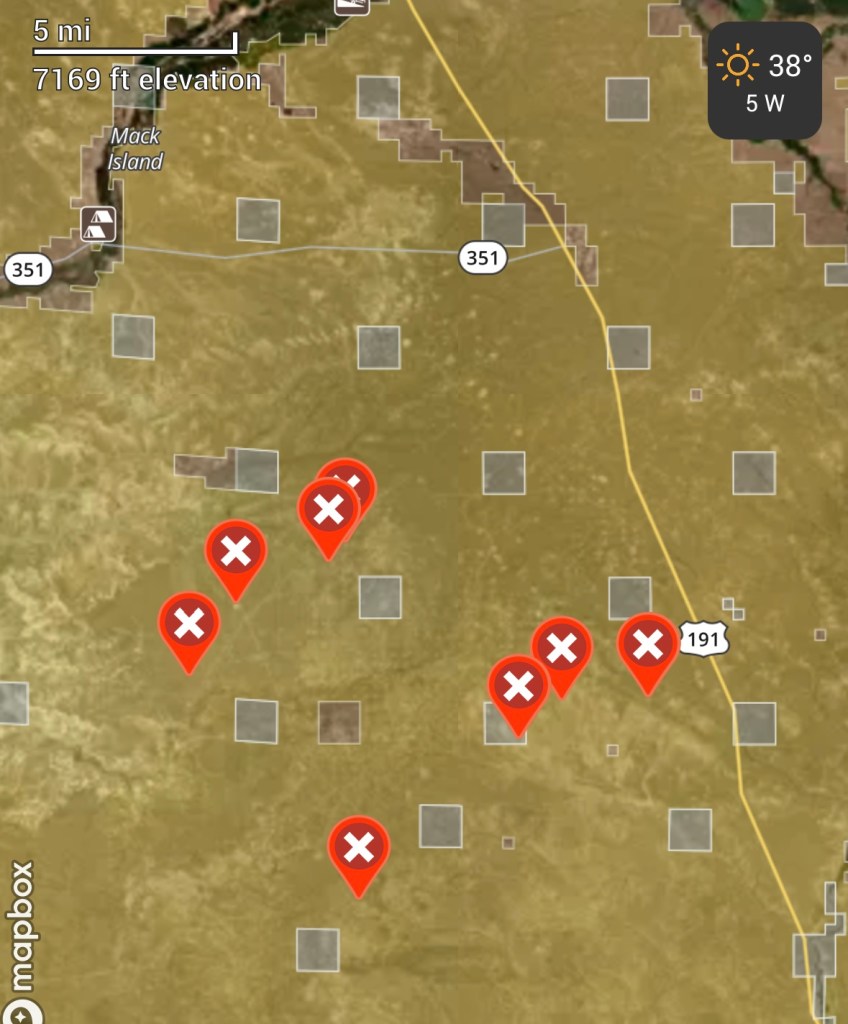
Records from the BLM’s Pinedale Field Office show that drilling was occurring within the project area as early as 1994. Although the agency’s record of decision for the 3,500-well project was approved in 2018 and litigated shortly thereafter, judges never put a stop to activity in the disputed field.
From the BLM, WyoFile obtained Jonah Energy’s application-to-drill documents for well pads within the field last winter. At that time, there had been 18 total submitted applications since the decision was published, 11 of which had been approved. Visits to coordinates of several of those approved pads show that, in places, the sagebrush has been scraped and ground leveled to accommodate Jonah Energy’s industrial operations.
“Where are we now with NPL?” BLM-Wyoming Deputy Director Brad Purdy said. “We are doing site-specific NEPA, which basically is going to be [applications to drill].”
Through that process, he said, stipulations are imposed that are intended to protect wildlife like sage grouse and big game and other natural resources.
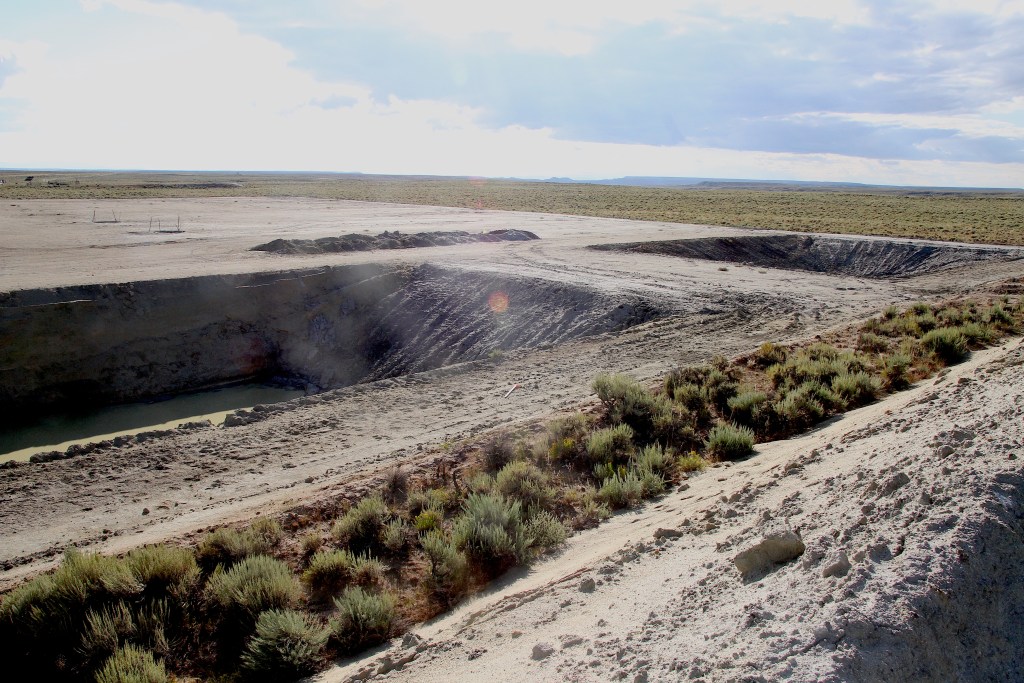
If natural gas market conditions ripen, Jonah Energy has the latitude to greatly increase the pace. Wells can be constructed at a rate of up to 350 per year, with an average of 10 drill rigs working at any one time, according to the gas field’s final environmental impact statement. At the time of its approval, the gas field was expected to generate an estimated $17.8 billion over 40 years.
Although they’ve sustained successive losses in court, the project’s opponents haven’t abandoned the fight.
“There’s always the option to request an en banc review, which would involve additional judges and not just the three we happened to draw,” Western Watersheds Project’s Molvar said. “There are other options for appealing a 10th Circuit ruling, but that’s the one that I would think that would be most likely.”
Meantime, Upper Green River Alliance Director Linda Baker bemoaned what she sees as more blows to the “internationally significant gem” of the Path of the Pronghorn and the valley’s “iconic sage grouse.”
“It’s really sad,” Baker said. “And it’s tragic that the federal Bureau of Land Management and the state of Wyoming governor’s office fails to recognize what an incredibly priceless gem we have here.”
This is a just ruling by the 10th. I’ll take 3,500 natural gas wells over 3,000 windmills any day. The btu bulk density of the wells completely dwarfs the unreliability of wind and solar btu’s. And, the density of natural gas in the Jonah Field is the highest concentration of btu’s in North America on a per acre basis…….the proposed wells are infield spacing, the acreage is already developed. Every new well in the Jonah Field is a well not drilled in a new exploratory area…..a common sense approach to development. Develop a known area, preserve new area.
The pronghorn argument is the weakest of all. These are the same animals who shelter on the leeward side of water tanks on location all winter long.
Not to worry, though, environmental obstructionists. The taxpayers are on the hook for paying for your attorneys next decade of obstructionism. Gotta respect the environmental grift…..
Cary Brus, your talk of BTUs is incorrect. Those wells will drop in production and eventually dry up to the point that it won’t pay to stimulate them anymore. Then they will be sold or abandoned. The wind however will continue to blow. Also, the NPL is a more conventional field than the sweet spot of tight sands that has already been drilled in the NE corner of the field. It won’t be as lucrative. We too often forget that the life of these wells are limited, while the impacts of drilling and production are more lasting. The gas isn’t going anywhere, so I’m not getting why it’s so urgent to develop at the proposed pace. I think if you look back at the last 2+ decades of development in the Upper Green, a slower approach/pace of development would have mitigated most of the impacts we’ve had to deal with. Not against resource development, I just hope we can make a solid effort to minimize the impacts and not just discount, out of hand, the real concerns folks have about our wildlife and their habitat. I think if you look at the data seriously you’ll find that a handful of goats at a rig doesn’t indicate that all is well. No pun intended…
Sage grouse should have been listed visa the Endangered Species Act during the Obama presidency.
The sage Gross is the only problem I see the others would just go around it. But the sage Gross needs sagebrush to live.
I despise oil and gas companies so bad I think I will vote straight Democrat from here on out !!!
Big Money always wins. Big Money does not care about the animals, including the human ones.
As Plucky Purcell said in “Another Roadside Attraction,” it all boils down to the buck.
There may be a lot of gas here, but the world is awash in natural gas. Why should Wyoming give up this pronghorn migration route and its best sage grouse nesting habitat?
We should wait. The gas goes no where and eventually Jonah Energy, one of the more responsible gas developers in the state, may figure out a way to reach that gas without destroying these irreplaceable wildlife resources.
I’m an optimist. Give it time and patience. Take a breath. Gas in the ground is money in the bank.
So you do nothing if you ride a bike you use petroleum products to lube the bearing we all use this product some of us are smart and know this.
this is the best gas field on the north american continent.
no sence in keeping the gas in the ground when it is need above ground.
True – this ruling could cause the USFWS to re-evaluate the status of the sage grouse as a T&E species especially after sage brush improvement projects have proven mostly ineffective – aren’t we at a point with sage grouse management that the same old approaches haven’t shown significant improvement in sage grouse numbers. And therefore, new approaches must be adopted soon or the USFWS will step in and take control of sage grouse management- this decision also implies that the BLM can take the same approach with respect to solar farm development on the high desert of Wyoming. If I remember right, the Upper Green has the best sage grouse populations of any place in the entire western US not just Wyoming. Wyoming is being asked too much to provide the nation’s energy needs and green energy projects will now compound the environmental impact. Will the USFWS say enough is enough – we may about to find out.
Get ready to list sage grouse under the ESA. Hopefully the Pronghorn won’t suffer the same consequence of a really bad decision-making.