


Wyoming’s cryptocurrency sector is concerned for its future after a Sen. Cynthia Lummis-backed amendment to new tax reporting requirements failed to be attached to a sweeping $1 trillion infrastructure package the Senate passed earlier this week.
If adopted in its current form, the INVEST in America Act would expand the definition of cryptocurrency firms the law defines as “brokers” to require a larger share of businesses to report cryptocurrency transaction information to the Internal Revenue Service, among other changes. The language was drafted in an effort to minimize fraud in financial transactions and to prevent users from dodging federal taxes by sinking their assets into cryptocurrencies.
Though regulations on cryptocurrency have long been anticipated — and even welcomed — cryptocurrency firms feared that the definition of “broker” in the act was far too broad, they said. If passed, the new regulations could subject firms like software developers and cryptocurrency miners to criminal charges due to new regulations they can’t realistically comply with, according to industry leaders.
The issue provoked uproar in the cryptocurrency sector and prompted Lummis, an outspoken cryptocurrency advocate, to join a group of bipartisan senators in drafting an amendment to narrow that definition of broker. As the bill was set to pass Monday, the seemingly bipartisan amendment went down in flames, however, as Alabama Republican Sen. Richard Shelby attempted to tie its passage to a $50 billion increase to the defense budget.
Wyoming’s cryptocurrency sector now waits with bated breath ahead of a House reconciliation bill in the coming weeks, along with the promulgation of rules by the IRS many believe will be unworkable for an industry just getting on its feet.
“I didn’t think the government could disappoint me any more than it has,” said David Pope, a Cheyenne-based certified public accountant whose clients include numerous cryptocurrency firms. “Then the Senate said, ‘hold my beer.’”
The need for regulation
Firms that work in cryptocurrency have anticipated regulation from the federal government as its value and number of users increased in recent decades, Pope said. (The decentralized form of digital currency maintains consistent value across state and national borders.)
Though cryptocurrencies have garnered growing visibility in Washington, D.C., in recent years, some politicians remain concerned about the broader implications of decentralized currencies and how they interact with the U.S. tax code. Earlier this year, the IRS estimated approximately $1 trillion in tax revenues is avoided each year due to loopholes in cryptocurrency reporting requirements, prompting calls for reform.
To address these concerns, provisions in the bipartisan infrastructure bill were drafted to ensure that those involved with cryptocurrencies paid the taxes they were required to pay by clarifying their position in the tax code. In doing so, however, they wrote a definition that some worry would require people who mine cryptocurrency, facilitate a transaction or develop software for the industry to collect information on every individual who buys or sells cryptocurrency.
Critics identified the reporting requirement as onerous and unrealistic. While supporters of the initial language framed industry concerns as disdain for taxes, others, including cryptocurrency think-tank CoinCenter’s communications director Neeraj K. Agrawal, argued the proposed law ignored the fundamental nature of how cryptocurrencies operated.
“I’m very glad that the narrative wasn’t that we don’t want to pay taxes, because that’s not the case,” Caitlin Long, founder of Cheyenne-based cryptocurrency bank Avanti Financial, said. “We do want to pay taxes. And we are. Frankly, the intermediaries have been looking for guidance from the IRS for a long time about what exactly the IRS wants the intermediaries to report to them.”

The bill did not provide that guidance, Long and other industry leaders said. Instead, they said it would have criminalized large swaths of the industry, including cryptocurrency miners who produce assets like Bitcoin that are then traded on exchanges far removed from them.
Such a change, Pope warned, could scare off developers in the cryptocurrency world or even move them offshore, costing the United States its position in the cryptocurrency wars against countries like China and stymying burgeoning crypto sectors that have begun to grow in places like Austin, Texas and Cheyenne, Wyoming.
“If this goes into effect, people will have to report to the IRS information to which they simply do not have access to,” Long said. “In doing so, they would be criminalizing software developers who don’t report, according to their obligations under the law. The issue is that they don’t have the ability to report because they simply do not have access to the information.”
The Lummis amendment
Lummis, co-founder of the Senate’s Financial Innovation Caucus, drafted an amendment to the bill that would have narrowed the definition of what constitutes a broker to firms that actually have customers, including players like cryptocurrency banks and exchanges like Kraken or Coinbase.
“Real people are going to be hurt if we do not change the language in this bill,” Lummis wrote in a tweet Sunday evening.
For many in the cryptocurrency sector, the amendment was seen as essential. Major influencers in the cryptocurrency world, including IOHK’s Charles Hoskinson and Kraken’s Jesse Powell, posted numerous video statements on social media and urged their thousands of followers to contact their senators. Treasury Secretary Janet Yellen, a sometimes-skeptic of cryptocurrency, offered her seal of approval on the amendment Monday morning, all but assuring the bipartisan compromise would be passed.
“I am grateful to Senators Warner, Portman, Sinema, Toomey and Lummis for working together on this amendment to provide clarity on important provisions in the bipartisan infrastructure deal that will make meaningful progress on tax evasion in the cryptocurrency market,” Yellen wrote in a Monday press statement.
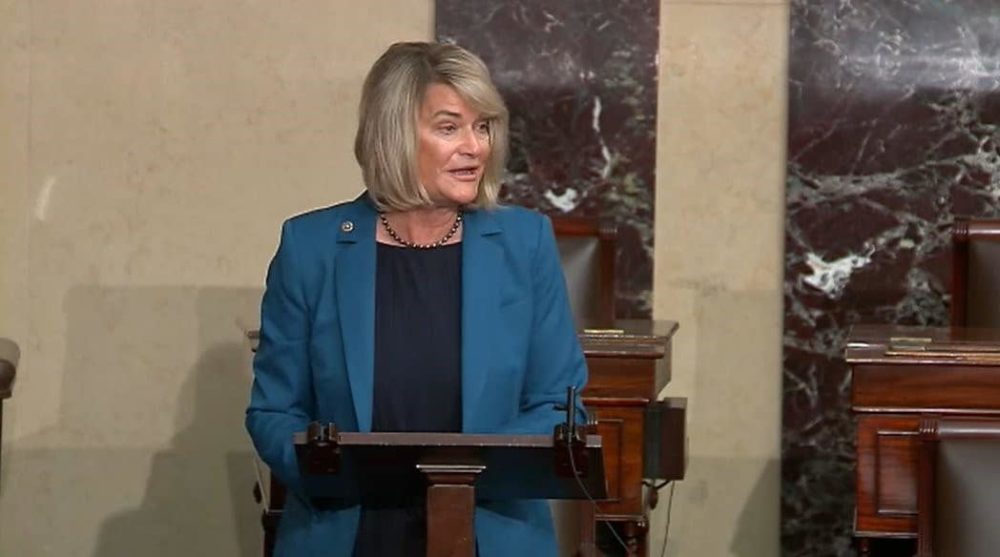
As senators were set to vote later in the day, Shelby made a motion to attach the amendment’s fate to his own military budget amendment. Sen. Bernie Sanders (I-Vermont) then objected and the amendment failed, which meant the infrastructure package advanced to the House with its original language.
What happens next?
Pope does not believe that the changes will have an immediate effect on the industry, he said.
On a call with the Wall Street Blockchain Alliance earlier this week, Pope said, he learned industry is anticipating the IRS could take anywhere between 12 and 24 months to create rules based off of the language in the Senate infrastructure bill, and could potentially modify some language based off the public comment period.
And the infrastructure bill is still just that — a bill. The legislation still needs to be ratified by the House of Representatives, which is simultaneously weighing its own $3.5 trillion version of the bill.
Long said it is still unclear what will happen, but that the industry plans to rally to support a similar amendment in the House bill. (Lummis was not available for an interview.)
Support independent reporting — donate to WyoFile today.
With the infrastructure bill already subject to scrutiny, Pope said he believes a more effective approach to fixing the language in the bill would be not through the infrastructure bill, but as part of an annual piece of tax-code “housekeeping” legislation passed each year to fix minor issues in IRS regulations.
Industry officials will continue to push for a change to the language in the infrastructure bill prior to its delivery to President Joe Biden later this year, they said.
“We’ve seen true bipartisanship support on this at the Wyoming level but also at the federal level,” Long said. “People who have historically not said much about this like Sen. Ted Cruz are now coming out in support of it, and I think we’re going to see a lot of that still as this fight rolls over to the House.”
Giving a new type of business advantages that others don’t get is a recipe for disaster. for example giving Amazon an exemption for collecting sales tax to incurage this small (at the time) business to grow. they qickly became a large enough business to argue (Lobby) against incurring the extra cost of handling the records required to collet sales taxes over the fifty states, giving them an advantage that they didn’t any longer need for probably a decade or more. This robbed states of sales tax revenew and hurt local businesses who did have to collet sales tax. Crypto currency is currently a haven for those that are running illegal businesses and/or hiding income that would othewise be taxed. Crypto transactions are financial transactions which should be given the same scrutiny as the banks, brokers, insurance companies are required to provide to the government.
Thank you, Mr. Reynolds, for this important reporting.
The reason that Lummis is attracted to cryptocurrency clearly has less to do with her understanding (such as it is) of “financial innovation” as the fact that cryptocurrencies in the long term clearly will be connected with authoritarianism and surveillance states, along with a rejection of traditional government. Attempting to partially replace Wyoming’s reliance on fossil fuel economy with a dream of a crypto economy (Wyoming as a “crypto hot spot”) would be dangerous to our economy and society. Lummis — who failed to condemn the attack on our Capitol and who voted against certifying the Electoral College results, even after the insurrection on Jan. 6.– is dangerous and should never be trusted.
Was there some sort of process where Cynthia Lummis was chosen to be a crypto champion? Was there a vote or something? This is such a bad fit. Lummis supports Trump’s Big Lie. She attacks Americans’ right to vote. She abandoned her oath, enthusiastically lies with the rest of the Republican liars, and has lost all credibility. Her proximity to crypto gives further taint to the rumors of fraud associated with it. She should shut up and RESIGN.
Doesn’t mean a thing to the average working person. Now to her, it does matter.
It’s not about whether it passes or not. Washington delayed the largest spending bill in history over crypto — that’s a victory in its self.