
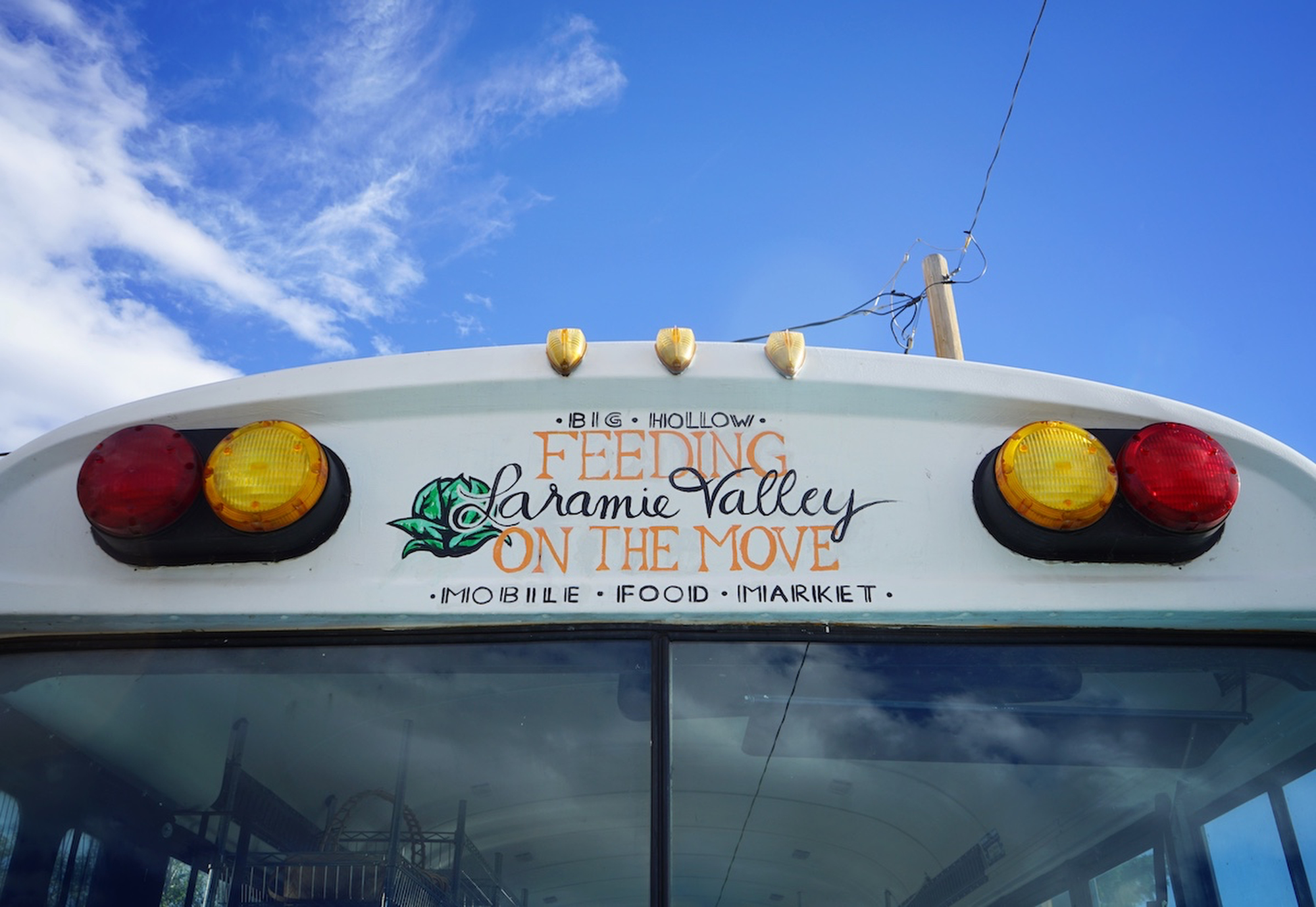

LARAMIE—The headquarters of Feeding Laramie Valley, a sprawling historic building at the edge of LaBonte Park, was quiet on an early September afternoon. The empty commercial kitchen gleamed, the main room was deserted and staff desks in a large office sat unoccupied.
The only soul in the nonprofit’s building other than Gayle Woodsum was her dog, Ethete, who lay under her desk snoozing.
Woodsum, who founded the organization 17 years ago and helped build it through food share initiatives, community gardens and a community composting program, is growing used to the quiet.
Trump administration efforts since 2025, including Department of Government Efficiency-related cuts and cancelled grants, have hobbled Feeding Laramie Valley, forcing the organization to shed employees, shelve programs and navigate a new world of rules and regulations.
Today, the nonprofit’s mobile pantry is parked indefinitely, the composting program has been put on ice and a commercial kitchen project remains unfinished. Grants have been pulled, reinstated and in some cases pulled again — a dizzying cycle of disruption and dashed hopes, Woodsum said.
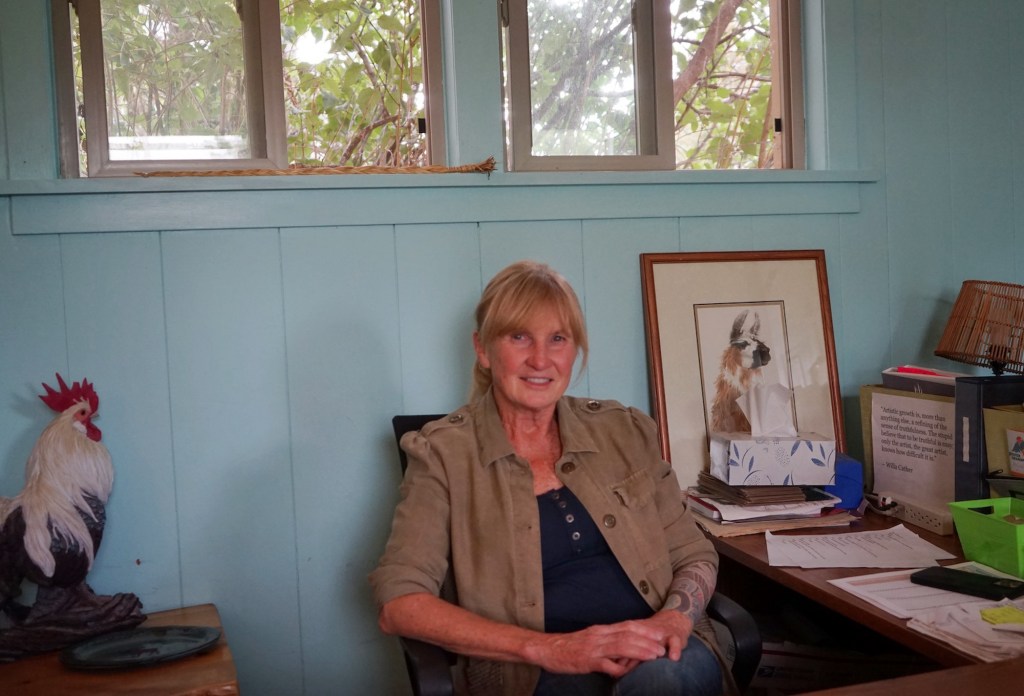
“It’s been an insanely difficult year,” Woodsum said, one filled with quixotic efforts to communicate with federal partners, deep funding losses and panicked emergency grant requests. Many of her friends think she’s crazy for clinging to the mission that has fueled her work for nearly two decades.
But, she said, “I just can’t stop.”
That attitude doesn’t surprise Woodsum’s acquaintances. She has never been one to back down, said Lina Dunning, a former Feeding Laramie Valley employee who has known Woodsum for decades.
“She is a force of nature,” Dunning said. “I don’t know if anybody else would have had the strength of character” to keep the nonprofit operating. “She certainly has sacrificed a lot.”
One thing that keeps Woodsum going is framing the situation not as a tragedy but a provocation.
“I’ve come to feel the hugeness of the disaster as motivation,” she said. “This is a major battle, and people like me and this program and programs like this all across the state are on the front lines of it. We have to have that attitude in terms of determination and hanging in there. But it’s not easy.”
There have been 20-hour days, she said, along with hours of agonizing about what to cut. But, she said, there is also a new sense of camaraderie, a feeling of supporters being in the trenches together.
The nonprofit’s gritty approach could offer inspiration for other Wyoming organizations learning to survive on less funding. In a time when food insecurity in the state is on the rise, Feeding Laramie Valley is managing to get fresh, healthy produce in the hands of those in need on a weekly basis.
A card table and an idea
Woodsum, who has roots in Maine, has been a community organizer for more than 40 years. She founded her first organization, a support provider for families of terminally ill children, in the 1980s after her son developed a rare and fatal medical condition. She went on to, among other things, launch a nonprofit for survivors of childhood sexual assault, raise llamas at a ranch in Colorado and work with victims of crimes in Albany County.
In the 2000s, she began thinking about food systems. She had been working with elders in Laramie and noticed that food insecurity was a key issue for them, she said.
Instead of just collecting and distributing food to those in need, Woodsum was interested in addressing the root of the problem, the systems-based causes of food insecurity, she said.
It struck her that people in need were expected to be grateful for standard food pantry fare like canned peas or Hamburger Helper. Woodsum, a lifelong gardener, hatched a vision for getting them fresh fruits and vegetables instead, and for helping them become more empowered in food production.
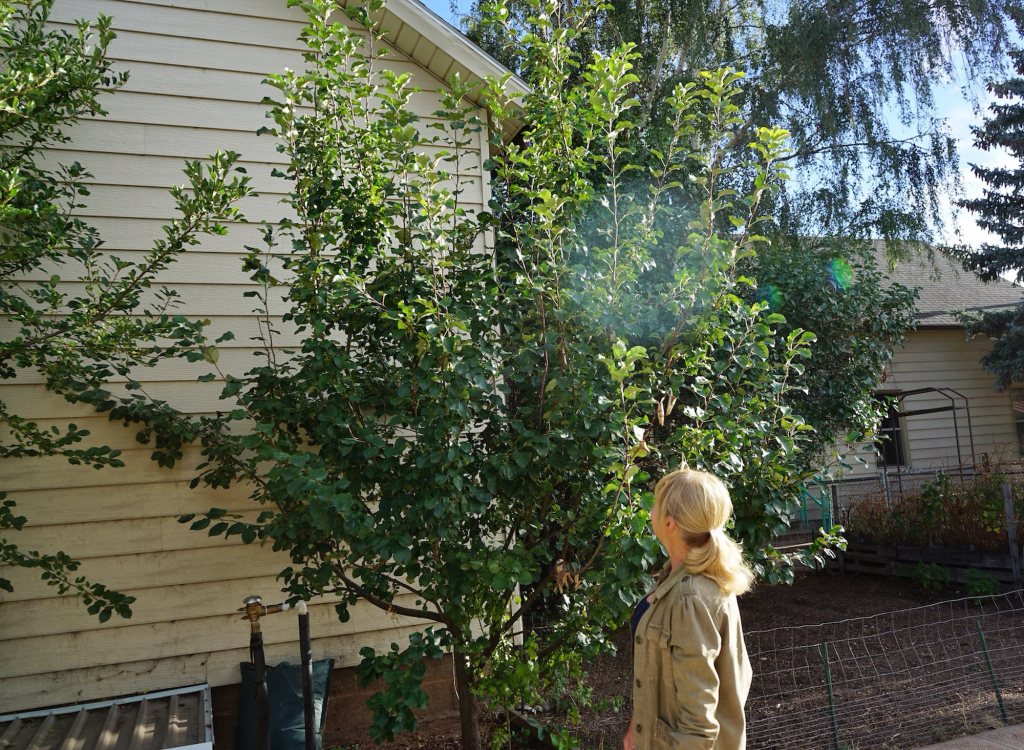
In the late 2000s, she took a card table to the Laramie Farmers Market, which back then was the end of the line for produce, she said, and asked farmers if they could spare any leftovers. The produce she collected became the origins of Feeding Laramie Valley, which she launched under her nonprofit Action Resources International.
Woodsum split the goods between the Laramie Soup Kitchen chef, the Interfaith Good-Samaritan food pantry and a share program she set up for residents of an independent senior housing center. Not long after, she secured community garden space.
In 2011, a stroke of luck came for the nascent organization when it was selected as one of five national sites for the Food Dignity Project. The USDA-grant-funded collaboration between community organizations and three universities set out to identify effective strategies for sustainable community food systems. For Feeding Laramie Valley, it provided access to a network of innovative trouble-makers who were trying to get to the roots of system changes, Woodsum said.
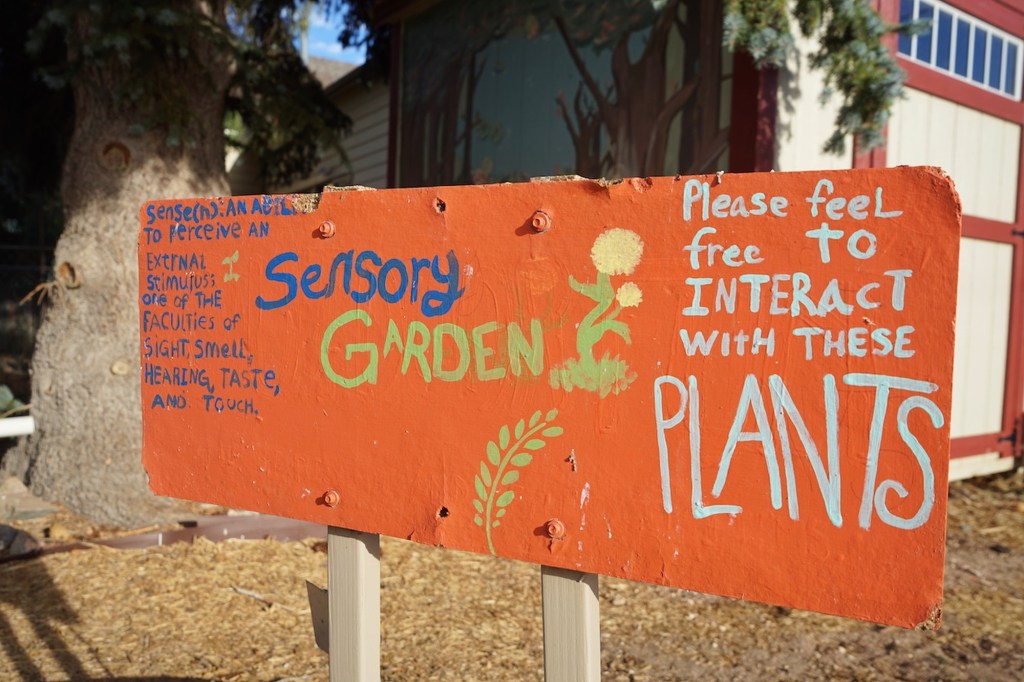
Feeding Laramie Valley grew steadily through the 2010s. It found its current home near LaBonte Park — in a building that is reportedly Laramie’s oldest. It launched a summer lunch program for kids, planted more gardens, established a food hub and started a mobile market to get produce to further flung communities. As an AmeriCorps VISTA intermediary, Feeding Laramie Valley placed VISTA volunteers all over the state, and also worked with the AmeriCorps NCCC program.
By late 2024, the headquarters was bustling, with a staff of 14 that would grow with seasonals to about 30 in the summer. Its annual budget reached over $2 million. It had a plan to wean off federal grant support through programs that could ultimately make money such as the budding composting program.
Sign of the times
The first sign of trouble arrived in January 2025, Woodsum said. She received an email about anticipated changes to AmeriCorps funding that noted words that were becoming off-limits in grant or program language.
Thus began a period of disruption in which funding was cancelled or thrown into doubt with little or no notice, Woodsum said. Federal partners became unresponsive, and alarming emails forewarned cuts. The organization lost its summer AmeriCorps volunteers after it had already made commitments for housing and placements. It lost a $116,915 grant for a commercial kitchen project on the eve of the construction work. Even with some grants reinstated, Woodsum said, by fall 2025 the organization was down an estimated $600,000.
As funding dwindled, the pool of applicants for remaining grants multiplied, which created more competition. Starting at the beginning of 2026, the organization had to make hard decisions, Woodsum said, shutting down programs that weren’t as essential to the mission and laying off staff.
“It was just shocking, and all done so poorly and maliciously, in my opinion,” Dunning, who worked as Feeding Laramie Valley’s VISTA program coordinator, said about the federal government’s approach. Dunning and other employees initially faced salary cuts, she said, and eventually lost their jobs.
“I’ve come to feel the hugeness of the disaster as motivation.”
Gayle Woodsum
At the beginning of this summer, a fundraising push raised $13,000, enough to pay for the Kids Out to Lunch summer program and 10 weeks of summer shares.
With the summer programs over, Feeding Laramie Valley is still offering regular weekly shares, but the operation is bare bones. Year-round staff has dwindled to zero. (As founder, Woodsum has never been a paid staffer). As for the annual budget, once over $2 million, Woodsum said, “now there’s like nothing on the table.”
The Laramie community has been extremely supportive of Feeding Laramie Valley, she said. But patching together small emergency grant funding isn’t a sustainable strategy, and she would like to secure a larger investment in the organization’s future.
She doesn’t want the account of the last year and a half to sound like an obituary, but said she is struggling to now formulate a message.
When programs were growing and accolades and funding were flowing, she said, “that was really easy to articulate … Then we get flattened, and I start to lose my own words.”
Picking up pieces
Increasing numbers of Wyoming residents are food insecure, according to Feeding America’s Map the Meal Gap report. More than 94,000 residents, or 16%, lacked consistent access to food in 2024 — an increase of about 4,000 from a year earlier.
While a whole constellation of food-related charities exist across the state and country, Feeding Laramie Valley is unique, said Monica Hargraves, who was a Cornell University partnership evaluator during the Food Dignity Project. Even though the project has long ended and Hargraves lives in New York, she has stayed involved with Feeding Laramie Valley, which she said is distinct in its authentic and innovative approach to responding to community needs.

“What stands out to me about Feeding Laramie Valley and the way they approach everything is this: It is truly community connected, community driven, not just in a drop-in kind of way,” she said. “It just feels different. Every human being is being celebrated and welcomed, and there’s much respect. I find it just astonishing.”
Even with the “horrific” DOGE cuts, Hargraves said, the organization is built on a sturdy set of values and has gained its community’s trust.
Though Feeding Laramie Valley had long wanted to become independent of federal grants, this isn’t at all how it planned to do that, Woodsum said. But the lifelong activist believes her community stands a better chance of preparing for future challenges “if we build on what we’ve brought together and successfully advanced in many directions, than if we erase it when the going gets tough.”

Apologies for asking silly questions. Where would one look how 2024 two million dollar budget was spent? We are supporters of the Laramie Soup Kitchen and have considered donating to this organization. Would like to see how funds were spent beyond salaries for 14 full time and 30 part time people.
“(As founder, Woodsum has never been a paid staffer)”
According to the most recent 990 tax return filing – 2024 – Ms Woodsum was paid $83,000. Founder or not, she does draw compensation from the tax exempt entity that operates Feeding Laramie Valley
The inhumane treatment of the unfortunate in the United States and even around the world by the Trump administration is unbelievable. Shutting down USAID starving thousands of people. While grain rots and farmers can’t find buyers for it so we subsidize the farmers to the tune of $10 billion. cutting food programs throughout the country letting our less fortunate citizens go hungry is a disgrace. And all of our Maga representatives are so proud to be part of this disgraceful unAmerican unChristian policies makes me sick.
Maybe this previous article…
https://wyofile.com/church-at-center-of-wind-river-controversy-lodges-discrimination-complaint-against-wyoming-food-bank/
Should have been titled
“Devastated by Wind River Indian Reservation and politically motivated Food Bank of Wyoming action, Wyoming church’s food pantry navigates new funding landscape”
Laramie is not anywhere near the reservation. Your attempt to conflate the two stories is disingenuous.
Two charitable food pantries essentially shutdown.
One due to political\economic policy changes, the other due to vindictive political agenda.
Yet the headlines and blamegaming are predictably biased.
Location\geography have nothing to do with it Chuck, they’re both in Wyoming.
It’s not even apples and oranges with you anymore chad/jack/doug… it’s apples and unicorns..
The food that foundations of nations distributed has been shifted to other pantries. There has been no loss. Only that the confederate flag flying “christian”, that you defend, isn’t the one doing it.
Again…. apples and unicorns. But keep up your fake outrage
Chuck, you often use the word “disingenuous”.
Yet you completely fabricate a lie about Foundations for Nations flying a Confederate Flag.
Do you have a single piece of proof this has ever happened?
This reporting by one of your stellar WyoFile journalists must be distributed into the hands of each Wyoming legislator immediately. It should be read aloud at the next opening session. It should be sent to every Wyoming newspaper. A clear, grass roots example of the tragic, cruel priorities of this administration. I am an ashamed registered Republican but a proud Wyomingite who is awestruck by the vision and mission of Feeding Laramie Valley. And the founder, Gayle Woodsum, presses on. A living testament to exactly the model Republicans used to applaud – government getting out-of-the way of ingenuity.
Meanwhile, Dumpy and his ‘boy’ reaped millions and even billions of dollars. Taking from the poor and giving to the rich. But it’s a HOAX, right MAGA.