

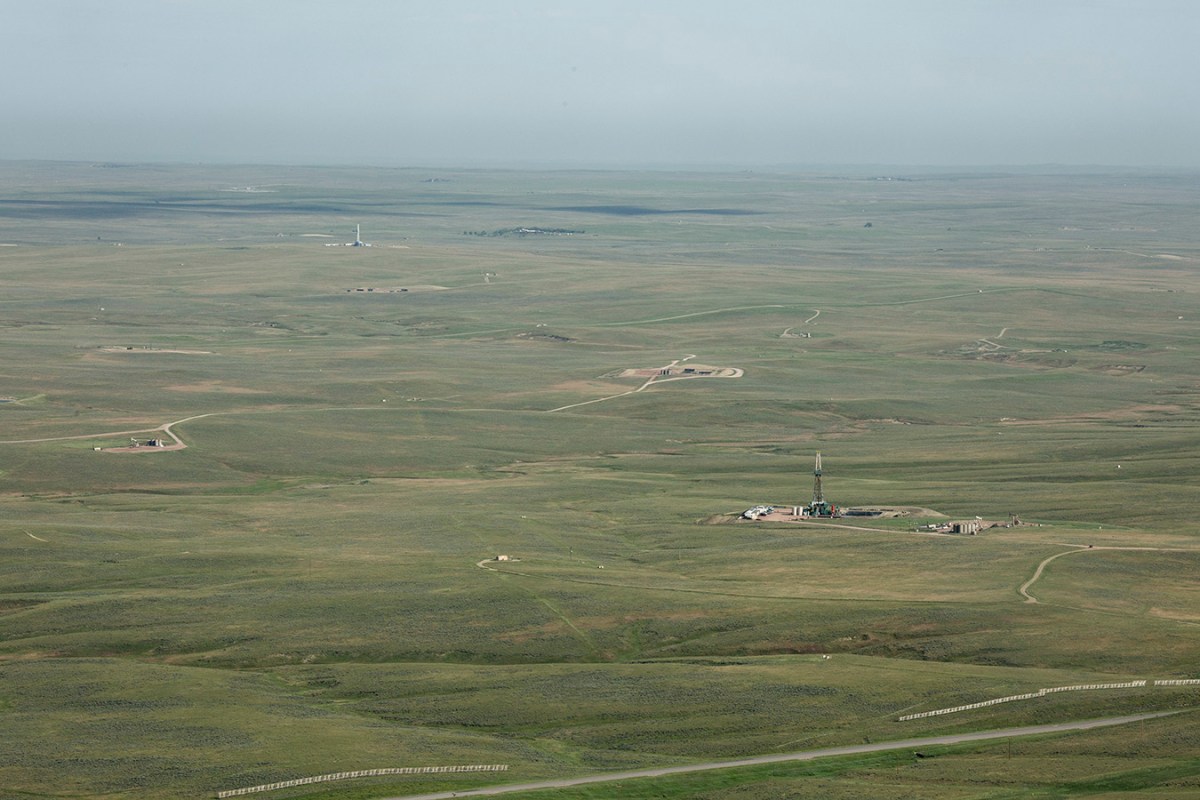
The federal government violated a bedrock environmental law when it approved a sprawling gas and oil field near Douglas that critics say threatens nesting raptors, other wildlife and groundwater, a judge ruled Friday.
The U.S. Bureau of Land Management fell short in its 2020 review of the 5,000-well Converse County Oil and Gas Project by dismissing alternatives to virtually unbridled development across an area the size of Delaware, the court concluded. U.S. District Judge Tanya Chutkan in Washington, D.C. rescinded the agency’s environmental impact statement and record of decision that authorized the development.
Chutkan made her summary judgment ruling four years after the Powder River Basin Resource Council and Western Watersheds Project filed their suit. The state of Wyoming, oil and gas drillers and the federal government fought the conservationists’ challenge.
Chutkan found that, among other things, the BLM violated the National Environmental Policy Act when it dismissed a development alternative that would have restrained the rate of drilling. “Contrary to BLM’s representation,” Chutkan wrote, “a slower pace of development is not inconsistent with the agency’s stated purpose and need for agency action.”
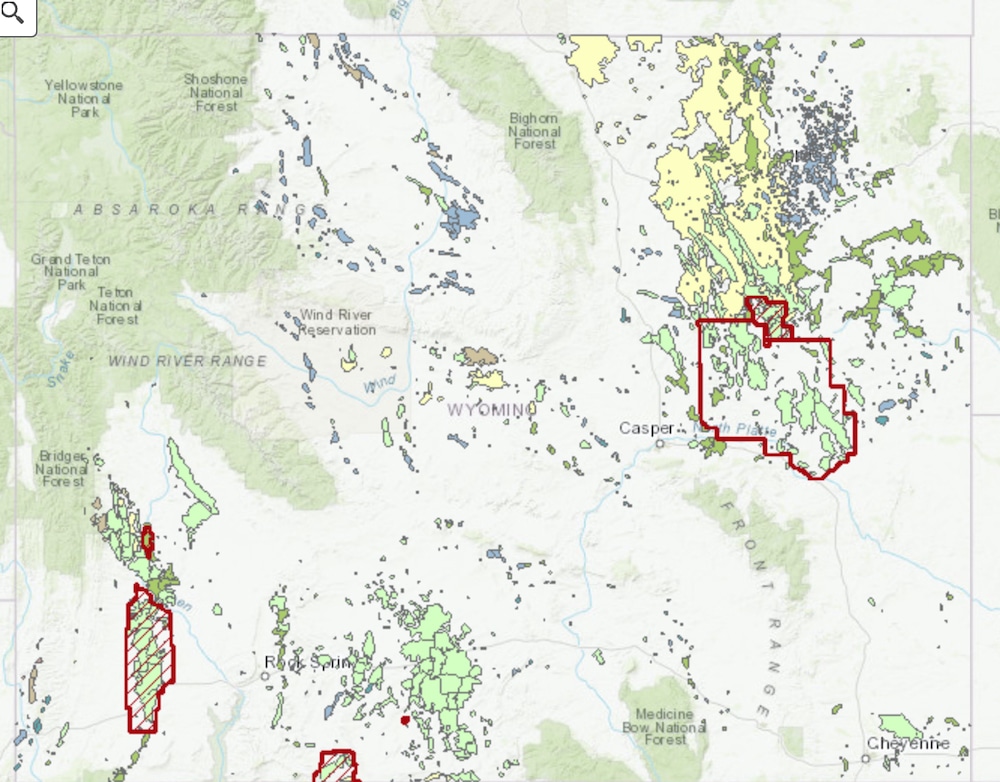
The BLM also bailed on any serious examination of reducing greenhouse gas emissions, the judge wrote. “BLM violated its obligation to rigorously evaluate a reasonable range of alternatives to its proposed action,” Chutkan wrote.
All of which was serious enough to throw out the final environmental impact statement that tallied 1,108 pages, not counting appendices. “The errors here were the type that prompts ‘substantial doubt’ that the agency chose correctly,” when it approved the scope and pace of drilling.
“The Project is already emitting and will continue to emit significant levels of greenhouse gases that will contribute to climate change and impart other significant environmental harm, impacting human health, sensitive natural resources, landscapes, and wildlife,” reads the judge’s opinion vacating BLM’s decision authorizing development. It is necessary to rescind approval to ensure “a fully fleshed out consideration of the issues under NEPA.”
Politics vs law
The federal agency said it is unsure what the ruling holds. “The BLM is reviewing the court’s decision and considering next steps,” BLM state spokesman Micky Fisher wrote in an email. The judge returned the issue to the BLM “for further consideration consistent with this Memorandum Opinion.”
Gov. Mark Gordon’s office did not comment in response to a WyoFile request to weigh in on the ruling. Last year, Gordon heralded Trump as his cabinet sided with Wyoming’s desire to drill with fewer environmental restraints.
“The new administration,” Gordon said at a Houston energy conference, “understands states know how to manage their resources best.”
Continental Resources, Devon Energy and Anschutz Exploration have said environmental laws are irrelevant in the approval of their drilling plans. “The political process” governs the development, the companies argued in court papers.

Chutkan’s decision is flawed, the Petroleum Association of Wyoming said in a statement. “The ruling ignores the United States Supreme Court’s 8-0 decision that narrowed the scope of NEPA reviews,” wrote Ryan McConnaughey, the organization’s vice president and spokesman.
“The ruling is a blow to the creative work of balancing development and conservation in Wyoming that will limit future collaborations if left standing,” his statement reads.
An attorney representing the conservation groups sketched the path forward. “The BLM will have to issue a new [environmental impact statement],” said Sarah Stellberg, staff attorney for Advocates for the West.
The conservation groups have other complaints regarding the federal approval, including that it underestimates the amount of water the oil and gas wells will require during drilling.
“The BLM had assumed half of the wells would use recycled water,” Stellberg said. “That has not played out.”
The court has not weighed in on that debate, she said. “That will be a question for a later day.”
Development forges ahead
Chutkan had already blocked the BLM from issuing new permits under the environmental impact statement’s authority, but that did not stop the agency from green-lighting more than 200 wells last year. Powder River and Western Watersheds sought to challenge those new approvals and bring them under the umbrella of their lawsuit, but failed.
The suit was too far along for the court to back up and incorporate complaints about the new permits, the judge decided, and the conservation groups could file a separate challenge if they want. With her ruling, Chutkan closed the case.
Drilling continues under those new permits. “Thankfully, sensible resource development in the Powder River Basin will continue via other permitting avenues,” PAW’s McConnaughey wrote.
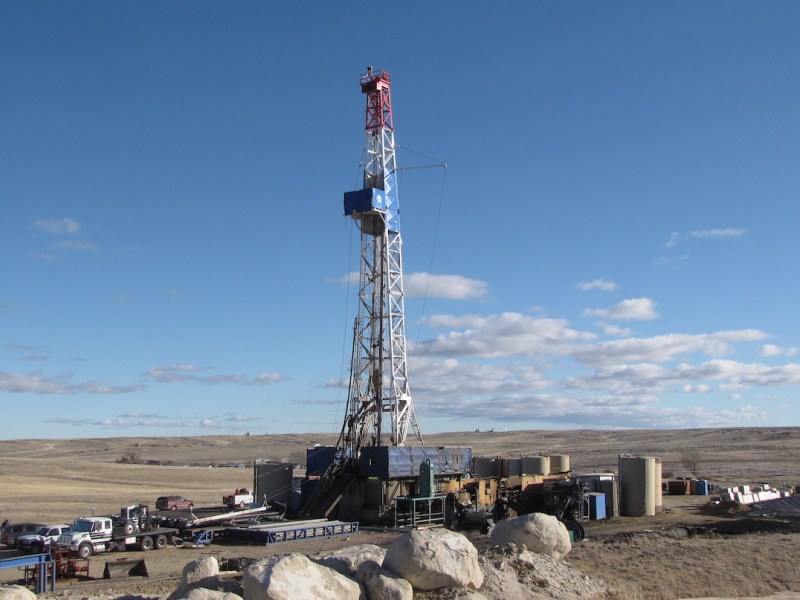
But conservationists see the move as an end-run around environmental safeguards. Stellberg said the environmental groups have not decided whether to file another legal challenge against the Converse project.
“We still view those [new] permits as being unlawful,” she said. “Further project permitting should await an EIS and project-level decision,” not the piecemeal approval that’s been undertaken.
“PAW is currently reviewing the case with our partners,” McConnaughey wrote, “and will make a decision on how to proceed in the near future.”

Balancing development and conservation has never been something industry has ever found important. The conservation portion of this issue is always at the bottom of the barrel. Maybe rulings like this one will encourage adherence to environmental laws that exist to support and protect our wild lands and wildlife.
You need to investigate what has happened to me in Weld County, Colorado over inherited mineral rights. It involves corrupt judges, lawyers and courthouse people in Weld County, Colorado and Hall County, Nebraska. I have a check from Chevron for $433,800 that I’ve never cashed in hopes of getting an Investigation. Nope, nothing.
Wow! The BLM made assumptions in an EIS that haven’t panned out? The problem is industry hires the consultants that make recommendations to the BLM. Consultants are taking orders from the BLM but paid by industry. It’s called a third party contract, a government invention that has benefited industry. Consultants are very clever at making the ones who pay them happy, while finding ways to prepare environmental documents that the BLM can approve, as the US Congress provides loopholes when needed. This has been going for so long that environmental regulations and the agencies that enforce them have lost much of their bite. And here we are.
Expect more of the same as judges who actually interpret environmental laws as intended are being replaced as soon as possible. It’s death by a thousand cuts.
Meanwhile oil and gas industries hold thousands of drilling permits and hundreds leases they “hold” and do not drill for production.