


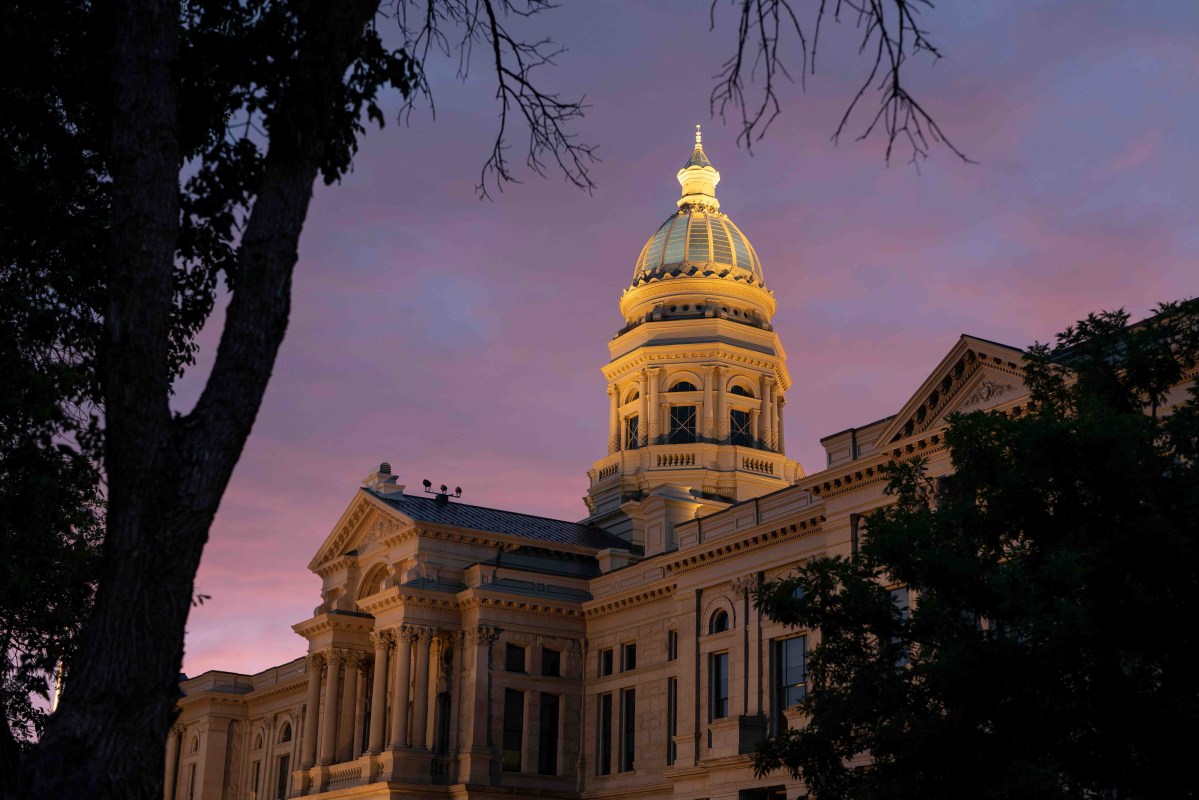
Wyoming’s sleepy State Capitol will roar back to life Monday when lawmakers return to pass new laws and decide how to spend the state’s money in the next two-year budget.
Lawmakers have just 20 business days to complete their work. Along the way, tight deadlines are designed to keep them on track, which in turn, thins out the herd of bills jockeying for introduction.
So far, more than 200 measures have hit the docket. Roughly half are committee bills, or legislation lawmakers worked on during the off-season known as the interim. Additional bills from individual lawmakers will inevitably appear between now and Wednesday’s noon deadline.
That said, there’s just one bill legislators are constitutionally obligated to pass into law before they adjourn by midnight on March 8 — the budget.
The budget
Lawmakers have the responsibility of crafting a two-year financial plan every even-numbered year.
The last time the Legislature had to hash out the budget, mineral rebounds and stimulus funds had unexpectedly replenished state coffers after the pandemic put Wyoming in dire straits.
Things are different now.
While Wyoming enjoyed a more lucrative 2023 than financial forecasters predicted — giving lawmakers more dollars to work with than expected — the long-term picture is less rosy. Volatility is on the horizon due to the state’s dependence on fossil fuels and other commodities, and lawmakers have not made significant changes to the funding model to avert the next financial bust.
It’s also the beginning of the end of the federal funds that bailed the state out two years ago.
“The Legislature has thoughtfully used some of the unprecedented congressionally mandated funding of the past few years to backfill many of the cuts we were compelled to make to balance our budget,” Gov. Mark Gordon wrote in his written budget recommendations submitted in November.
Certain cuts are back on the table, Gordon said, and he’s called on the state to live “within our means.”
Ultimately, however, it’s up to lawmakers to decide whether to cut, save, spend or pass a budget that does a combination of those things.
The Joint Appropriations Committee — often called the “J-A-C” — met dozens of times throughout December and January to consider Gordon’s recommendations and to hear directly from state agencies.
One key area where lawmakers and the governor have already diverged is funding for the Department of Health. The Appropriations Committee voted to fully fund the agency’s budget request, while Gordon’s proposal was about $20 million less than that.
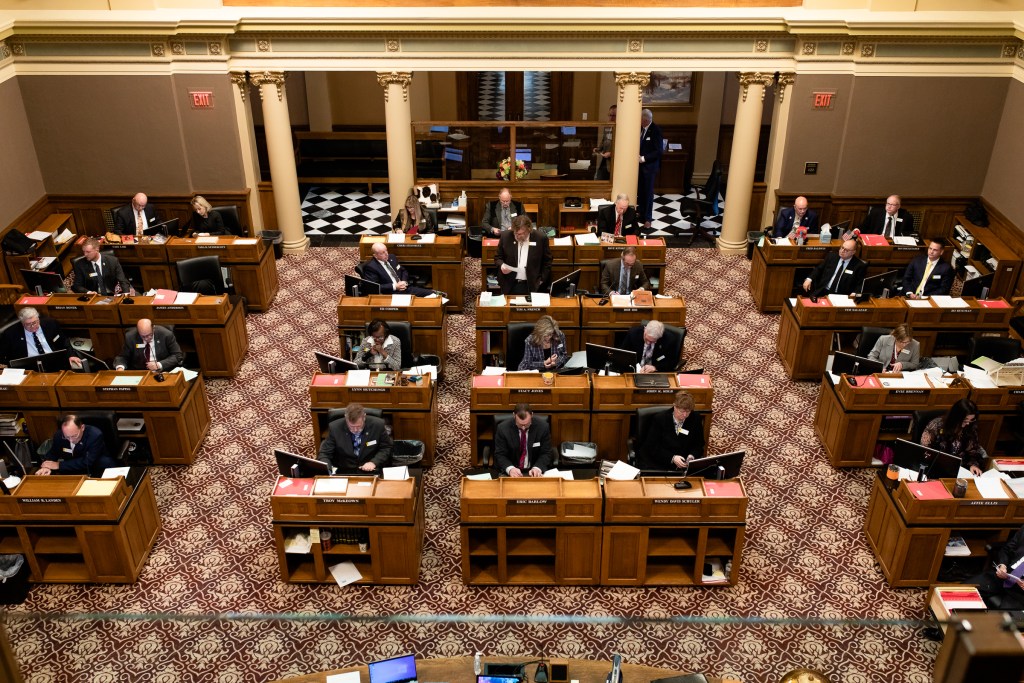
Property taxes
Aside from the budget, residential property taxes will be the top priority for lawmakers.
That’s according to Speaker of the House Albert Sommers (R-Pinedale) and Senate President Ogden Driskill (R-Devils Tower), who opined in the Wyoming Tribune-Eagle last month.
“Although Wyoming has some of the lowest residential property taxes in the country, the increased property taxes have pressed many homeowners’ ability to pay,” leadership wrote. “Higher residential property taxes have been particularly burdensome for older people on fixed incomes.”
Sommers and Driskill highlighted four specific ways they’re interested in providing property tax relief and reform — amending the refund program, capping tax increases and two different kinds of exemptions for long-term homeowners and everyone else.
Leadership will have to contend with the hard-line Wyoming Freedom Caucus, whose members say the Legislature isn’t willing to go far enough.
“Wyoming’s property tax system is immoral and needs reformed,” Freedom Caucus Chairman John Bear (R-Gillette) wrote in a Jan. 31 op-ed.
“Unfortunately, tax-and-spend insiders in both parties hold a majority in Cheyenne and see no need to reform the system,” he wrote.
Freedom Caucus member Rep. Mark Jennings (R-Sheridan) said he plans to bring back a bill to shift the state’s property tax system to one that is based on acquisition value — a tax structure used in California that bases taxes on the price paid to purchase the property.
Last year, Jennings penned a successful bill to fund a $50,000 study on adopting the change, which he later disclosed was intended to “see how the opposition would fight the switch.”
After the study concluded that such a transition would dry up state revenue and violate the Wyoming Constitution, the Joint Revenue Committee left the option behind.
A split party
Property taxes won’t be the only rub between lawmakers this session, either. The two Republican camps — the Freedom Caucus and the traditionalist wing — are expected to battle under the long shadow of the 2024 election.
To some lawmakers’ delight, this could result in gridlock, particularly in the House.
Last session, after the Freedom Caucus had grown its House ranks in the 2022 election, it grew its resources, receiving support from its DC-based umbrella organization. That often landed Wyoming’s legislative affairs on Fox News and other major conservative outlets, bringing national attention to the least populated state in the country.
Much of that reporting framed Wyoming’s Republican supermajority — there are seven Democrats out of 93 lawmakers — as left of center, even as the Legislature passed a first-in-the-nation ban on abortion pills and restricted the rights of transgender teenage girls to play sports.
Meanwhile, non-Freedom Caucus Republicans in the House have organized themselves under the banner of the Wyoming Caucus and remain in the majority — for now.
Ultimately, both groups will need to work together to get anything done. That’s because of an early hurdle bills must clear during a budget session.
More specifically, and except for the budget bill, the state constitution requires that all proposed bills receive two-thirds support in an introductory vote to move forward.
With roughly 26 members, the Freedom Caucus has the power to single-handedly kill any House bill during that initial vote. On the other hand, the group does not have enough members to pass legislation on its own. That would require the support of other lawmakers.

Social issues
While time is limited, lawmakers have also set their sights on social issues, which have become more of a hallmark of the session in recent years.
In particular, the Legislature will once again consider prohibiting gender-affirming surgeries for minors.
While there aren’t any providers in Wyoming who offer gender-affirming surgeries for either minors or adults, that didn’t stop an online firestorm over a confidential child custody case last month that accused Montana’s child welfare division of “kidnapping” and transporting a teenager to Wyoming to receive those services here. The online narrative is largely unsupported by court records and email communication examined by the Montana Free Press.
Nonetheless, the Freedom Caucus said it “will not rest until all gender reassignment abuses are illegal in Wyoming.”
Another anti-transgender bill seeks to define “man,” “woman,” “male,” “female,” “father,” and “mother” based on biological terms.
Meanwhile, Democrats in the House are bringing an abortion rights bill that would prohibit the state from “denying or interfering with a person’s right to have an abortion prior to viability of the fetus or to protect the person’s life or health.” The legislation faces an uphill climb in a statehouse overwhelmingly dominated by Republicans.
What role will Gordon play?
Lastly, it remains to be seen how much the governor will assert himself in the legislative process.
Traditionally, Gordon has taken a hands-off approach, mostly reserving his line-item vetos in the budget to sections where he felt lawmakers were improperly legislating within the financial plan. Last session, for example, he allowed the transgender athlete bill to become law despite heavily criticizing it.
But some in his own party — chief among them, Freedom Caucus members — have targeted the governor more fiercely in recent months, particularly for his long-touted energy policies. It remains to be seen whether he will respond by asserting himself more forcefully in the legislative process.
The Constitution, however, provides some guardrails. For example, it’s unconstitutional for the governor to “menace” any lawmaker “by the threatened use of his veto power.”
The Legislature kicks off at 10 a.m. Monday and will be streamed online throughout.

Nice article Maggie. I look forward to your coverage.
I would like them to show up and actually care about those people late in there life who need care. Y mother has been waiting for Medicaid to take care of business but they just brush it off and in the meantime she just goes deeper in debt. If they would accept federal funding for the care of people (not just subsidies to gas, oil and ranchers) I’d respect some outcomes. This Legislative group spends precious time and money on non issues (voting). More bills have been drafted since they got crazy self interest groups in there.
Disappointed
It promises to be an exciting session. Hopefully most of the nonsense bills will fail the first vote and the bodies can work on their actual job of balancing the budget.
Why does the News not care that since 2007, Wyoming has been incentivizing sex offenders for choosing younger victims by placing one of their lowest severity offenses above Many worse offenses with younger victims?
It was shown to be misclassified but they are only allowing those within 8 years age difference of their victim to be reclassified.
Meaning 1st & 2nd Degree offenses with victims aged 13-15 are monitored 2 times a year and can ask for relief after 25 years, even though the comparable 3rd Degree offenders are monitored 4 times a year for life.
How can this be said to protect Wyomings children when offenders are incentivized for choosing younger victims or worse conduct?
Senate File 0034 2024 Budget Session
I’m confident there will be lots of bills about non-issues, things that don’t happen in WY, things that take the legislators into people’s bedrooms and pants, and doctors’ offices to interfere in women’s healthcare.
My crystal ball-They will craft 10 bills based on “social issues” with fake facebook articles as their evidence, and do absolutely nothing for any of the real issues.
Then campaign for reelection saying that we need to “finally fix the real issues”
Your first line is not quite accurate, it is OUR money they are spending, NOT their money. They need to realize that every penny taken from a taxpayer is money he worked for, but is forced to give to someone else for something or another for what they want or need…..good or bad.